Gayan-bayan
The recital opens with the singers and khol drummers, who play and dance at the same time. It is a full item in its own right.

सत्रिया
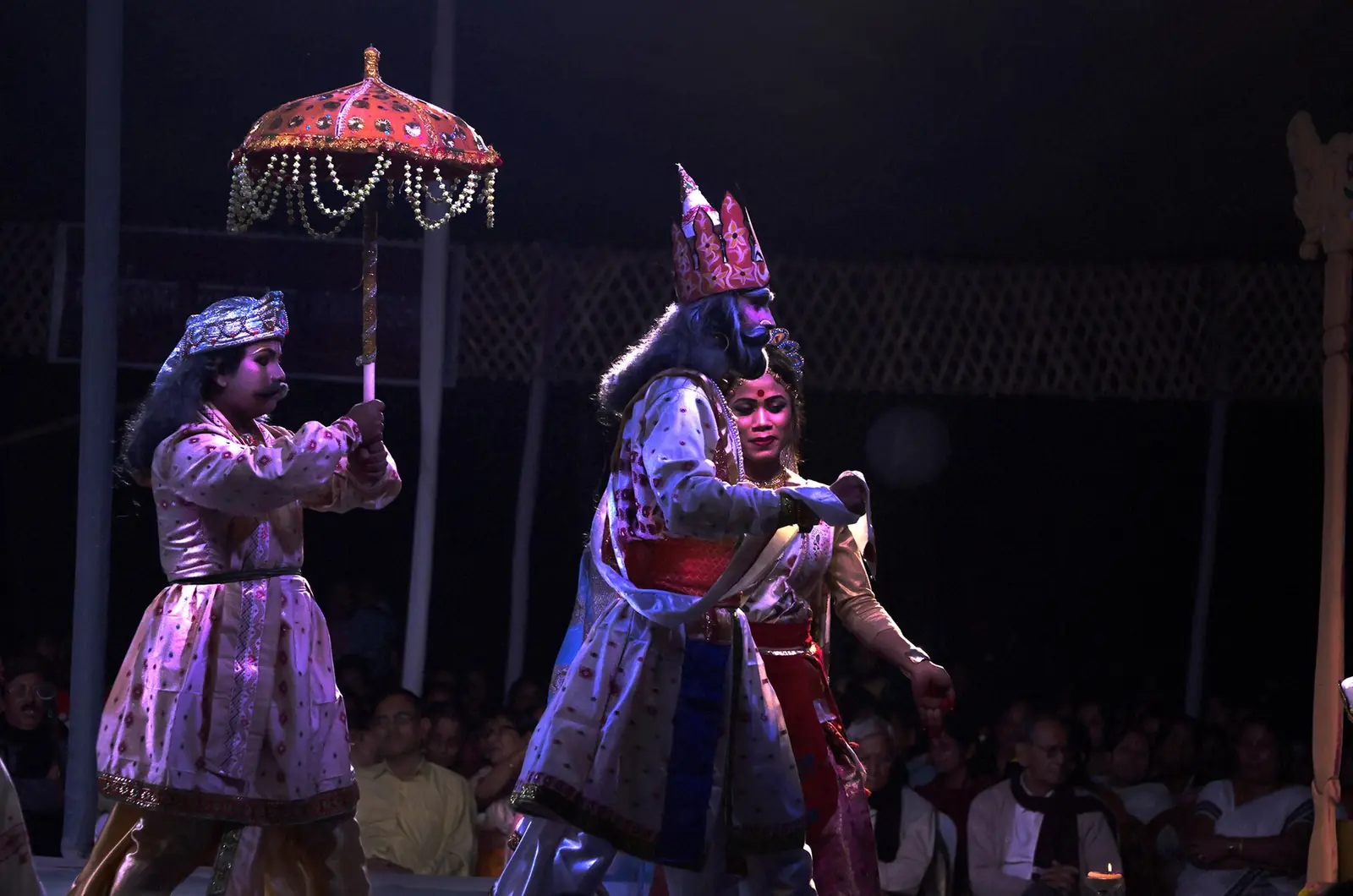
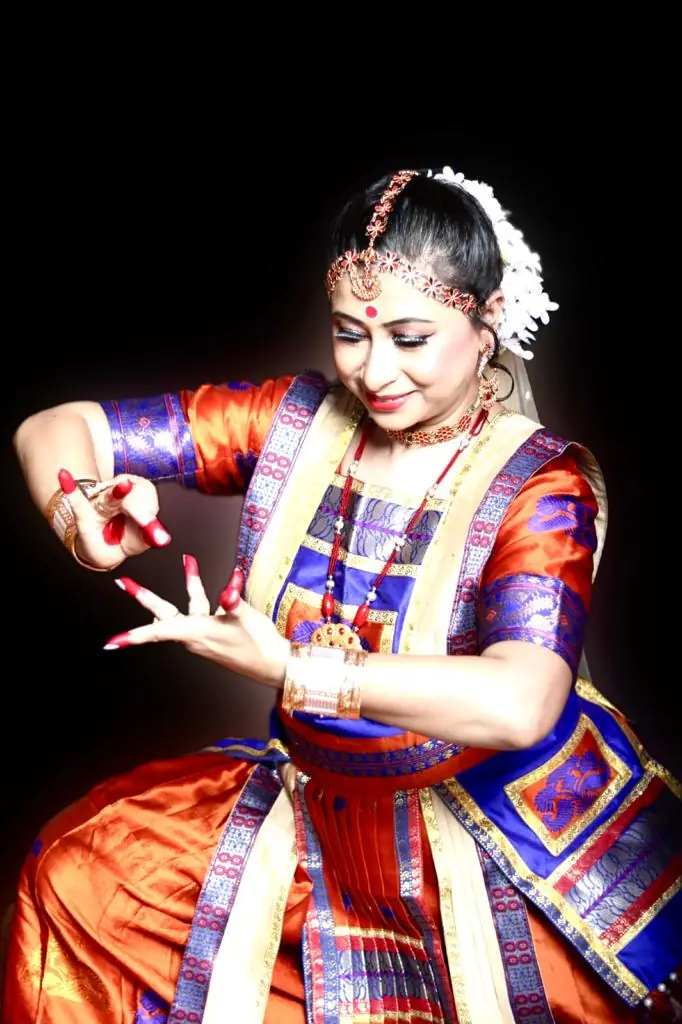
Born in the Vaishnava monasteries of Assam, Sattriya was kept alive for five centuries by celibate monks dancing for Krishna.
The recital opens with the singers and khol drummers, who play and dance at the same time. It is a full item in its own right.
The Sutradhar, the narrator, dances the prologue and stays on stage through the play, singing and explaining.
Gosai nach for Krishna, gopi or maiki nach for the gopis, and the vigorous yuddhar nach, the battle dance, are taught in the sattras.
Songs composed by Sankardev and Madhavdev, sung in ragas to the khol and the cymbals called taal.
Woven of pat or muga silk in white and gold, with traditional Assamese jewellery.
The saint and poet (1449–1568) built the sattra system and composed the Ankiya Naat, one-act plays. Sattriya dance grew within them.
In the sattras the dance was handed down by the bhakats, resident monks, as part of daily worship and festival bhaona.
The Sangeet Natak Akademi recognised Sattriya as a classical dance on 15 November 2000.