
Naivedya is food offered to the deity before anyone tastes it, the fifth of the five upacharas. The cook does not taste while cooking. The plate is set before the deity and sprinkled with water, with a tulsi leaf on it for Vishnu.
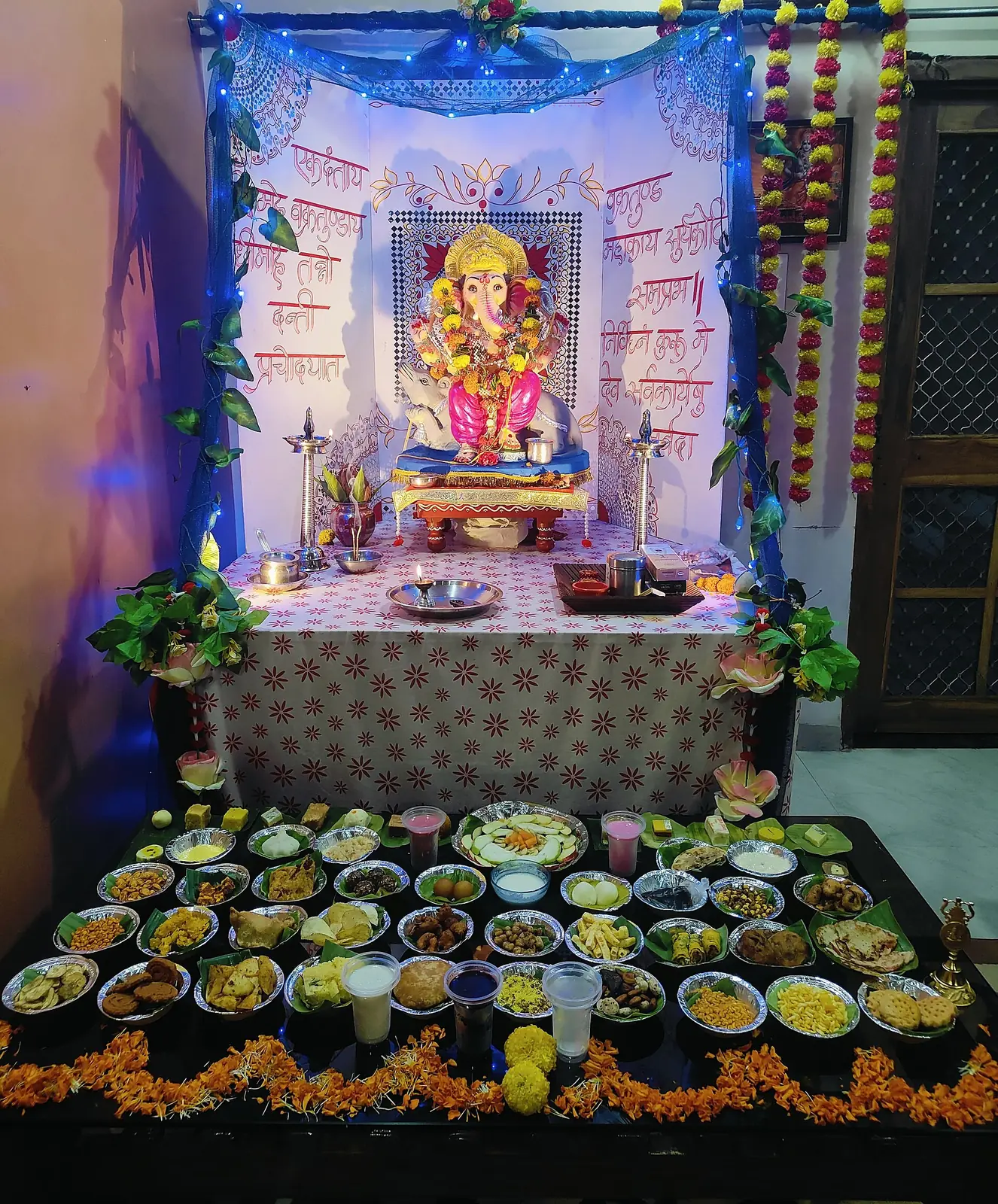
Food as offering
अन्न · नैवेद्य
First to the god, then to everyone. Temple kitchens, festival feasts and the leaf meal are some of the most carefully composed things in Hindu life.
१४ offerings and feasts
What comes back from the deity's plate is prasad, grace, and it is taken with the right hand, never refused. Prasad is shared, not finished alone. A sliver of laddu or a spoon of panchamrita is enough, and none of it is thrown away.
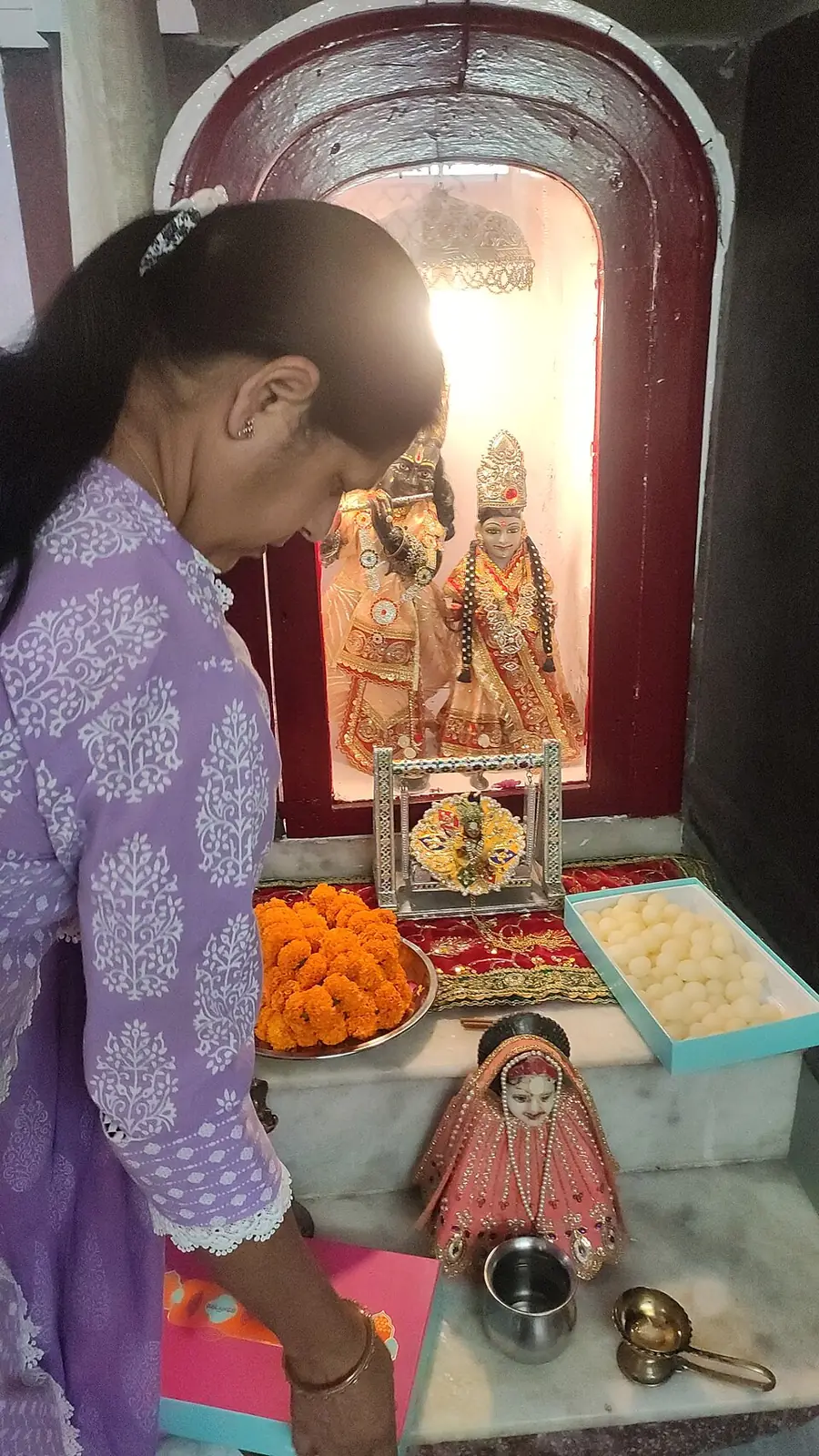
छप्पन भोगChappan bhogFifty-six dishes, because for seven days Shri Krishna held up Govardhan and missed eight meals each day. That is the telling in Braj. Annakut is a great day for Pushti Marg, and today the count of dishes often runs well past fifty-six.
 अन्नकूटAnnakut
On the day after Diwali food is heaped into a mountain, Annakut, for the Lord who lifted Govardhan. The food is set out as a hill before the deity. Pushti Marg and Swaminarayan temples are known for the largest Annakuts.
 महाप्रसादMahaprasad, Puri
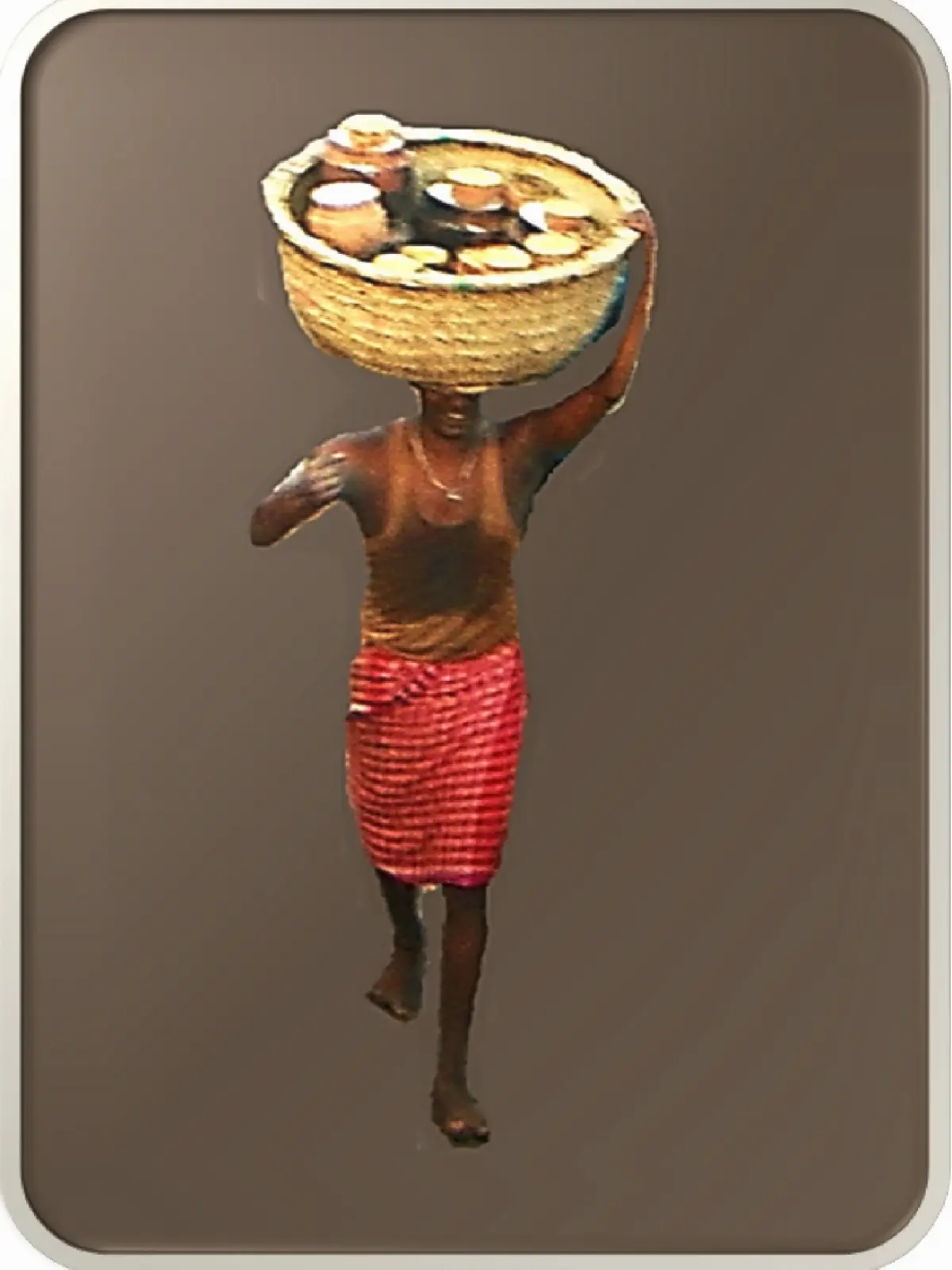
Shri Jagannath's food is cooked in new earthen pots over wood fire in the Rosa Ghara, the great temple kitchen. Each pot is used once. No onion, no garlic, and no tasting before it is offered. Six times a day rice, dal, vegetables and pitha go before the deities; after, the Mahaprasad is sold in the Ananda Bazaar inside the temple walls.
 तिरुपति लड्डूTirupati laddu
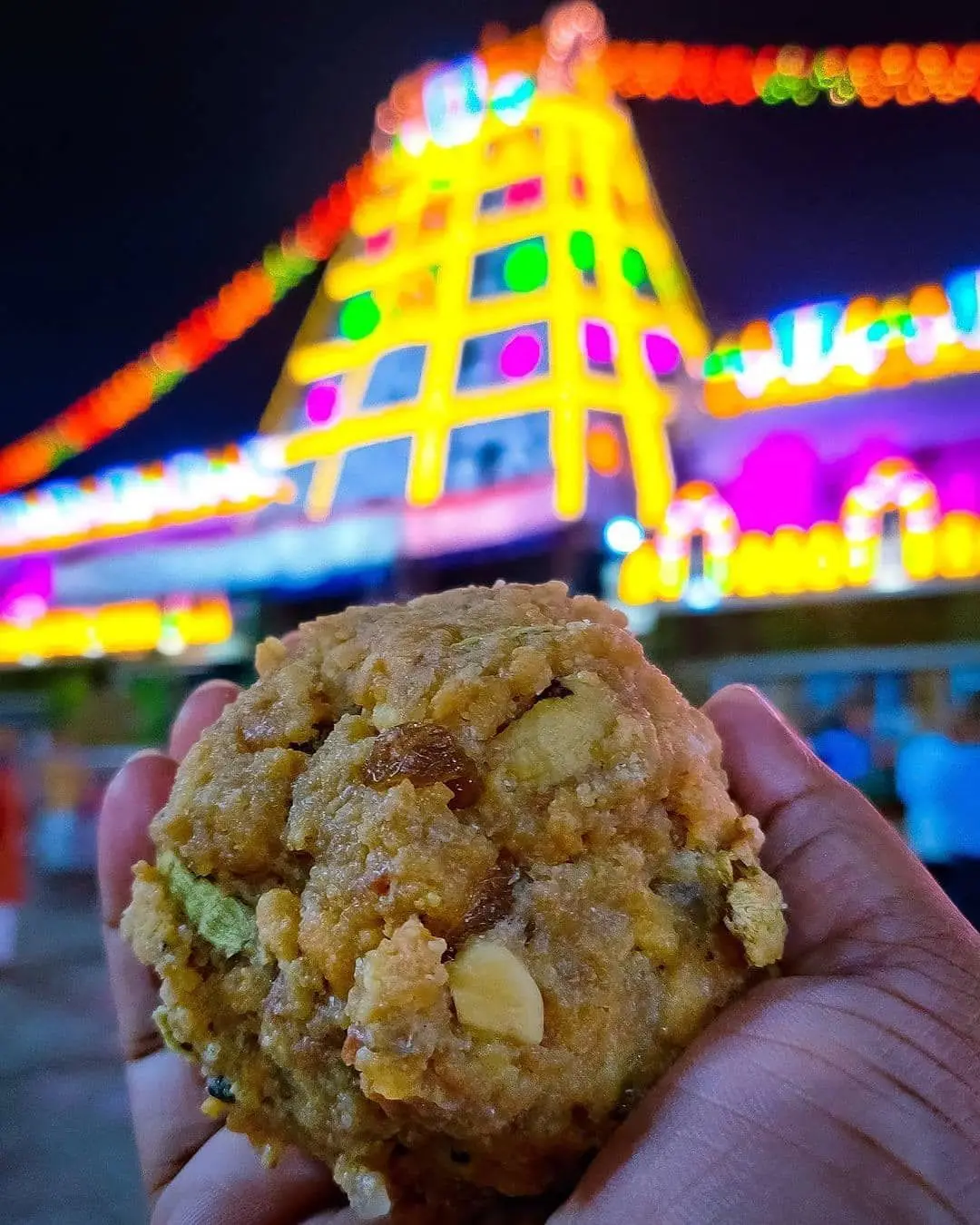
Laddus have been offered at Tirumala since 1715, and the Tirupati laddu took a GI tag in 2009. Gram flour, ghee, sugar, cashew, cardamom, raisins and sugar candy. They are made in the Laddu Potu, the temple kitchen in the Sampangi pradakshinam, by more than six hundred people.
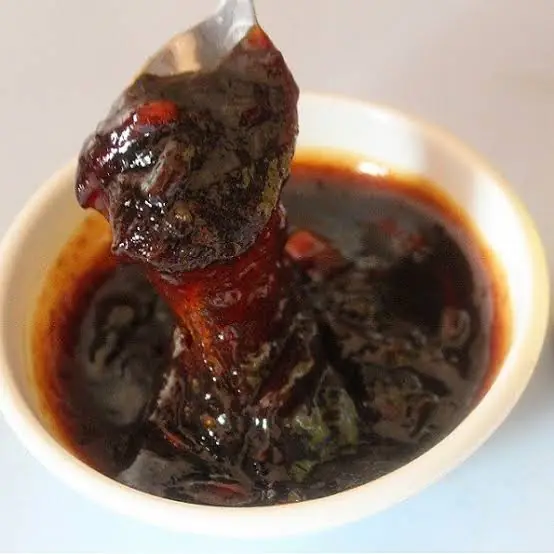 पलनी पंचामृतमPalani panchamirtham
Palani's panchamirtham was the first temple prasadam in Tamil Nadu to receive a GI tag, in 2019. Hill banana, country sugar, ghee, honey and cardamom, with dates and sugar candy, and not one drop of water. The GI area is the whole of Palani town in Dindigul district, below the hill temple of Dandayudhapani.
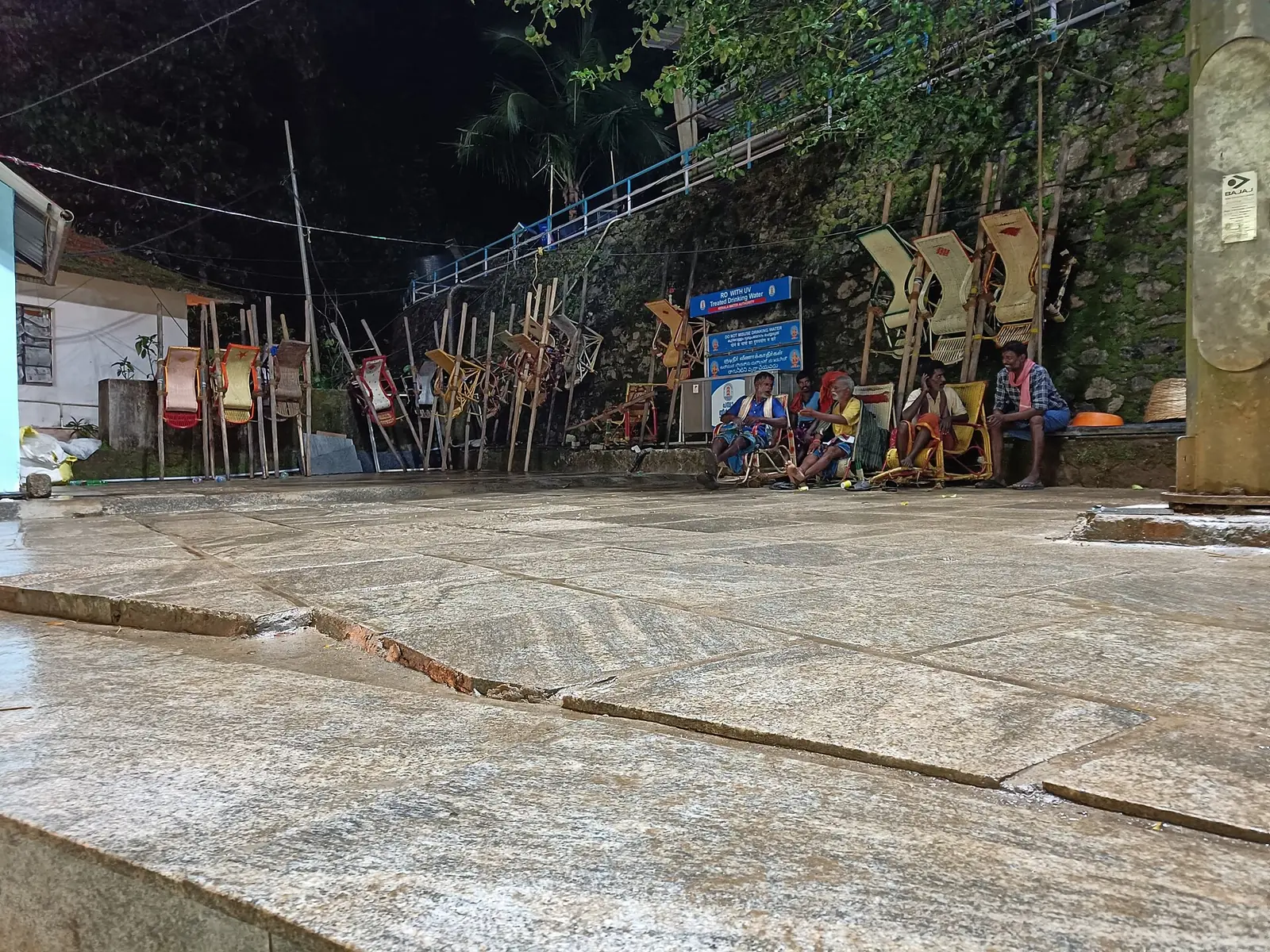 अरवणाAravana, Sabarimala
Pilgrims carry home tins of aravana from Sabarimala, a dark payasam of rice, jaggery and ghee. With it goes appam, a sweet rice-and-jaggery fritter. Both are made by the Travancore Devaswom Board for Ayyappa's pilgrims through the Mandala-Makaravilakku season.
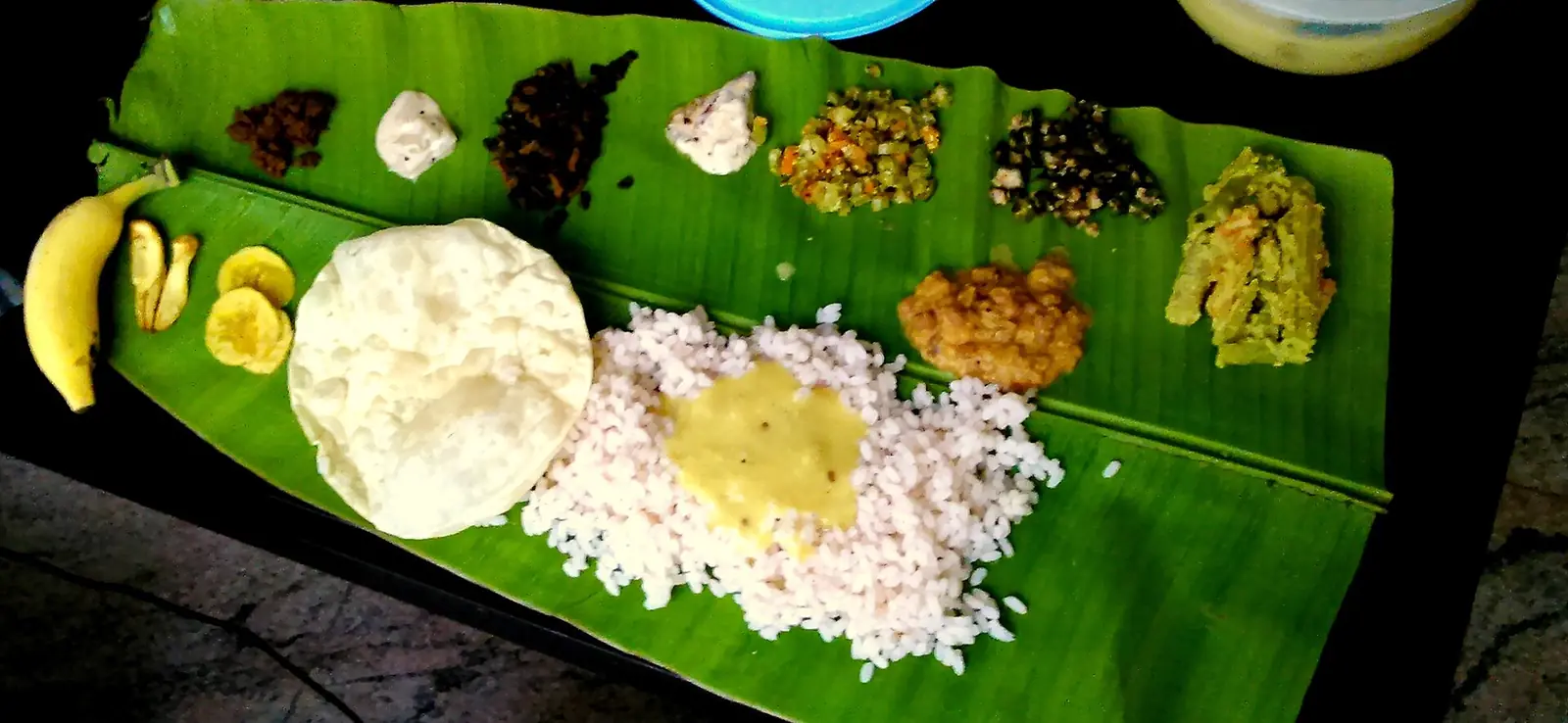 ओणम सद्याOnam sadhya
Twenty-four to twenty-eight dishes on one banana leaf, eaten with the right hand, for the Onam feast. Big sadhyas pass sixty-four. The order of serving is fixed and the meal ends with payasam and buttermilk. When you finish, the leaf is folded; which way you fold it tells the host what you thought.
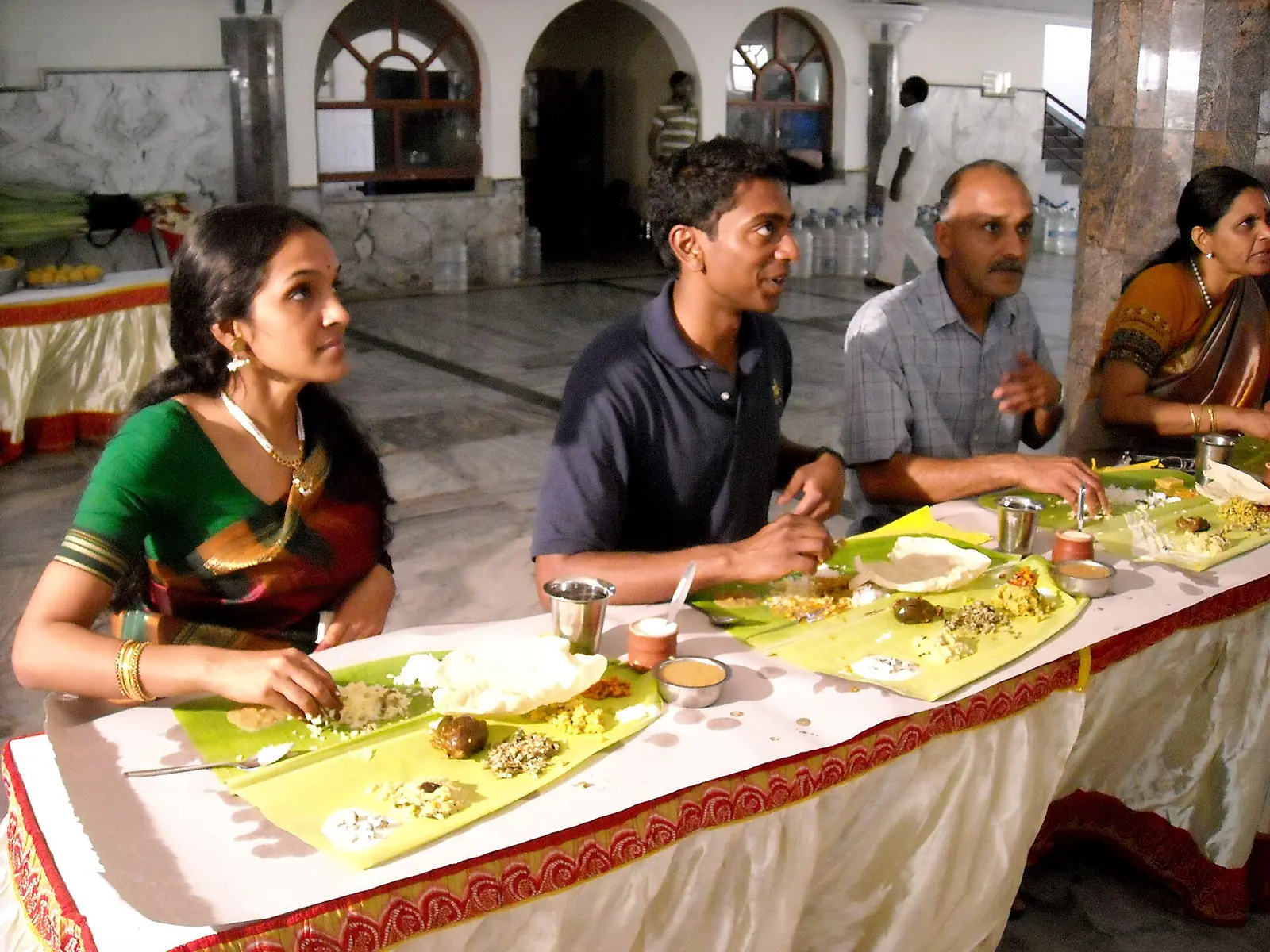 केले के पत्ते पर भोजनThe banana-leaf meal
Every dish has its place on the leaf, so a server can see at a glance what is missing. Pickles and small things at the narrow end, vegetables across the top, rice in the open centre. You eat in the opposite direction to the serving.
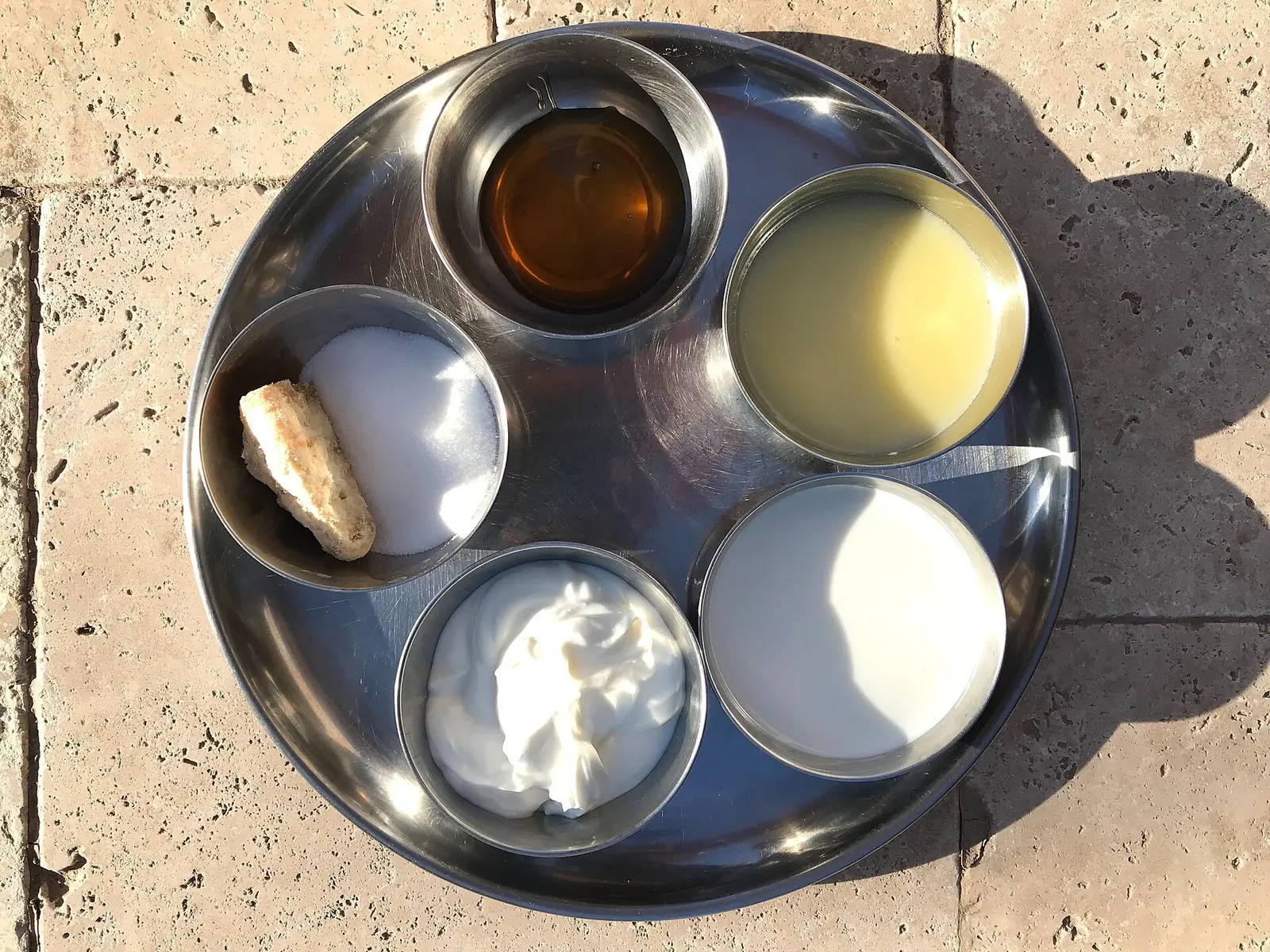 पंचामृतPanchamrita
Five nectars, milk, curd, ghee, honey and sugar, poured over the deity in abhishek, then given as prasad. Each is poured in turn, with water between, and the mixture collected below is spooned into the devotee's right palm, tulsi in it for Vishnu.
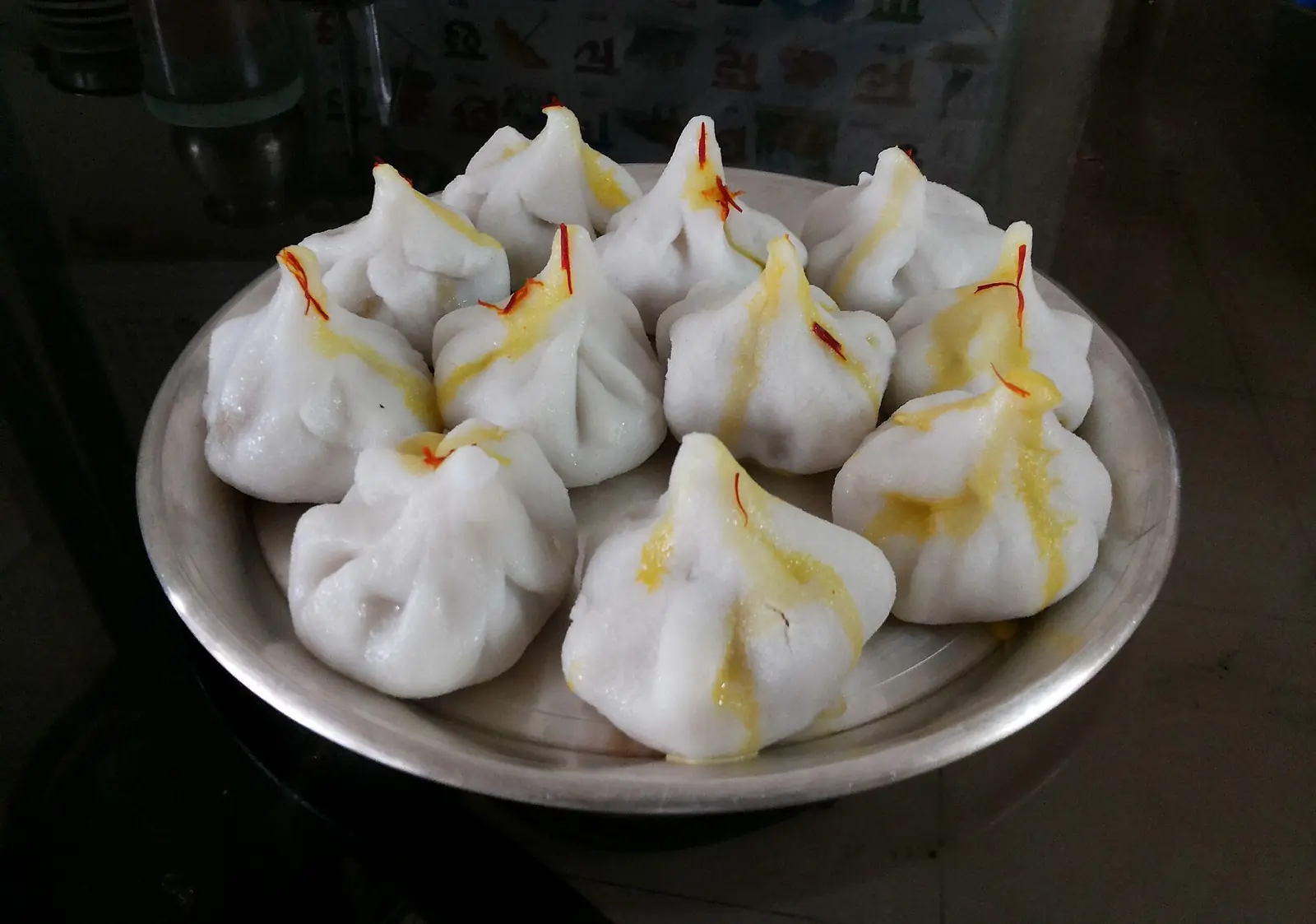 मोदकModak
Ganesha is Modakapriya, the lover of modak, and he holds one in his hand in many murtis. The Maharashtrian ukadiche modak is steamed rice-flour dough pleated round coconut and jaggery, with a pointed top. Twenty-one is the count for Ganesh Chaturthi, the same as the durva.
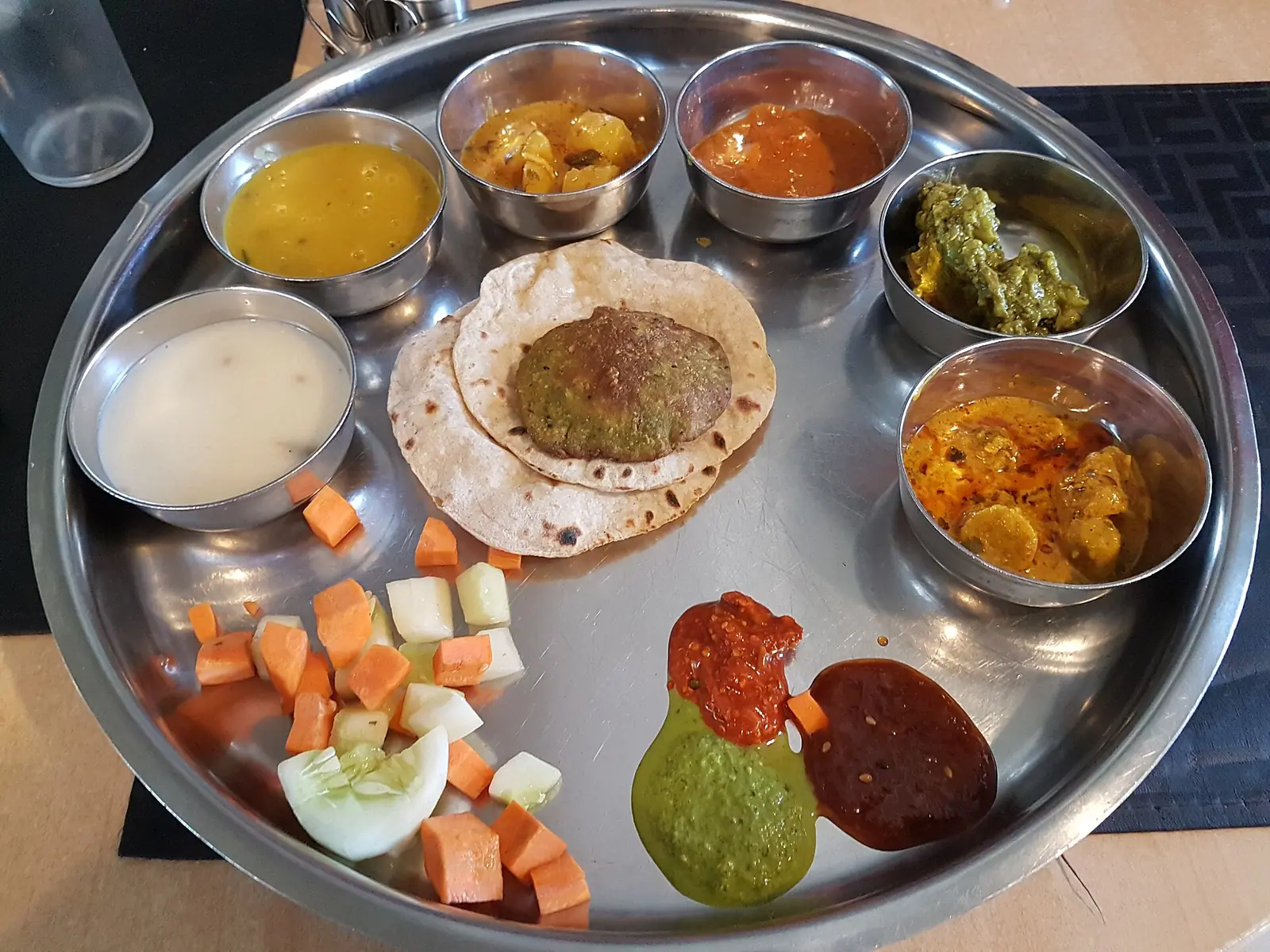 षड्रसThe thali and the six tastes
Ayurveda counts six rasas: sweet, sour, salt, pungent, bitter and astringent, and a full thali holds all six. Madhura, amla, lavana, katu, tikta, kashaya. The thali is a composition of them: a bitter fry, a sour kadhi, salt in the pickle, sweet at the end. A meal missing one is felt as incomplete.
The Gita sorts food by the gunas: satvic food is juicy, smooth, lasting and pleasing to the heart. Rajasic food is too bitter, sour, salty, hot, sharp or dry, and brings pain. Tamasic food is stale, tasteless, putrid, leftover or impure (Gita 17.9–10).
The banana-leaf meal
Small things go at the narrow end, curries across the top, rice in the open centre. You eat in the reverse direction to the serving, so the digestive inji curry, served early, is eaten near the end. Layouts differ between households; this is the common Central Kerala pattern.
A Kerala sadhya leaf is laid with its tip to the diner's left and filled from left to right.
Onmanorama, "Kerala Onasadya: order of dishes" (28 Aug 2020) and "Sadya dish order explained" (20 Aug 2026); Wikipedia, Sadya.