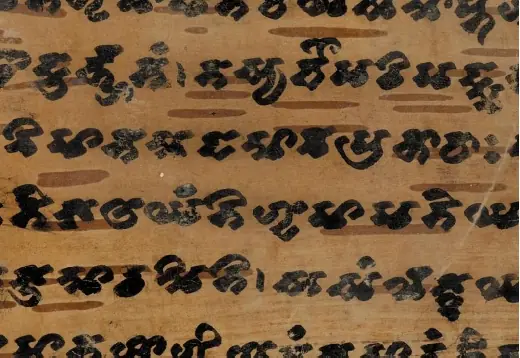
The mother script: almost every script of India, and many of Southeast Asia, descends from it. Its earliest firmly dated letters are on Ashoka’s rock edicts, written left to right. James Prinsep read it again in the 1830s, after centuries of forgetting. One count finds 198 scripts that come down from Brahmi.
All of BharatLipi means script. From Brahmi, more than a hundred and ninety scripts grew across Asia, each with its own hand. A scribe opened his leaf with a bow to Shri Ganesh and closed it with his name and the date. The beauty is in that care.
Scripts
The one old Indian script that runs right to left, and the one that is not Brahmic. Its letters were shaped from the Aramaic alphabet and used in Gandhara, in today’s Pakistan and Afghanistan. Ashoka’s scribes at Shahbazgarhi wrote his edicts in it. It faded from its homeland by about the 5th century CE and left no living descendant.
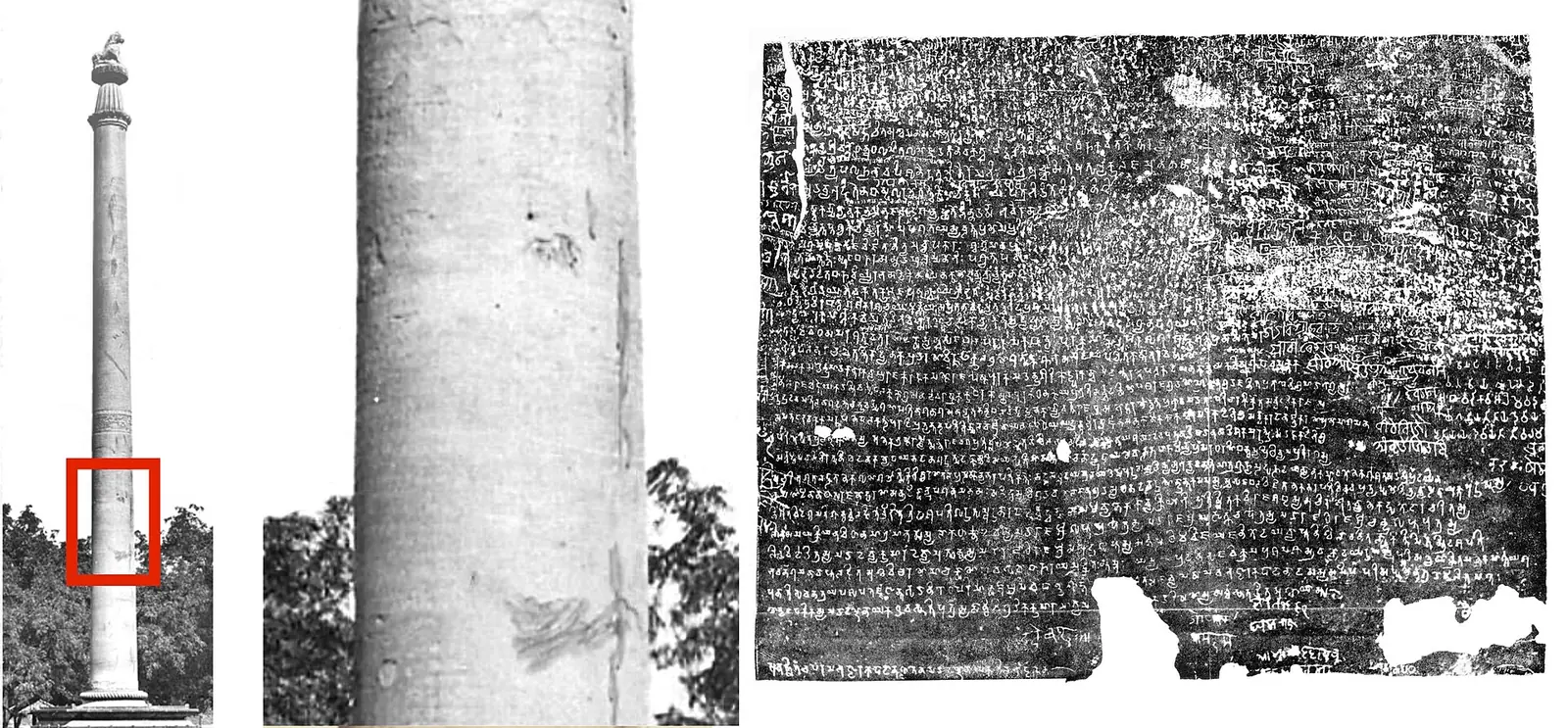
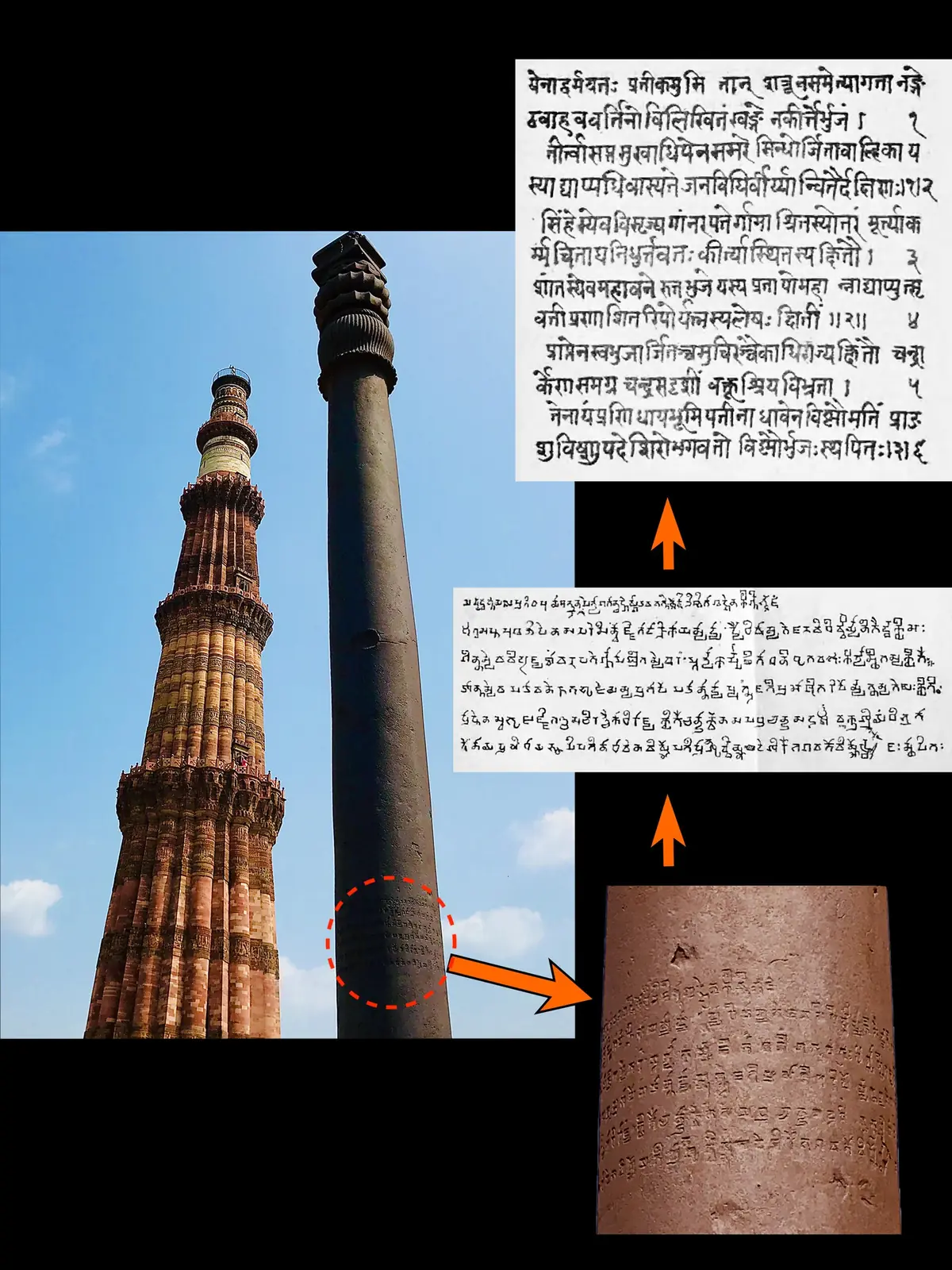
Gandhara, the north-westBrahmi grown rounder and taller under the Guptas, the bridge to Nagari, Sharada and Siddham. Harishena’s praise of Samudragupta on the Allahabad pillar is the standard example of its vowel signs. The iron pillar at Mehrauli carries an eastern Gupta hand. Unicode gives it no block of its own, so it is set here in Brahmi letters.
North and central IndiaThe script of Nalanda, carried to Japan in 806, where monks still write seed syllables in it. Siddham grew out of the Gupta hand and is an ancestor of Nagari, Bengali and Odia. Kukai took it to Japan, where it is called shittan or bonji. Japan is the only land where it never stopped being written.
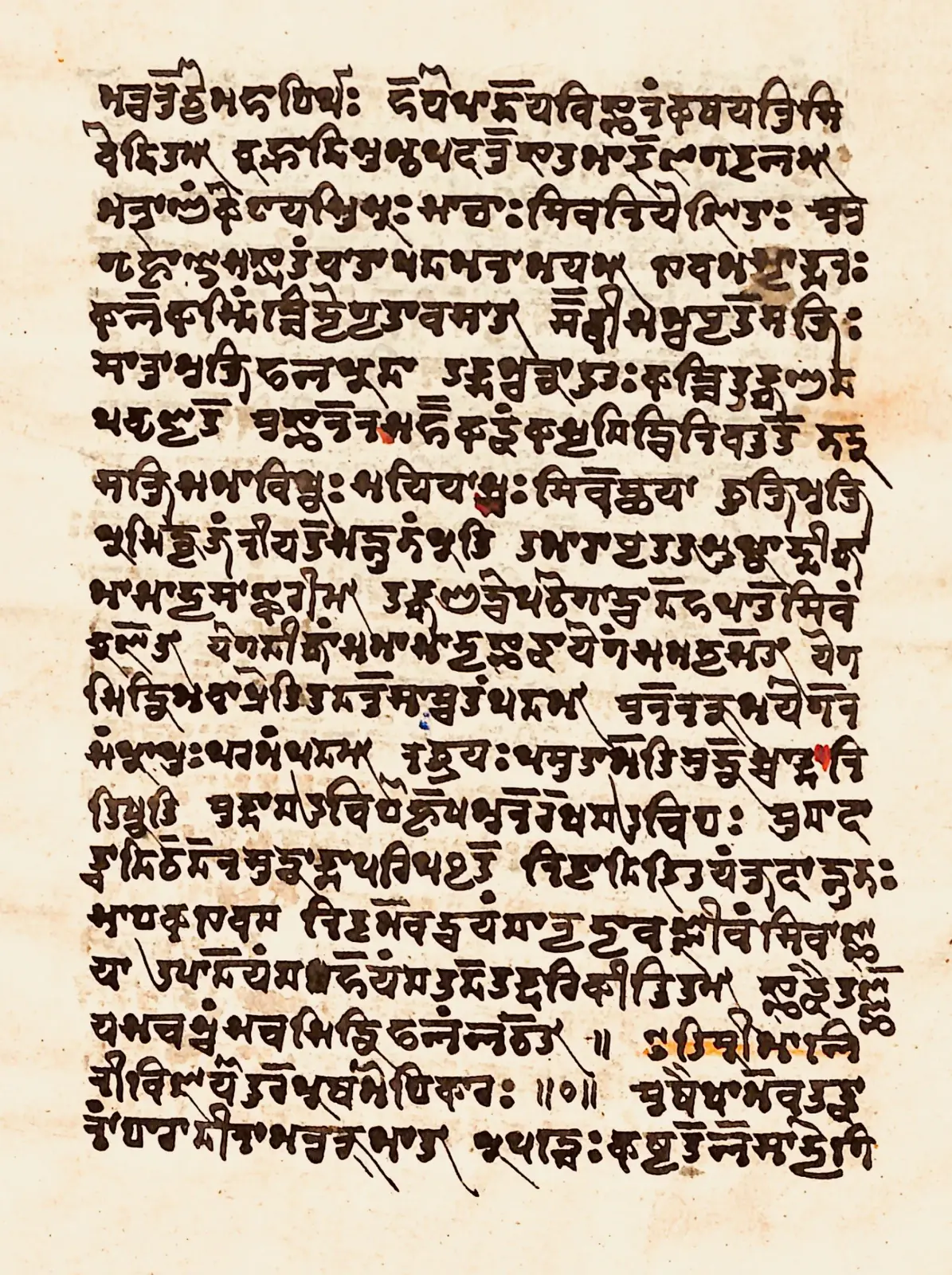
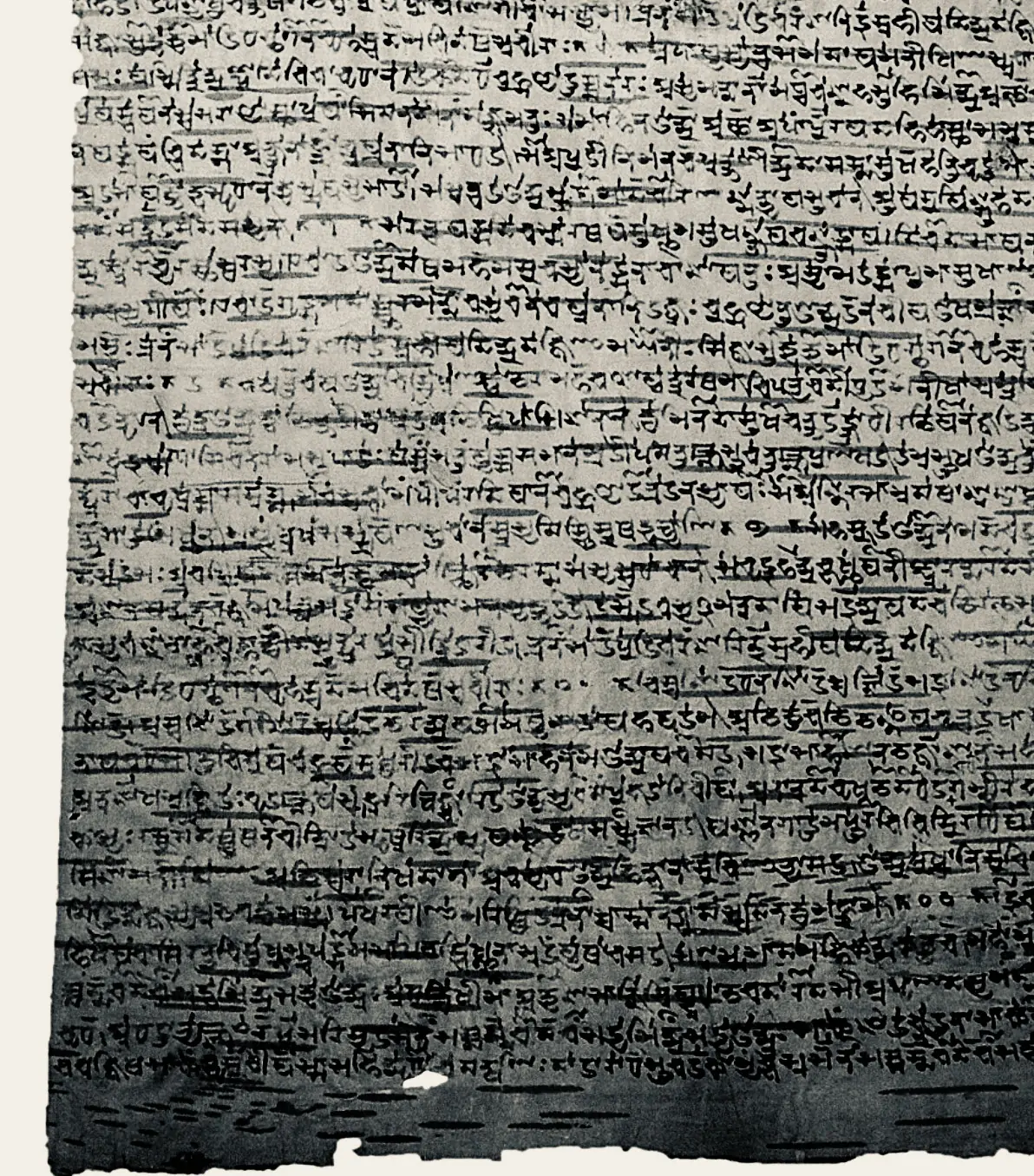
North and east India, then East AsiaNamed after Mata Sharada, Saraswati of the Sharada Peeth, it was Kashmir’s hand for centuries. Kalhana’s Rajatarangini and the Kashmiri Rigveda leaves at BORI are in Sharada, most often on birch bark. Kashmiri Pandits still use it for religious purposes, though few others can read it now.
Kashmir and the north-westThe hanging line across the top, the shirorekha, joins each word like beads on a thread. Nagari became the common hand for Sanskrit across India. The Nagari inscription of 876 CE in Gwalior fort holds one of the oldest written zeros. Today it carries Sanskrit, Hindi, Marathi and Nepali, and most printed Vedas and Puranas.
All of BharatA southern sister of Devanagari, with no headline, in which many Madhva manuscripts were copied. Sanskrit works on the Vedas, philosophy and the arts survive in it, and so do some manuscripts of Shri Madhvacharya. Vijayanagara kings issued copper-plate grants in Nandinagari, among them a 16th-century plate of Sadashiva Raya.
Karnataka, south Maharashtra, AndhraGrantha means a book: this was the south’s script for writing Sanskrit, on temple stone and palm leaf. It grew from the Pallava hand. Tamil was usually written in Tamil script, and Sanskrit in Grantha, often side by side on one temple wall. Modern Malayalam letters descend directly from it.
Tamil Nadu and KeralaThe script of the Tevaram and Divya Prabandham, written with a small, spare set of letters. Its oldest form, Tamil-Brahmi, is cut over rock beds in caves such as Mangulam near Madurai. Tamil keeps a small set of letters and borrows Grantha letters when it needs Sanskrit sounds.
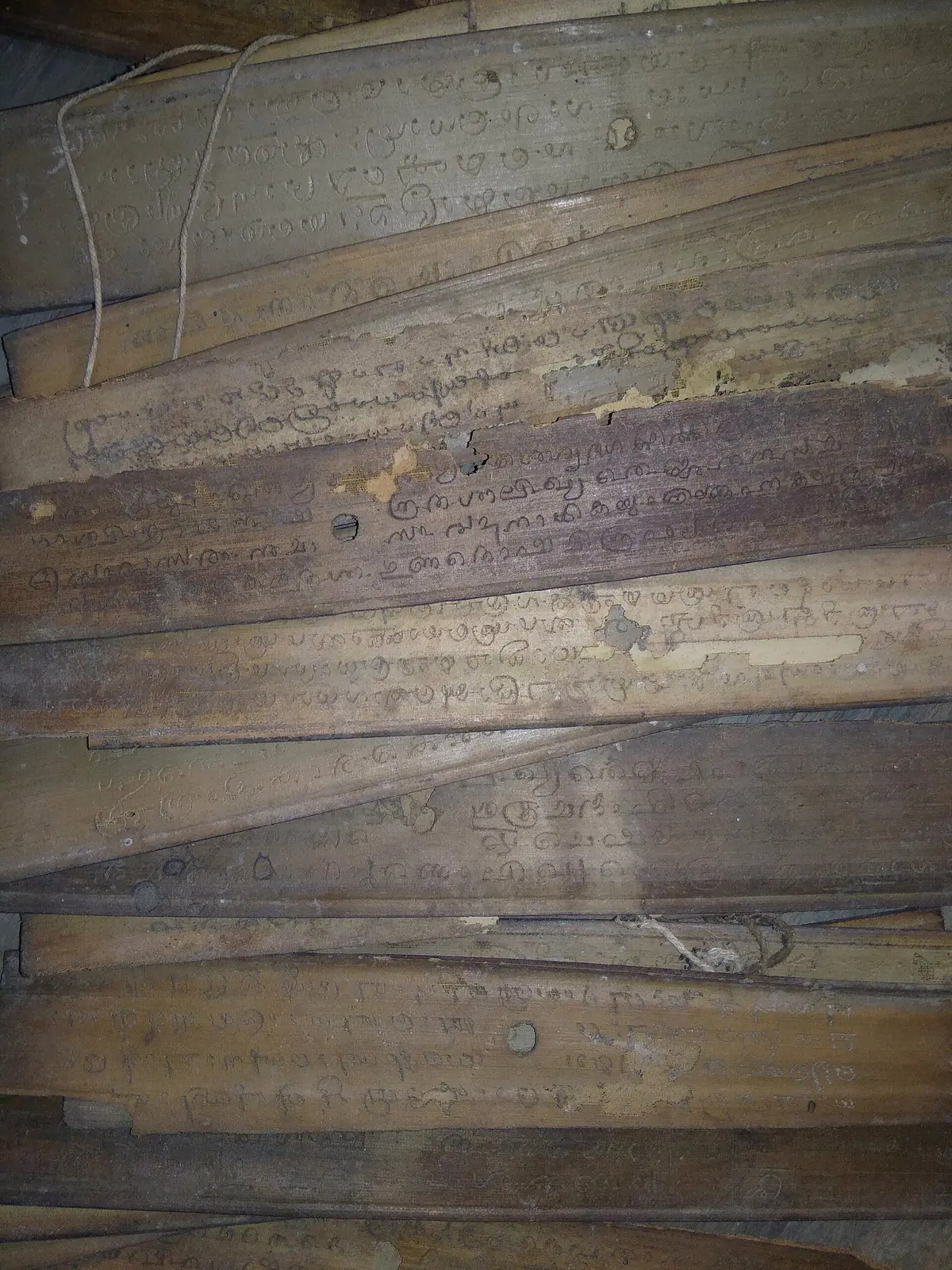
Tamil NaduRound, looping letters, the direct child of Grantha, written for centuries with an iron stylus. Kerala households copied the Bhagavata and the Ramayana on palm leaf in it. Ezhuthachan’s Adhyatma Ramayanam, read aloud in many homes each Karkidakam, survives in palm-leaf copies centuries old.
KeralaKannada and Telugu share one old hand, seen in the Chalukya inscription of 578 CE at Badami. The Halmidi inscription is the earliest full record in the Kannada language. The letters are round, with a little hook on top of many of them, the talekattu.
KarnatakaThe Kannada script’s twin, its letters crowned with a tick mark, the talakattu. Telugu inscriptions fill temples such as Srimukhalingam in Srikakulam. Many Sanskrit works were copied in Telugu letters too, among them a sixteenth-century Mimamsa Sutra Bhashya.
Andhra Pradesh and TelanganaEach letter wears an umbrella-shaped curve on top, the mark of a script grown on palm leaf. Odia came from the Siddham line over a thousand years. A stylus drawn straight along a palm leaf can split it, and many hold that is why Devanagari’s straight headline became a curve here.
OdishaOne script for Bengali, Assamese and the old Charyapada songs, and for much Sanskrit of the east. It shares the Gaudi root with Odia and Tirhuta. Shrimanta Sankardev’s Assamese verse and the kirtans of Bengal were copied in it, and Assamese sattras still keep illustrated manuscripts in this hand.
Bengal, Assam, TripuraThe script of Mata Sita’s land, also called Vaidehi lipi, kept by the Maithili pandits. Its oldest form is seen in the Sahodara inscriptions of about 950 CE. Most of its consonants match Bengali–Assamese. The 14th-century Varna Ratnakara, a prose work in Maithili, survives in Tirhuta.
Mithila, Bihar and NepalThe fast, running hand of the Maratha state, written with as few lifts of the pen as possible. Modi broke Devanagari letters into loops so a clerk could write a whole line under one headline. Maratha and Peshwa records, and the Thanjavur Maratha files, are in Modi. Religious texts stayed in Balbodh Devanagari. Printing in Modi ended in the 20th century.
MaharashtraManuscripts

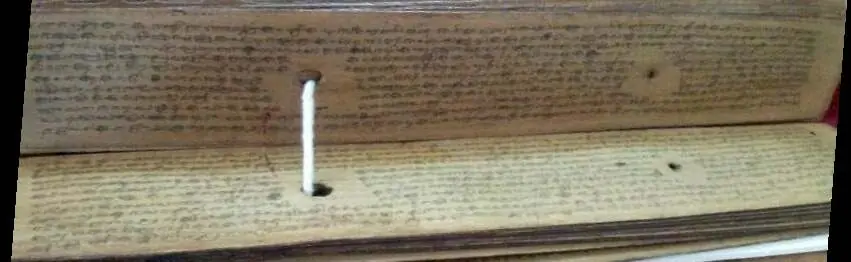
Palm-leaf manuscript (tala-patra)
The south and east wrote on palm leaf, incised with a stylus, then darkened with soot so the letters show.
A freshly cut line is almost invisible. The scribe wipes lamp-black mixed with oil over the leaf, the black settles in the grooves and the rest is wiped away. Holes are pierced, a cord is threaded through, and two wooden boards make the cover.

Birch-bark manuscript (bhurja-patra)
In Kashmir the scholars wrote on the inner bark of the Himalayan birch, in ink, mostly in Sharada.
Kashmir was famed for its birch bark and sent it to Punjab and Central Asia. Older Kashmiri scholars said all books there were written on bark until the 16th century. Sheets were cut to pothi shape or joined as scrolls.

Gilgit manuscripts
Birch-bark books found at Gilgit in 1931, among the oldest manuscripts that survive in India.
Most are Buddhist sutras in Sanskrit, written in a Sharada-type hand of about the 5th–6th centuries, with leaves on medicine and folk tales too. The main part is in the National Archives of India, New Delhi. They entered UNESCO’s Memory of the World register in 2017.

Bakhshali manuscript
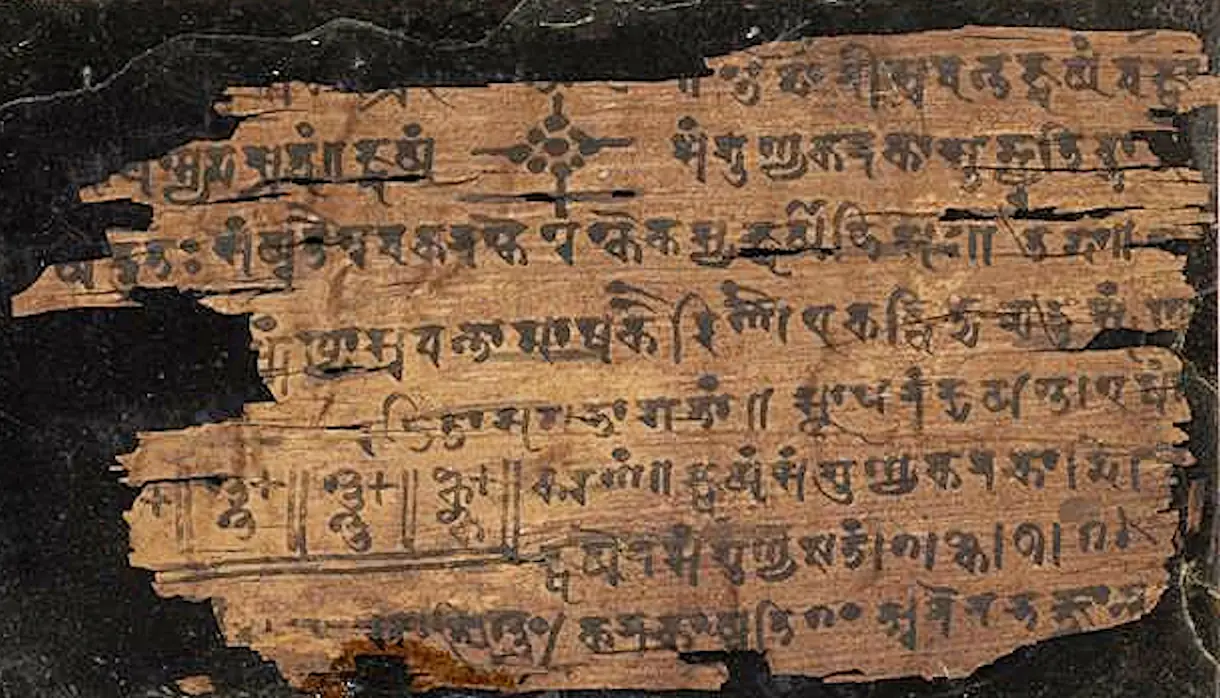
Seventy birch-bark leaves of arithmetic, dug from a field near Mardan in 1881, with a dot for zero.
The dot is the shunya-bindu, a placeholder in the decimal system. The leaves are in early Sharada and in Sanskrit coloured by local speech. Its dating is still argued: Oxford’s latest radiocarbon results place it roughly in the 9th to 11th centuries.

Rigveda manuscripts at BORI
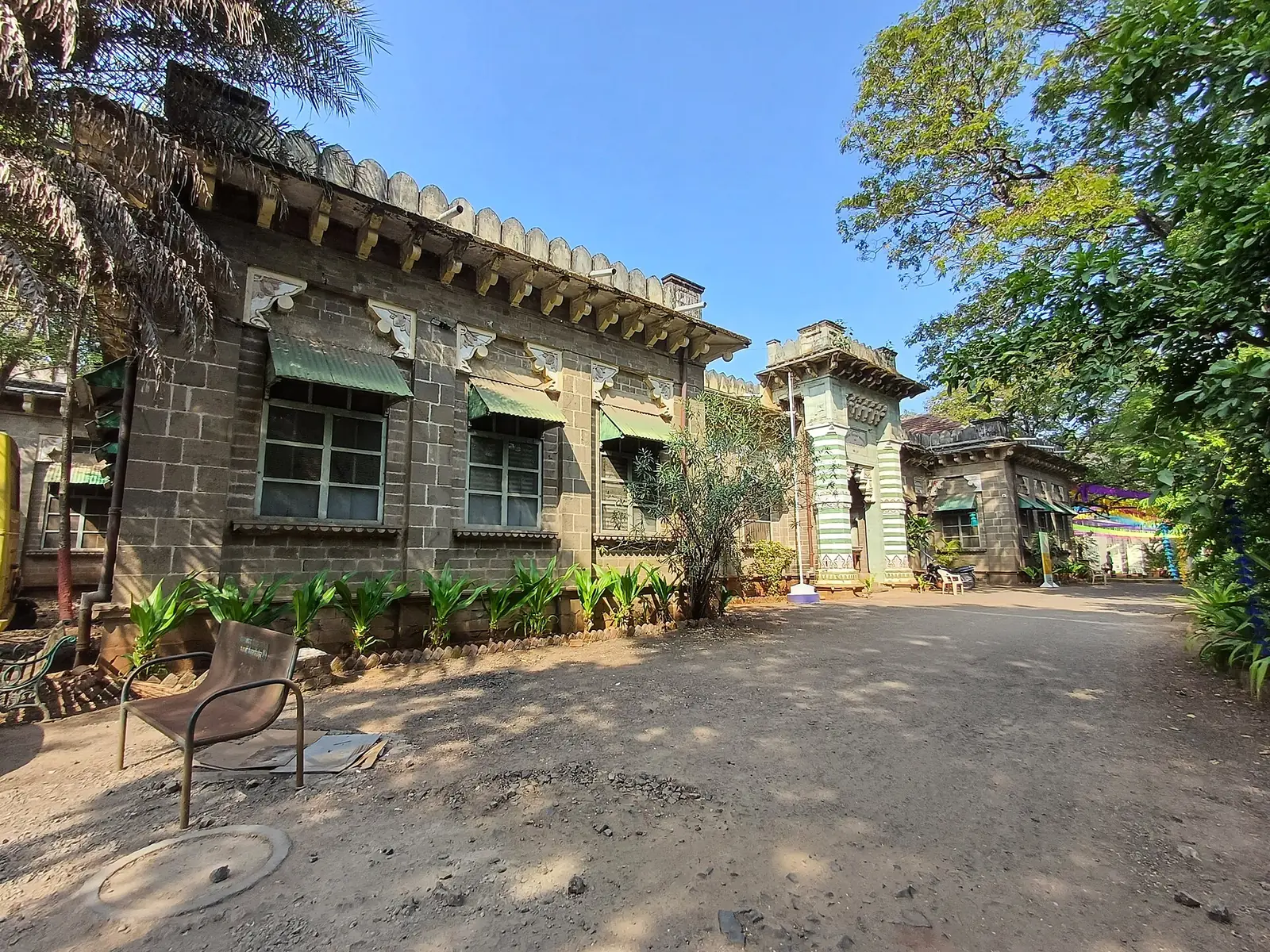
Thirty Rigveda manuscripts in Pune, on birch bark and paper, entered UNESCO’s Memory of the World register in 2007.
Georg Bühler, Franz Kielhorn and others gathered them in the 19th century from Kashmir, Gujarat, Rajputana and the Central Provinces. They are in Sharada and Devanagari. The oldest dated one is of 1464 CE.

The Mahabharata critical edition
From 1919 to 1966, BORI scholars compared 1,259 manuscripts of Maharshi Vyasa’s Itihasa, verse by verse.
V. S. Sukthankar led the work from 1925 until his death in 1943. The result filled nineteen volumes and over 15,000 pages. BORI itself, founded in 1917, holds more than 29,000 manuscripts.

The Arthashastra palm leaf, Mysuru
In 1905 R. Shamasastry recognised a palm-leaf bundle given to the Mysore library as Kautilya’s lost Arthashastra.
A pandit from Thanjavur had handed it in. The leaves are in Grantha script. Shamasastry published the text in 1909. The Oriental Research Institute, begun in 1891 as the Government Oriental Library, now keeps over 45,000 palm-leaf bundles.

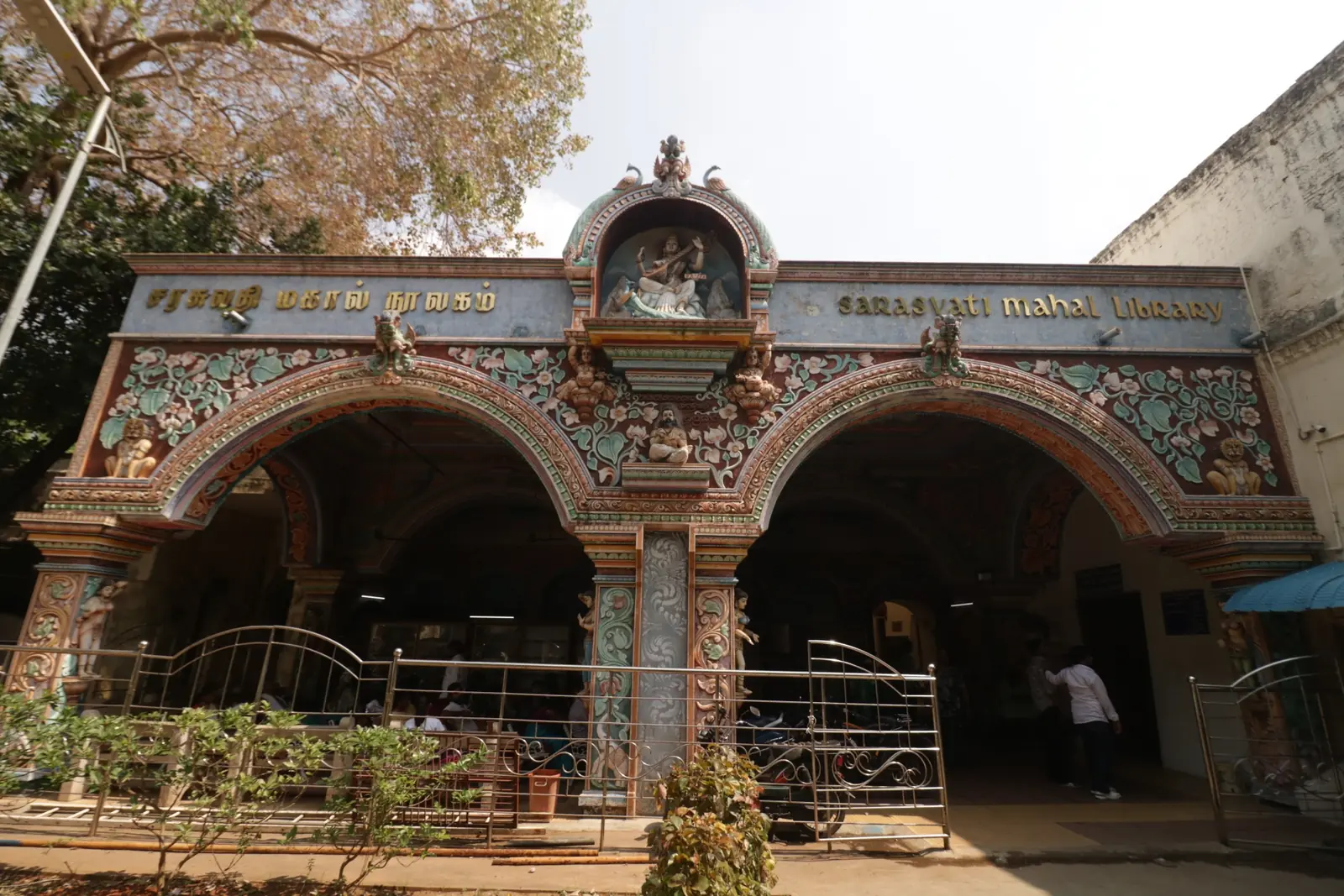
Saraswati Mahal library, Thanjavur
A palace library begun by the Nayaka kings of Thanjavur and enlarged by the Maratha king Serfoji II.
It holds about 39,000 manuscripts in Tamil and Sanskrit, with Telugu palm leaves and Maratha court records in Modi. The library stands inside the Thanjavur palace.

Kerala’s household libraries
In Kerala the manuscripts lived at home, in the illams and manas of Namboothiri families and in temple colleges.
Families copied and recopied their palm leaves in Grantha and Malayalam. Many such collections are now gathered at the University of Kerala’s manuscript library in Thiruvananthapuram, which has about 65,000 works, most on palm leaf.

Odisha’s etched palm leaves (pothi chitra)
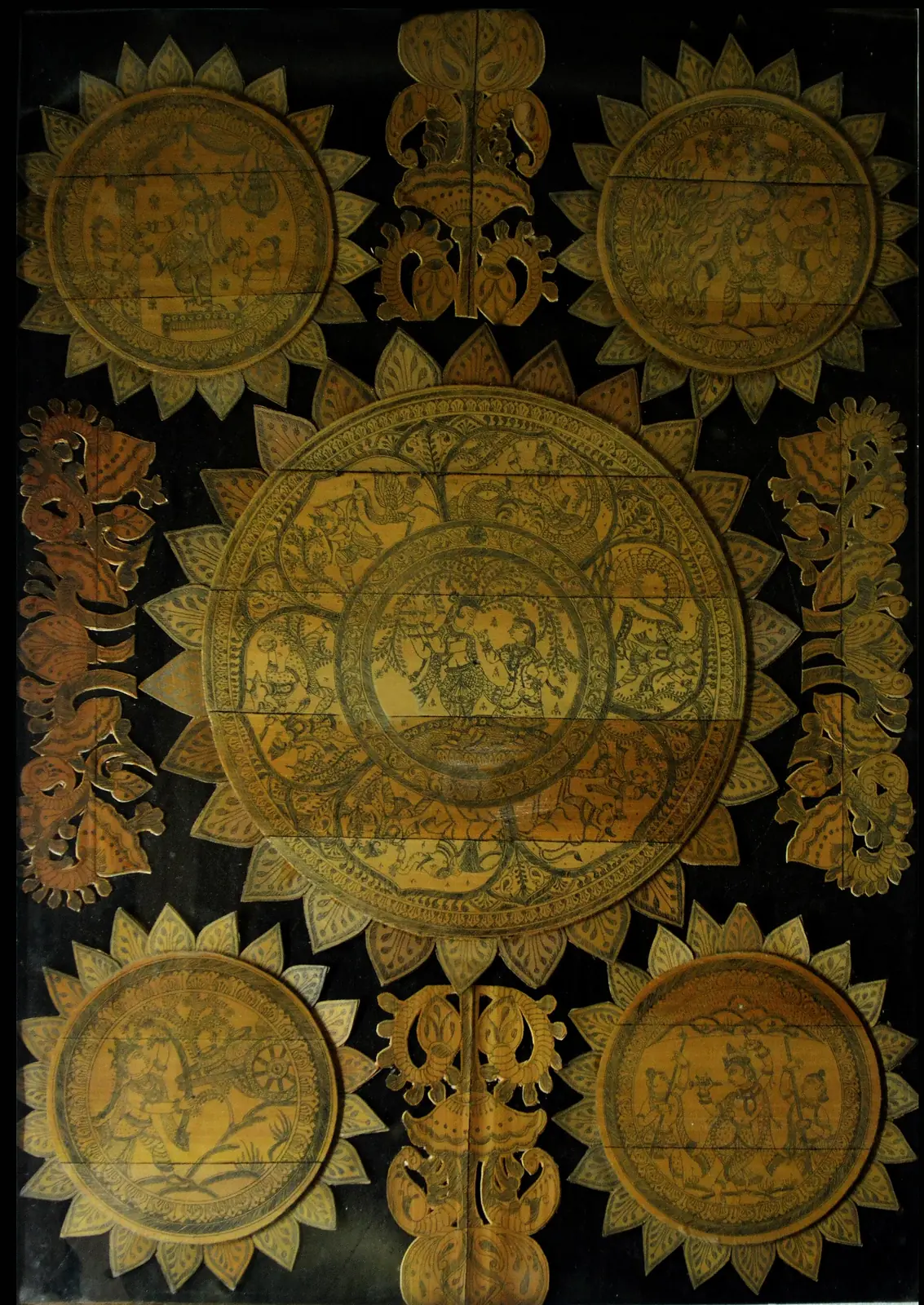
In Odisha the stylus drew pictures as well as letters: Jagannath, Radha and Krishna, cut into the leaf.
Black is rubbed into the cut lines and the leaf is washed, so the drawing stands out on the gold of the leaf. Raghurajpur near Puri still makes them. The Odisha State Museum holds over 50,000 palm-leaf manuscripts, many illustrated.

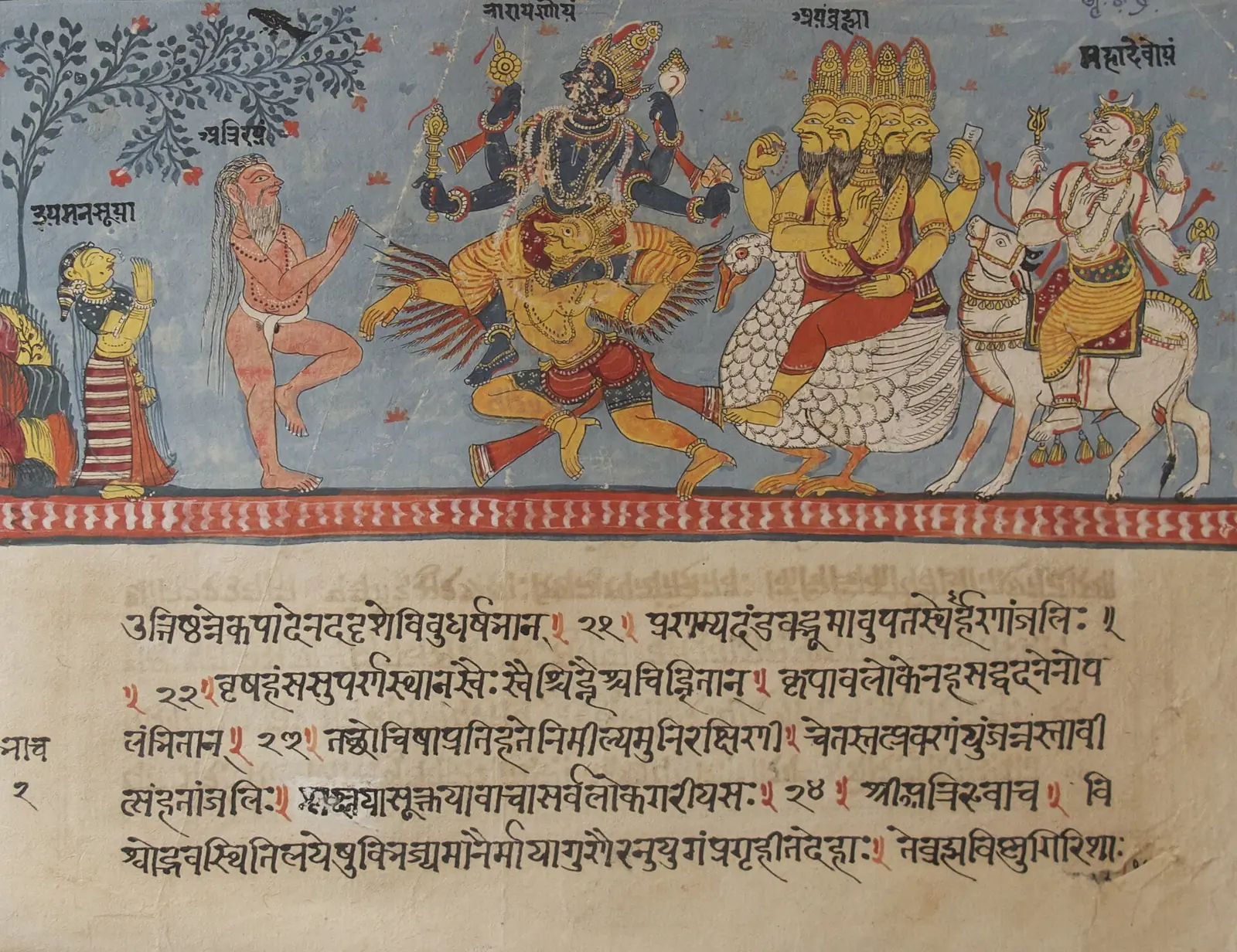
Illustrated Bhagavata Purana
Painters across Bharat set Shri Krishna’s leelas from the Bhagavata beside the verses, page by page.
In Assam the Chitra Bhagavata illustrates Shrimanta Sankardev’s Assamese rendering of the tenth book. Its own text gives Shaka 1461, that is 1539 CE, though some art historians place it later. Rajput and Pahari courts made great Bhagavata sets too.

Gita Govinda manuscripts
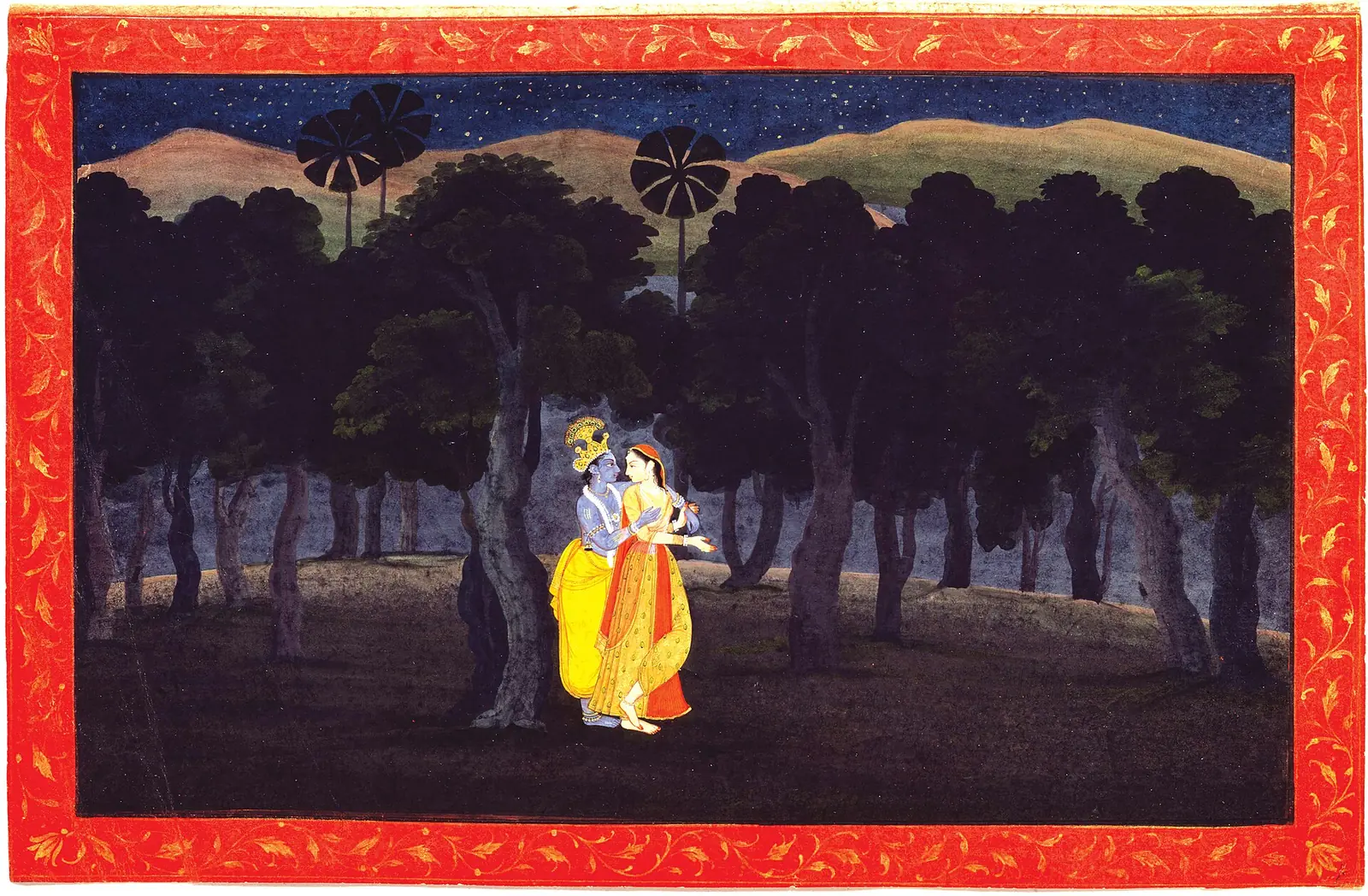
Jayadeva’s songs of Radha and Madhava were copied and painted on palm leaf in Odisha and on paper in the hills.
Illustrated Odia palm-leaf copies of the Gita Govinda are in the Odisha State Museum. The museum’s oldest palm leaf is a copy of the Abhinava Gita Govinda, finished on 6 April 1494. The Pahari painters of Tehri Garhwal made a famous paper set.
Inscriptions

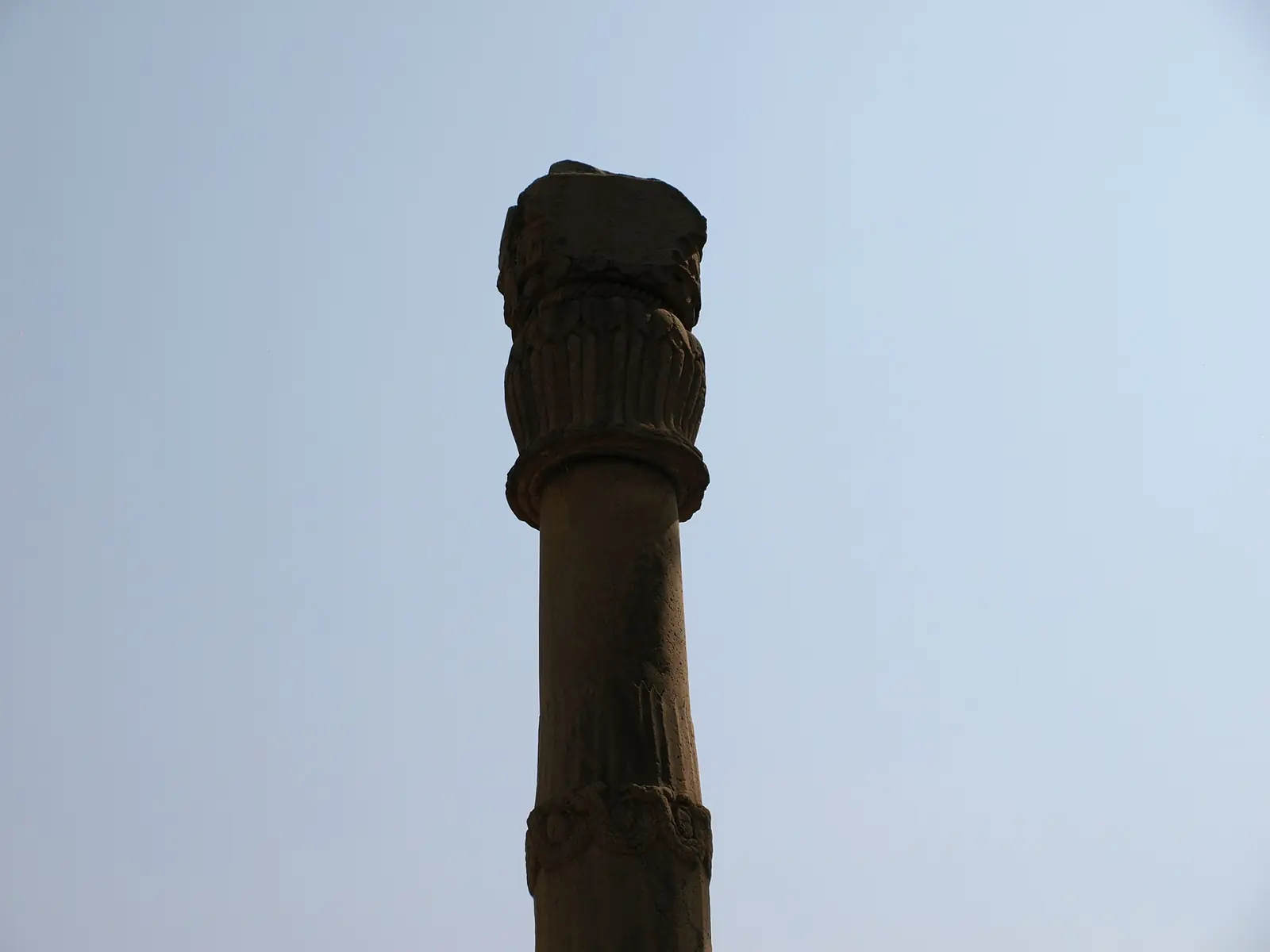
A Garuda pillar raised to Vasudeva, “God of gods”, by a Greek envoy from Taxila who called himself a Bhagavata. Heliodorus came from the court of King Antialkidas to King Bhagabhadra. The Brahmi lines name three steps to immortality: self-control, generosity and attention.

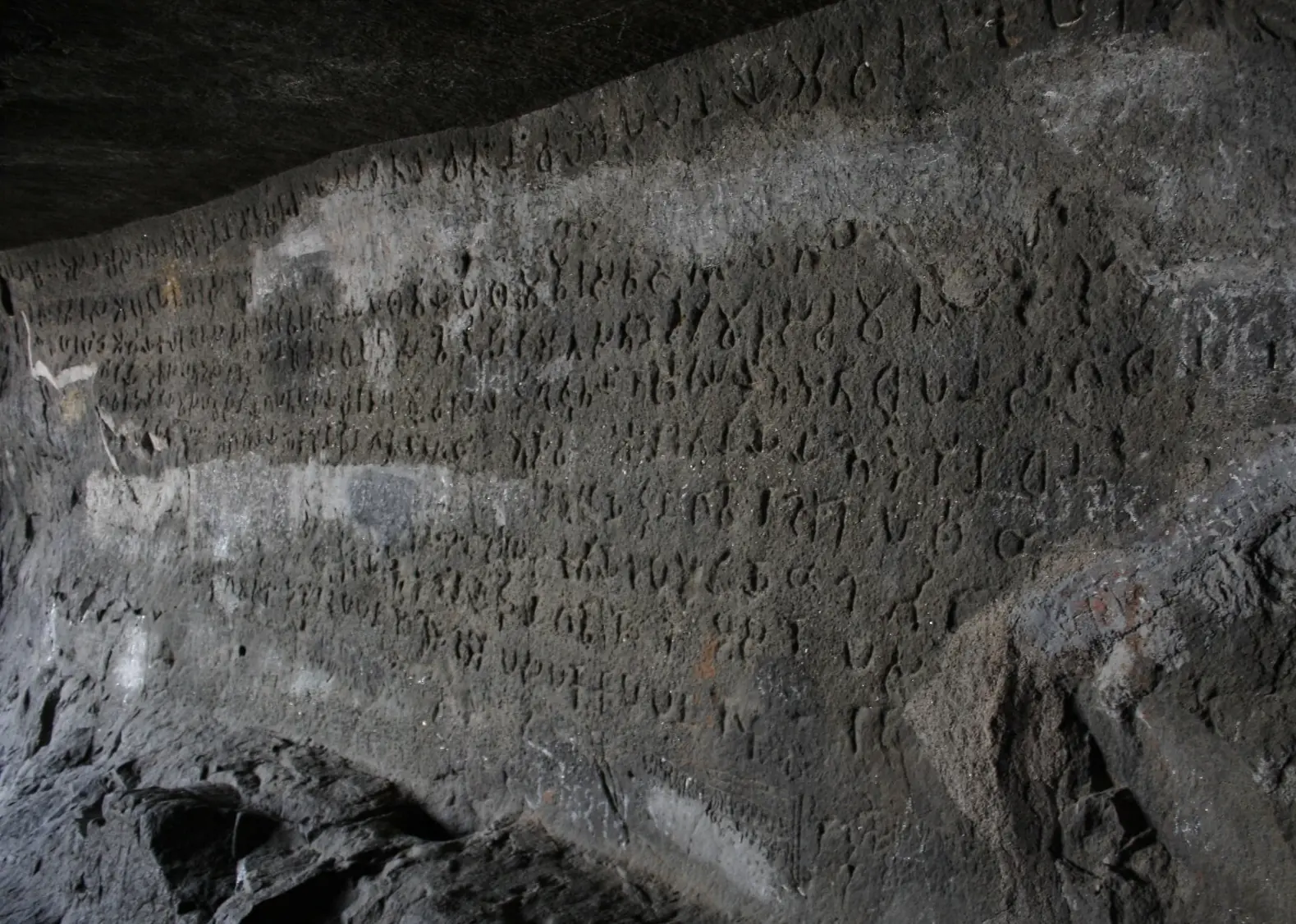
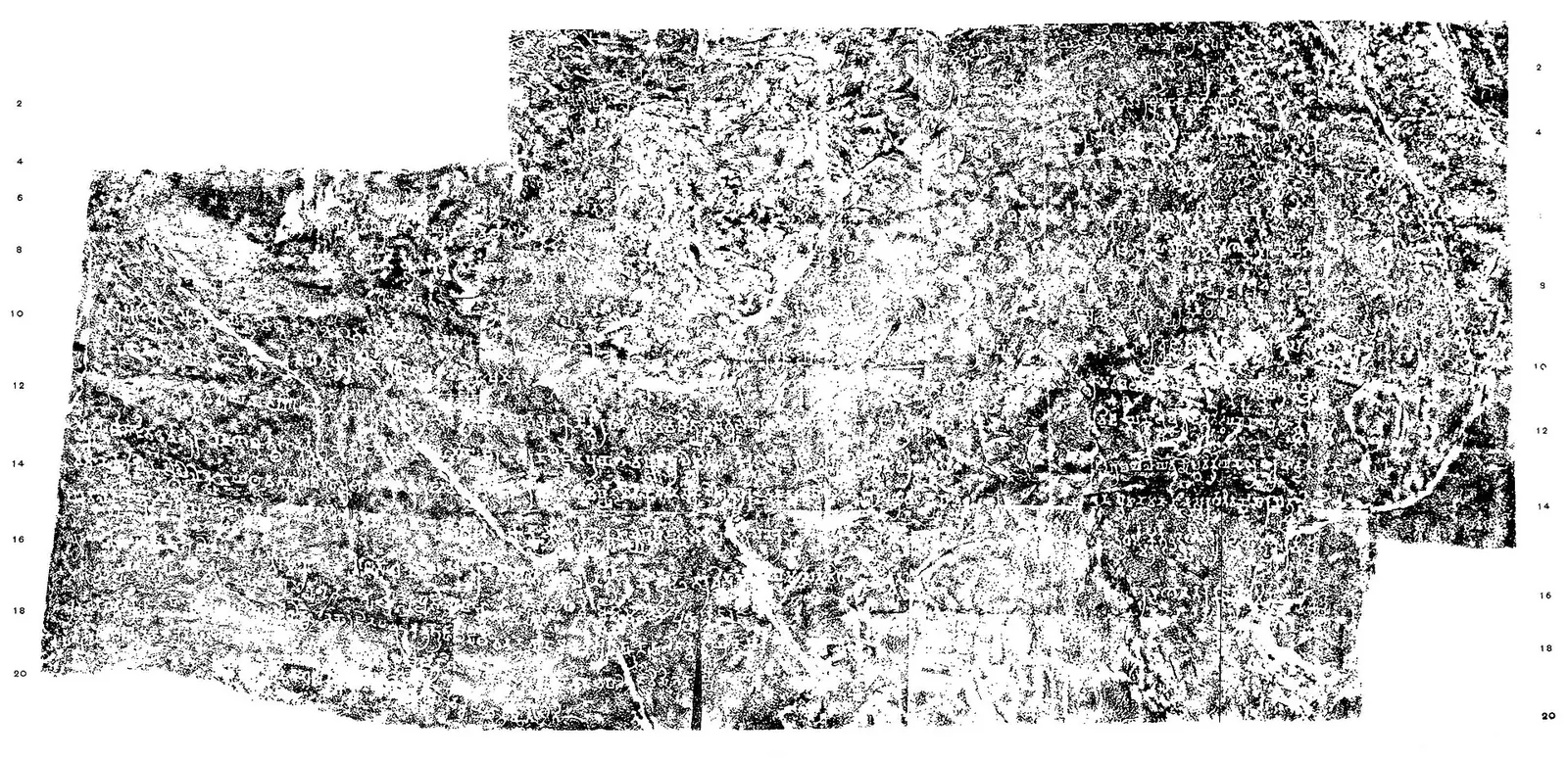
Queen Naganika of the Satavahanas lists her yajnas, from Rajasuya to Ashvamedha, on a cave wall above a trade pass. It opens by bowing to Dharma, Indra, Sankarshana and Vasudeva, the Moon’s line and the four Lokapalas. Then it counts the dakshina given to priests: cows, horses, elephants, coins, a village. Its numerals are among the oldest forms of our 2, 4, 6, 7 and 9.

The first long inscription in fairly standard Sanskrit that survives, cut in prose on a boulder near Girnar. It tells how storms burst the dam of the Sudarshana lake, first built under Chandragupta Maurya, and how Rudradaman had it rebuilt. The rest praises the king. The same rock carries Ashoka’s edicts and a later record of Skandagupta.

Harishena, poet and minister, carved Samudragupta’s praise onto an older pillar in polished Sanskrit. Its letters are the clearest example of the Gupta hand. A prashasti is a praise-poem. Many later kings had their deeds written this way, in verse, on stone and copper.

Six tonnes of wrought iron that call themselves a dhvaja of Bhagwan Vishnu, set up on Vishnupada hill. The Sanskrit verse, in the shardulavikridita metre and an eastern Gupta hand, praises a king named Chandra, usually taken to be Chandragupta II. The pillar stands 7.21 metres and has resisted rust remarkably well.

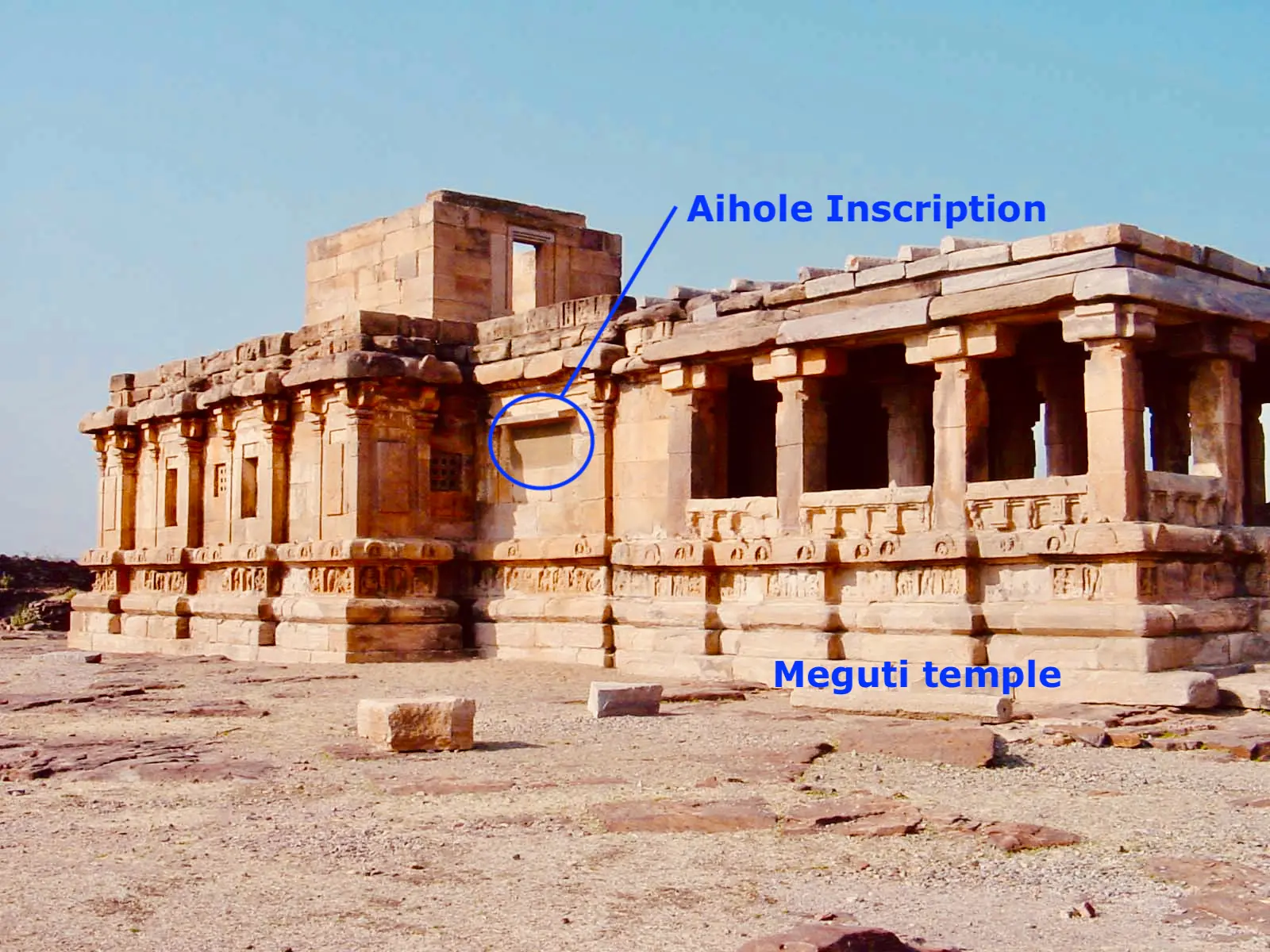
Dated 3,735 years after the Bharata war, it counts time from the Mahabharata and the start of Kali Yuga. Ravikirti, a Jain court poet, praised the Chalukya king Pulakeshin II in Sanskrit verse in classical metres. He boasts that his fame equals Kalidasa’s and Bharavi’s, and borrows their phrases to prove it. It also gives Shaka 556.

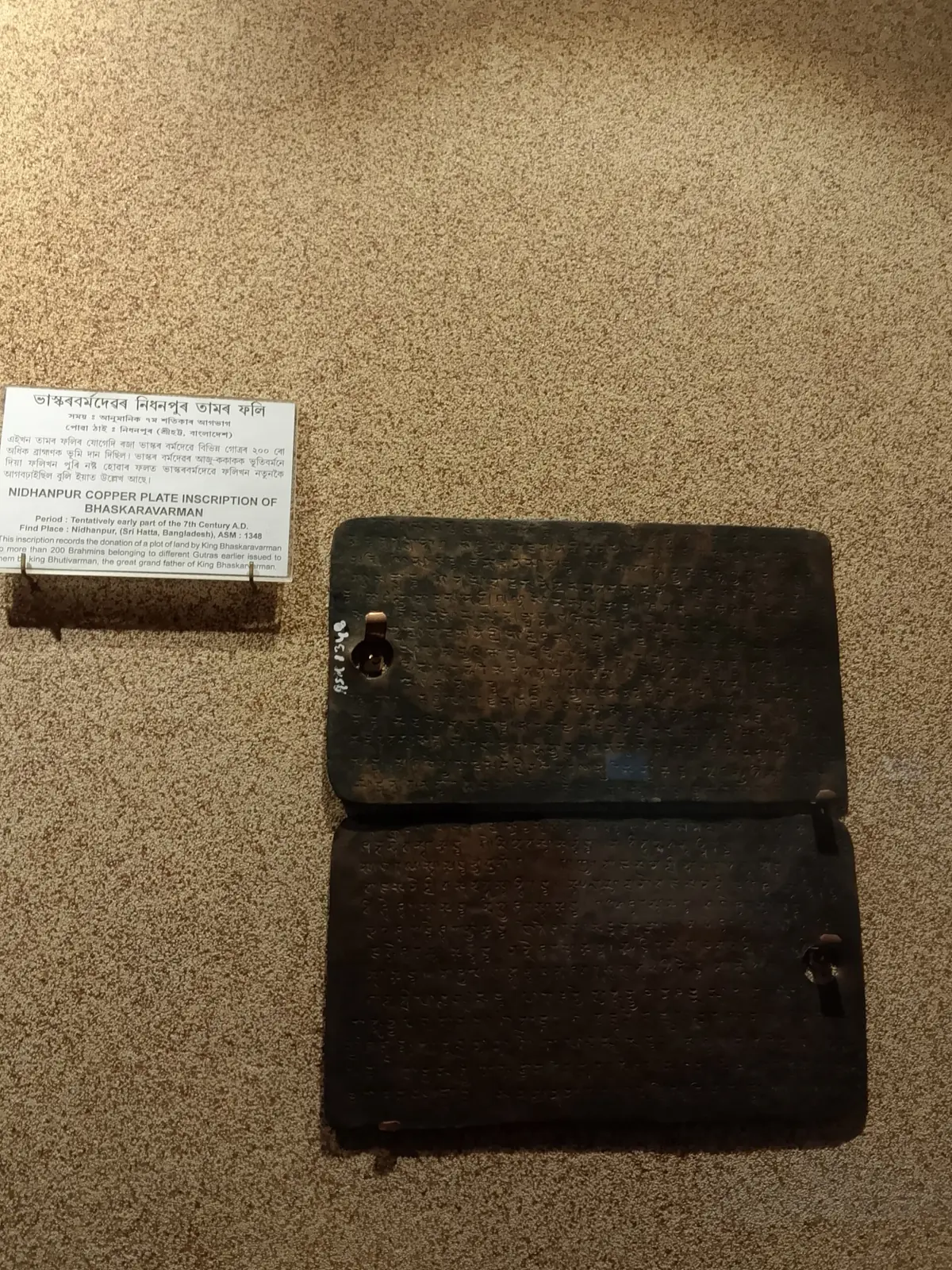
Kings gave land to temples and Brahmins by deed engraved on copper, strung on a ring and sealed. A grant opens with the king’s line and praise, then names the village, its boundaries and the gift. The royal seal was cast onto the ring. The receiver kept the plates, sometimes burying them at the edge of the land.

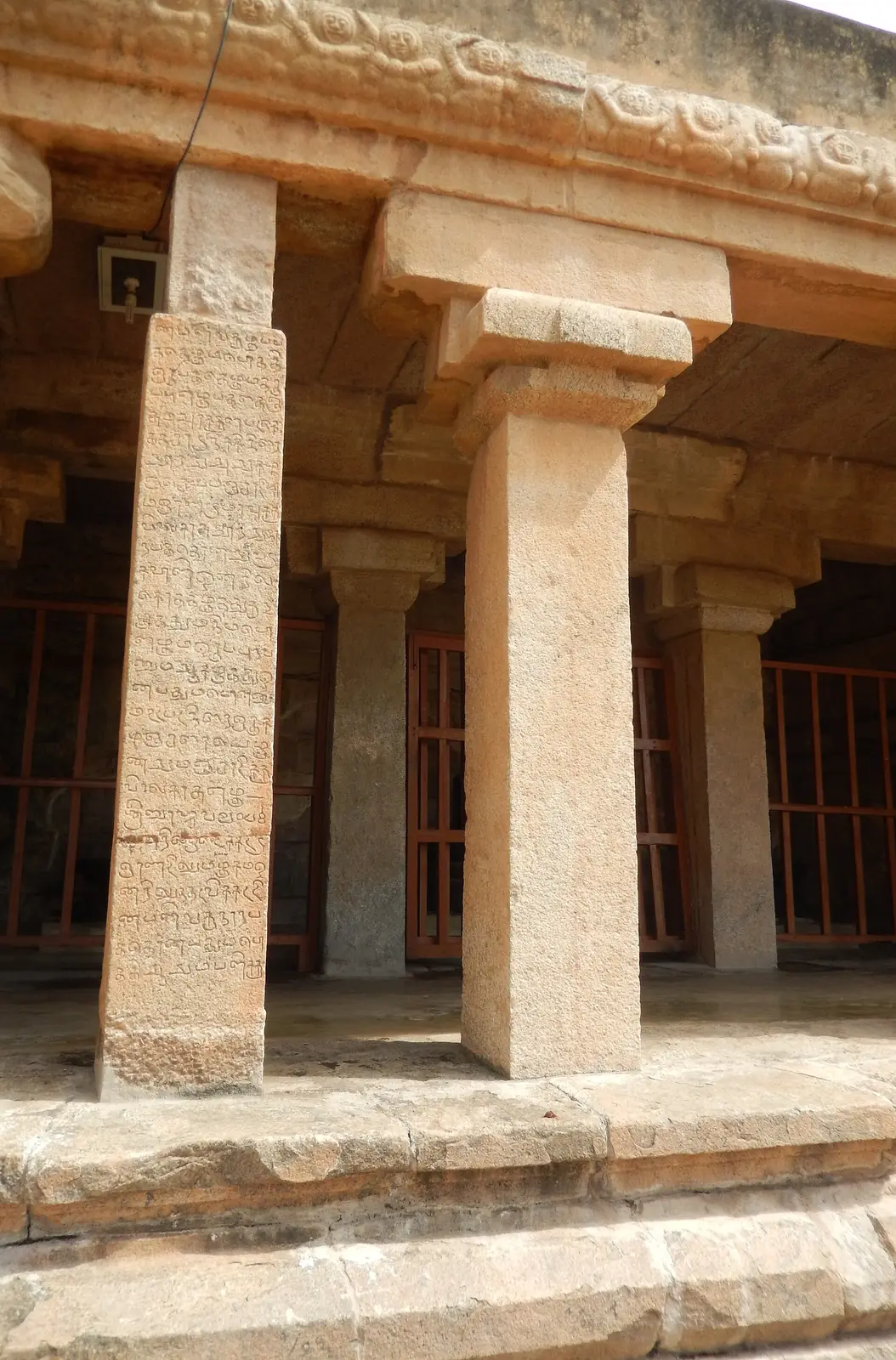
Chola records on temple walls that set out how the village assembly was chosen by palm-leaf lots. Under Parantaka I, names were written on palm-leaf tickets and put in a pot, the kudavolai. A young boy drew them out. Members served for 360 days, and the 921 record draws from thirty wards.

Rajaraja Chola had his temple’s gifts and its whole staff written in Tamil and Grantha on the stone itself. Rajaraja’s reign alone left 64 inscriptions here. One on the north enclosure wall, of 1011, lists over 600 people with their wages: priests, lamp lighters, dance teachers, singers, accountants and tailors.
Sacred syllables
Many Indian scripts give Om a sign of its own, and it heads mantras, letters and books. The Mandukya Upanishad opens: “ओमित्येतदक्षरमिदं सर्वम्”, Om, this syllable, is all this. It gives A to waking, U to dream and M to deep sleep. The fourth, turiya, is beyond the parts. Devanagari writes it as one sign, ॐ, with the crescent and bindu above.
The word for Mata Lakshmi’s grace, written before a name, a deity or a book as a blessing. Shri is written at the top of a ledger, on a wedding card, before Bhagwan’s name. In Devanagari it is a single knot of letters, sha, ra and a long i bound together.
Seed syllables such as ह्रीं, श्रीं and क्लीं hold a mantra’s power in one sound, written with a bindu. Hrim is the Maya bija of Mata Bhuvaneshvari. Shrim is the seed of Mata Lakshmi. Klim is the bija of attraction, linked with Kama. They are often written inside yantras, at the centre or on the petals.
A single upright stroke ends a half-verse or a sentence; two strokes close a full verse. Danda means staff. Sanskrit manuscripts used little other punctuation, so the stroke carried the rhythm of the chant. A verse number often sits between two double dandas, ॥ १ ॥, and Hindi still ends sentences with a danda.
The bow to Shri Ganesh that opens countless manuscripts, before even the title of the work. Ganesh removes obstacles, and copying a long text is full of them. So the scribe’s first words were to him, often followed by atha, “now begins”. Some leaves open with ॐ as well.
A manuscript ends with iti, the title and samaptam, “complete”, then the scribe’s name and date. A full colophon gives the work, the date in the Vikrama or Shaka era, the place and the copyist. From these lines we know who copied what, and when.
Tools of the scribe
A rod of iron, brass or silver, 25 to 30 cm long, thick in the middle and sharp at the point. It writes with no ink, cutting the skin of the palm leaf. In Kerala it is the narayam or ezhuthani, and it also pierced the binding holes.
On birch bark and paper, scribes wrote with reed or wooden pens in soot-based black ink, mashi. The same soot, mixed with oil, was rubbed into incised palm leaves to bring the letters up.
Leaves are boiled to make them supple; one Kerala maker boils them in turmeric water. They are dried, pressed between planks for weeks, and cut to size before a single letter is cut.
A soft cloth wiped with lemongrass oil keeps old leaves supple and keeps insects off. Conservators still use it, mixed with carbon black, to make faded letters readable again.
Holes are pierced through the leaves of a pothi and a cord is threaded through to keep them in order. Two flat wooden boards, top and bottom, make the cover.