 वाव · Gujarat: Patan, Adalaj, AhmedabadVav
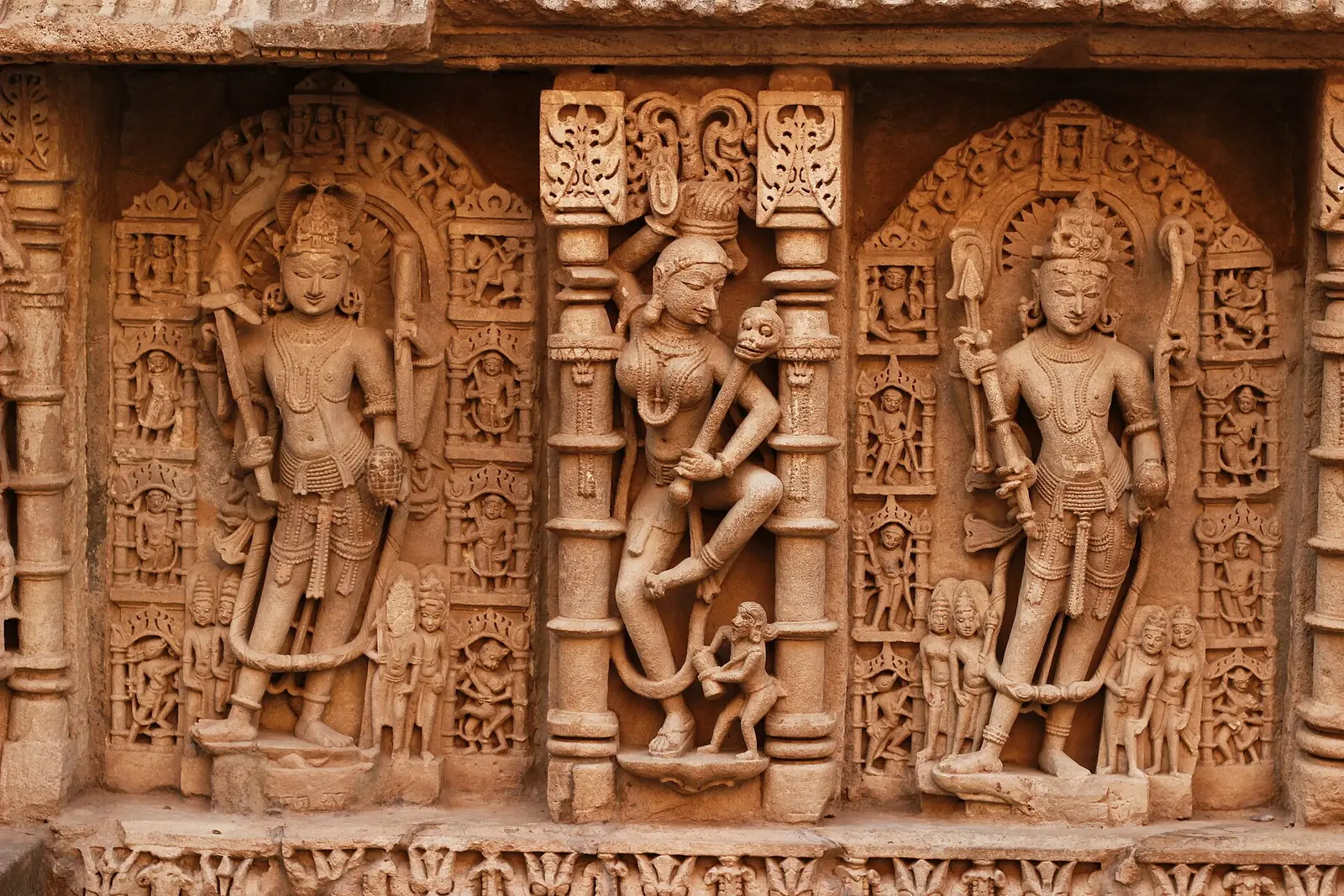
A stepwell in Gujarat goes down seven storeys, and every landing is a shrine. Rani ki Vav at Patan descends seven levels to a round well, about 28 m deep. It was later buried in silt by the Sarasvati and dug out in the 20th century. At Adalaj, finished in 1498 by Queen Rudabai, the octagonal well is about five degrees cooler than the street above.
 बावड़ी · Rajasthan, Delhi, Madhya PradeshBaori
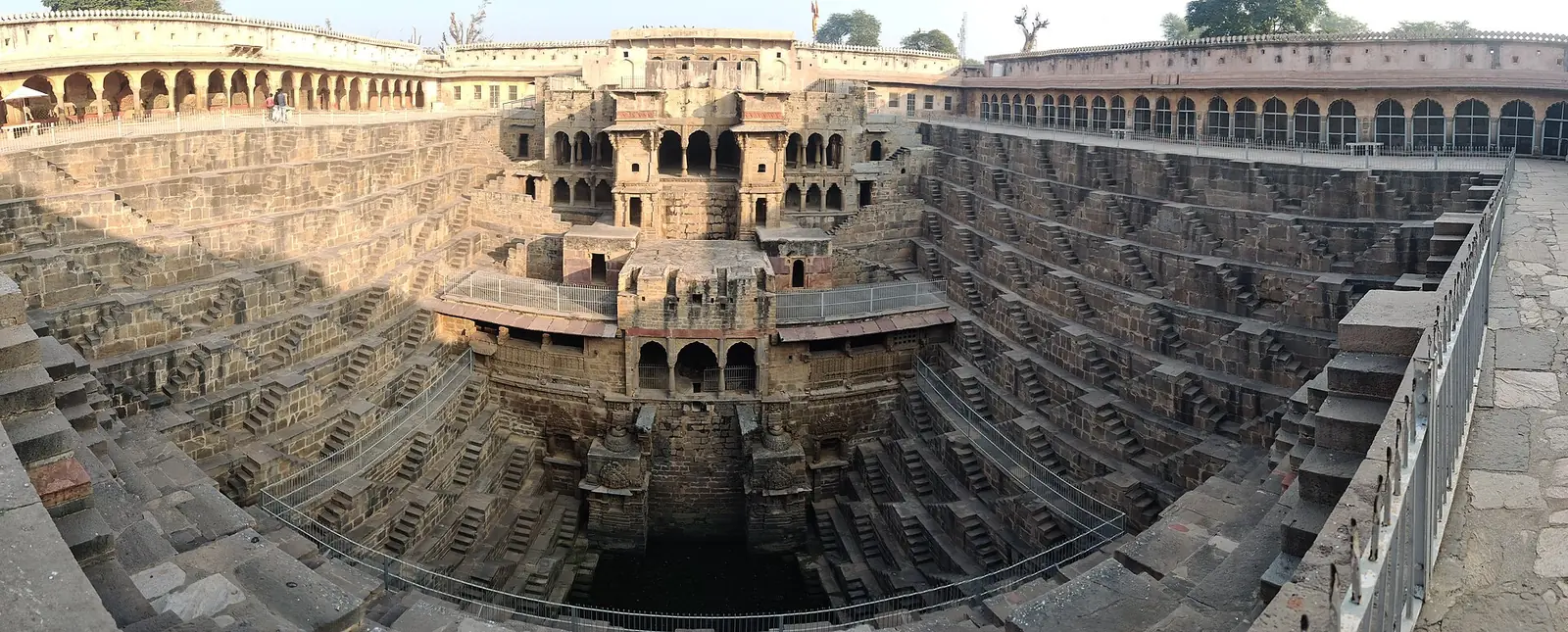
In Rajasthan the stepwell turns into a funnel of 3,500 steps. Chand Baori at Abhaneri, of the 8th–9th century, drops about 30 m in thirteen tiers of zigzag steps on three sides. The fourth side holds pillared galleries. The Harshat Mata temple stands beside it.
 कुंड · Before temples across North and West IndiaKund
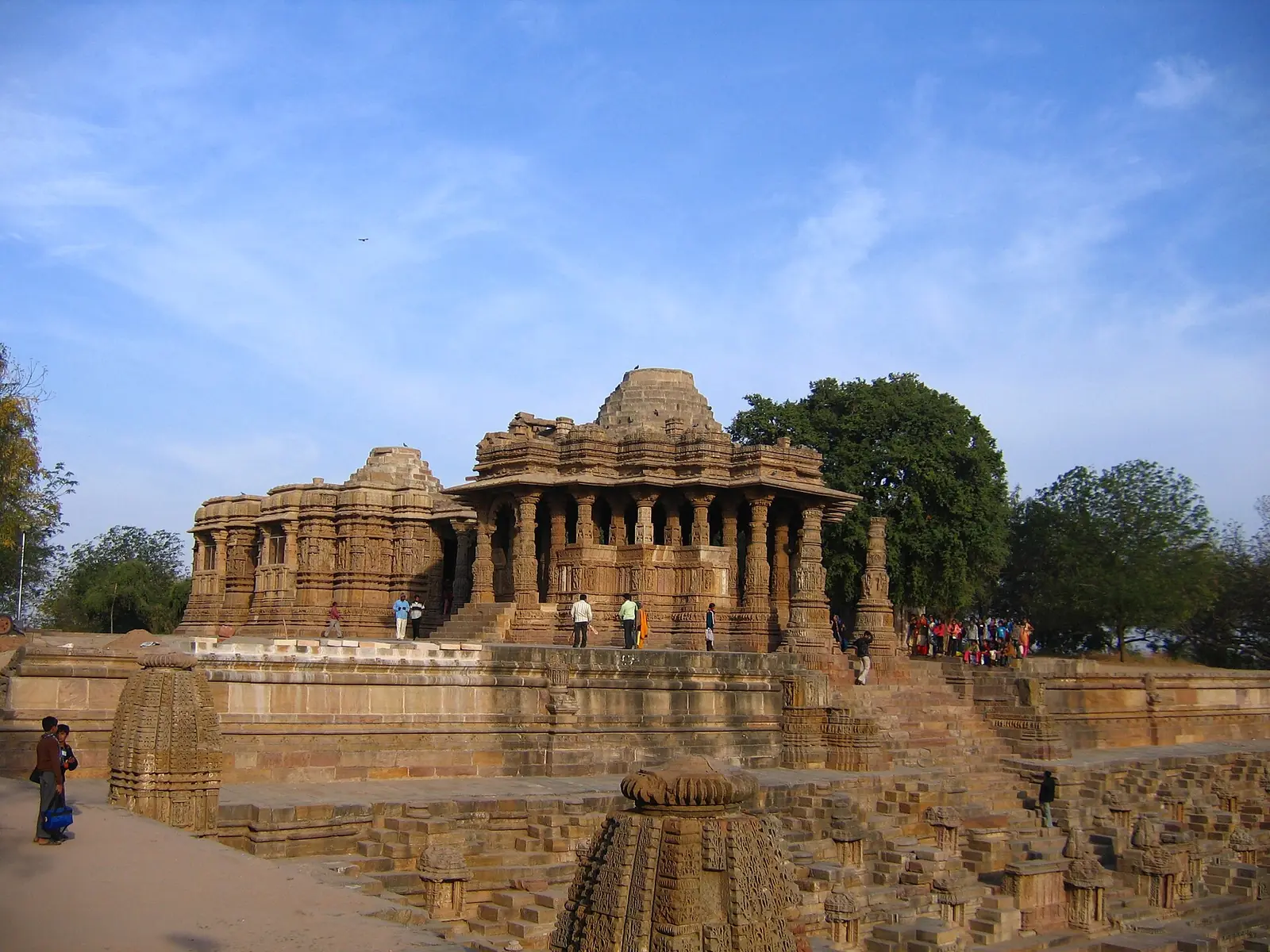
A stepped tank before the temple, so you bathe before you meet the devata. The Surya Kund at Modhera sits on the axis of the Sun Temple, its sides stepped in small pyramids with little shrines on the landings. Pilgrims bathe, then climb to the sabha mandapa. Many kunds carry a devata's name: Brahma Kund, Ram Kund, Tapt Kund.
 पुष्करिणी · Karnataka, Andhra Pradesh, Tamil NaduPushkarini
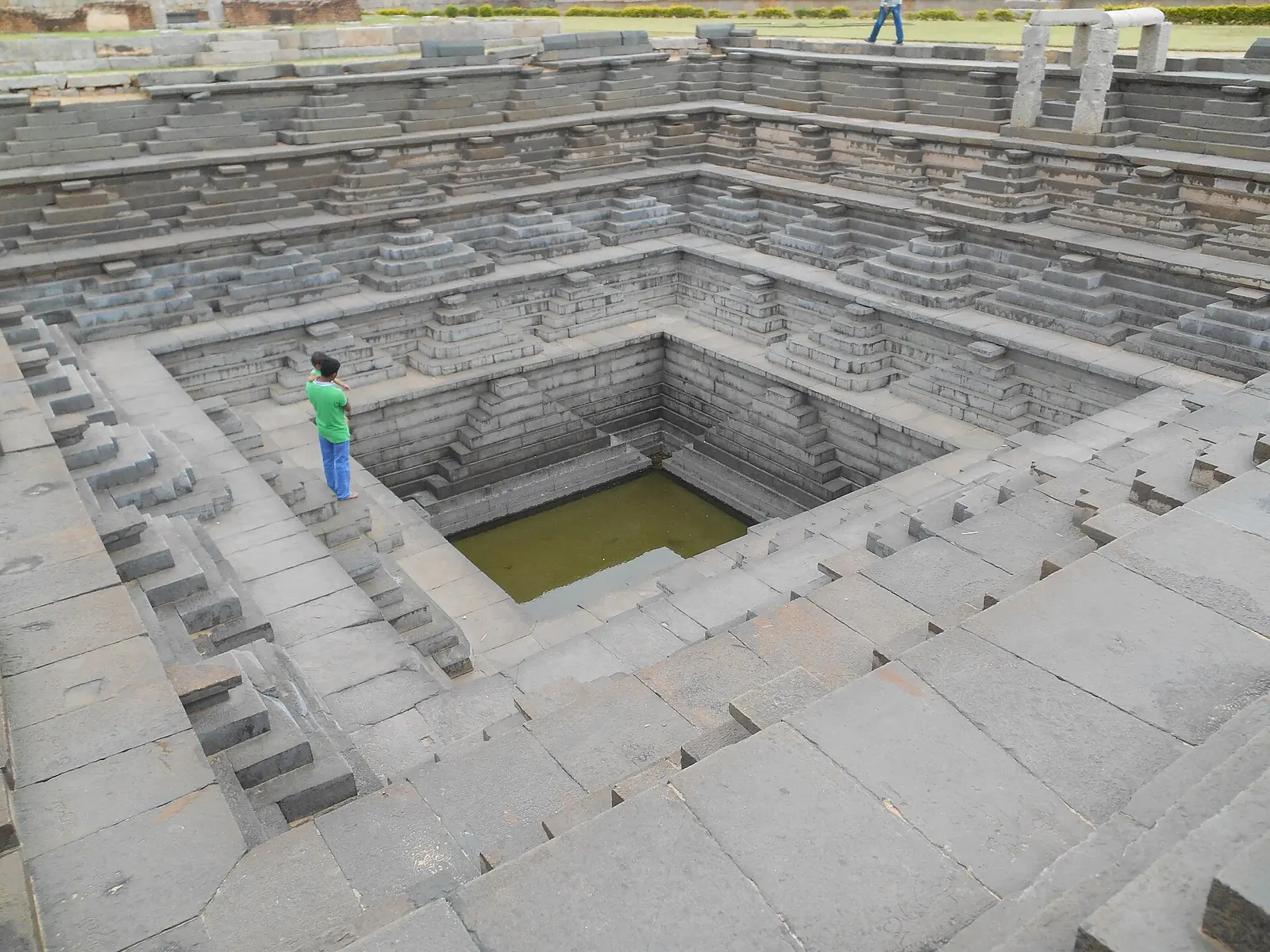
The temple tank of the south, square, stepped on all four sides, often with a pavilion in the middle. At Hampi the stepped tank in the royal enclosure is built of finished schist blocks, steps and landings falling to the water on every side. Mason marks on the stones show where each one belonged. In Karnataka the same form is called a kalyani.
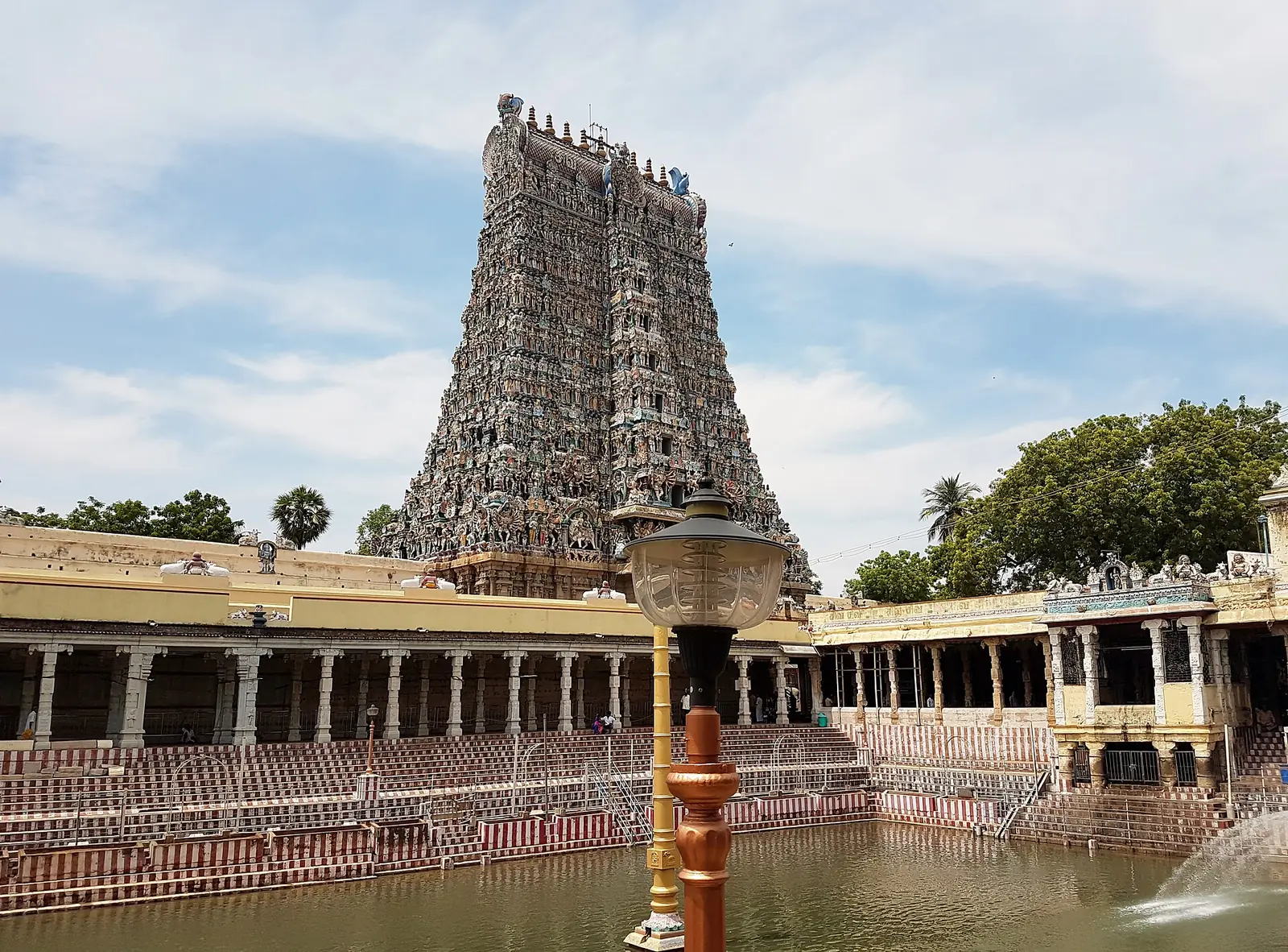 तेप्पकुलम · Tamil NaduTeppakulam
A great tank where the devata goes boating on a lit float on festival nights. Teppam means float. At the float festival the utsava murti rides a lamp-lit raft round the tank; Madurai holds it at the Mariamman Teppakulam. The Potramarai Kulam, tank of the golden lotus, lies inside the Meenakshi temple.
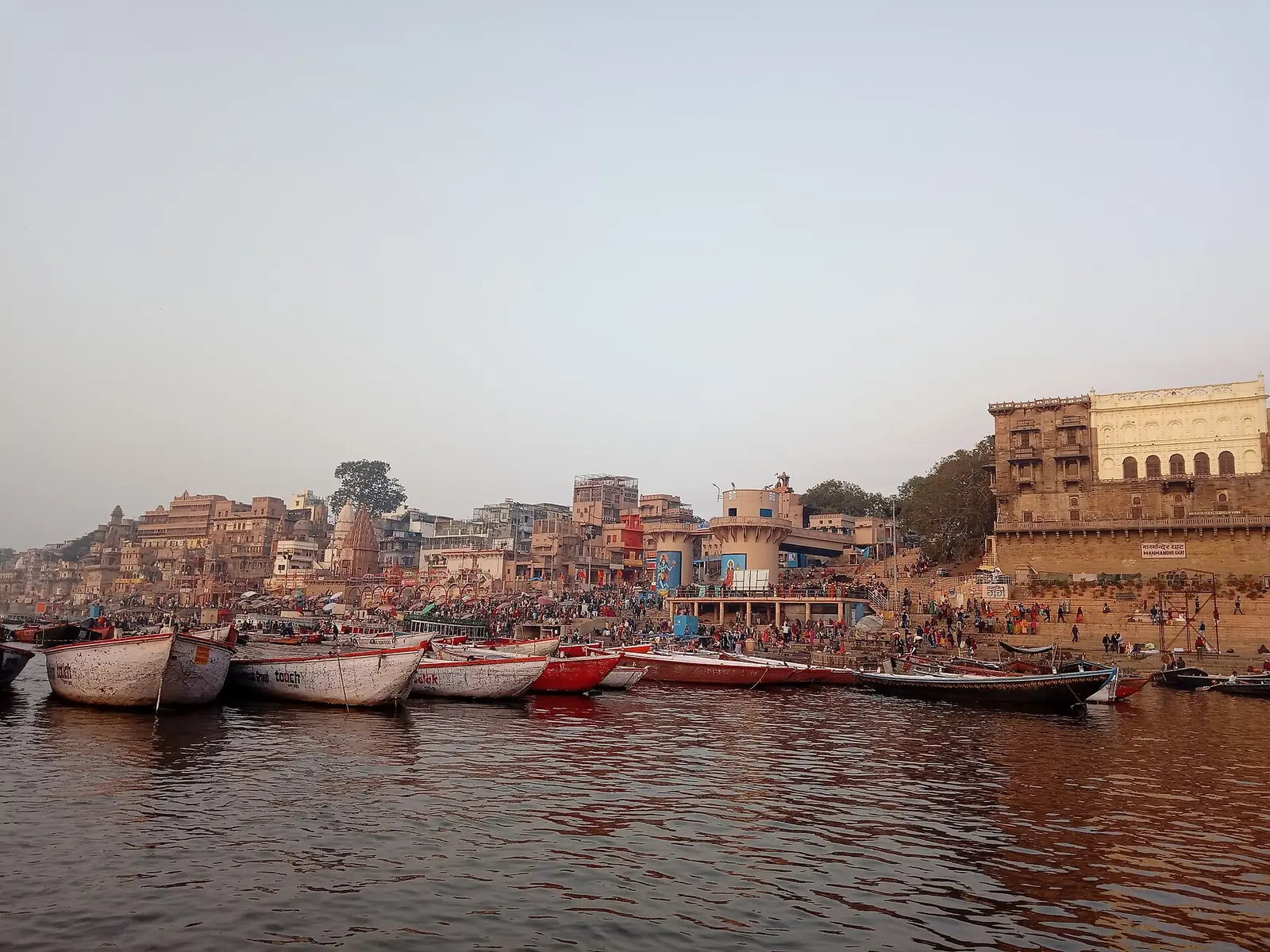 घाट · Kashi, Haridwar, Ujjain, Nashik, every river townGhat
Stone steps down to the river, where a city bathes, prays and says goodbye to its dead. Kashi has 84 ghats along the Ganga, most rebuilt in the 18th century by Maratha patrons, Holkars, Scindias and Peshwas. Dashashwamedh holds the evening aarti. Manikarnika and Harishchandra are the burning ghats, where by tradition the fire never goes out.
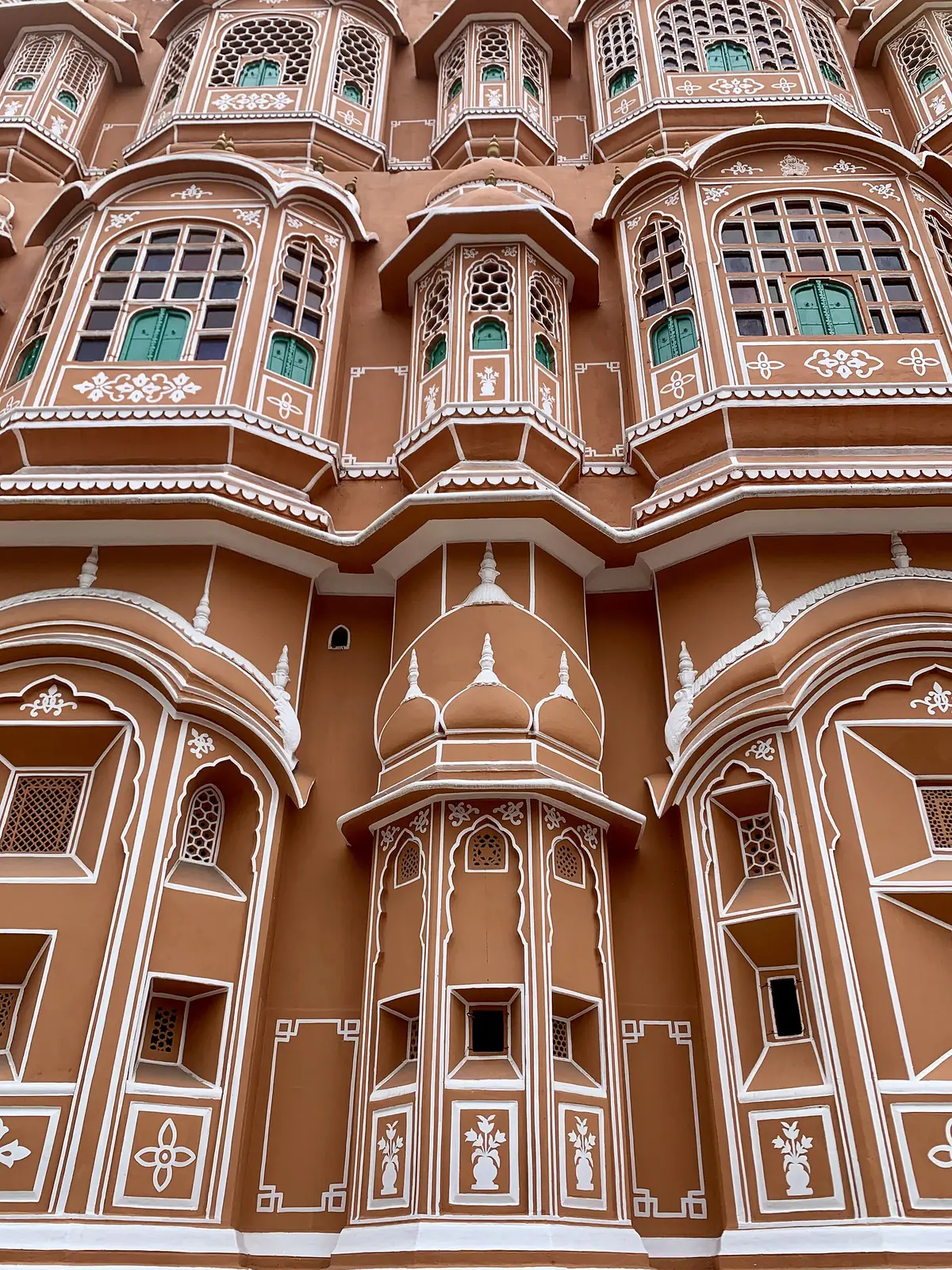 झरोखा · Rajasthan, Gujarat, Madhya PradeshJharokha
A stone window that juts out over the street on carved brackets, screened with jali. The jharokha lets air and light in and lets those inside watch the street unseen. Kings gave darshan to their people from one. The Hawa Mahal in Jaipur is little else: 953 small windows stacked like a honeycomb so the women of the court could watch the festivals below.
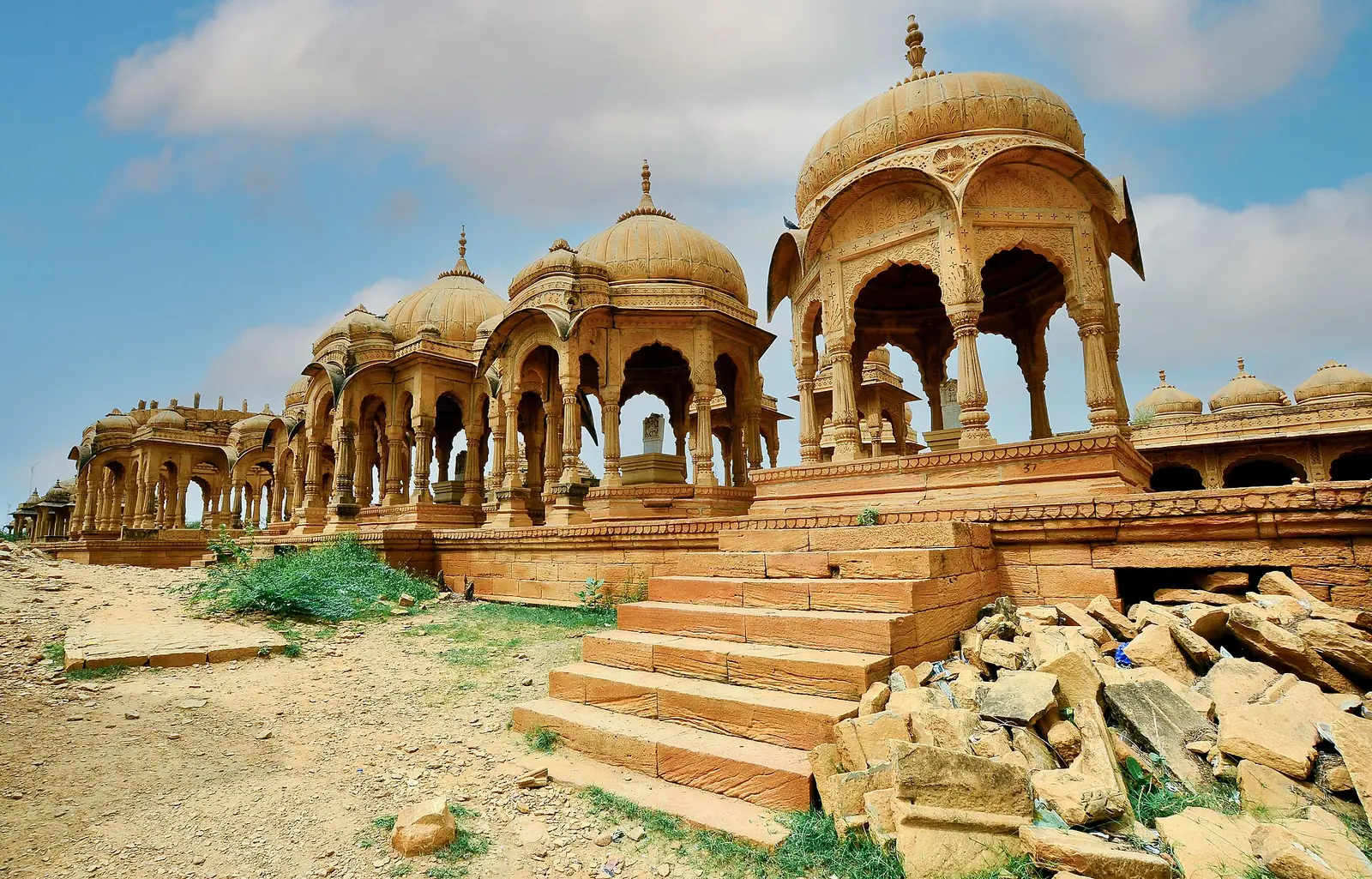 छतरी · Rajasthan, Madhya Pradesh, MaharashtraChhatri
A domed pavilion on pillars, the umbrella that marks a rooftop or a royal cremation ground. Chhatri means umbrella. Raised on four, eight or more pillars, it crowns forts and palaces and marks the place where rulers were cremated. Bada Bagh at Jaisalmer holds rows of them for the Bhati rulers; Bundi's Chaurasi Khambon ki Chhatri of 1631 stands on 84 pillars.
 गोपुरम · Tamil Nadu, Kerala, Karnataka, Andhra PradeshGopuram
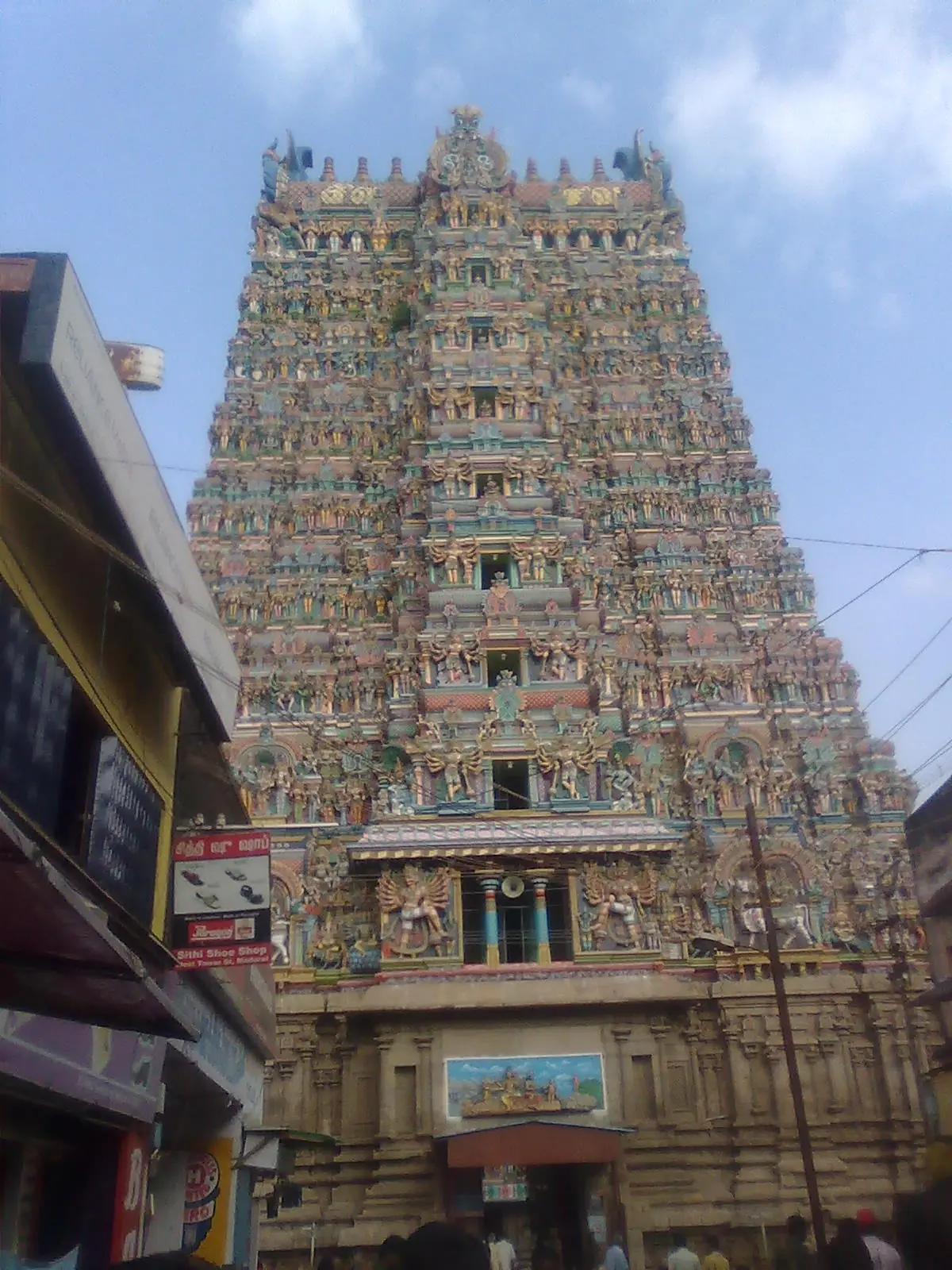
The gateway tower of a southern temple, often taller than the shrine itself. A gopuram rises in storeys that shrink as they climb, crowned by a barrel roof and a row of kalashas. Under the Pandyas, Vijayanagara and Nayakas the gates grew taller than the vimana. Srirangam's rajagopuram, finished in 1987, is about 73 m high.
 मंडप · Every templeMandapa
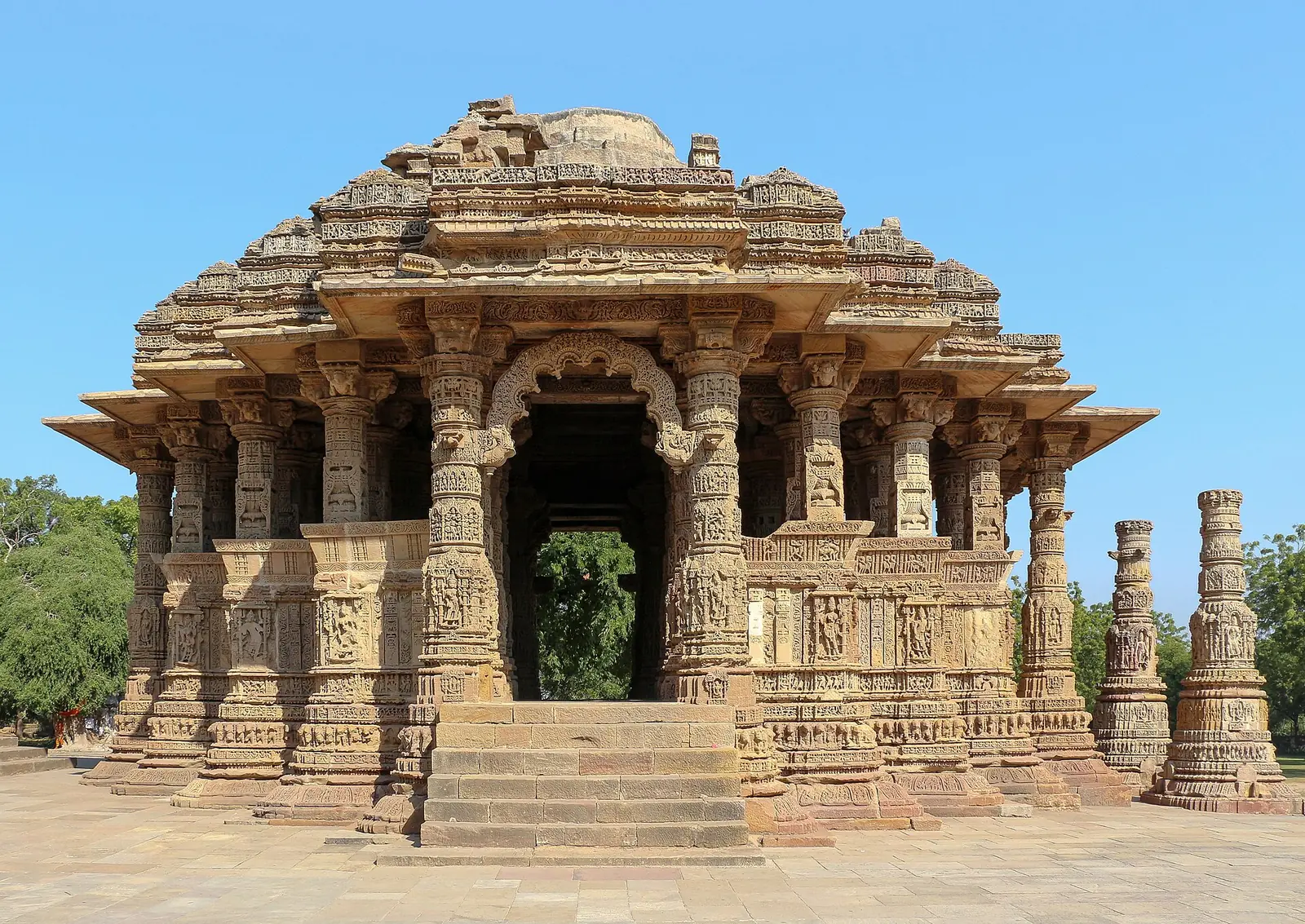
The pillared hall before the sanctum, where devotees gather, dance and wait for darshan. A temple may have several: an ardha mandapa at the door, a maha mandapa for the assembly, a nritya mandapa for dance, a kalyana mandapa for the divine wedding. At Modhera the sabha mandapa stands apart, its pillars carved from floor to ceiling.
 तोरण · Temple gateways and house doors everywhereTorana
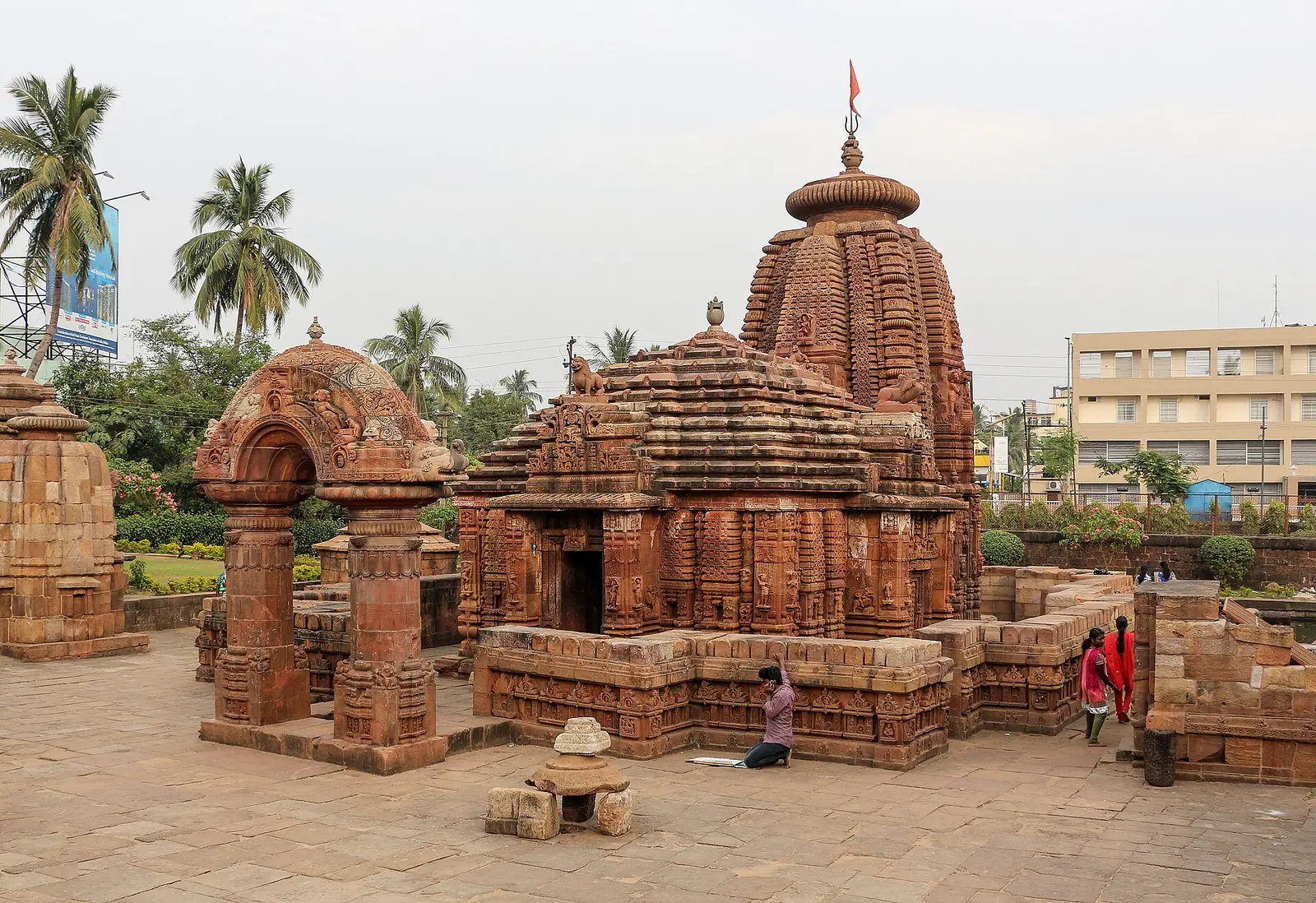
Two posts and a carved crosspiece or arch: the gate that says something holy begins here. The stone torana before the Mukteshwar temple in Bhubaneswar, of around 900 CE, is a round arch on two pillars, with women reclining along its curve. At home the same idea is a string of mango leaves or a beaded toran hung over the door on festival days.
 सांची के तोरण · Sanchi, Madhya PradeshToranas of Sanchi
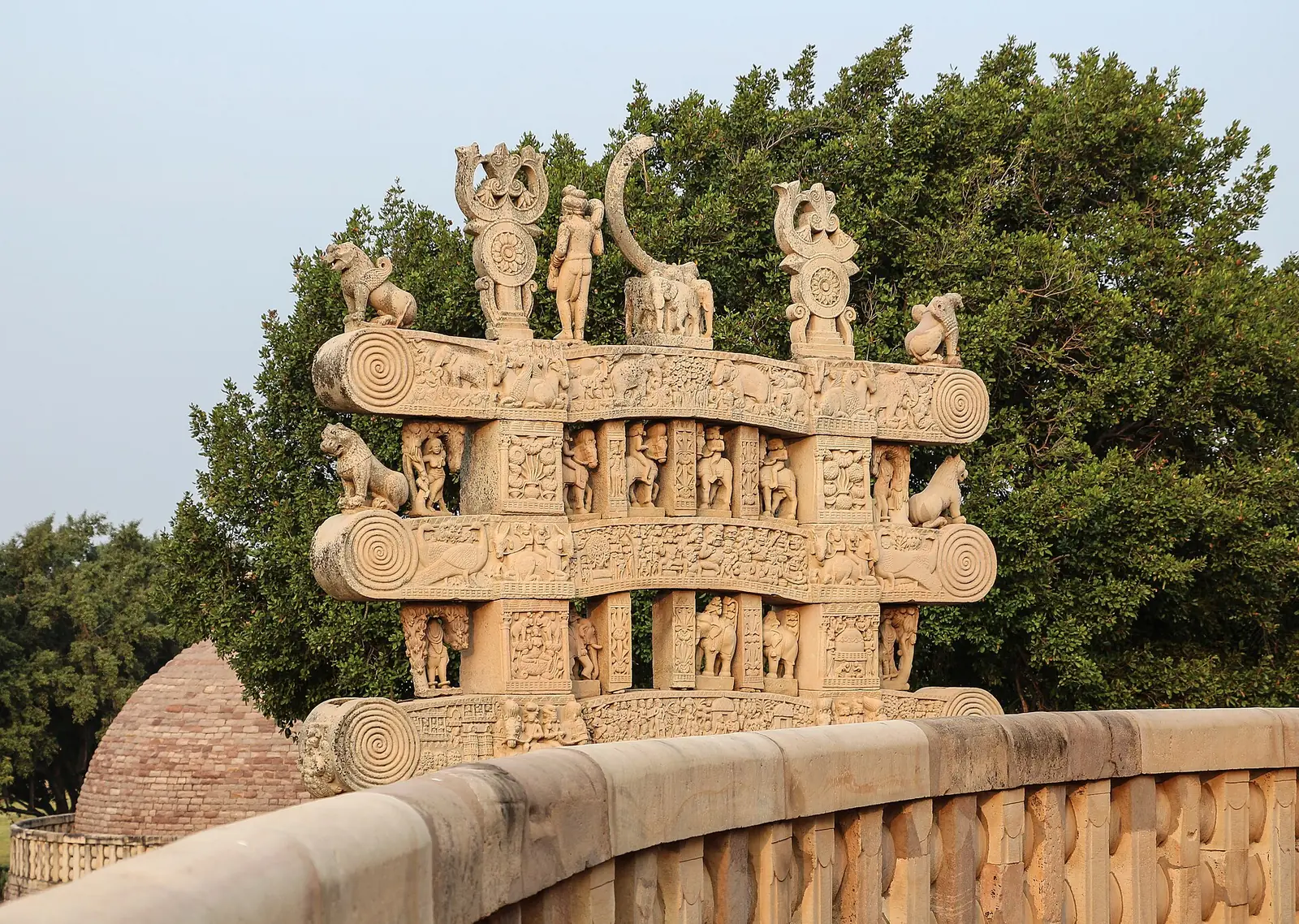
Four stone gateways of the 1st century BCE, carved as if in wood or ivory. Each Sanchi gateway is two square posts carrying three curved crossbars that end in spirals. One inscription credits the ivory carvers of Vidisha. The form, posts and stacked beams, is the ancestor of every temple torana that followed.
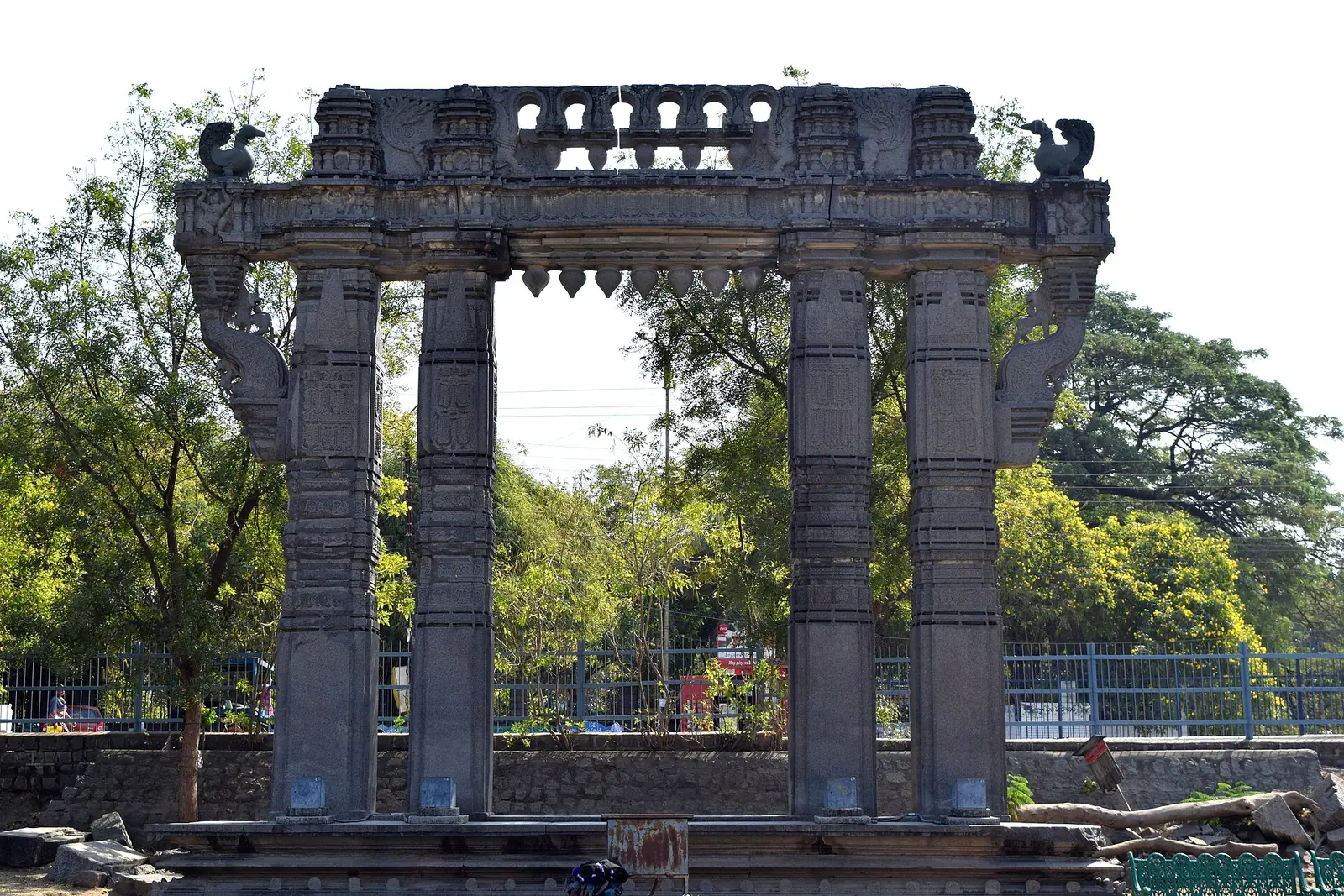 कीर्ति तोरण · Warangal, TelanganaKirti Torana
Four free-standing stone gateways of the Kakatiyas, standing round a temple that is gone. At Warangal fort four carved toranas still face the four directions round the site of the Swayambhu Shiva temple. Each has two posts, a lintel and a bird-and-flower crest. The design is the emblem of Telangana today.
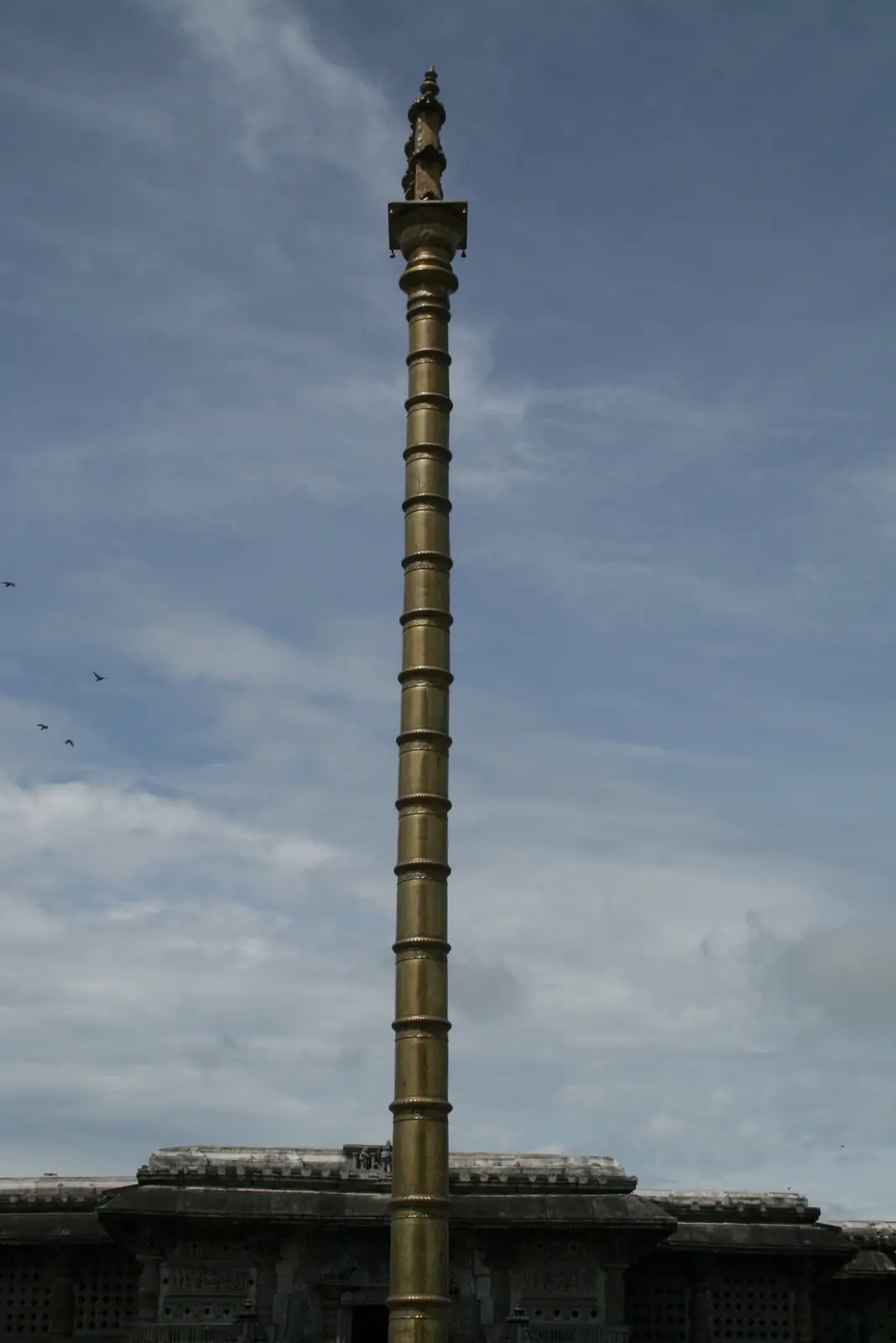 ध्वजस्तंभ · Temples across South IndiaDhvajastambha
The temple flagstaff, set on the line of the sanctum, its flag raised to open the festival. The dhvajastambha stands between the gate and the shrine, in line with the deity, near the bali pitha and the vahana. Wooden masts are cased in copper or gilt. Raising the flag on it marks the start of the temple's annual festival.
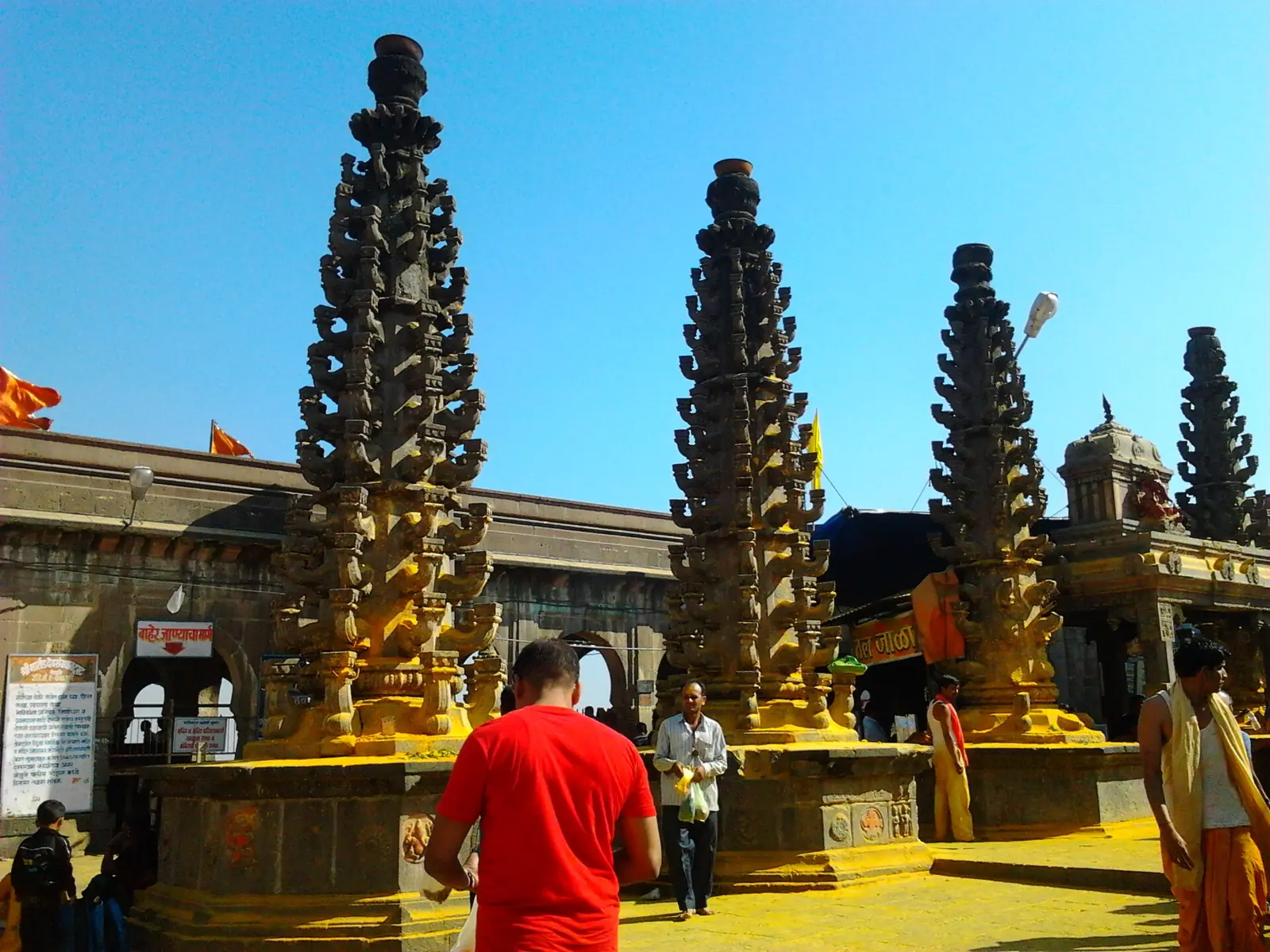 दीपस्तंभ · Maharashtra, Goa, Karnataka, KeralaDeepastambha
A tower of lamps before the temple, lit niche by niche on festival nights. In Maharashtra the deepmal is a stone pillar studded with brackets for oil lamps; at Jejuri they stand before Khandoba's temple. Goa's lamp towers rise two to six storeys. On festival nights hundreds of lamps are lit from bottom to top.
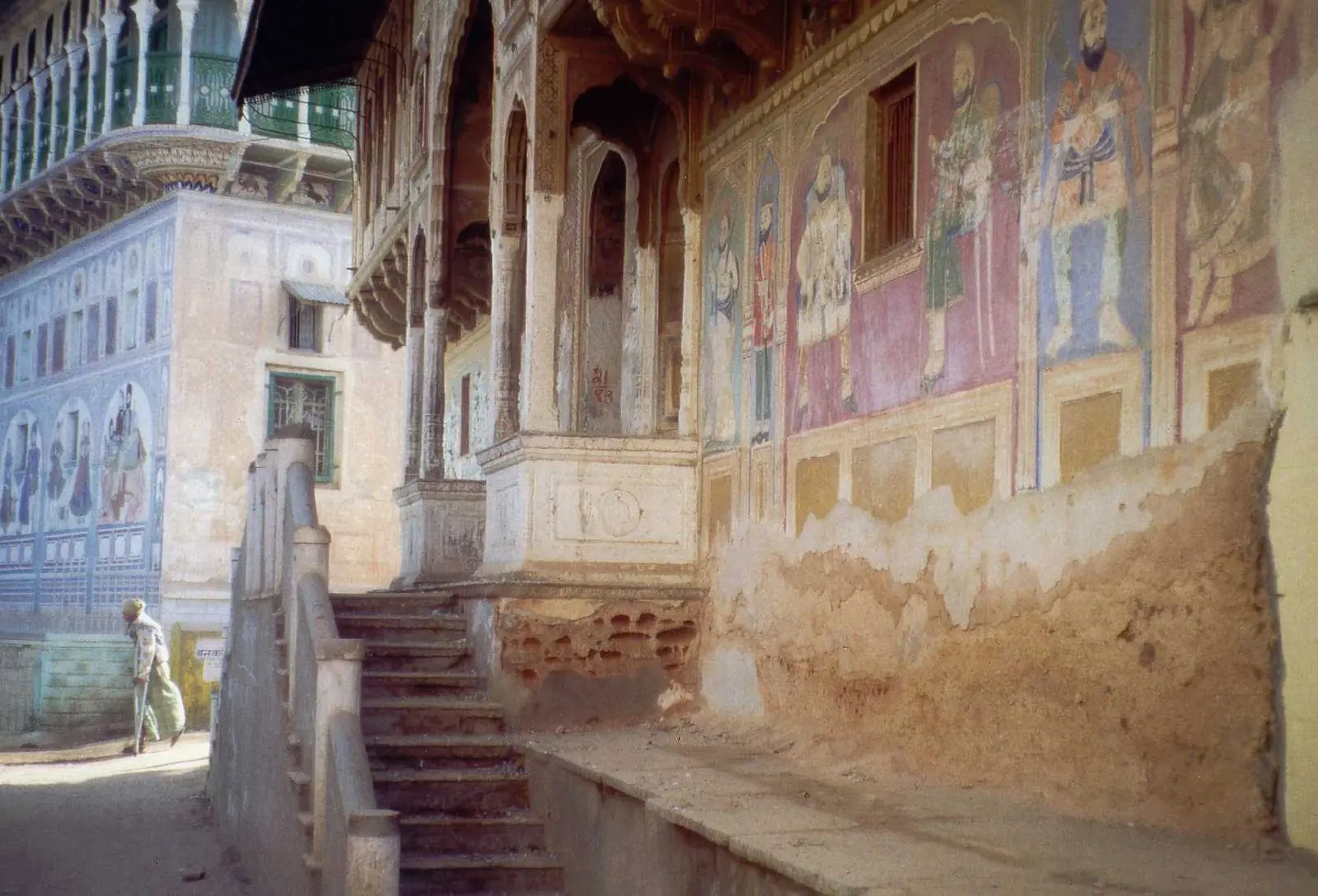 हवेली · Rajasthan, Gujarat, Old DelhiHaveli
A merchant family's house built round courtyards, its walls painted inside and out. In Shekhawati, Marwari merchants of the 18th to early 20th centuries built havelis at Mandawa, Nawalgarh and Fatehpur. Their walls carry painted Krishna lila, Ramayana scenes, trains and soldiers. Outer rooms received guests; the family lived round the inner court.
 चौक · Palaces and houses of North India and NepalChowk
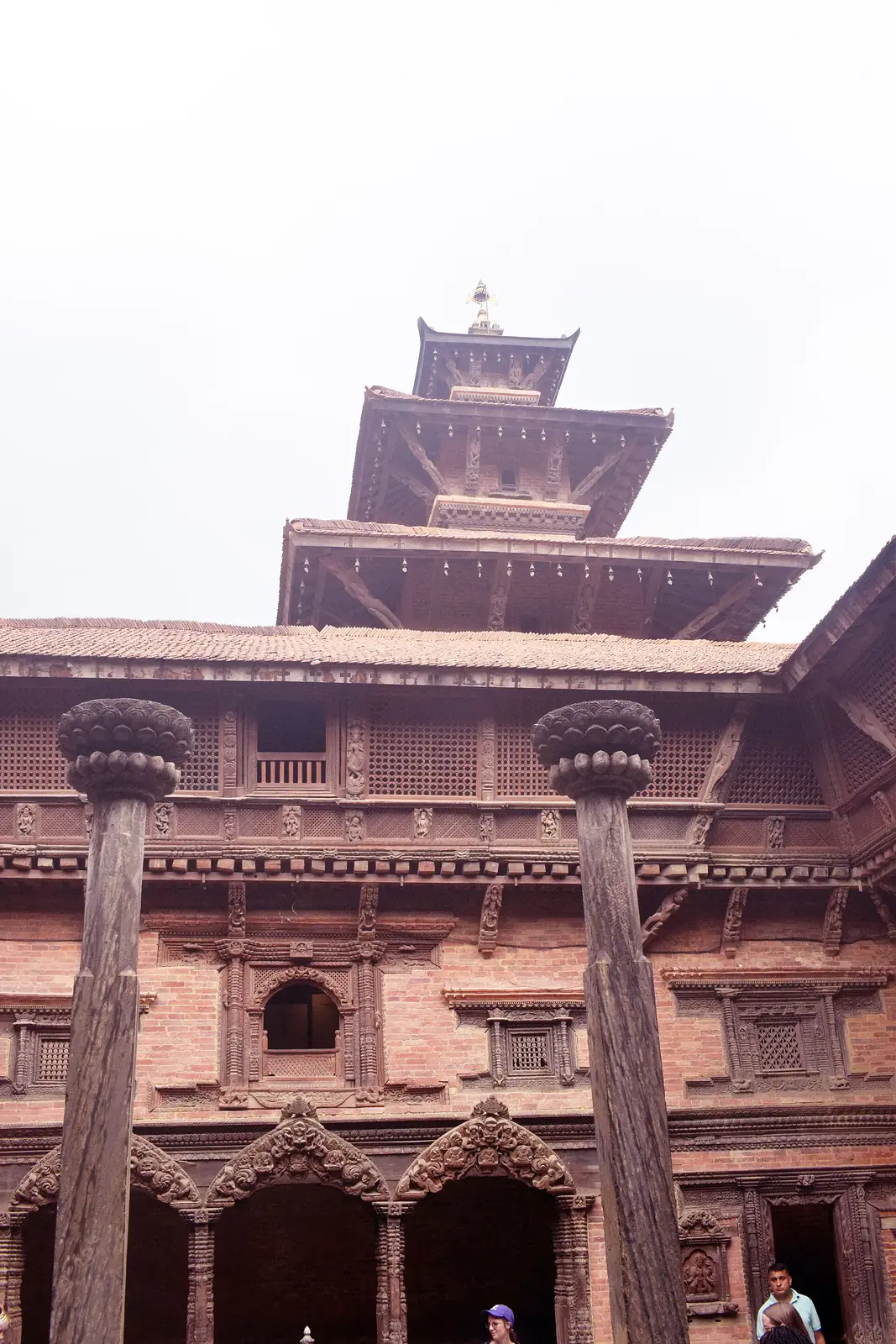
The open square courtyard at the centre of a house or palace, where the sky comes in. Houses, havelis and palaces were built round one or more chowks. In the Patan palace in Nepal, Sundari Chowk holds the Tusha Hiti, a stepped royal bath lined with stone devatas, commissioned under Siddhi Narasimha Malla.
 नालुकेट्टु · KeralaNalukettu
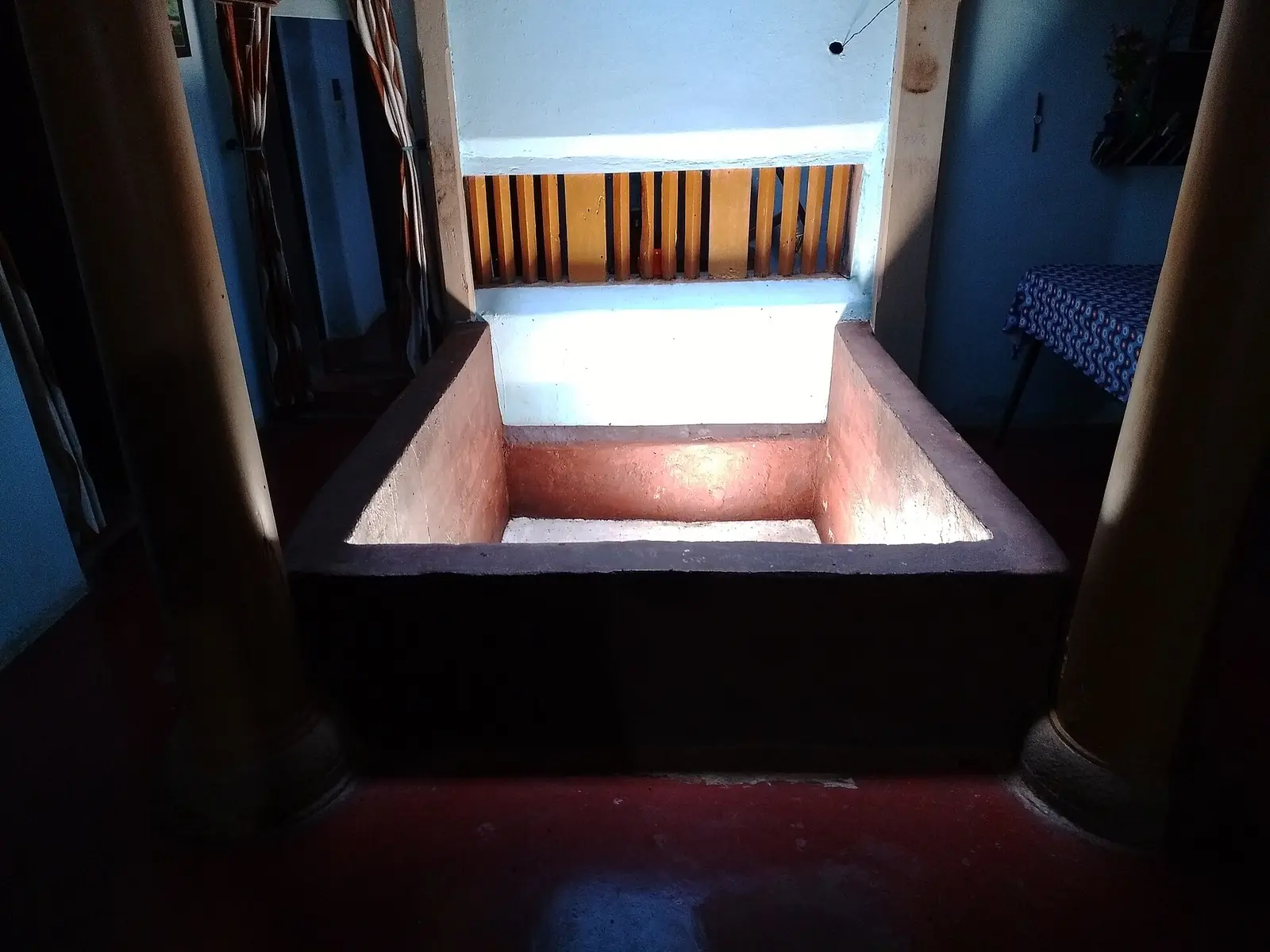
A Kerala house of four halls round an open court, the nadumuttam, that drinks the monsoon. The four wings face north, south, east and west round the nadumuttam. Builders followed Thachu Shastra, the Kerala science of carpentry, in laterite, wood and tile. Larger houses doubled into the ettukettu, eight halls and two courts.
 रथ · Puri, and temple towns across IndiaRatha
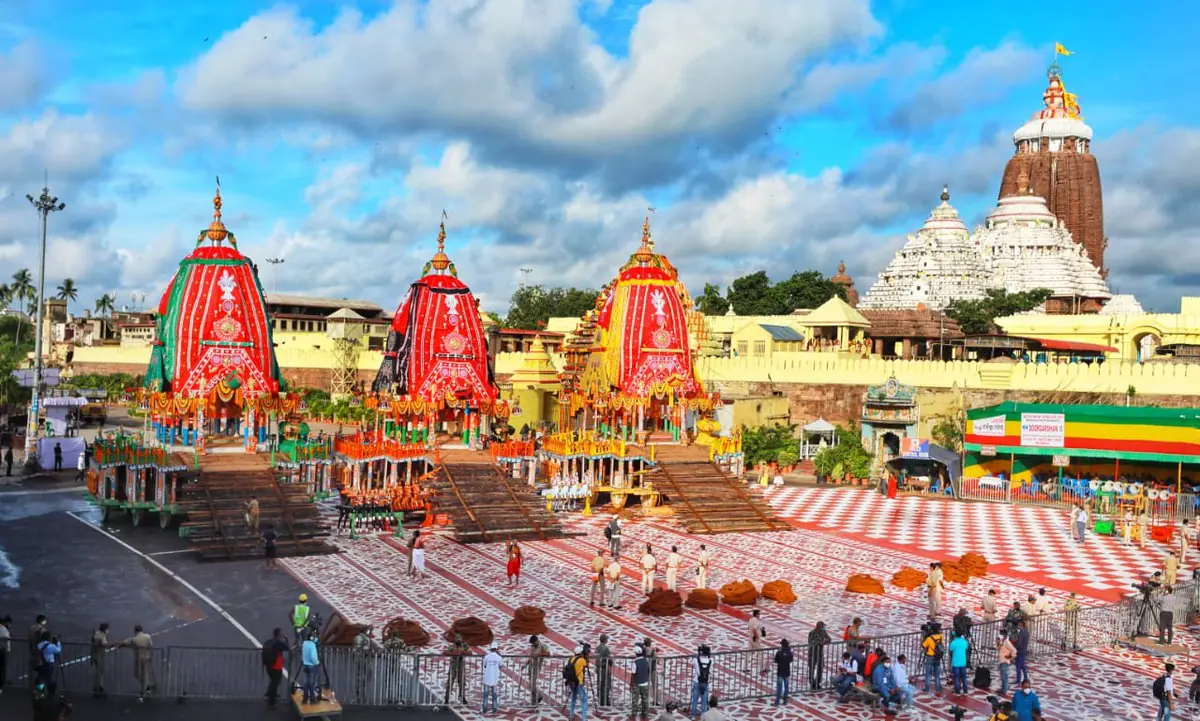
The temple car that carries the devata out to the people, built new each year at Puri. For the Ratha Yatra at Puri three chariots are made new every year, work beginning on Akshaya Tritiya. Jagannath's Nandighosha has 16 wheels, Balabhadra's Taladhwaja 14, and Subhadra's Darpadalana 12. They are pulled along the Bada Danda.
 पाषाण रथ · Mamallapuram, Hampi, KonarkStone ratha
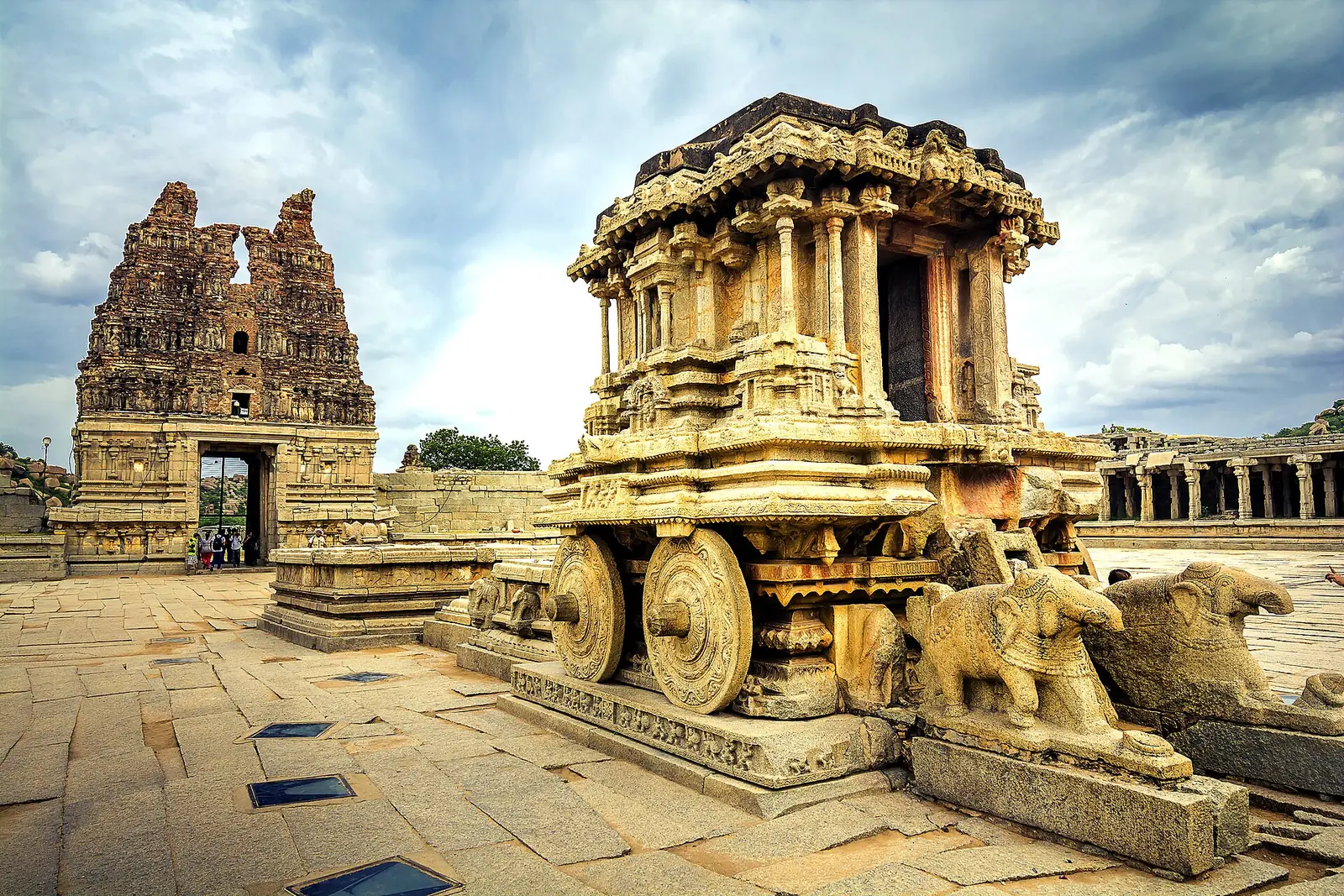
Temple and chariot become one: a shrine carved in stone on wheels. At Hampi a shrine for Garuda in the Vitthala temple is built as a chariot with stone wheels. At Mamallapuram the five "rathas" are shrines cut from single rocks. Konark turns a whole temple into Surya's chariot.
 पोल · Old Ahmedabad and Gujarat townsPol
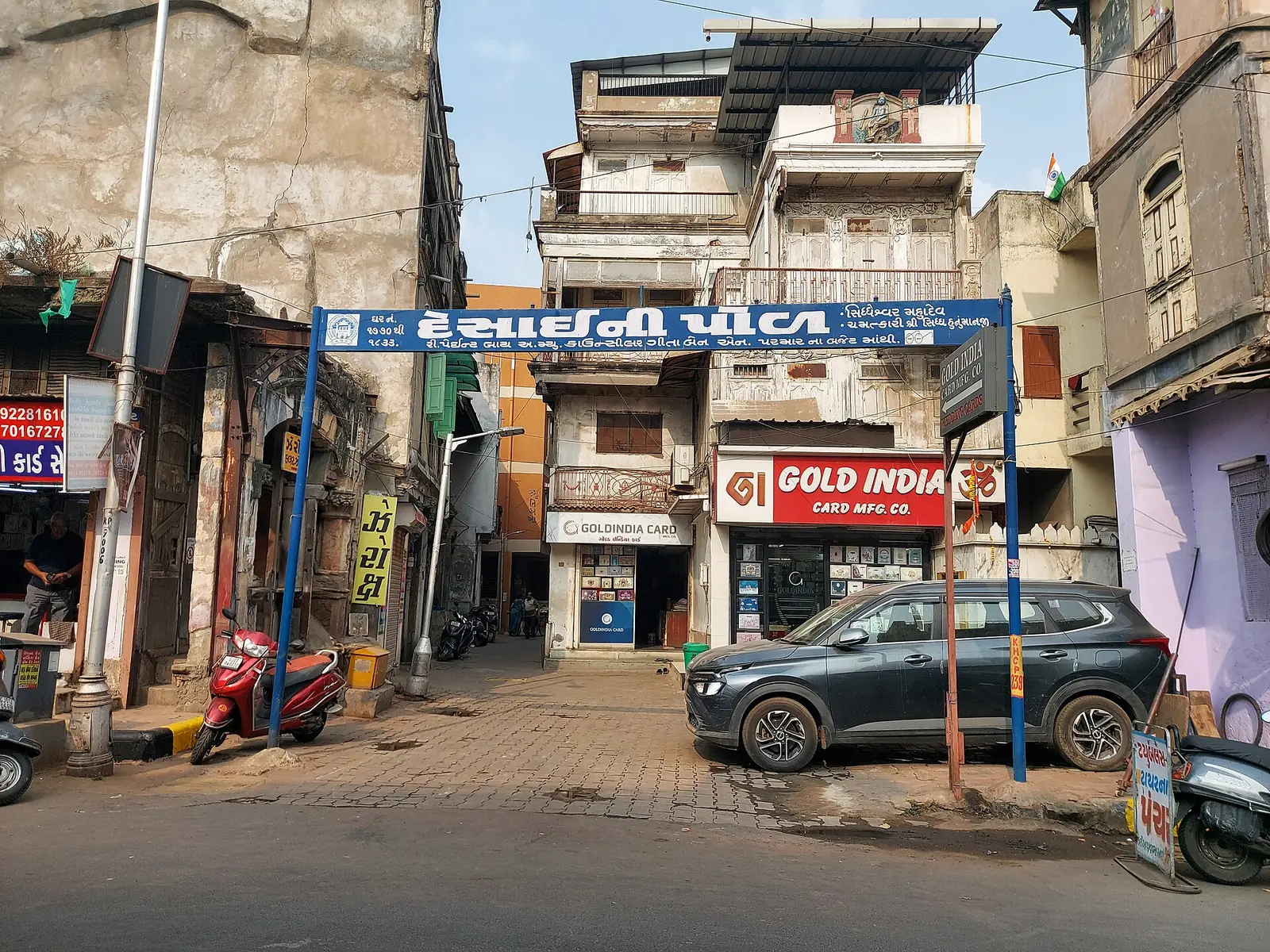
A neighbourhood behind one gate, closed at night, its families sharing a well and a common fund. The word comes from the Sanskrit pratoli, an entrance. Old Ahmedabad has about 360 pols, each a street with lanes branching off, often from 5 to 60 houses. Families kept a common fund for the gate and the well, and fed the whole pol on big occasions.
 तुलसी वृंदावन · Courtyards and doorways of Hindu homesTulsi Vrindavan
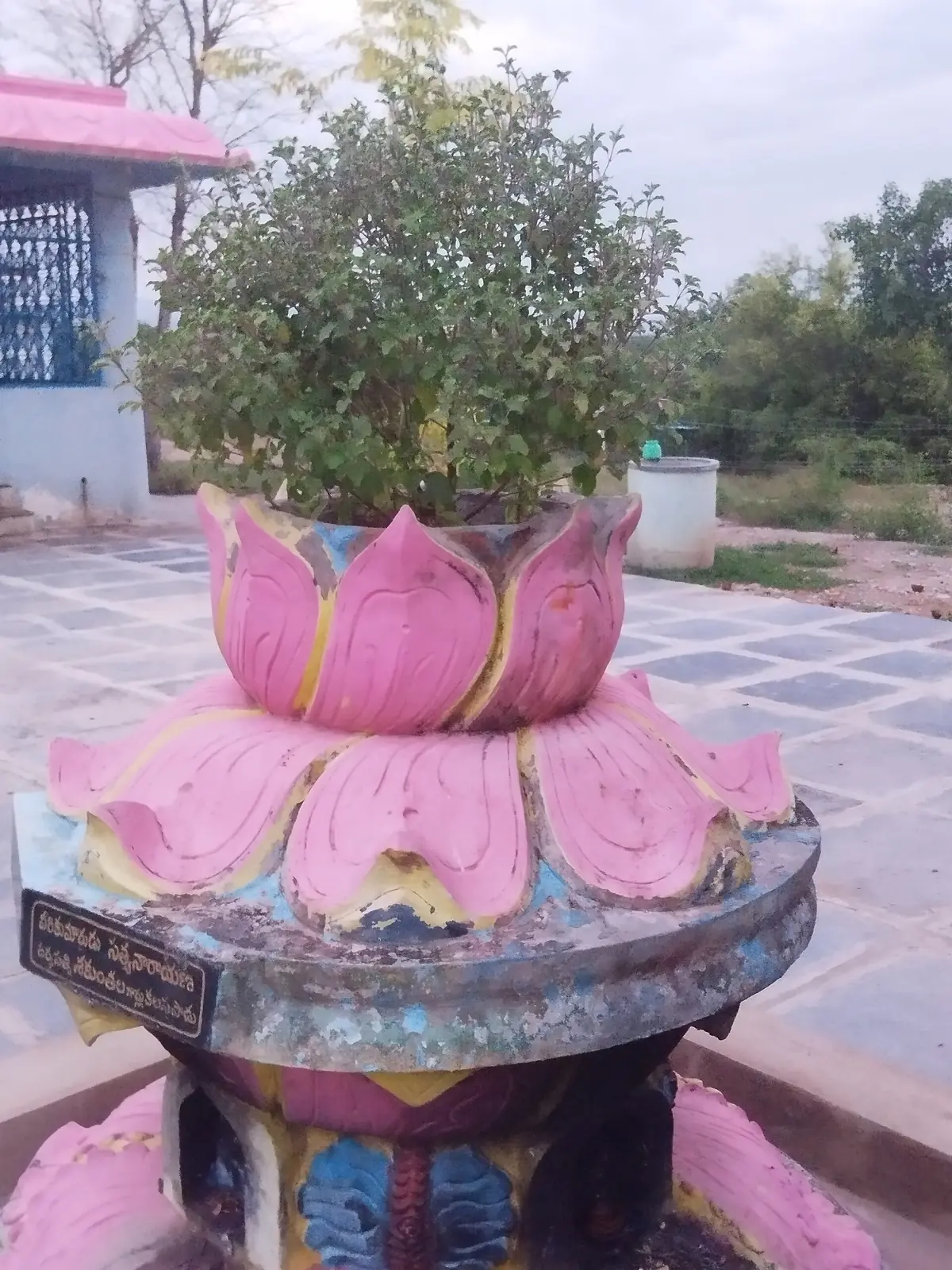
A small raised altar in the courtyard where the Tulsi plant grows and receives a lamp each evening. The Tulsi altar stands in the central courtyard or before the door, often facing east. Women of the house water it and walk round it. Tulsi Vivah, her wedding to Vishnu as Shaligram or Krishna, is held between Prabodhini Ekadashi and Kartik Purnima.
 कूत्तम्बलम · Kerala templesKoothambalam
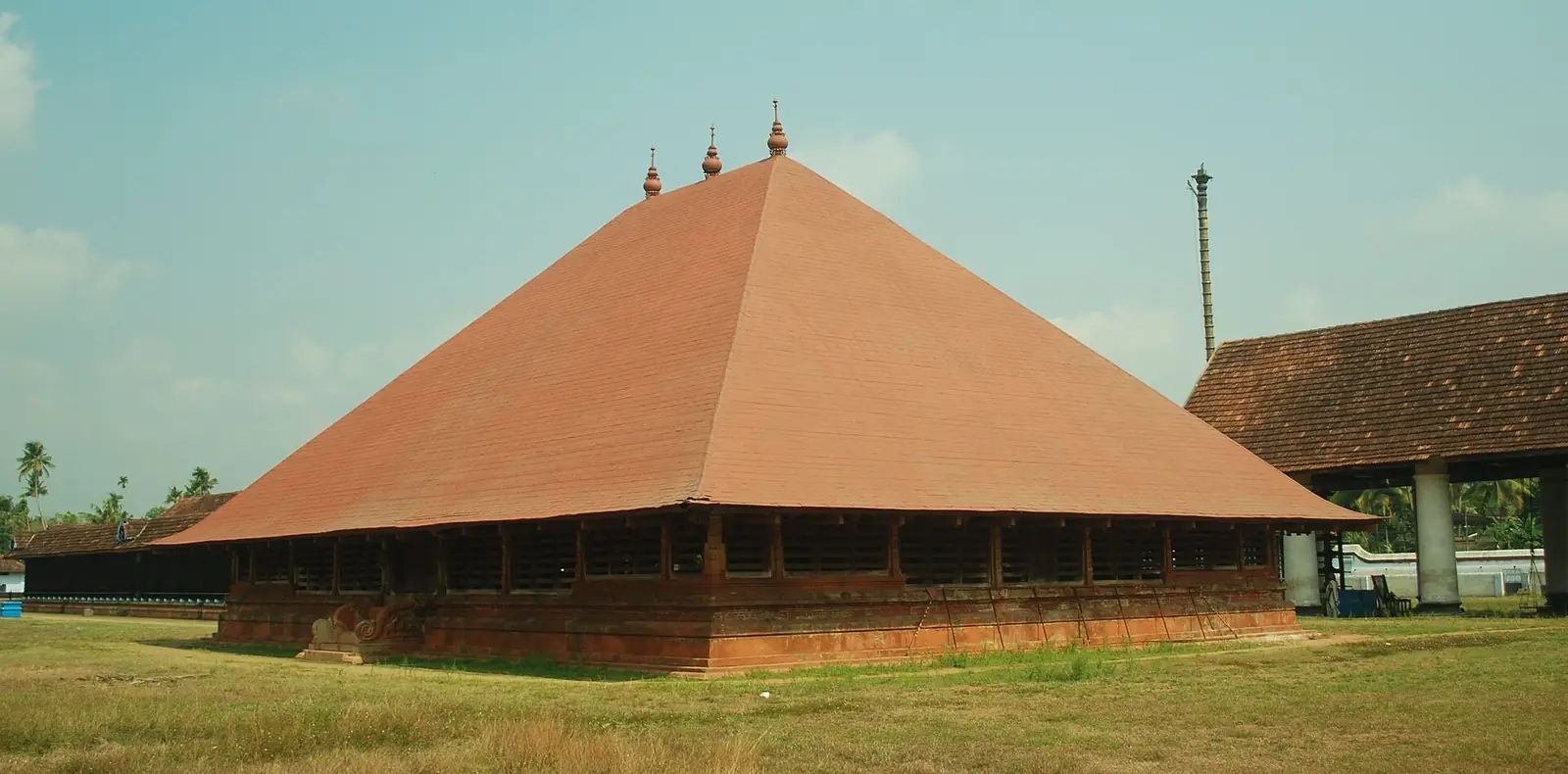
The temple theatre of Kerala, built for Koodiyattam inside the temple walls. Chakyars perform Koothu and Koodiyattam here, with the mizhavu drum in its own railed seat. A square stage with its own pyramidal roof stands in the hall. The stage is held as sacred as the sanctum. Fine ones stand at Vadakkunnathan and Koodalmanikyam.
 चाला · Bengal: Bishnupur and village templesChala roof
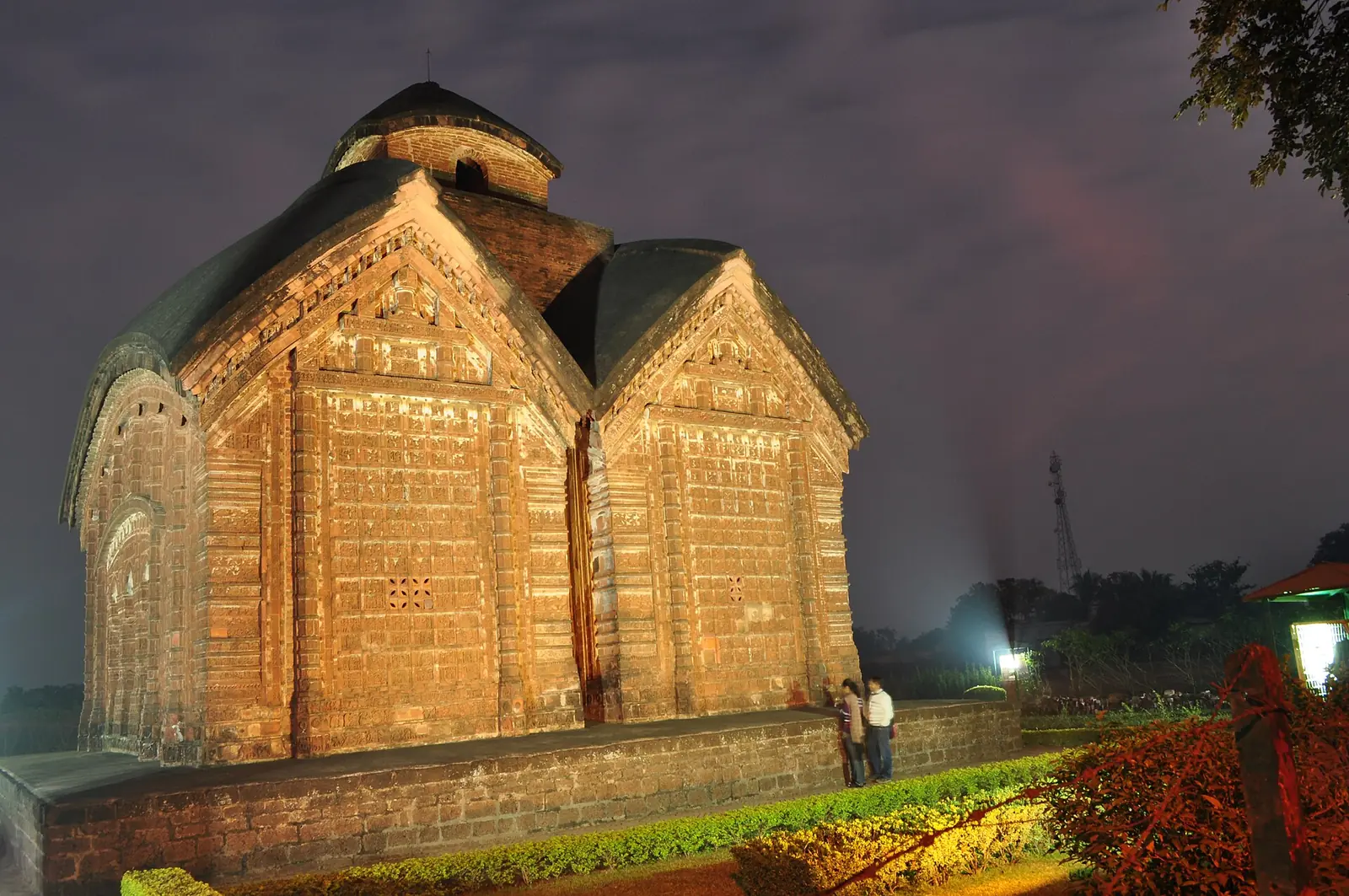
The curved thatched roof of a Bengal hut, rebuilt in brick and terracotta for Krishna. Bengal's temple builders copied the village hut: do-chala with two slopes, char-chala with four, at-chala with eight. The Jor Bangla at Bishnupur, of 1655 under Raghunath Singha, joins two do-chala huts and tops them with a char-chala tower.
 हिटी · Kathmandu valley, NepalHiti
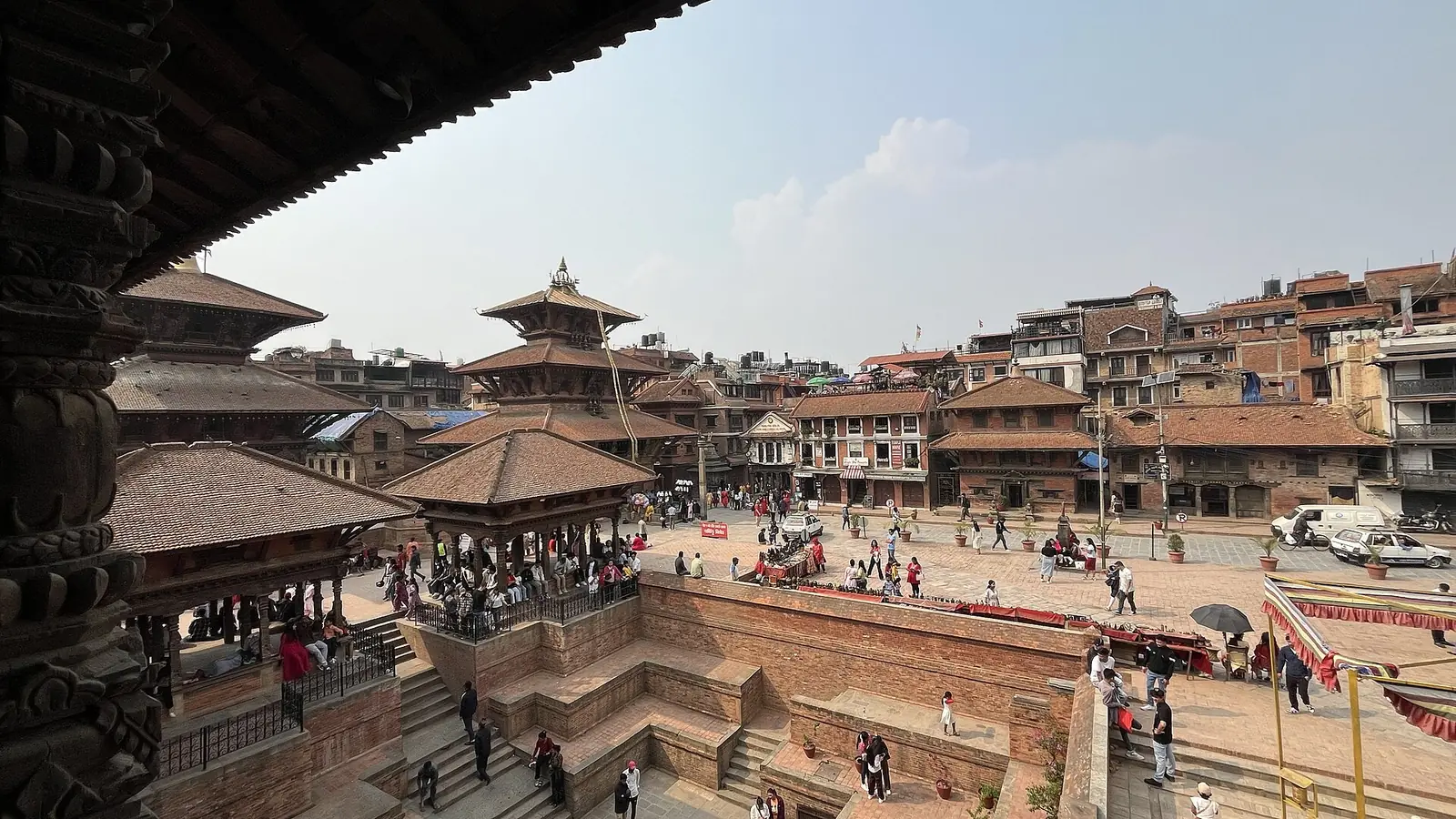
A sunken stone water spout, fed from hidden channels, flowing through a makara's mouth. Nepal's hiti or dhunge dhara is a stepped pit with spouts carved as makaras. An inscription at Hadigaon dates one to 550 CE; Manga Hiti in Patan, dated 570 CE, is the oldest still flowing. People still bathe and fill pots at them.
 चंडी बेंतार · Bali, Java, LombokCandi bentar
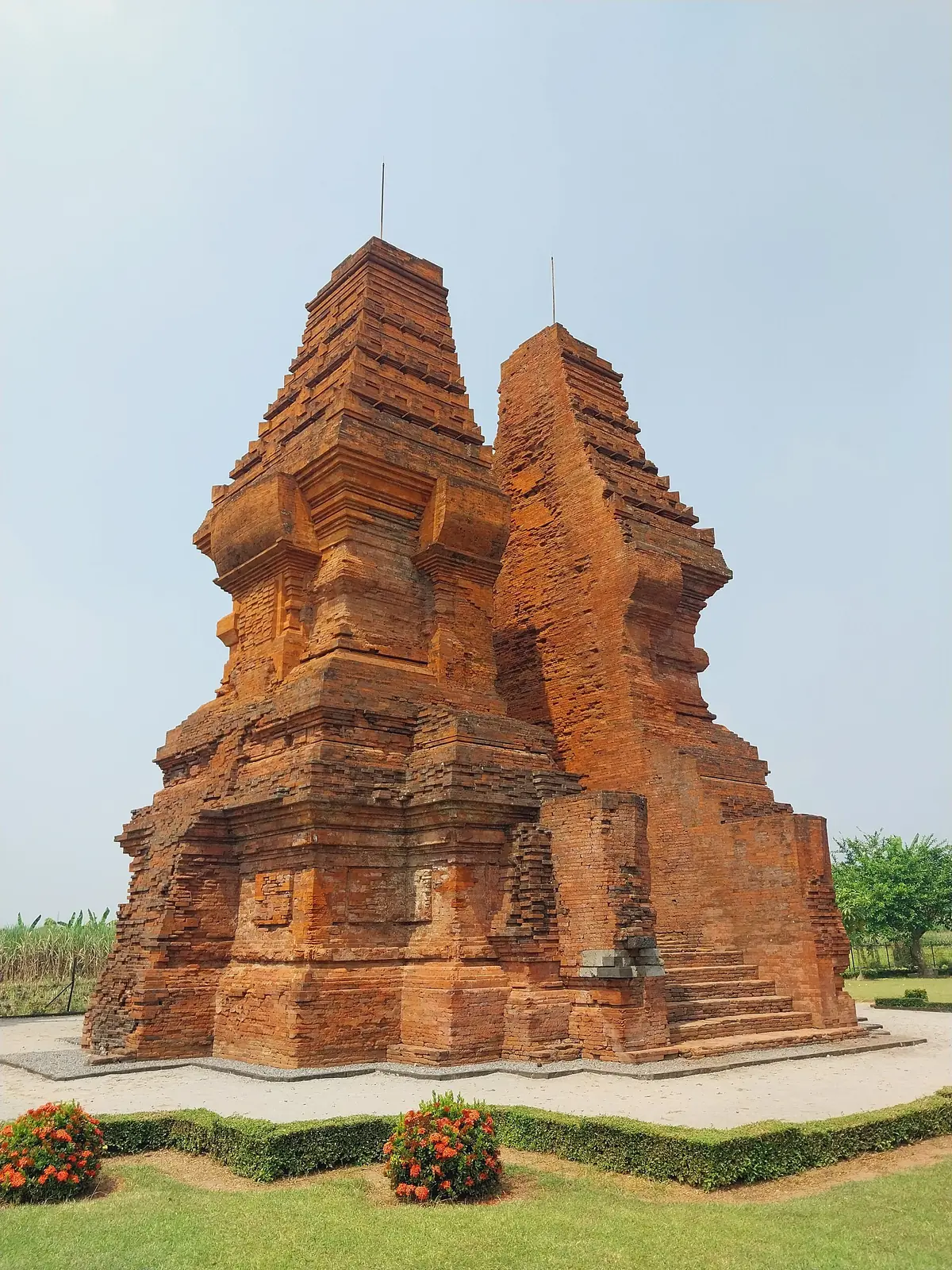
A temple gate split cleanly down the middle, its inner faces left bare. At the entrance of every Balinese temple stands a split gate, as if a tower had been cut in two. It marks the outer court; a roofed gate leads further in. The form goes back to the Majapahit age, and Wringin Lawang at Trowulan is among the oldest.
 विजय स्तंभ · Chittorgarh, RajasthanVijay Stambha
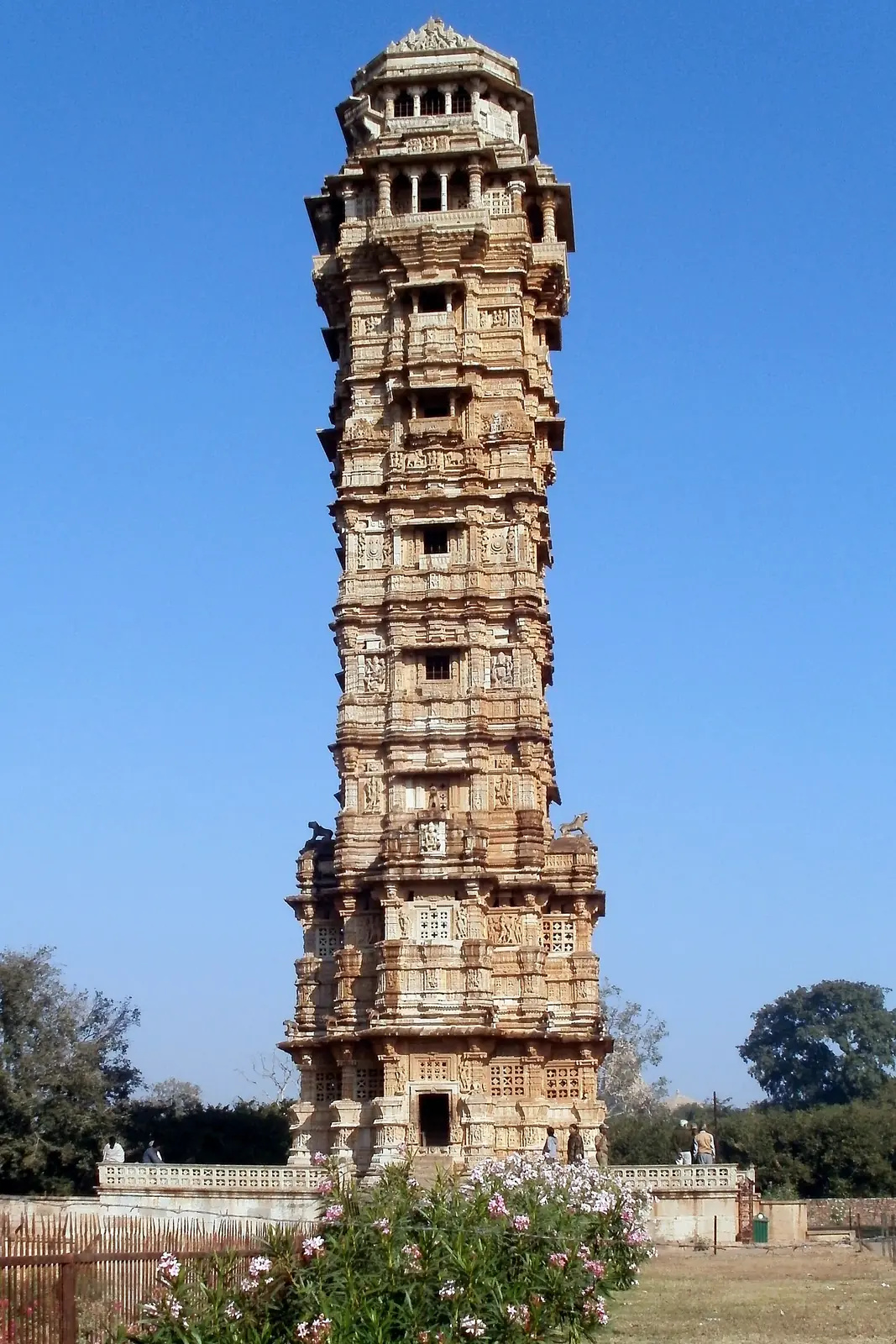
A tower of victory in nine storeys, its walls carved with the devatas inside and out. Rana Kumbha raised the Vijay Stambha at Chittor in the 15th century to mark a victory, dedicating it to Vishnu. You can climb its stair inside, and the walls of every storey are carved with devatas.
 नगारखाना · Forts, palaces and temples of North and West IndiaNagarkhana
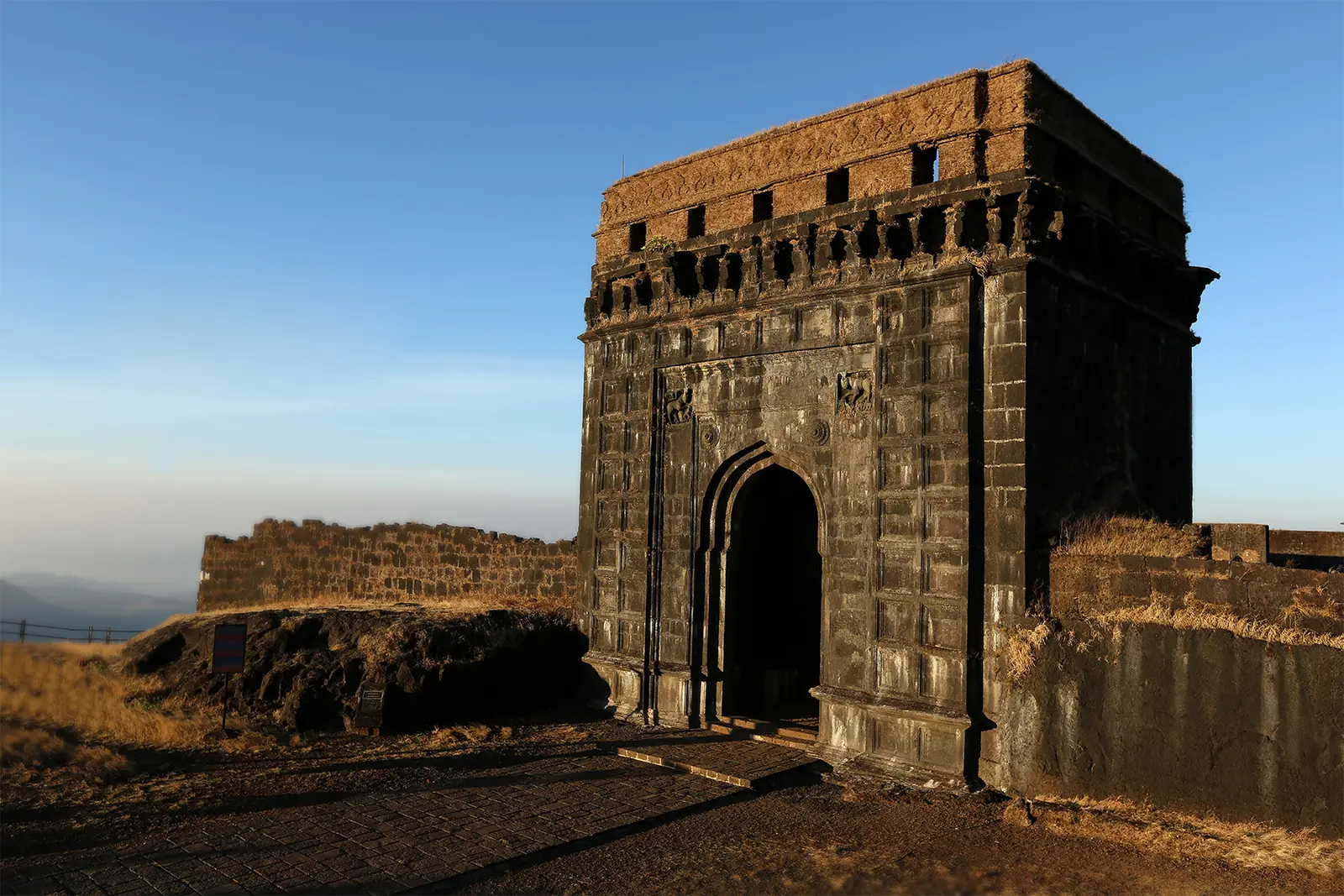
The drum house over the gate, where the nagara is beaten at set hours. Over the main gate of a fort or temple is a gallery for drums and shehnai. The music marks the hours and announces the ruler or the devata. At Raigad, Shivaji Maharaj's capital, the Nagarkhana gate faces the throne.
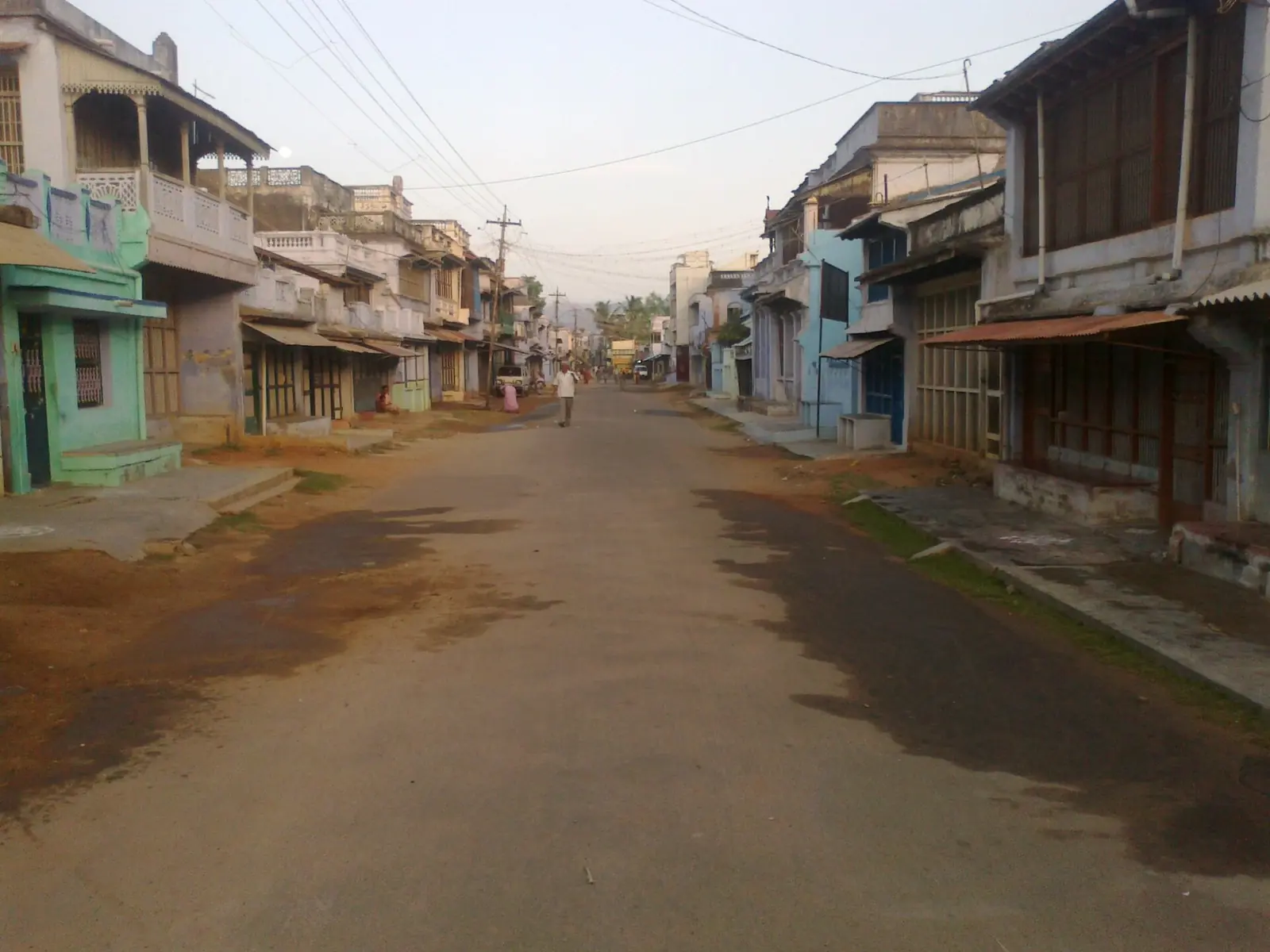 अग्रहारम · Tamil Nadu, Kerala, KarnatakaAgraharam
Two rows of houses on a straight street, with a temple at its head. An agrahara began as a royal grant of land for Vedic learning and temple service. The street has two rows of joined houses, often running north–south, with the temple closing one end. Each house front has a raised platform, the thinnai, where neighbours sit in the evening.
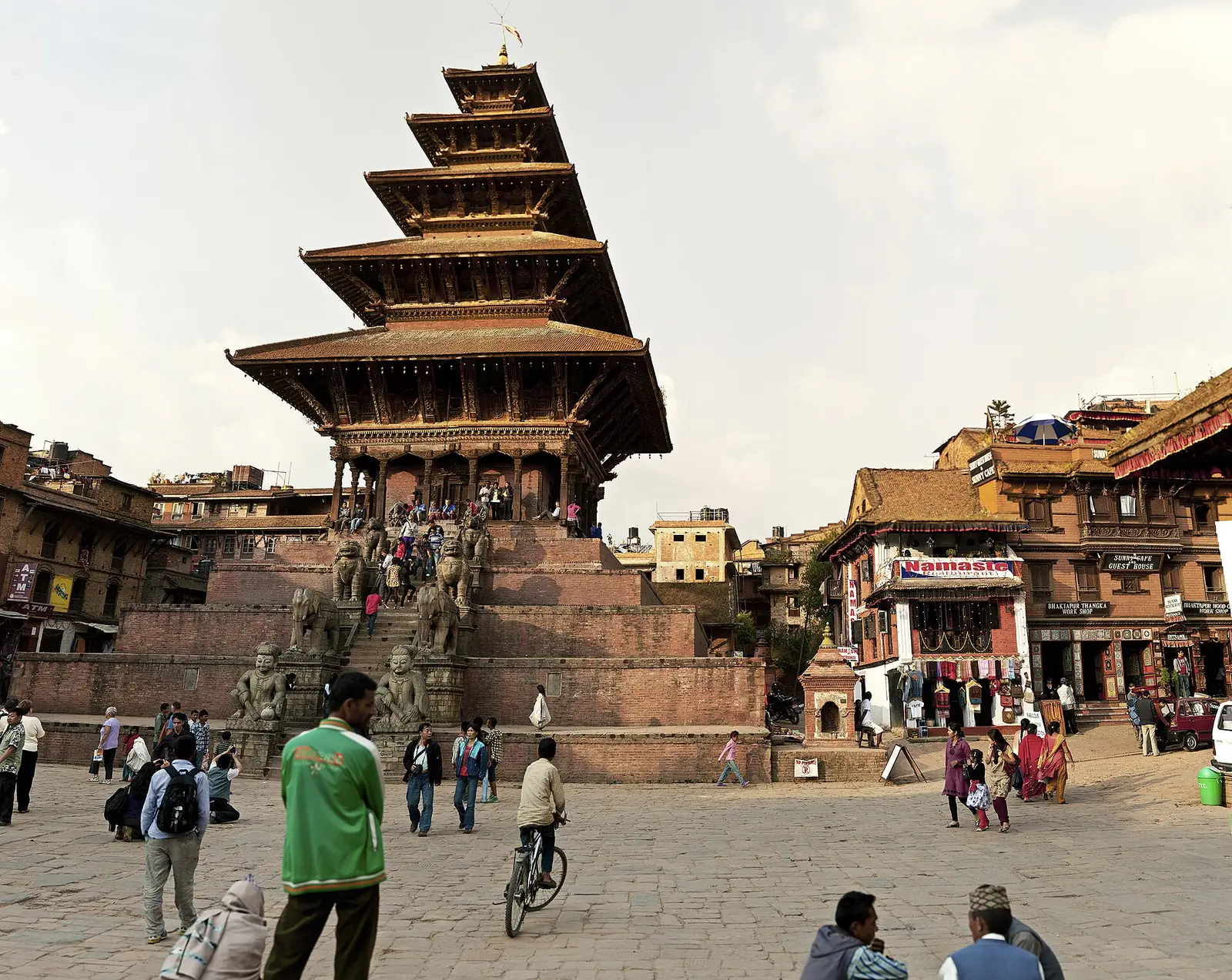 बहुतल मंदिर · Kathmandu valley, Himachal, KeralaTiered temple
Roof on roof, the hill temple climbs in tiers of tile or wood instead of a stone spire. In the Kathmandu valley temples rise in two to five roofs on carved struts. Nyatapola in Bhaktapur stands five tiers on a five-stepped plinth, with pairs of guardians on each step. Himachal and Kerala build tiered roofs of their own for the rain and snow.