हिंदी
Rani ki Vav, Patan

Lokakalyan: works built for others

लोककल्याण

Wells, tanks, groves, rest-houses and food for strangers were counted as dharma, and Hindu builders made them beautiful.

२१ works of welfare · ७ ways to serve

इष्टIshta

What one offers to the gods: the fire, the prayer, the gift to the priest.

पूर्तPurta

What one builds for everyone: wells, tanks, groves, temples, rest-houses and food.

The Rig Veda (10.14.8) sends the departed to meet the Pitrs with their ishtapurta in the highest heaven. Ishta is what is offered in yajna. Purta is what is filled and given: wells, tanks, temples, gifts of food and gardens, as a verse quoted by the commentator Aparārka lists them.

Verses

वापीकूपतडागानि देवतायतनानि च। अन्नप्रदानमारामः पूर्तमित्यभिधीयते॥

vāpī-kūpa-taḍāgāni devatāyatanāni ca | annapradānam ārāmaḥ pūrtam ity abhidhīyate ||

Step-wells, wells and tanks, temples of the devas, the gift of food and gardens: these are called purta.

Quoted by Aparārka on the Yājñavalkya Smriti as from the Mahabharata (not found in the common editions); repeated by Jātūkarṇa
अध्यापनं ब्रह्मयज्ञः पितृयज्ञस्तु तर्पणम्। होमो दैवो बलिर्भौतो नृयज्ञोऽतिथिपूजनम्॥

adhyāpanaṃ brahmayajñaḥ pitṛyajñas tu tarpaṇam | homo daivo balir bhauto nṛyajño ’tithipūjanam ||

Teaching is the yajna to Brahman, water to the ancestors the yajna to the Pitrs. The fire offering is for the devas, the bali for all beings, and honouring the guest is the yajna to men.

Manusmriti 3.70
कर्मणैव हि संसिद्धिमास्थिता जनकादयः। लोकसंग्रहमेवापि सम्पश्यन्कर्तुमर्हसि॥

karmaṇaiva hi saṃsiddhim āsthitā janakādayaḥ | lokasaṅgraham evāpi sampaśyan kartum arhasi ||

Janaka and others reached perfection through action alone. Keep the holding-together of the world in view, and act.

Bhagavad Gita 3.20
दातव्यमिति यद्दानं दीयतेऽनुपकारिणे। देशे काले च पात्रे च तद्दानं सात्त्विकं स्मृतम्॥

dātavyam iti yad dānaṃ dīyate ’nupakāriṇe | deśe kāle ca pātre ca tad dānaṃ sāttvikaṃ smṛtam ||

A gift given because it ought to be given, to one who can do nothing in return, at the right place and time and to a fit person, is called sattvic.

Bhagavad Gita 17.20
अयं बन्धुरयं नेति गणना लघुचेतसाम्। उदारचरितानां तु वसुधैव कुटुम्बकम्॥

ayaṃ bandhur ayaṃ neti gaṇanā laghucetasām | udāracaritānāṃ tu vasudhaiva kuṭumbakam ||

"This one is kin, that one is not": so the small-minded count. For the large-hearted, the earth itself is one family.

Maha Upanishad 6.71 (sanskritdocuments.org text; other editions read अयं निजः परो वेति)

The works

Each with one real place you can visit.

Rani ki Vav, Patan
वाव · WaterVav

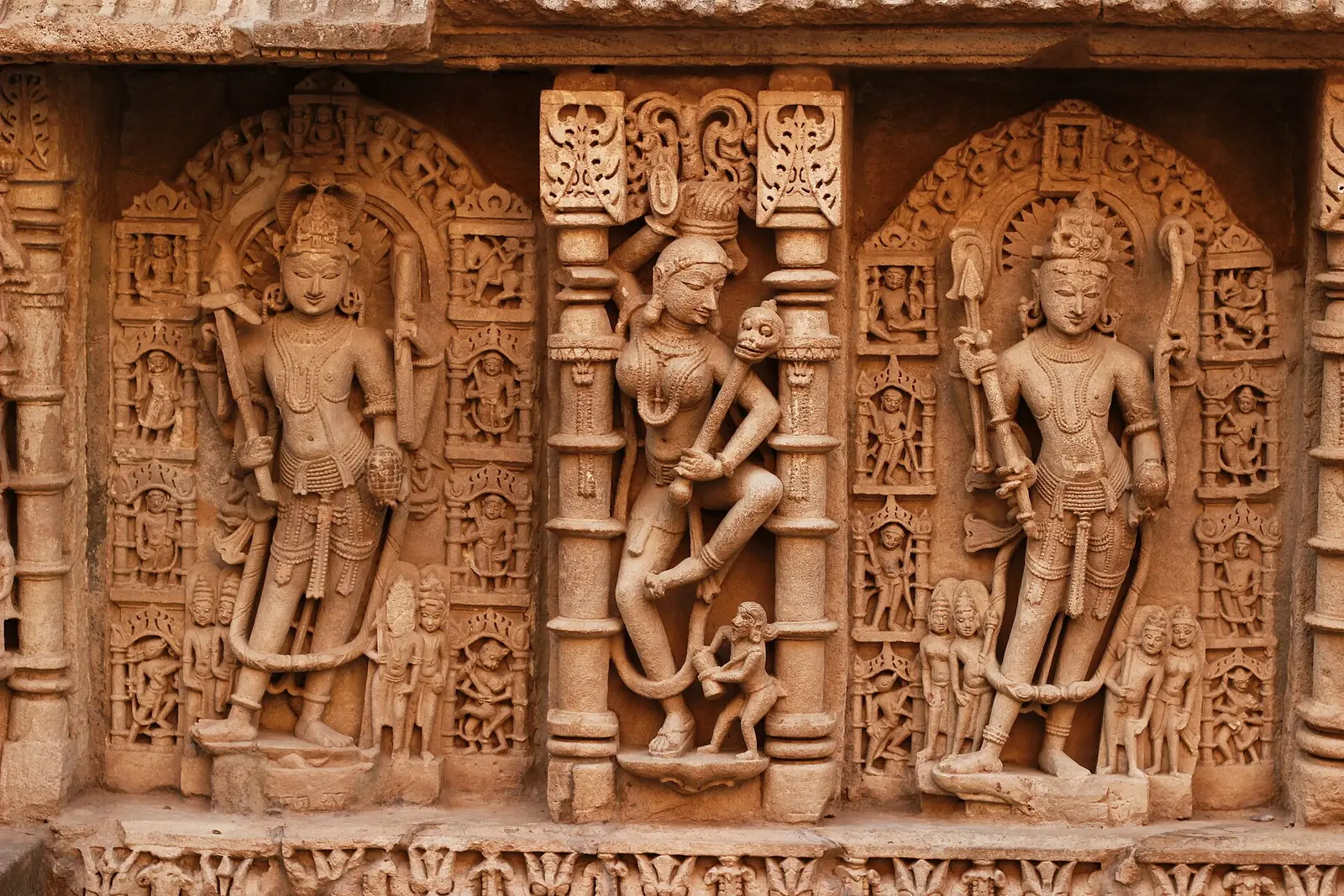
A stair of stone that walks the traveller down, storey by storey, to cool water. Rani ki Vav at Patan was built by Udayamati, queen of the Chaulukya king Bhima I, in the 11th century. Seven levels of steps go down some 28 metres, past more than 500 principal sculptures, Vishnu's avatars among them. UNESCO listed it in 2014.

दर्शन · VisitRani ki Vav, Patan, Gujarat
Rani Udayamati
Raniji ki Baori, Bundi
बावड़ी · WaterBaori

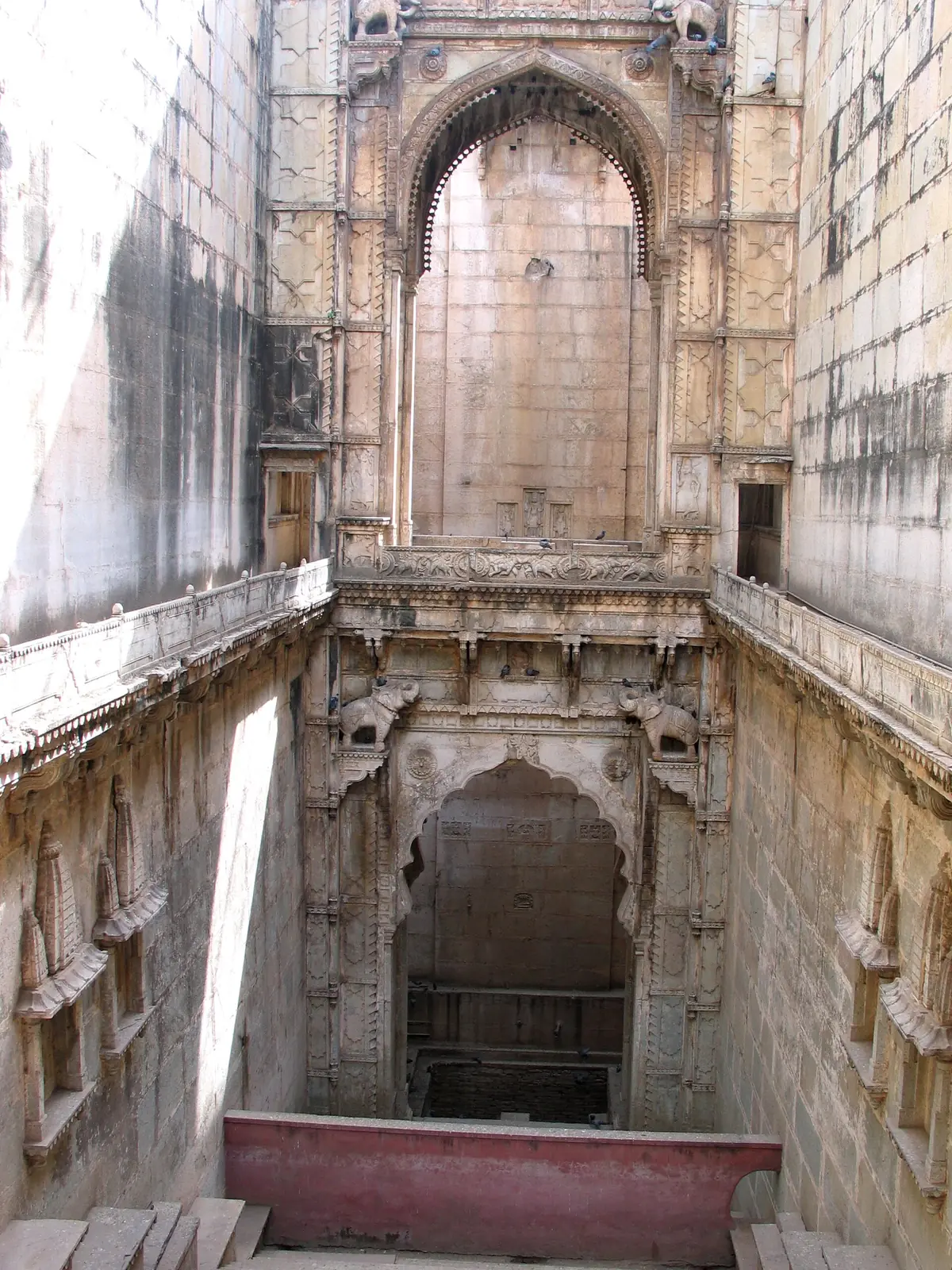
In Rajasthan the stepwell was a public gift, often from a queen, with a shrine on its landings. Rani Nathavati Solanki, queen of Raja Anirudh Singh, completed the Raniji ki Baori at Bundi in 1699. It drops about 46 metres. A high arched gate on carved pillars opens the descent, stone elephants face each other at the corners, and there are places of worship on its floors.

दर्शन · VisitRaniji ki Baori, Bundi, Rajasthan
Rani Nathavati Solanki

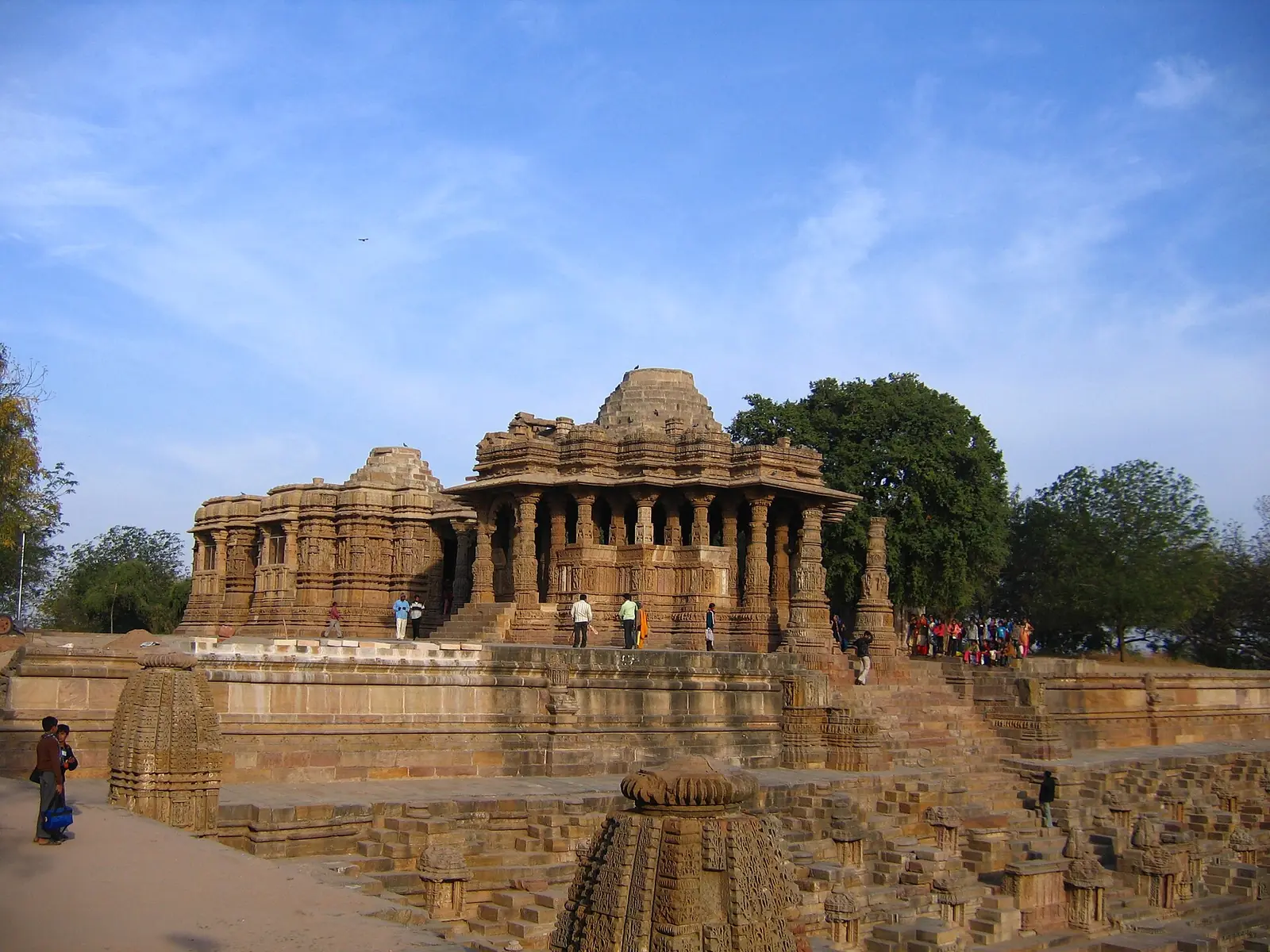
Surya Kund before the Sun Temple, Modhera
कुण्ड · WaterKund

A stepped tank before the temple, where pilgrims bathe and the town draws water. At Modhera the Surya Kund, also called Ramakunda, lies before the Sun Temple of the Chaulukyas. It measures 176 by 120 feet, falls in four terraces, and small shrines sit in niches along the steps. Each flight begins with a half-moon step.

दर्शन · VisitSurya Kund, Modhera, Gujarat

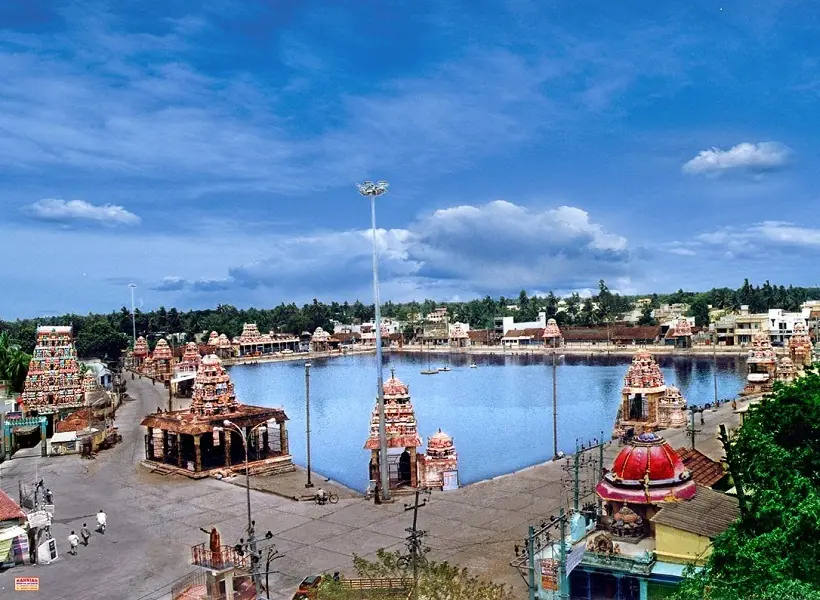
Mahamaham tank, Kumbakonam
पुष्करिणी · WaterPushkarini

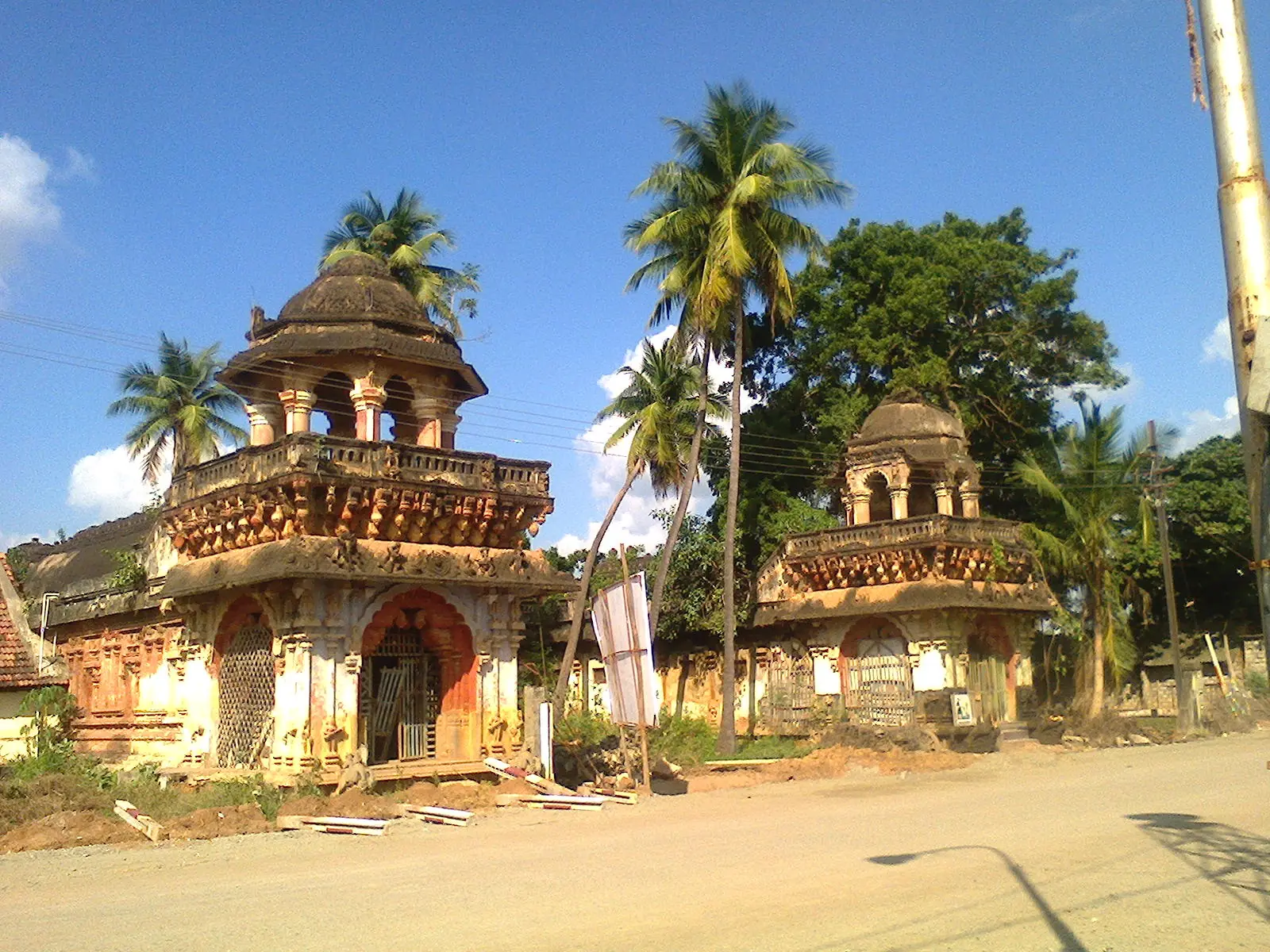
The great tank of a Tamil temple town is its reservoir, its bathing place and its festival ground. The Mahamaham tank at Kumbakonam covers about 21 acres. Govinda Dikshitar, who served the Nayak kings of Thanjavur, is credited with the sixteen small mandapams and the stone steps around it. Every twelve years, when Jupiter enters Simha, crowds gather here for the Mahamaham bath.

दर्शन · VisitMahamaham tank, Kumbakonam, Tamil Nadu
Govinda Dikshitar

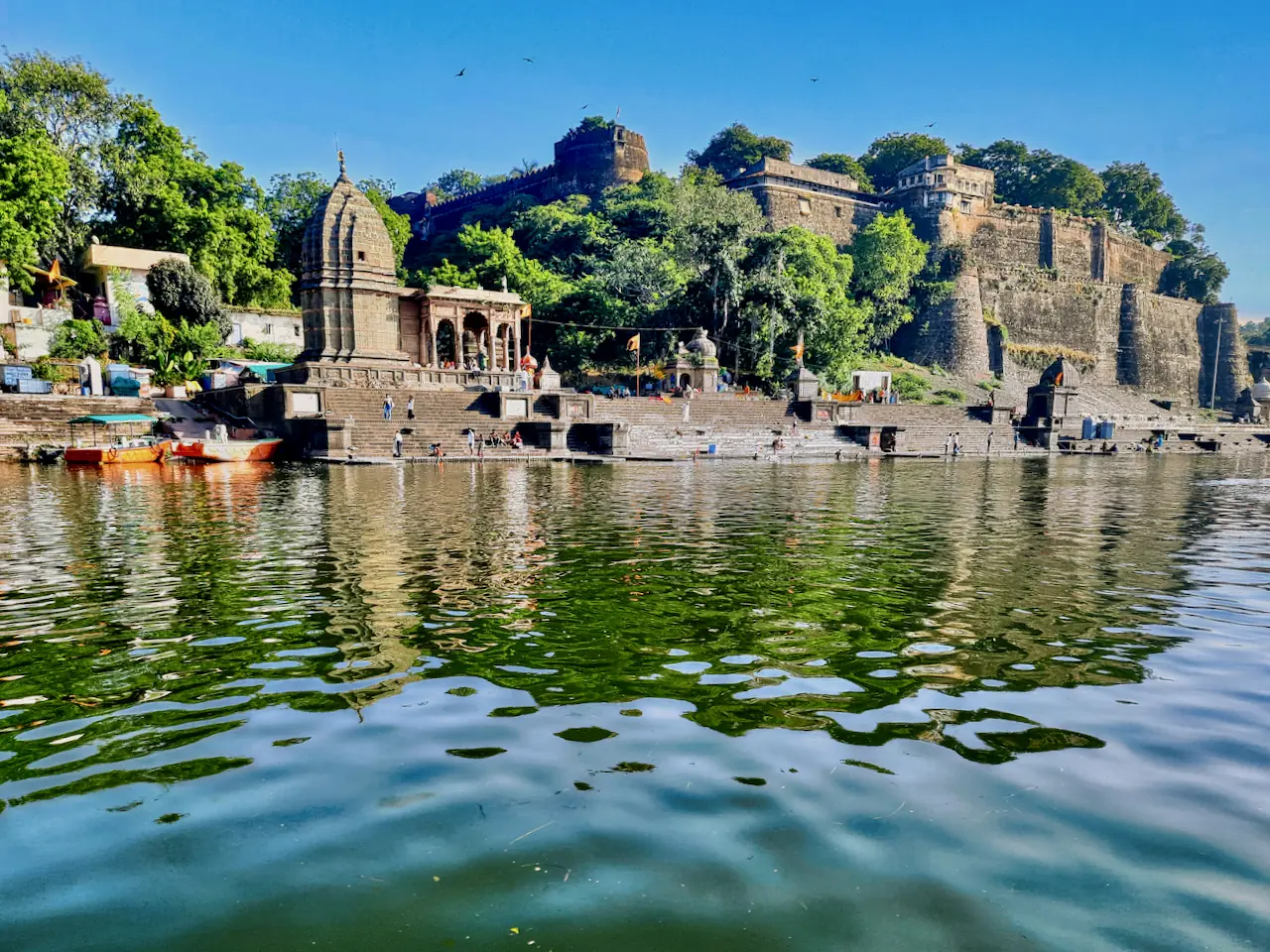
Ahilya fort and ghats, Maheshwar
घाट · WaterGhat

Broad steps let everyone reach the river safely: to bathe, to fill a pot, to offer a lamp. When Ahilyabai Holkar took up rule in 1767 she moved her seat from Indore to Maheshwar on the Narmada. The long stone ghats below her fort, with their temples and memorial shrines, are credited to her.

दर्शन · VisitAhilya Ghat, Maheshwar, Madhya Pradesh
Ahilyabai Holkar

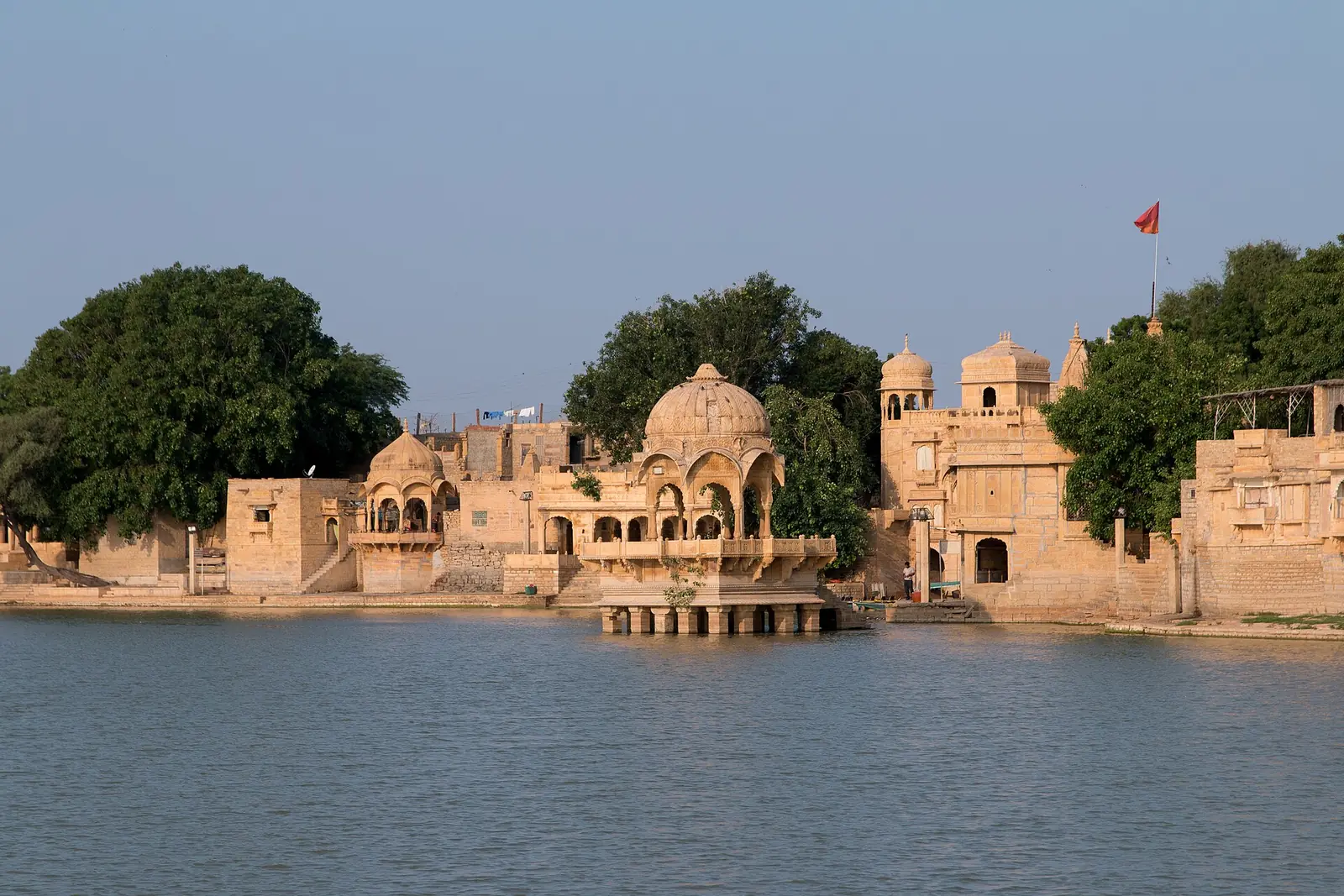
Gadisar lake with its pavilion and Tilon ki Pol, Jaisalmer
तालाब · WaterTalab

In the desert a town lived by its tank, so the tank was given ghats, shrines and gateways. Gadisar was the water supply of Jaisalmer. Maharawal Gadsi Singh rebuilt it in the 14th century and it carries his name. Ghats, chhatris and small temples ring the banks, and the lake is entered by a gateway, Tilon ki Pol.

दर्शन · VisitGadisar, Jaisalmer, Rajasthan
Maharawal Gadsi Singh

Rudradaman’s Sanskrit inscription on the Junagadh rock
जलाशय लेख · WaterJalashaya lekh

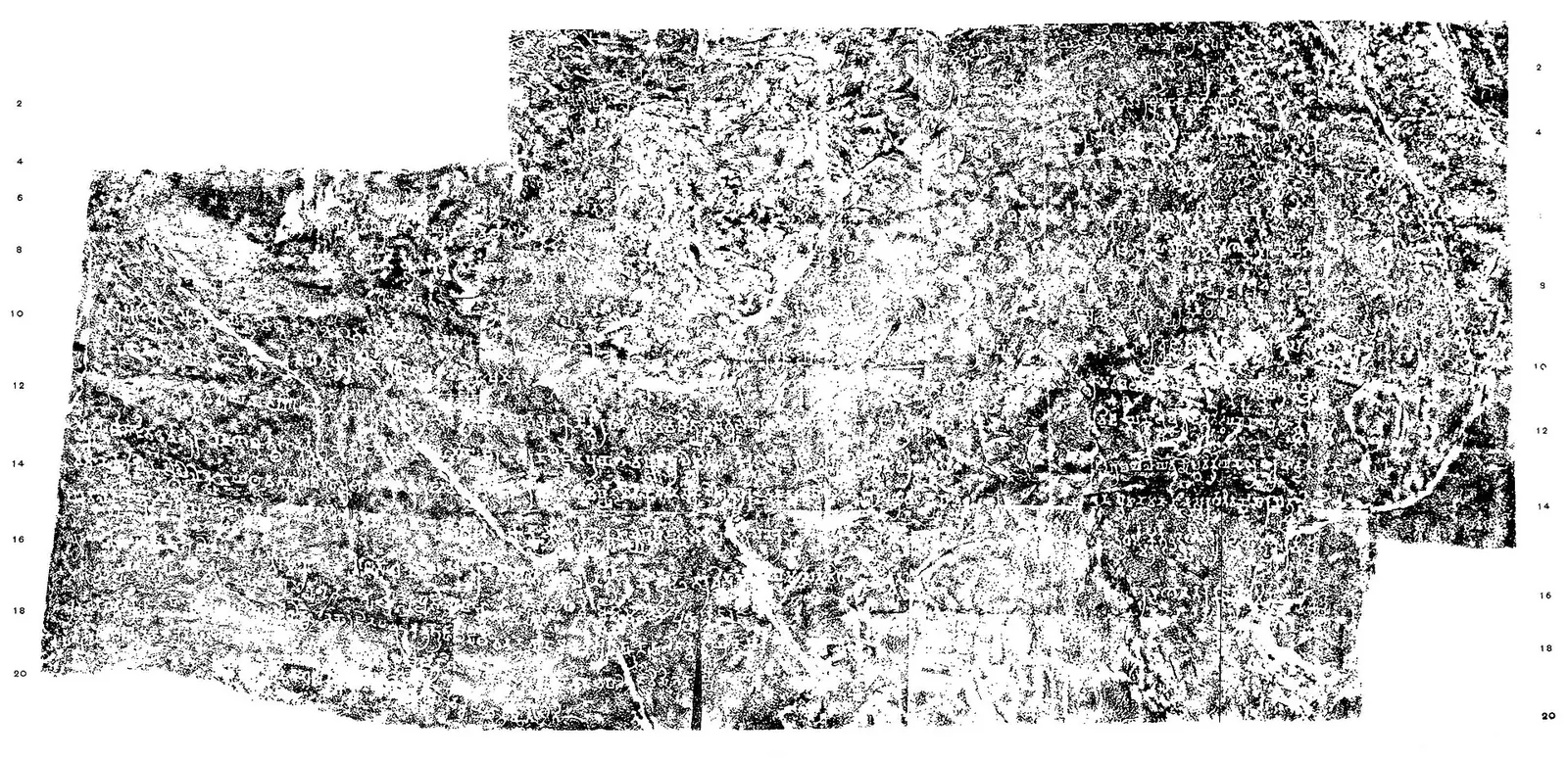
Kings cut into stone who built a lake, who mended it, and how. A rock at Junagadh records Sudarshana lake, made under Chandragupta Maurya's governor Pushyagupta. Rudradaman's Sanskrit inscription of about 150 CE tells of its repair after a storm breached the dam. A later record says Chakrapalita rebuilt it under Skandagupta and raised a temple to Chakrabhrit, the discus-bearer.

दर्शन · VisitJunagadh rock inscriptions, Gujarat

प्याऊ · WaterPyau

A shaded stall of clay pots, or a carved stone fountain, where anyone may drink. Mumbai's merchants gave the city stone pyaus. The Kessowji Naik fountain at Masjid Bunder, built in 1876 by Kessowji Naik and his son Nursey, has a trough for animals and carvings of Nandi, a peacock and an elephant. In villages the same gift is a row of matkas under a thatch.

दर्शन · VisitKessowji Naik pyau, Masjid Bunder, Mumbai
Kessowji Naik

Mukthambal Chatram, Orathanadu
छत्रम् · ShelterChatram

On the road to Rameswaram, Maratha kings of Thanjavur built rest-houses where pilgrims ate and slept free. Serfoji II built the Mukthambal Chatram at Orathanadu in memory of Mukthambal, who asked for it before she died young. An inscription dates its opening to 16 January 1802. It has wooden-pillared verandahs, a well, a tank and a temple, and fed travellers without distinction.

दर्शन · VisitMukthambal Chatram, Orathanadu, Thanjavur
Serfoji II of Thanjavur

Shri Kashi Vishwanath temple
तीर्थ सेवा · ShelterTirtha seva

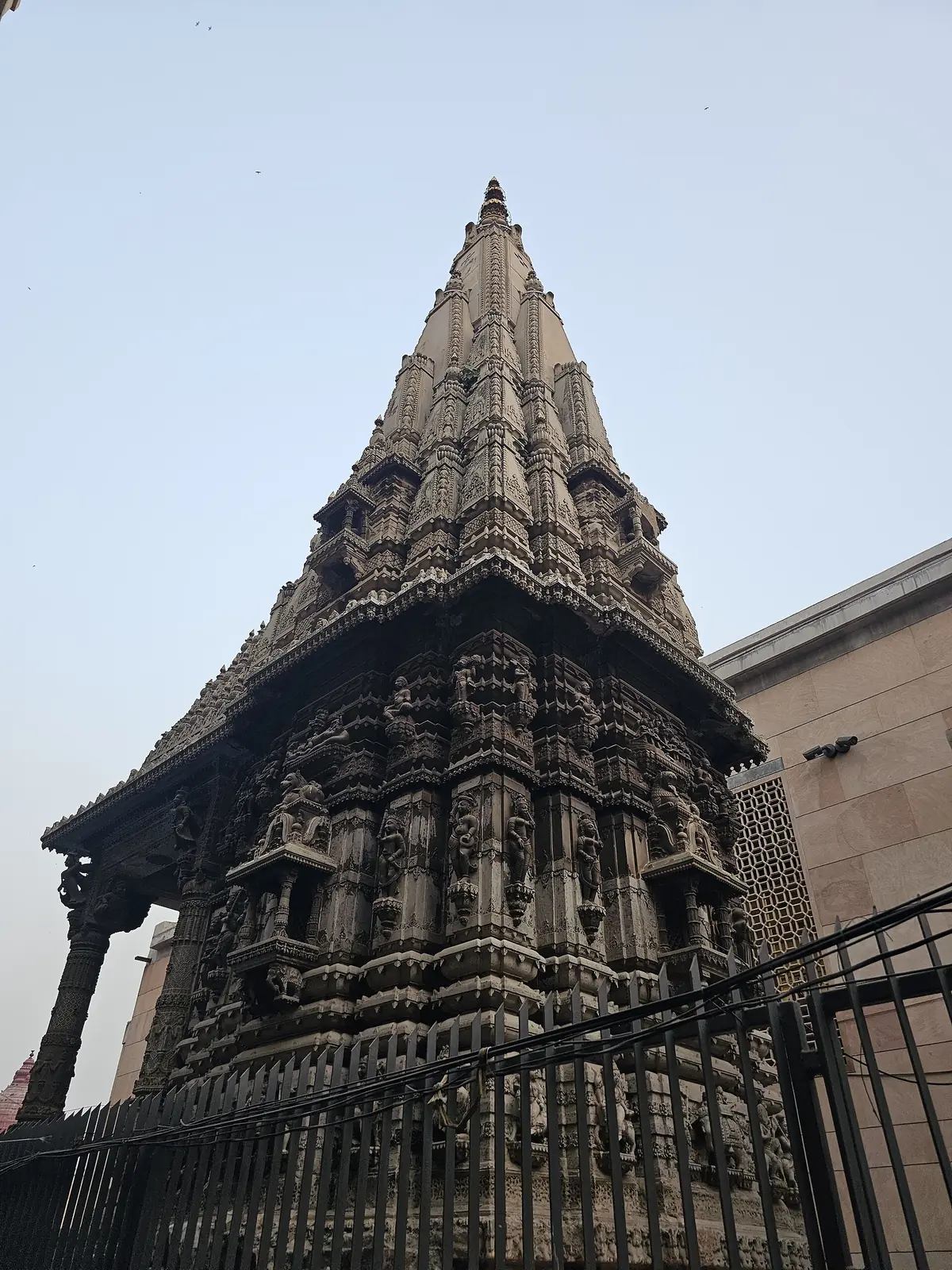
From her small kingdom Ahilyabai Holkar built and fed pilgrims at tirthas across Bharat. She rebuilt the Kashi Vishwanath temple in 1780 and the Vishnupad temple at Gaya in 1787. Records of her charities list dharamshalas at Badrinath and Kashi, ghats at Haridwar and Mathura, a well at Rameshwaram, and food for pilgrims at Dwarka, Puri and Ujjain.

दर्शन · VisitKashi Vishwanath, Varanasi, and many tirthas
Ahilyabai Holkar (1725–1795)

A pol house with its raised otla, Desai ni Pol, Ahmedabad
ओटला · ShelterOtla

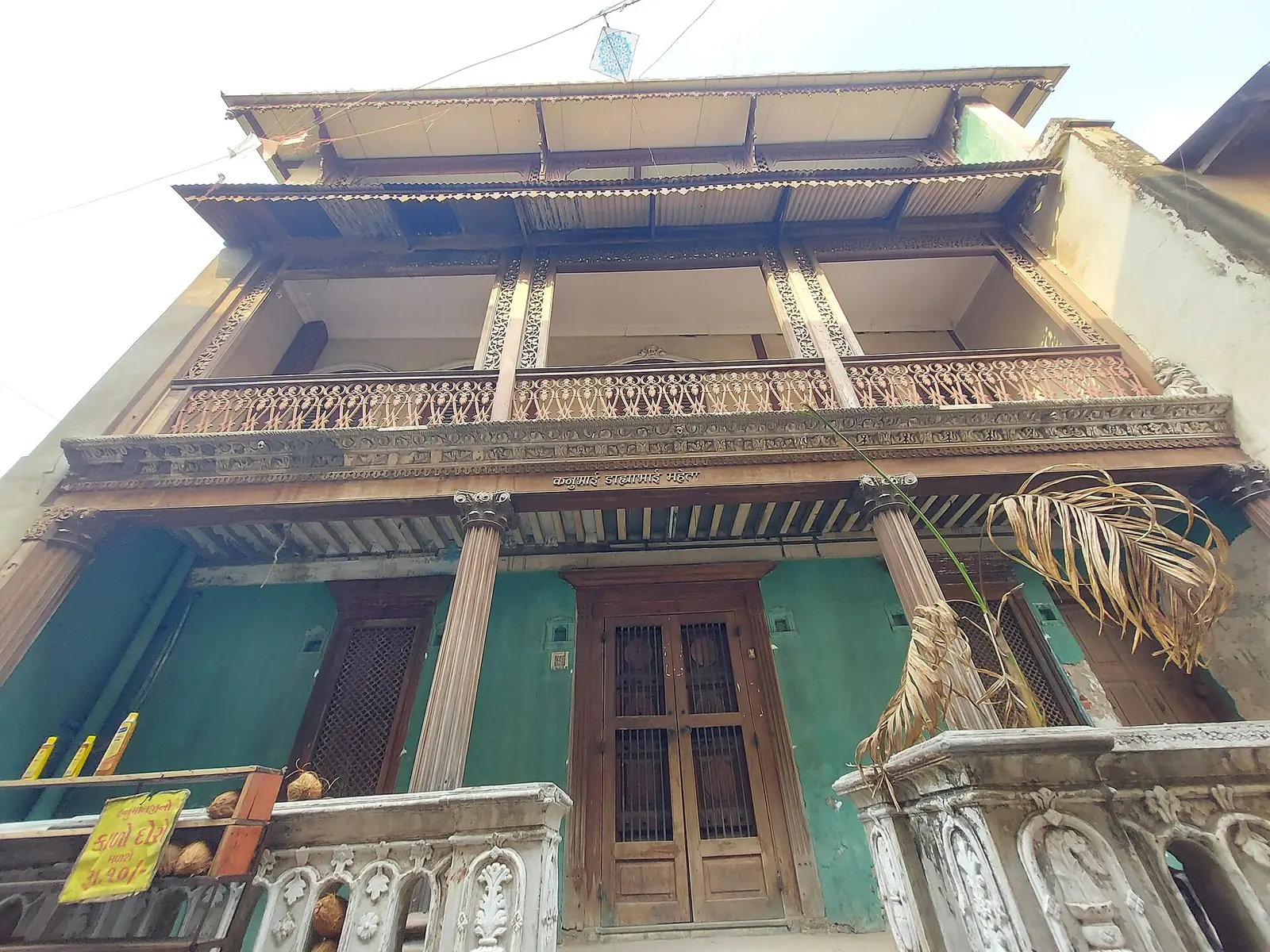
A raised plinth at the door where neighbours sit, talk and watch the street. In the pols of old Ahmedabad every house steps up from the lane on to an otla, often under a row of columns. It belongs half to the family and half to the street. Neighbours sit and talk there day to day. The historic city was listed by UNESCO in 2017.

दर्शन · VisitPols of Ahmedabad, Gujarat

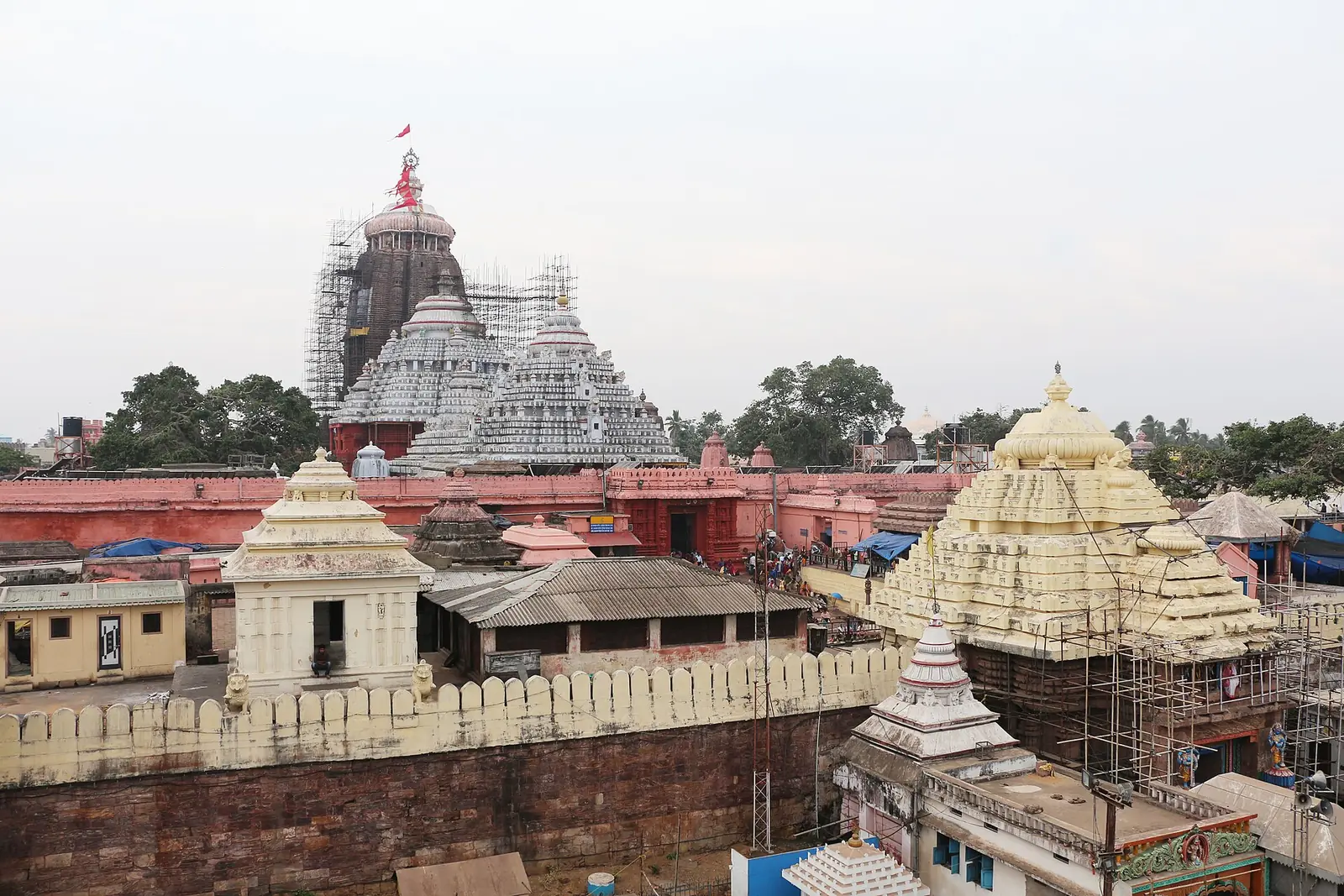
The Jagannath temple, Puri
रोसाघर · FoodRosaghara

At Puri the food is cooked for Shri Jagannath first, then shared by everyone who comes. In the Rosaghara of the Jagannath temple, cooks called Suaras and Mahasuaras make the Mahaprasad in earthen pots over wood fires, with no onion or garlic and no tasting before the offering. It is then eaten at Ananda Bazar, where people of every caste sit and eat together.

दर्शन · VisitJagannath temple, Puri, Odisha

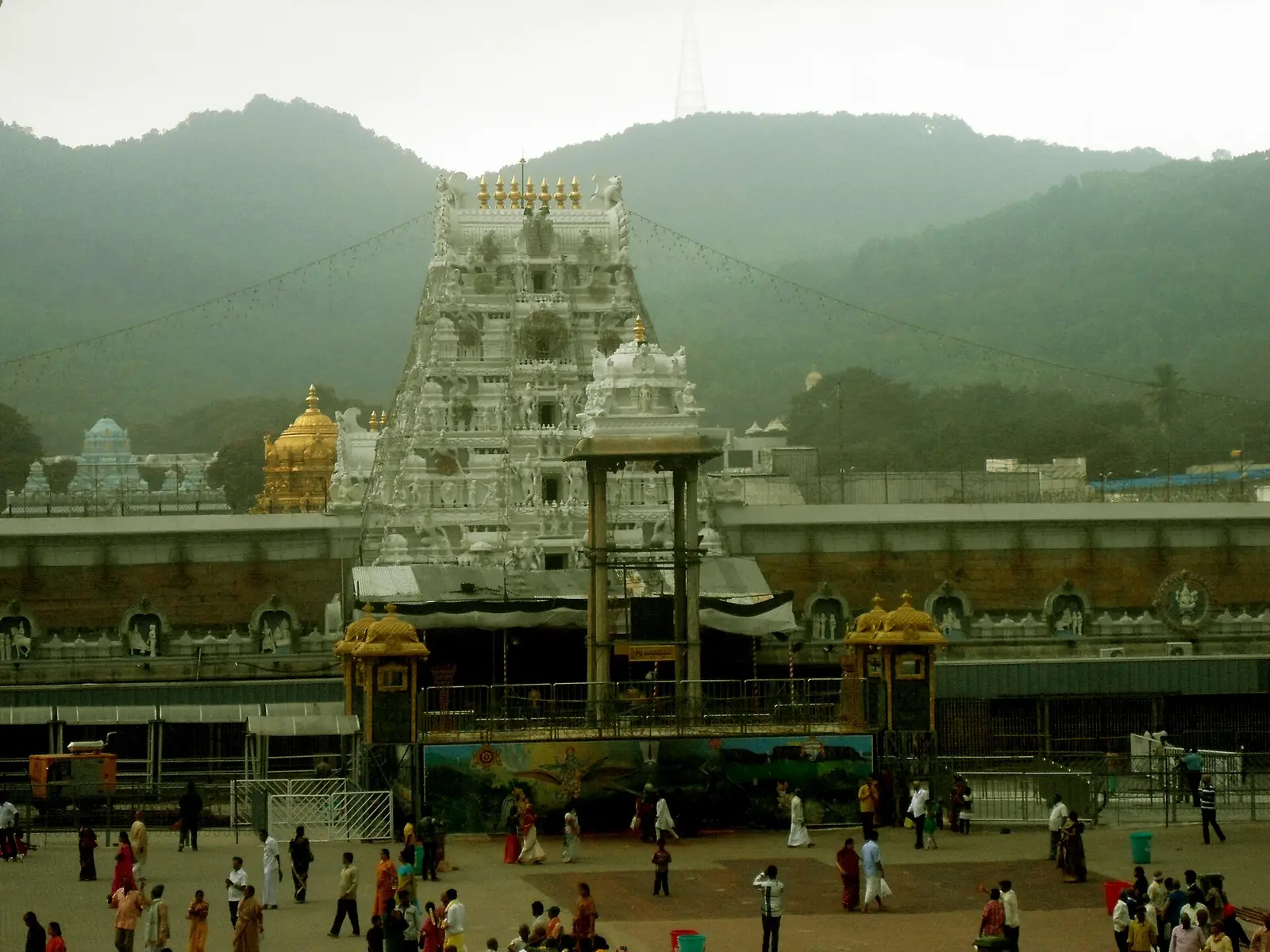
Sri Venkateswara temple, Tirumala
अन्नप्रसादम् · FoodAnnaprasadam

At Tirumala the free meal began with one woman feeding pilgrims at her hut. Tarigonda Vengamamba (1730–1817), poet and devotee of Shri Venkateswara, fed pilgrims at her home and was called Matrusri. The devasthanam began free meals on 6 April 1985. The hall opened in 2011 on the site of her hut bears her name and seats 4,000 at a time.

दर्शन · VisitMatrusri Tarigonda Vengamamba Annaprasadam Complex, Tirumala
Tarigonda Vengamamba

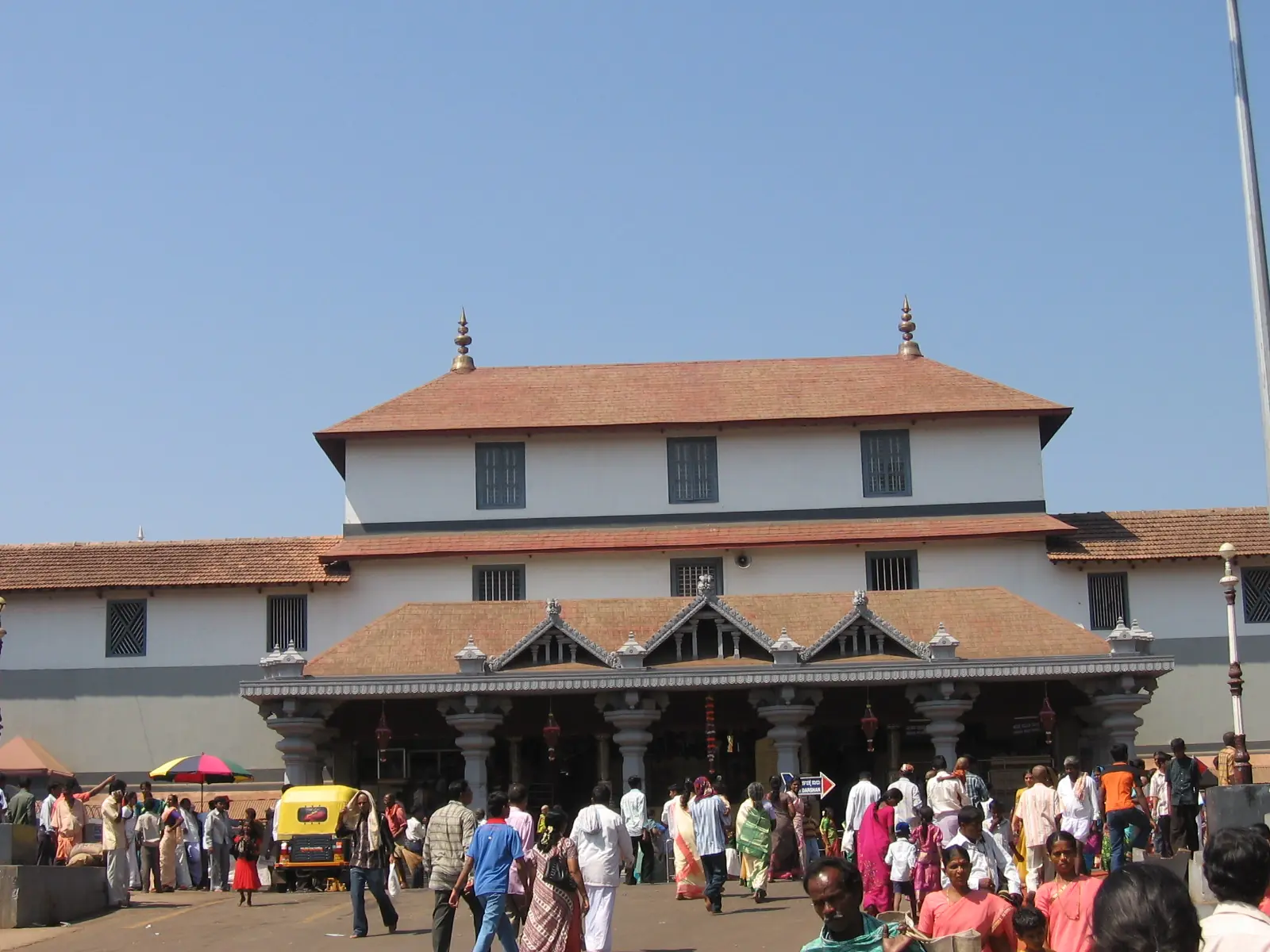
Shri Manjunatha temple, Dharmasthala
चतुर्दान · FoodChaturdana

Food, learning, medicine and freedom from fear: one temple gives all four. At Dharmasthala the Heggade family, hereditary keepers of the Manjunatha temple, hold to anna dana, vidya dana, aushadha dana and abhaya dana. Every pilgrim is fed free in the Annapoorna hall, and volunteers help to serve.

दर्शन · VisitShri Manjunatha temple, Dharmasthala, Karnataka
The Heggade family

गौशाला · All creaturesGaushala

Old, sick and abandoned cows are kept and fed till their natural end. Shri Pathmeda Godham Mahatirtha, near Sanchore, began in 1993 with eight cows. It now shelters tens of thousands across many centres, and is often called the largest cow shelter in the world.

दर्शन · VisitPathmeda, Jalore district, Rajasthan

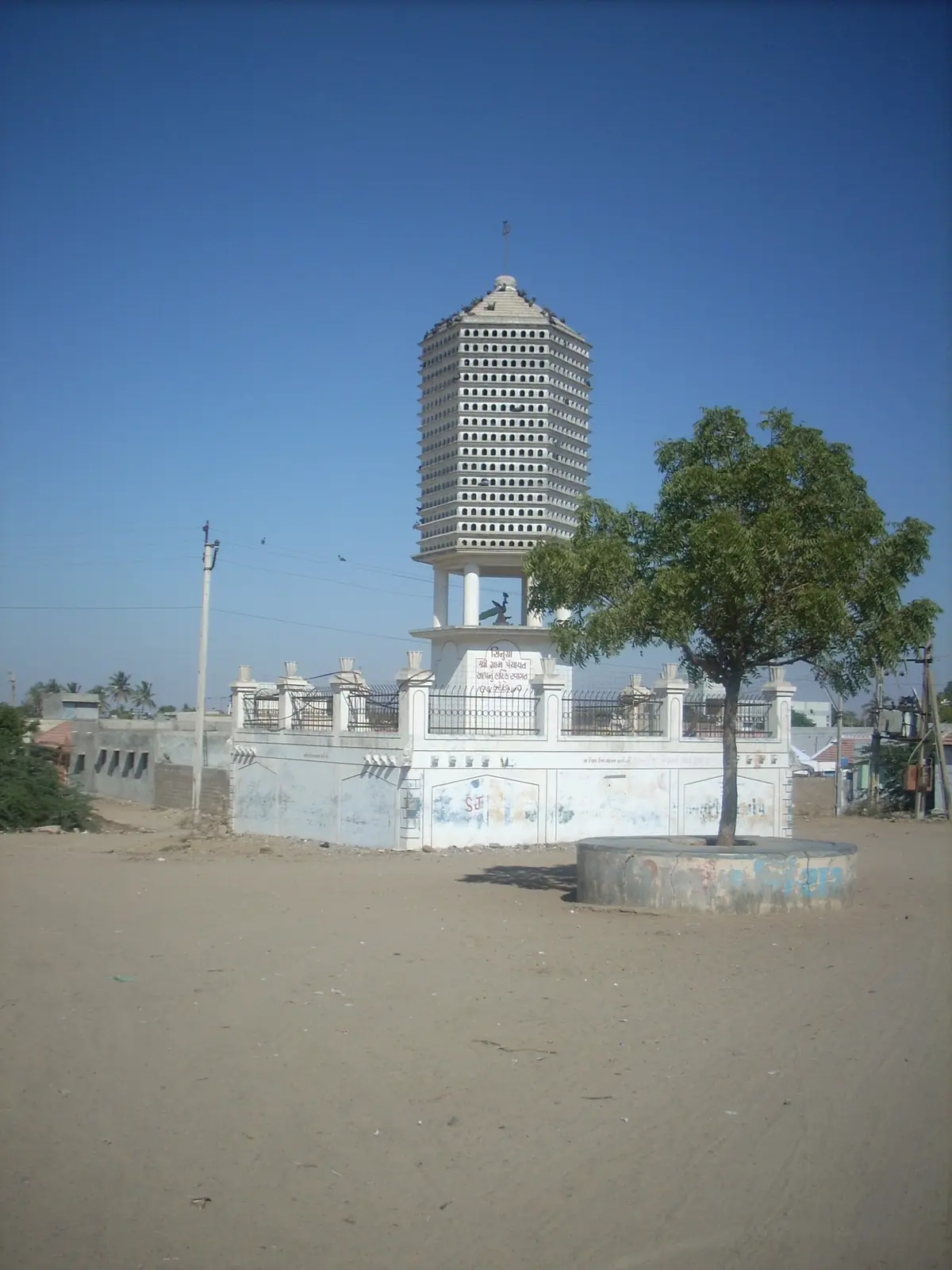
The chabutro at Sinugra, Kutch
चबूतरा · All creaturesChabutro

A carved tower on a pillar, raised in the street or square so birds can eat and nest safely. Gujarati towns and villages raise chabutros, often with a sitting platform at the foot. In Kutch the Mistri craftsmen built one for almost every village; the one at Sinugra was made in 1910 by Seth Khora Ramji. Ahmedabad's Sanskar Kendra keeps one about 120 years old from Kshetrapal ni Pol.

दर्शन · VisitSinugra, Kutch, and the pols of Ahmedabad

Kothari kabutarkhana before the General Post Office, Mumbai
कबूतरखाना · All creaturesKabutarkhana

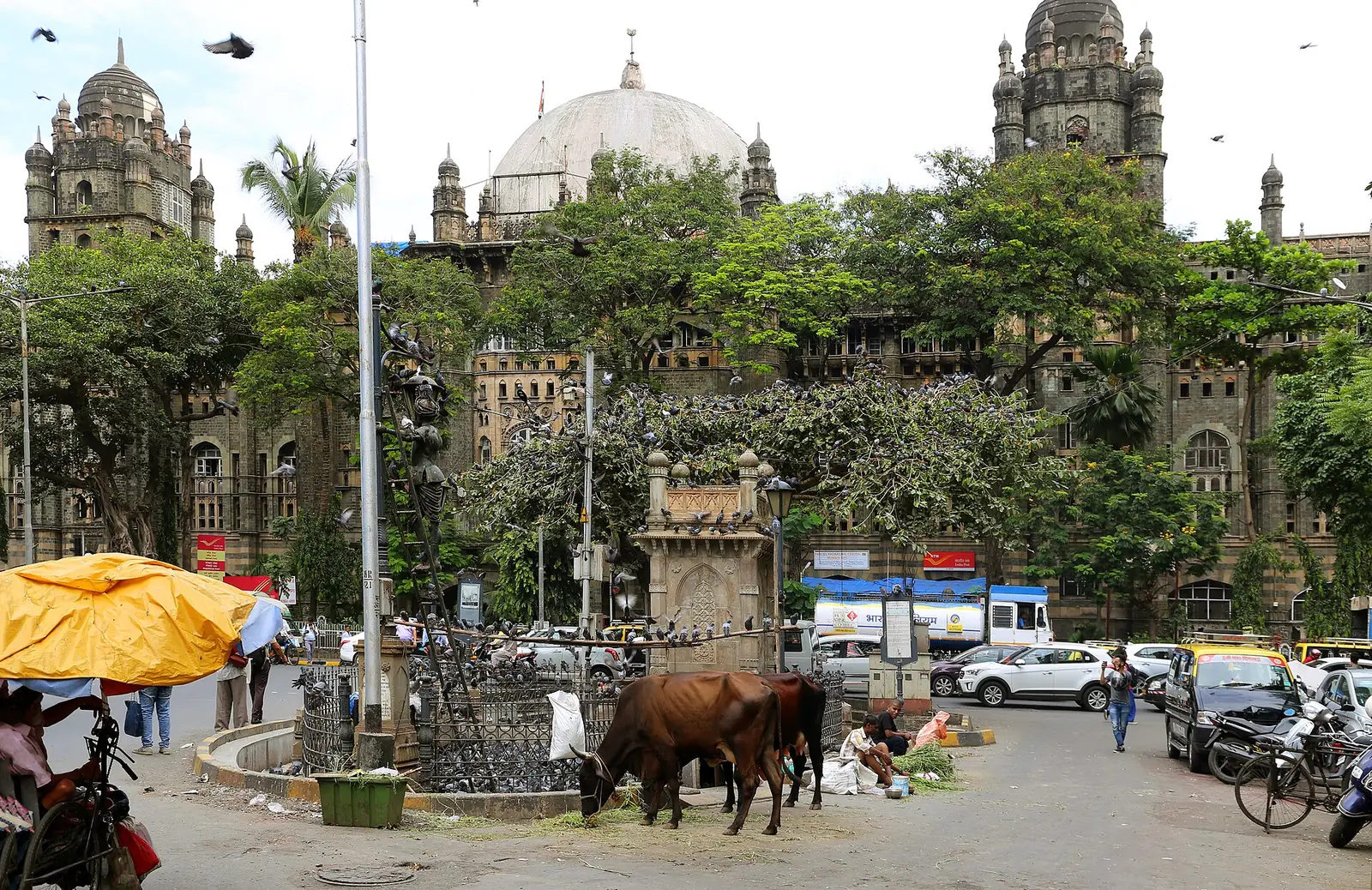
In the city the gift for people and the gift for birds were sometimes built as one. Opposite Mumbai's General Post Office stands the Devidas Prabhudas Kothari Pyau and Kabutarkhana of 1923. Kothari built it in memory of his daughter Leelavati: water below for passers-by, a pigeon house above, framed by four slender towers.

दर्शन · VisitMint Road, opposite the GPO, Mumbai
Devidas Prabhudas Kothari

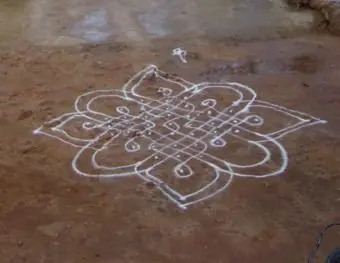
A kolam at a house door, Tamil Nadu
कोलम · All creaturesKolam

Drawn at dawn in rice flour, the kolam is by tradition also a meal for ants and small birds. Women in Tamil homes sweep and wet the threshold before sunrise and draw the kolam in rice flour. By tradition the flour was coarse so that ants, beetles and small birds could eat from it through the day. It is a small, daily bhuta yajna.

दर्शन · VisitHouse thresholds, Tamil Nadu

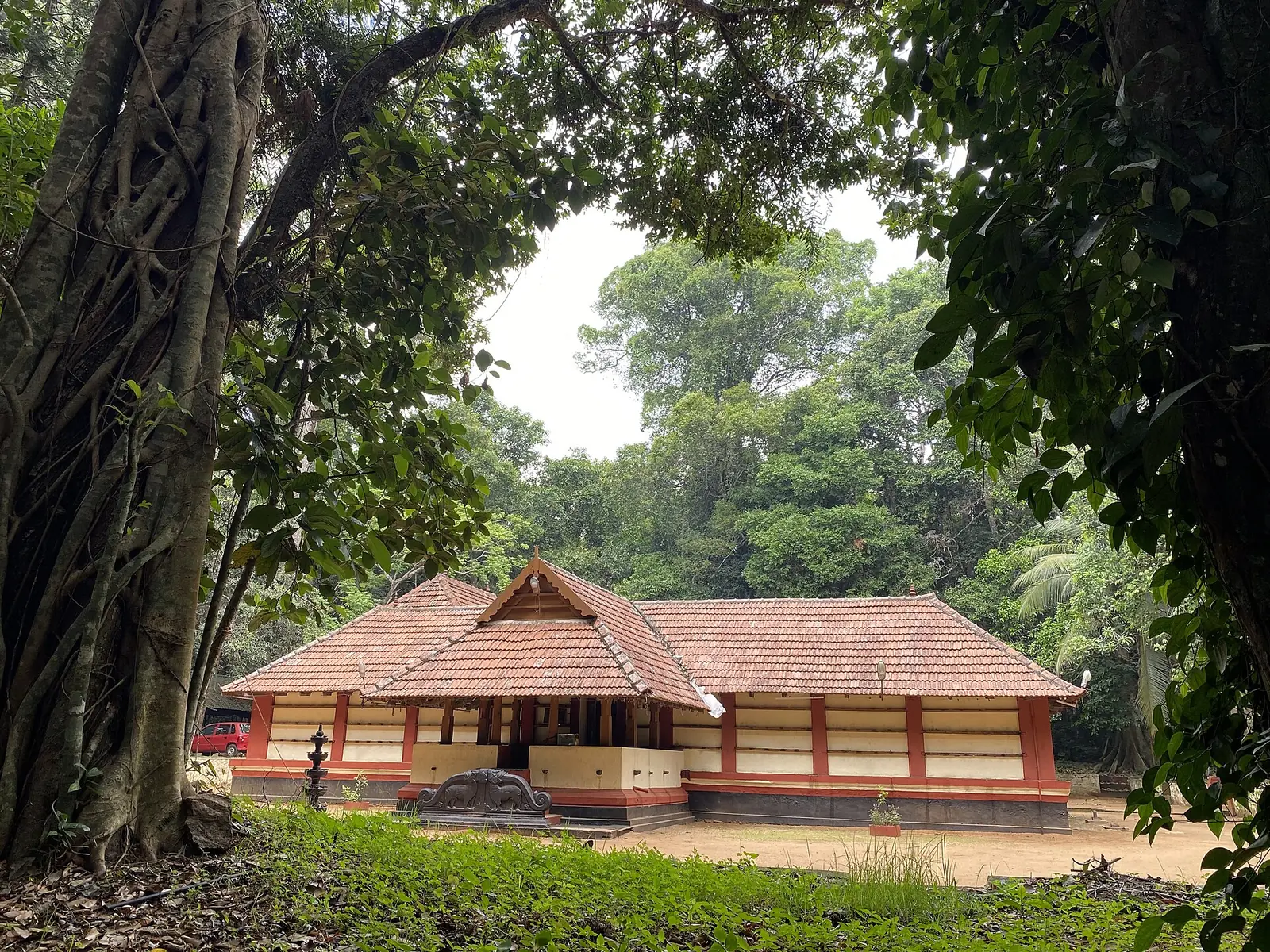
Iringole Bhagavathy temple in its kavu, Perumbavoor
काव · TreesKavu

A forest kept whole around a shrine, because the grove itself belongs to the Devi. Iringole Kavu near Perumbavoor is some 50 acres of forest with a Bhagavati temple at its heart. It has survived because it is sacred. A verse of the Matsya Purana, spoken by Devi Parvati, sets one tree above ten sons.

दर्शन · VisitIringole Kavu, Perumbavoor, Ernakulam, Kerala

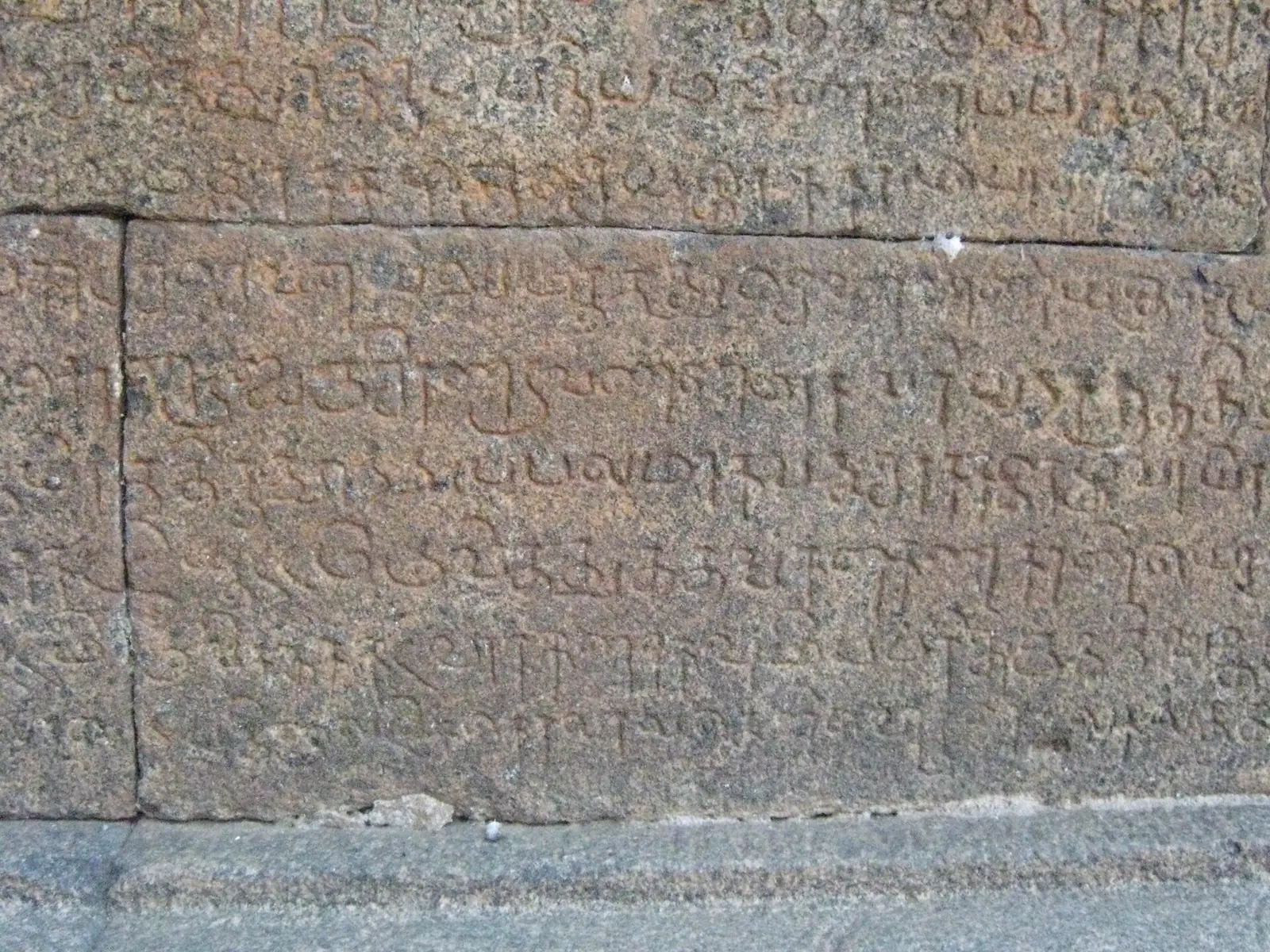
Chola inscriptions on the temple wall at Ennayiram
वेद पाठशाला · Learning and healingVeda pathashala

Temple lands paid for teachers, food and lodging so students could learn without fees. At Ennayiram, an inscription of Rajendra Chola I records a Vedic college with several hundred students. They studied the Vedas and their limbs, Mimamsa, Nyaya, the Puranas and Dharmashastra, and teachers and students were paid in paddy and gold.

दर्शन · VisitEnnayiram, Tamil Nadu
Rajendra Chola I

आतुरशाला · Learning and healingAturashala

A temple could keep a school, a hostel and a hospital from the income of its lands. An inscription of Virarajendra Chola at the Venkatesa Perumal temple, Tirumukkudal, provides for worship, a Vedic school with a hostel, and the Virasolan Atular-salai. This hospital had 15 beds, a physician, a surgeon, two herb-gatherers, two nurses, a barber and a waterman.

दर्शन · VisitVenkatesa Perumal temple, Tirumukkudal, Tamil Nadu
Virarajendra Chola

Ways to serve

From the five daily offerings to a pot of water for the birds.

१पञ्च महायज्ञ · Every day, before the main mealThe five daily yajnas at home
  1. १

    Read or teach a few lines of shastra: brahma yajna.

  2. २

    Offer water to the Pitrs, naming them: pitri yajna.

  3. ३

    Offer a little ghee or food into the fire or lamp: deva yajna.

  4. ४

    Set cooked food outside for crows, cows and ants: bhuta yajna.

  5. ५

    Feed a guest or someone in need before you eat: manushya yajna.

Why. Manu names these five as the householder's daily yajnas. Sayana explains bhuta yajna as food set outside for crows and other beings after the Vaishvadeva offering.

Manusmriti 3.70; Taittiriya Aranyaka 2.10 with Sayana

२सात्त्विक दान · Whenever you giveHow to give
  1. १

    Give because it ought to be given; expect nothing back.

  2. २

    Choose someone who cannot repay you.

  3. ३

    Find a fit receiver: a student, a patient, a pilgrim, the hungry.

  4. ४

    Give at the right place and time, when the need is real.

Why. The Gita calls a gift sattvic when it is given as a duty, to one who cannot return it, at the right place and time, to a fit person.

Bhagavad Gita 17.20

३परिंडा · From March until the monsoonWater for birds and animals in summer
  1. १

    Hang a shallow clay bowl in shade, out of a cat's reach.

  2. २

    Fill it every morning and scrub it every second day.

  3. ३

    Put a flat stone in it so small birds can stand.

  4. ४

    Keep a tub of water at the gate for cows and dogs.

  5. ५

    Scatter a little grain nearby; never salty or spiced food.

Why. Bhuta yajna is the share owed to other beings. In the hot months what they need most is water, and a clay bowl keeps it cool.

Household custom; bhuta yajna (Manusmriti 3.70)

४प्याऊ · Summer, at a gate, shop or bus stopKeep a pyau
  1. १

    Fill two or three clay matkas; clay keeps water cool.

  2. २

    Cover each pot and hang a long-handled ladle.

  3. ३

    Wash the pots daily and change the cloth covers.

  4. ४

    Share the refilling turns with neighbours.

  5. ५

    Put a low trough beside it for animals.

Why. Water to the thirsty is one of the oldest purta gifts. Mumbai's merchants built stone pyaus with troughs for cattle. A matka at your gate does the same work.

Purta-dharma; household custom

५अतिथि सत्कार · When anyone comes to the doorFeed a guest
  1. १

    Offer water first, then a seat.

  2. २

    Do not ask why they came until they have eaten.

  3. ३

    Serve fresh food, and eat after the guest.

  4. ४

    See them to the door when they leave.

Why. Among the teacher's parting words in the Taittiriya Upanishad is atithi devo bhava: let the guest be a deva to you. Manu counts honouring a guest as one of the five yajnas.

Taittiriya Upanishad 1.11.2; Manusmriti 3.70

६वृक्षारोपण · At the start of the monsoonPlant and tend a tree
  1. १

    Choose a native tree: neem, peepal, banyan, jamun or mango.

  2. २

    Plant where its full spread will not crack a wall.

  3. ३

    Guard it from goats with thorns or a mesh ring.

  4. ४

    Water it through its first two summers.

  5. ५

    Plant on a birthday or a parent's tithi, and keep watching it.

Why. The arama, a garden of flowers and fruit, is counted among purta works. A tree gives shade and fruit to strangers long after the planter is gone.

Purta-dharma (verse quoted by Aparārka); Matsya Purana

७सेवा · On a free day, and at festivalsSeva at a temple or ghat, and keeping shared places clean
  1. १

    Ask the temple office where help is needed.

  2. २

    Sweep, wash vessels, or serve in the prasadam hall.

  3. ३

    At a ghat, carry rubbish away; never throw it in the river.

  4. ४

    Pick up litter at a well, tank or pyau you use.

  5. ५

    Serve without asking for darshan out of turn.

Why. Temple kitchens such as Dharmasthala's welcome volunteers to serve meals. The steps, the tank and the river are shared, so keeping them clean is part of the gift.

Temple custom

A kolam at a house door, Tamil Naduशौच · Also readClean is the first beauty →The swept threshold, the bath before puja, the scrubbed brass: cleanliness in Hindu life.