 सिंदूर · Vermilion in the partingSindoor
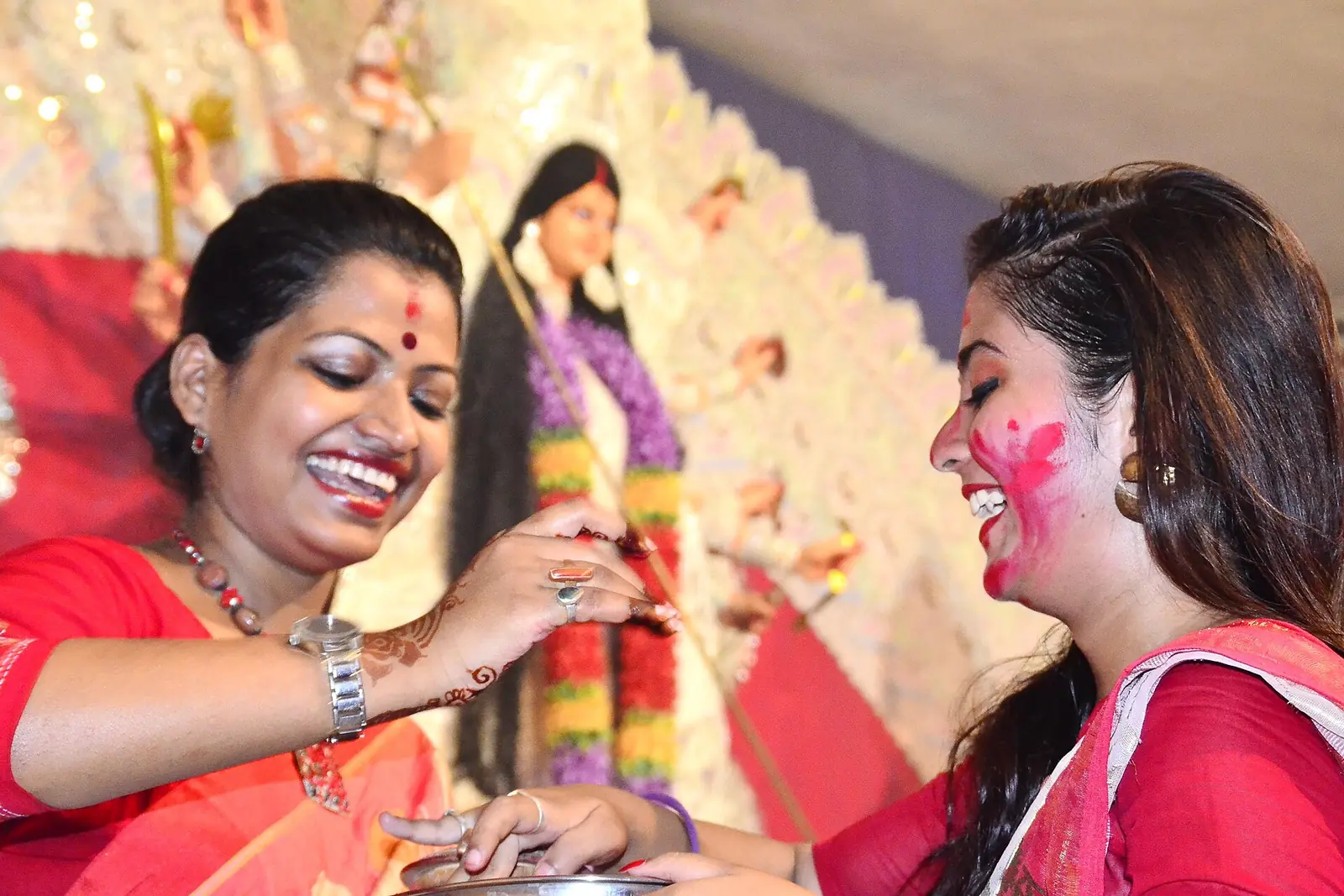
The red line in the parting of the hair is the first sign of a married Hindu woman in much of India. The groom fills the parting at the wedding, in sindoor daan. After that the wife wears it daily. On Vijaya Dashami, Bengali women smear one another with sindoor before Mata Durga leaves, in sindoor khela.
Suhaag, the wife's blessing on her husband's life.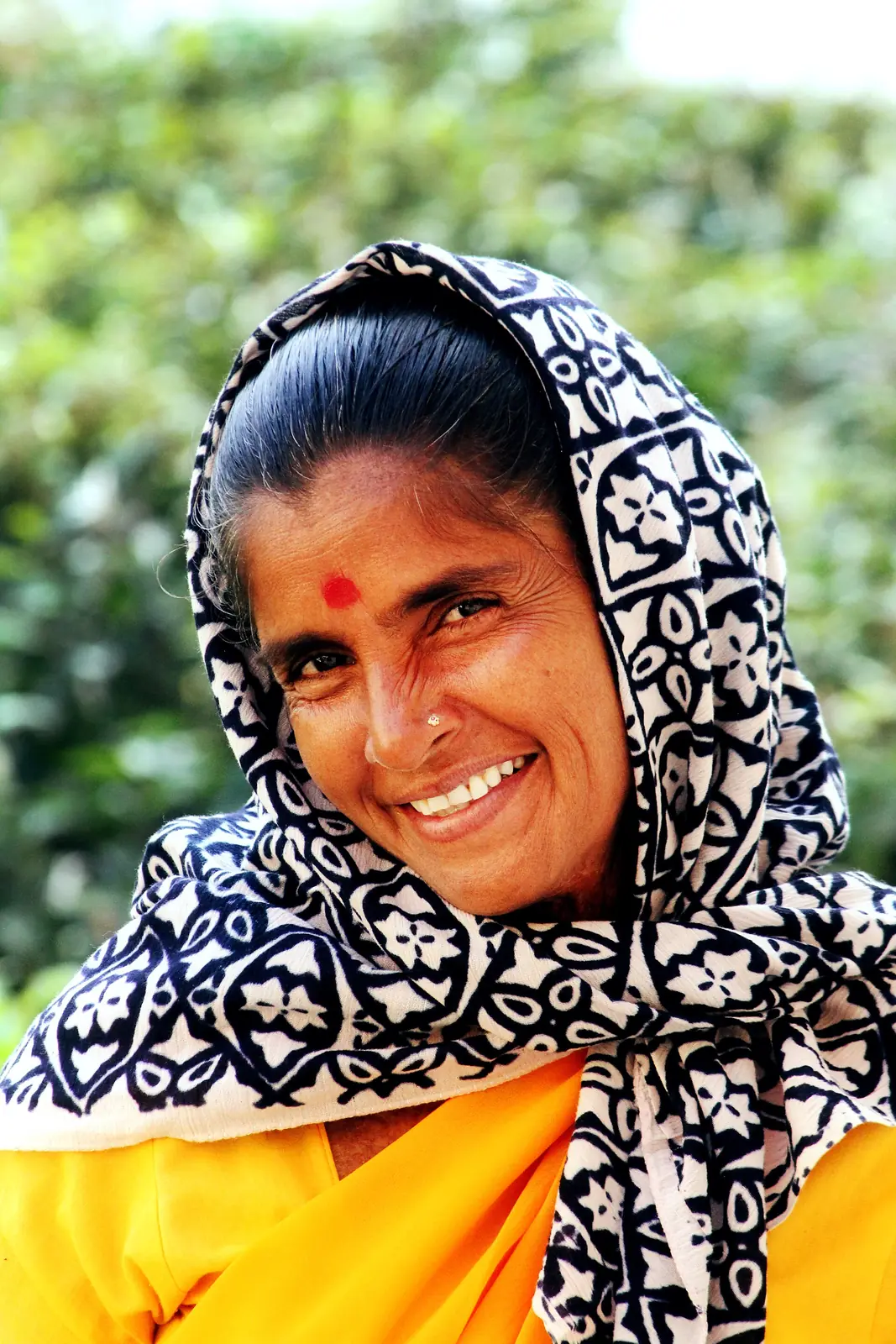 बिंदी · Forehead dotBindi
Bindi means a drop or dot, worn between the brows where the ajna chakra is placed. It was made with kumkum, sindoor or sandal paste, and is now often a felt sticker. Married women in many regions wear red; unmarried girls may wear any colour. The bridal bindi can be a pattern of small dots over the brows.
Auspiciousness, the third eye, a married woman's mark.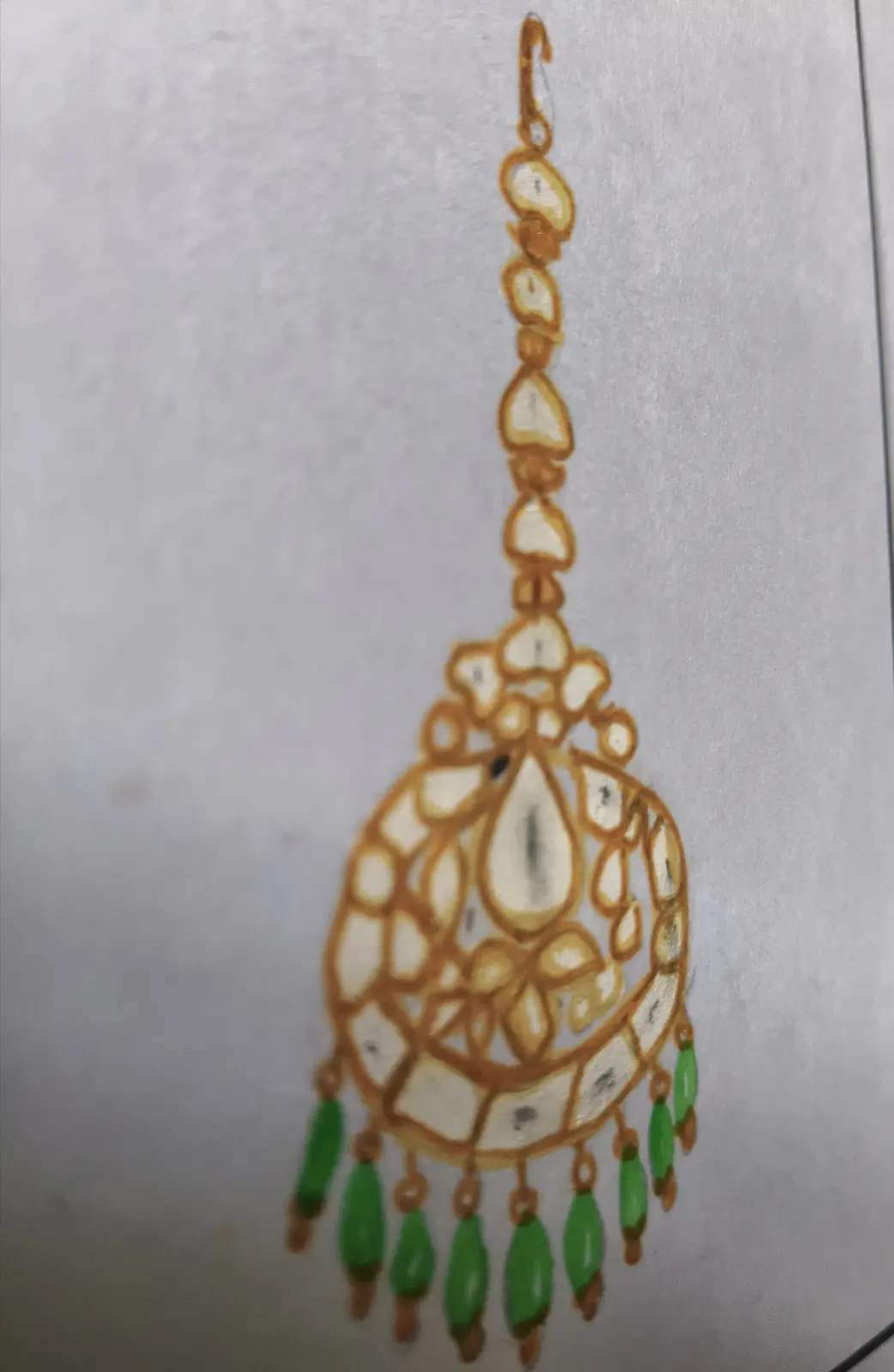 मांग टीका · Parting pendantMaang tikka
The maang tikka hangs on a chain along the parting and rests on the forehead. A hook holds the chain in the hair and the pendant falls where the bindi sits. In the south the same ornament is the nethi chutti, often with side chains framing the hairline, and dancers wear it in temple jewellery.
It marks the parting, the place of sindoor.४काजल · Kohl for the eyesKajalKajal is lamp-black mixed with ghee, drawn along the rims of the eyes. It is made at home by holding a brass plate over a lit lamp and scraping off the soot. Brides, dancers and newborns all wear it, the baby with an extra dot to turn away nazar.
Beauty of the eyes and protection from the evil eye.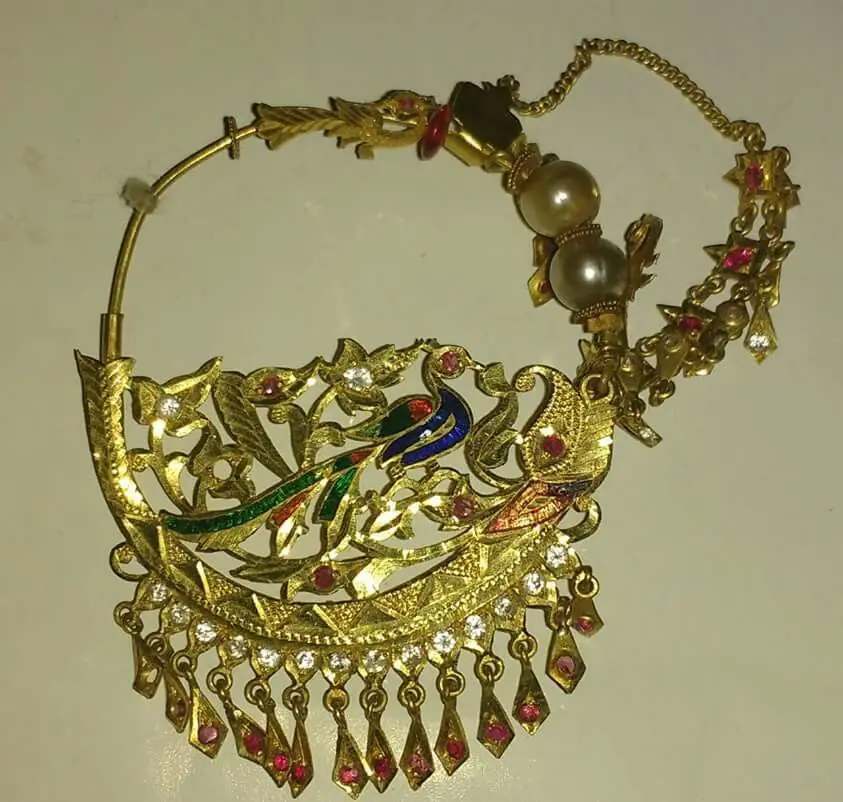 नथ · Nose ringNath
The nath is the bride's nose ring, often so large that a chain carries its weight to the hair. It is worn in the left nostril in most of the north. Shapes differ widely: the Maharashtrian nath is a curve of pearls with a ruby and emerald, the Tehri nath of Garhwal is a great gold hoop, and the south wears studs on both sides.
A bride's ornament, given by her family; in many homes removed only in widowhood.६कर्णफूल · Ear flowerKarnphoolKarnphool, "ear flower", is a large stud shaped like a blossom, often with a bell (jhumka) below. Ear-piercing is one of the sixteen samskaras, karnavedha, so earrings are worn by girls from infancy. Heavy karnphool are held by a chain (sahara) that runs into the hair.
The karnavedha samskara, beauty, and the hearing of the shastras.७हार · NecklaceHaarHaar is the bride's necklace, worn in layers from a close choker to a long chain over the heart. A bride may wear a hansli or choker at the throat, a rani haar long enough to reach the waist, and her mangalsutra between. Gold, pearls, kundan and coins are all used, region by region.
Wealth given as stridhan, the bride's own property.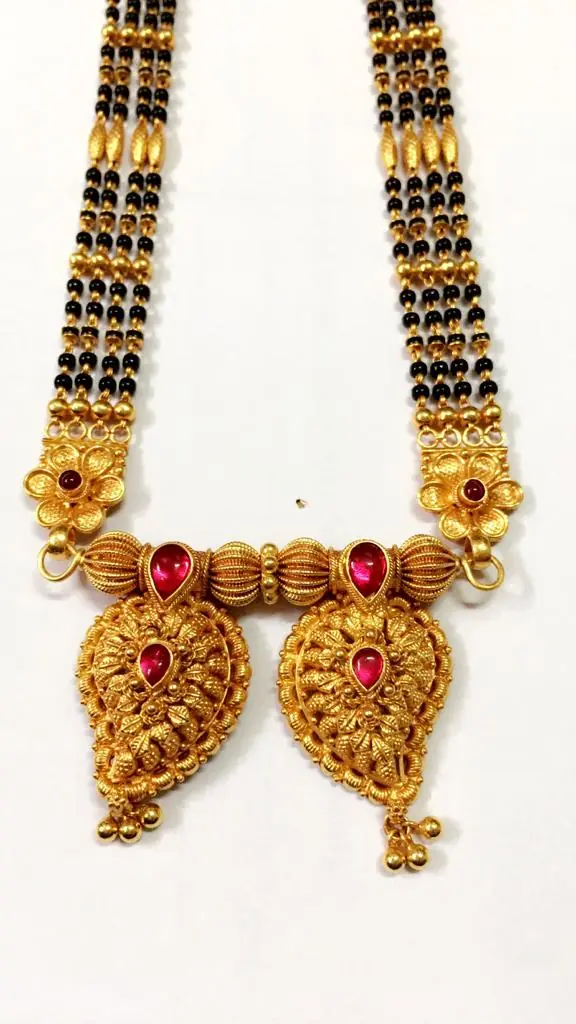 मंगलसूत्र · The auspicious threadMangalsutra
The mangalsutra is the necklace the groom ties at the wedding, and the wife's most precious ornament. In the commonest form it is black beads strung with gold, sometimes on a thread dyed with turmeric. The Lalita Sahasranama names the Devi's mangalya sutra, and in the south the tying of the tali is itself the moment of marriage.
Marriage, the husband's long life, protection.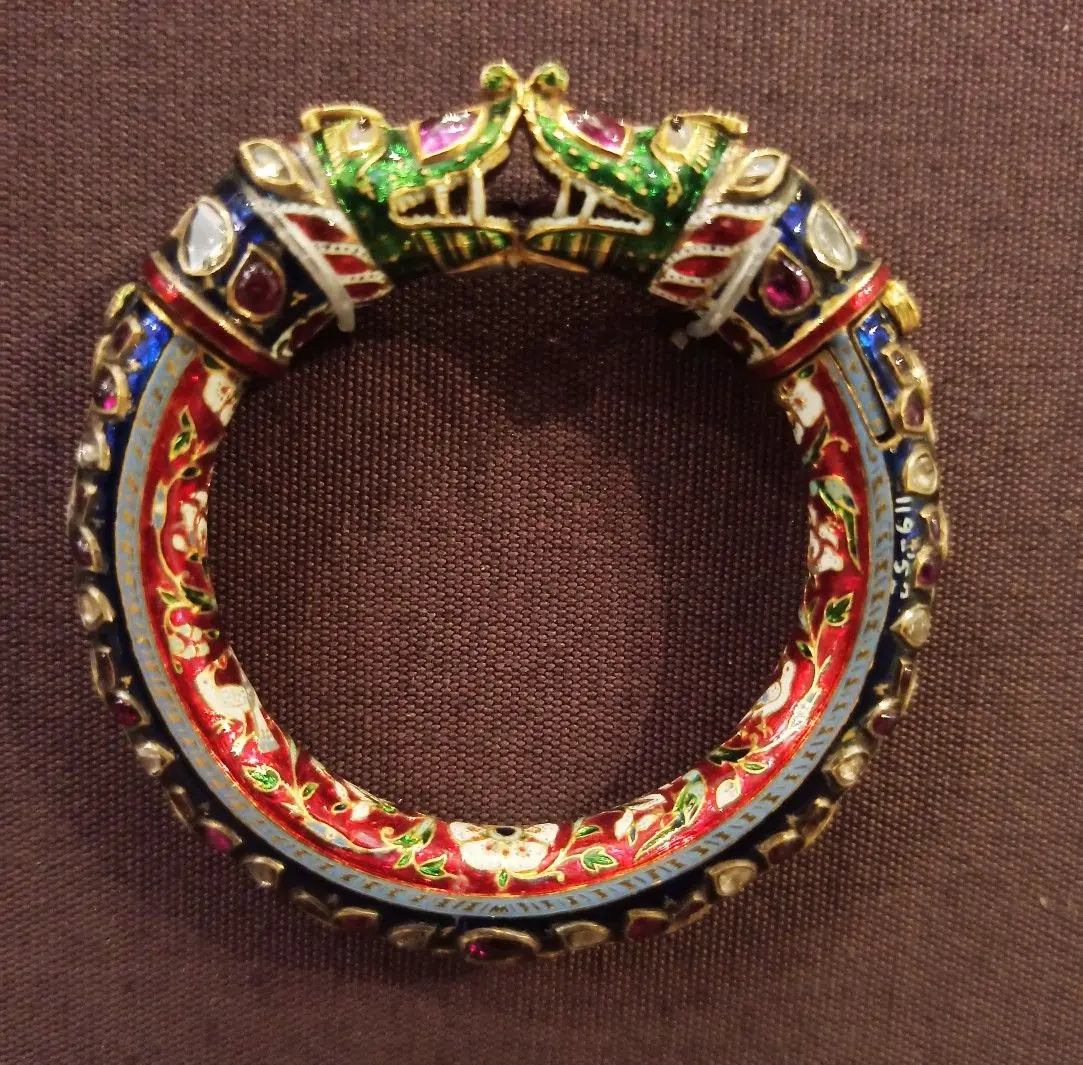 बाजूबंद · ArmletBajuband
The bajuband is a band or ornament tied on the upper arm. Old murtis of Devi and of apsaras wear armlets, and brides still do. In the north it is often a jewelled plaque tied with silk tassels; in the south the inverted-V vanki does the same work.
Strength and beauty of the arm.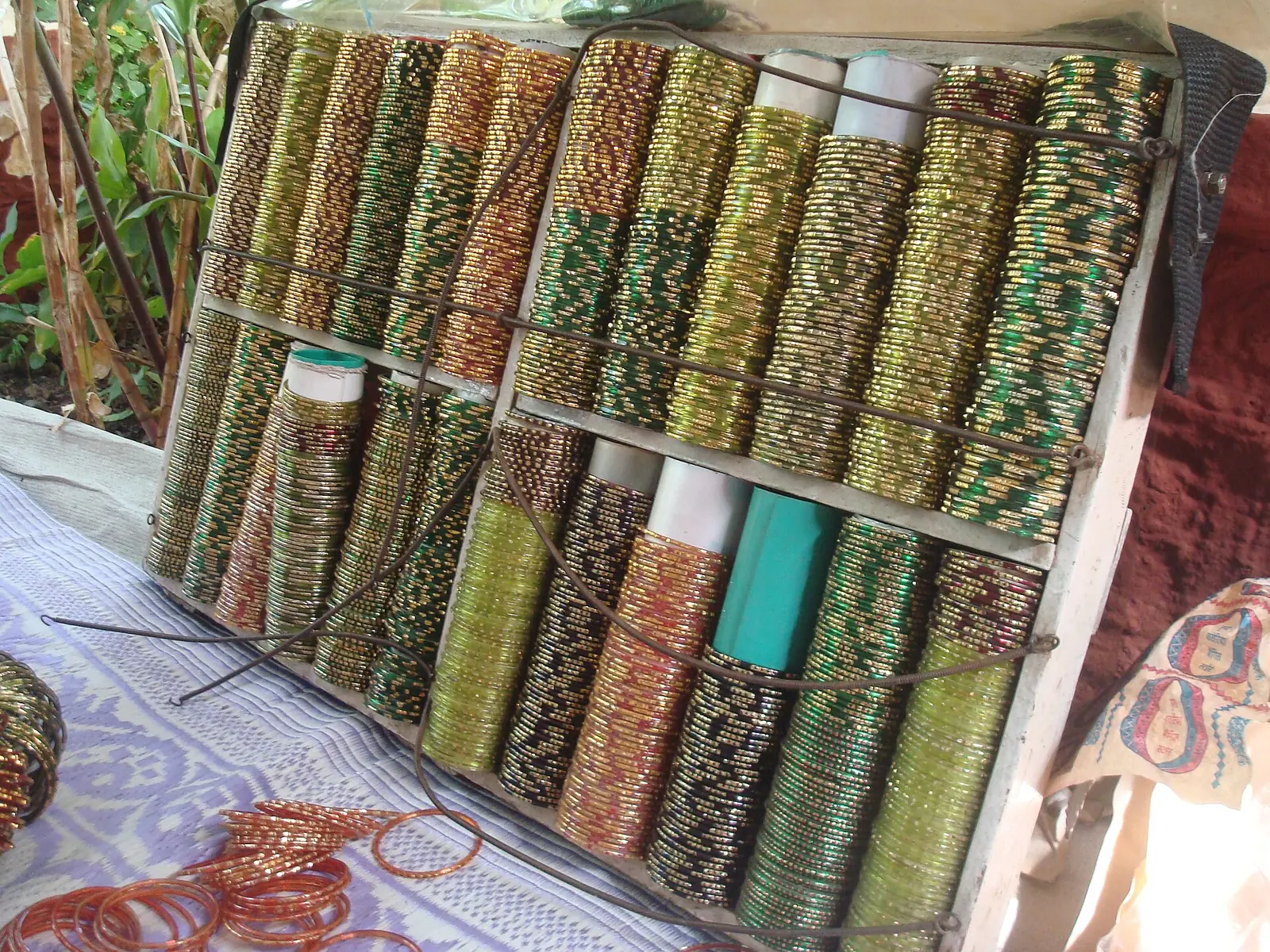 चूड़ियाँ · BanglesChudiyan
Bangles are the sound of a married home: glass, lac, shell, gold or ivory, in pairs and in dozens. Every region has its own marriage bangle: the chooda of Punjab, the shankha-pola of Bengal, green glass in Maharashtra and Sawan. Bangles are given at baby showers (valaikappu, godh bharai) so the sound reaches the child.
Suhaag, prosperity and the wish for children.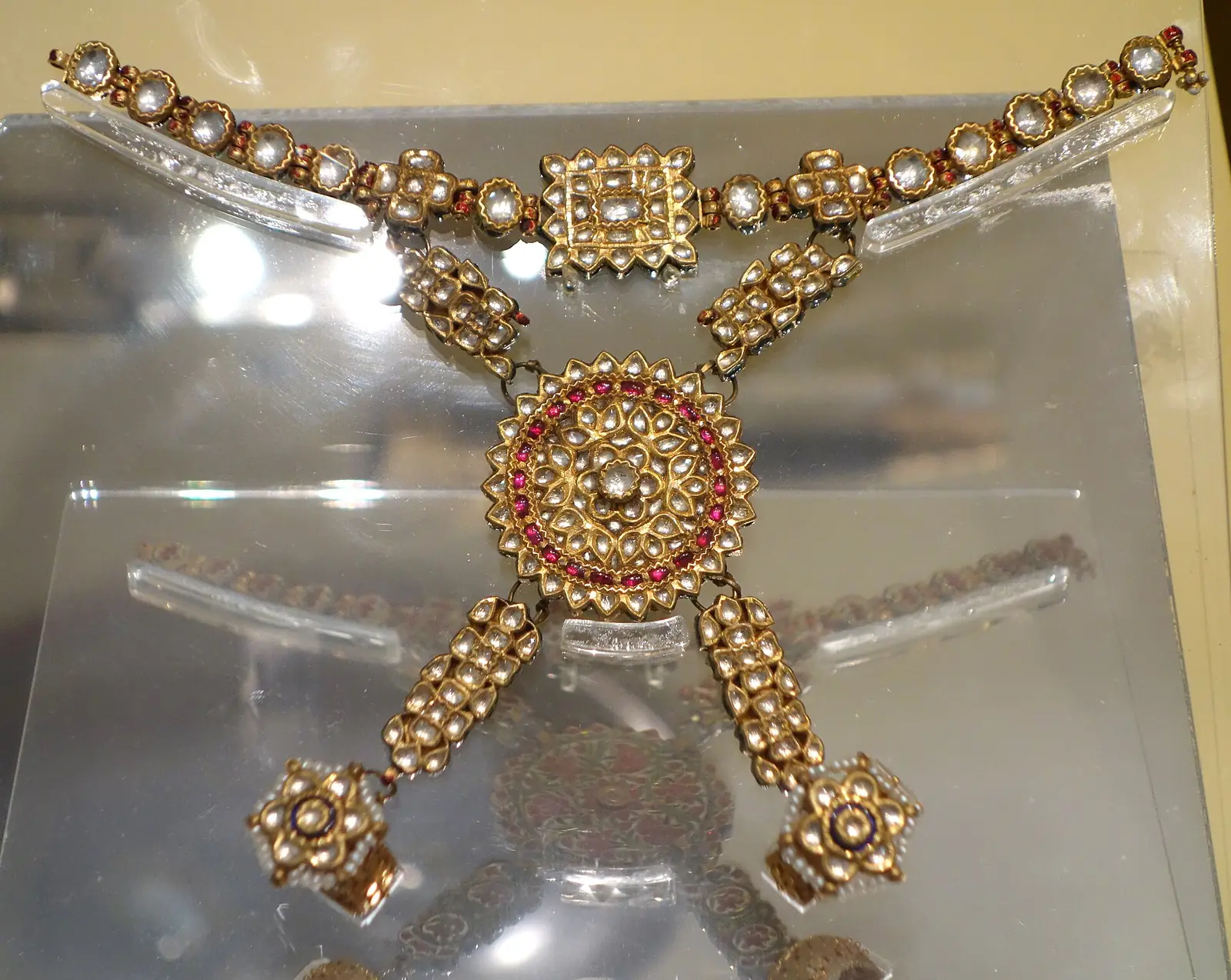 हाथफूल · Hand flowerHaathphool
The haathphool is a flower on the back of the hand, joined by chains to rings and a bracelet. It is mostly a northern and western bridal ornament. The best old pieces from Rajasthan are set with kundan stones on the front and enamel on the back.
The hand that gives in kanyadaan, decorated.१२आरसी · Mirror ringArsiThe arsi is a thumb ring set with a small mirror, worn on the right hand. By tradition it let a veiled bride glimpse her own face, and her groom's. Several old lists of the solah shringar include it in place of the haathphool.
The bride's own reflection, and her first look at her husband.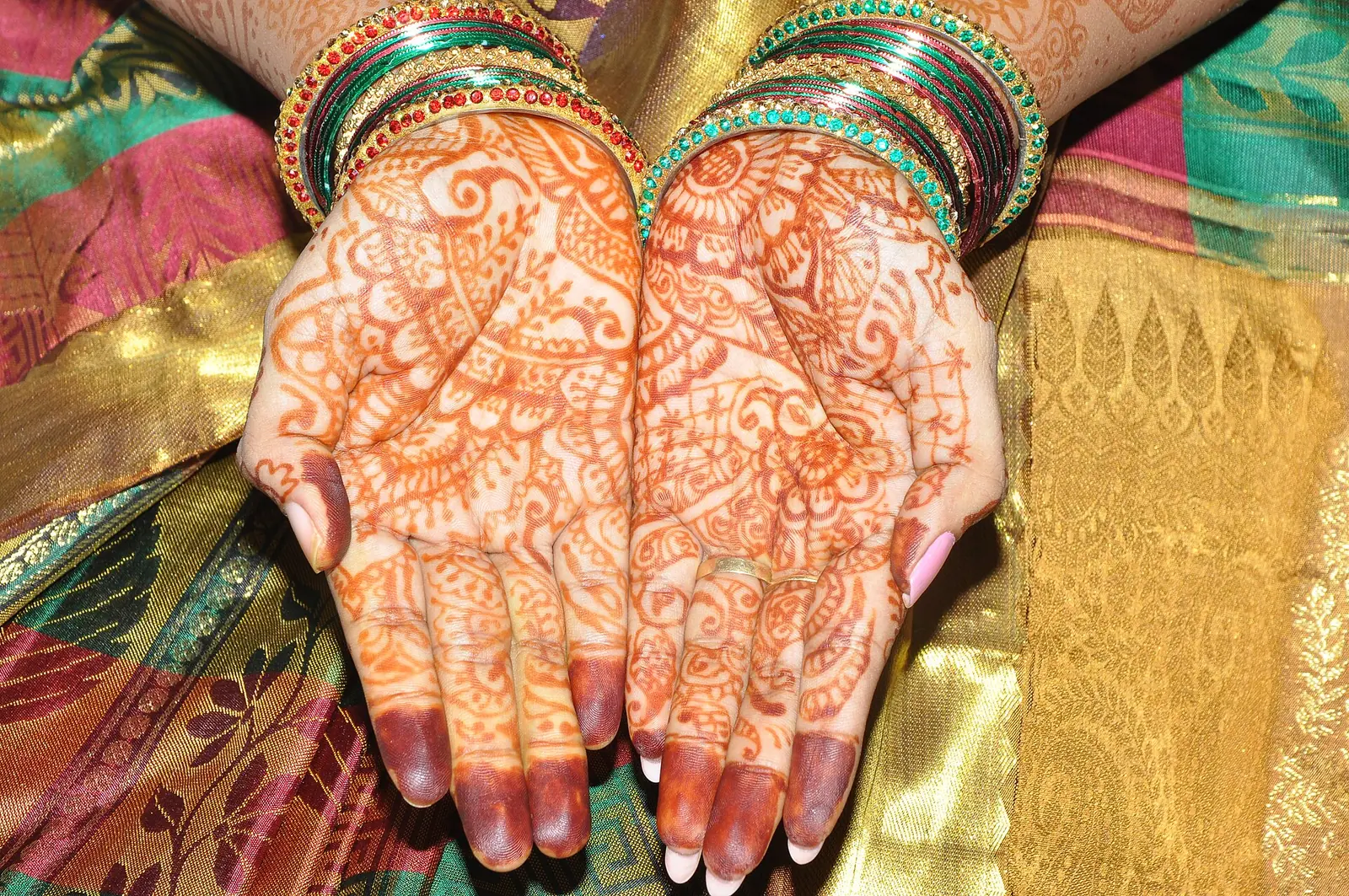 मेहंदी · HennaMehendi
Mehendi is henna paste drawn on hands and feet the night before the wedding. The paste goes on green and dries to a red-brown stain. Families hide the groom's initials in the bride's design for him to find. Women also wear it for Teej and Karva Chauth.
Joy, coolness and the depth of love, read in the depth of the stain.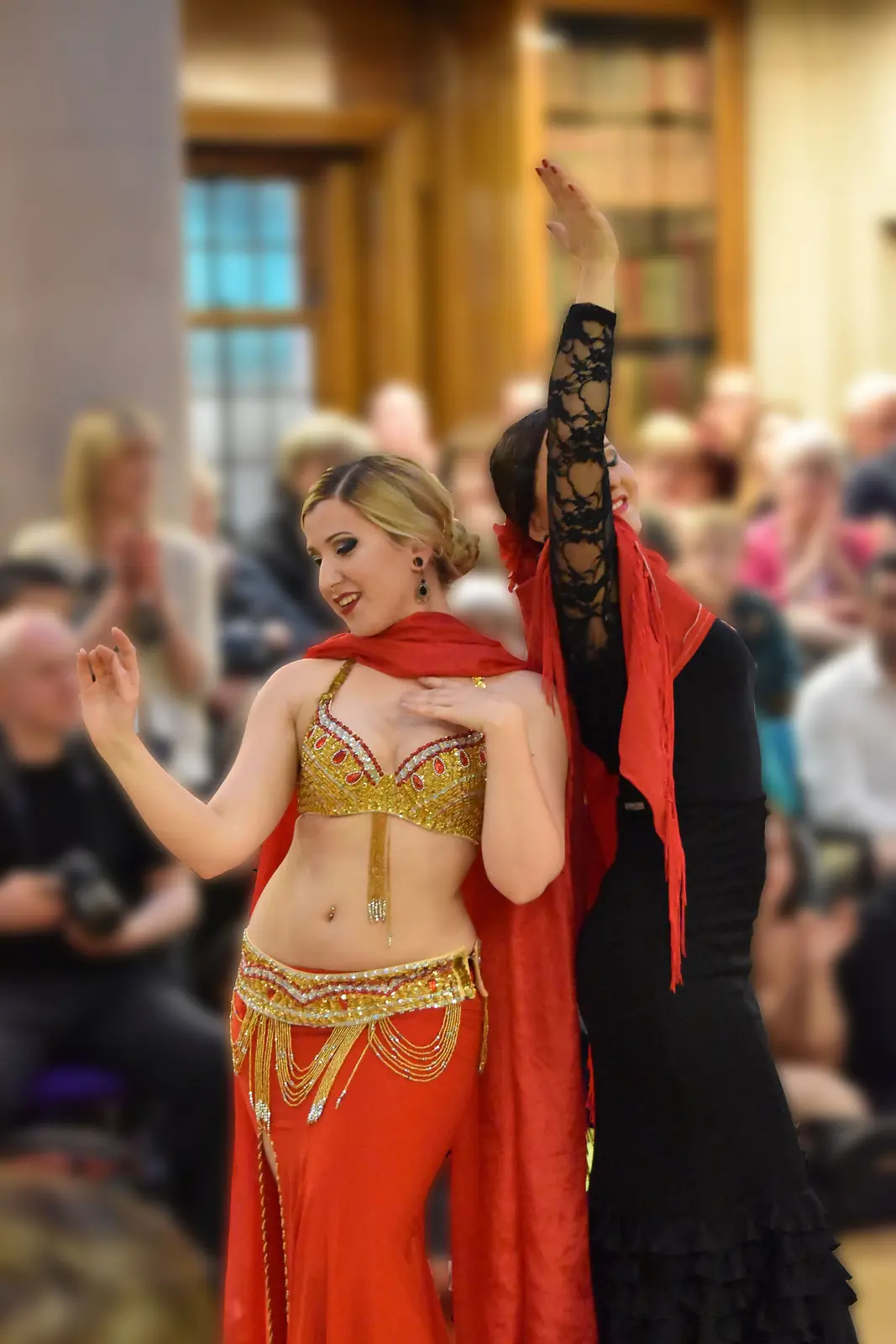 कमरबंद · Waist beltKamarbandh
The kamarbandh is a chain or belt of gold or silver round the waist, holding the sari pleats. Temple sculptures show both gods and goddesses with jewelled girdles (mekhala). In the south the broad oddiyanam does this work for brides and dancers, and the Maharashtrian kambarpatta for the nauvari.
Grace of the waist, and the bride's readiness for household life.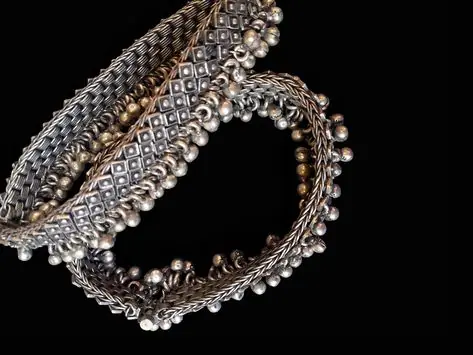 पायल · AnkletPayal
Payal are silver anklets hung with small bells, so the new bride is heard about the house. Gold is rarely worn below the waist in most Hindu homes, out of respect for Lakshmi, so anklets are silver. Heavier forms include the kada and the hollow, bead-filled pajeb.
Lakshmi entering with chiming steps. बिछिया · Toe ringsBichhiya
Bichhiya are silver rings on the second toe of both feet, worn by married women. In the south they are metti, put on by the groom during the wedding, in some communities as he guides the bride through the saptapadi. Like payal, they are silver.
Marriage; one of the plainest signs of a wife.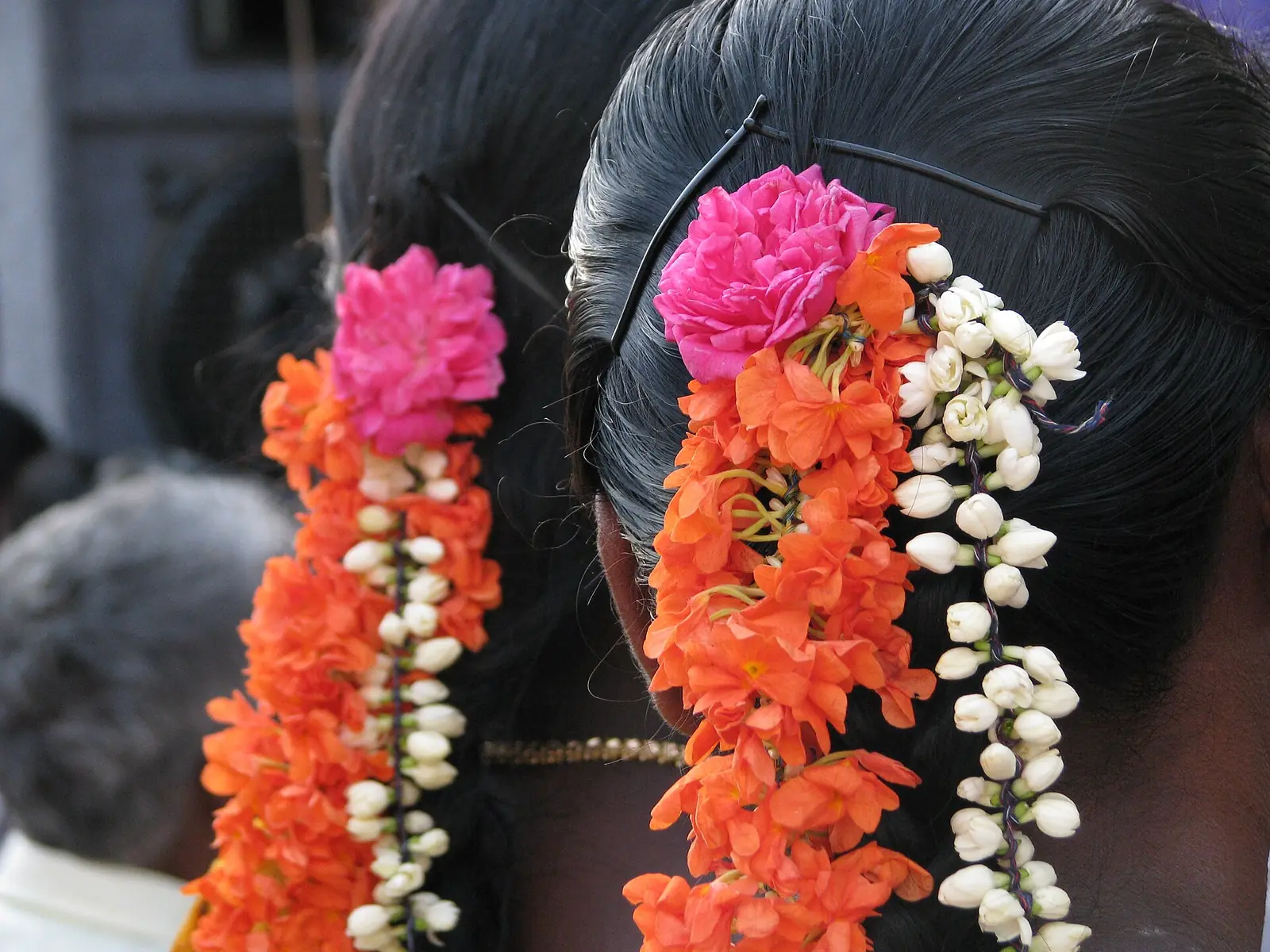 गजरा · Flower stringGajra
The gajra is a string of fresh jasmine or mogra wound round the bun or down the braid. In the south women wear fresh flowers in their hair every day, bought by the hand-span. A bride's braid may be covered entirely in jasmine and kanakambaram. Flowers worn are never offered to the deity afterwards.
Freshness, fragrance, the goddess Lakshmi's favour.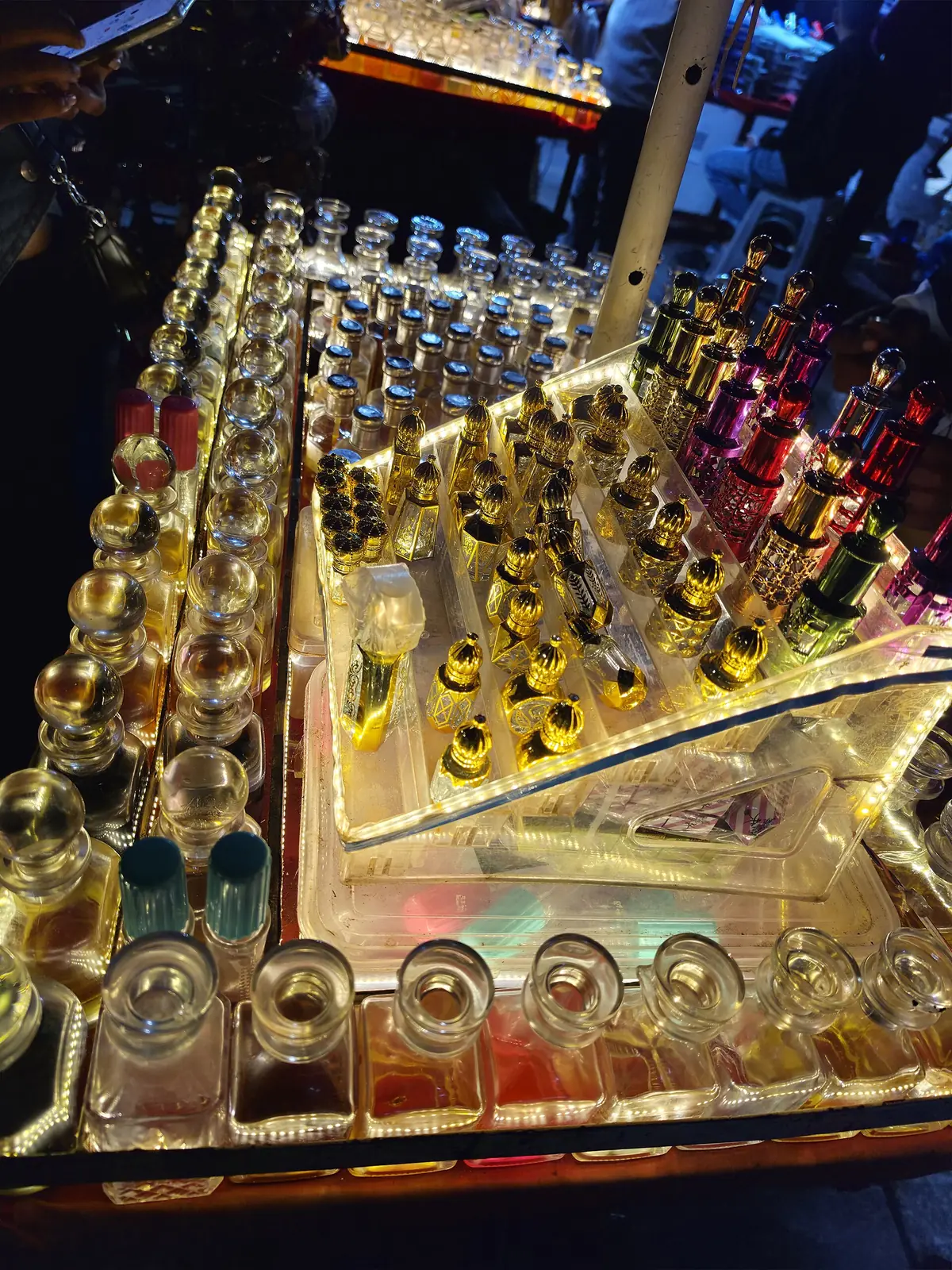 इत्र · Perfume oilItra
Itra is perfume distilled into sandalwood oil, the last touch before the bride is ready. Kannauj in Uttar Pradesh has made itra in copper stills for centuries, with rose, kewda, jasmine and mitti, the scent of first rain. Itra is also offered to deities.
A pleasing presence; scent is one of the sixteen offerings of puja.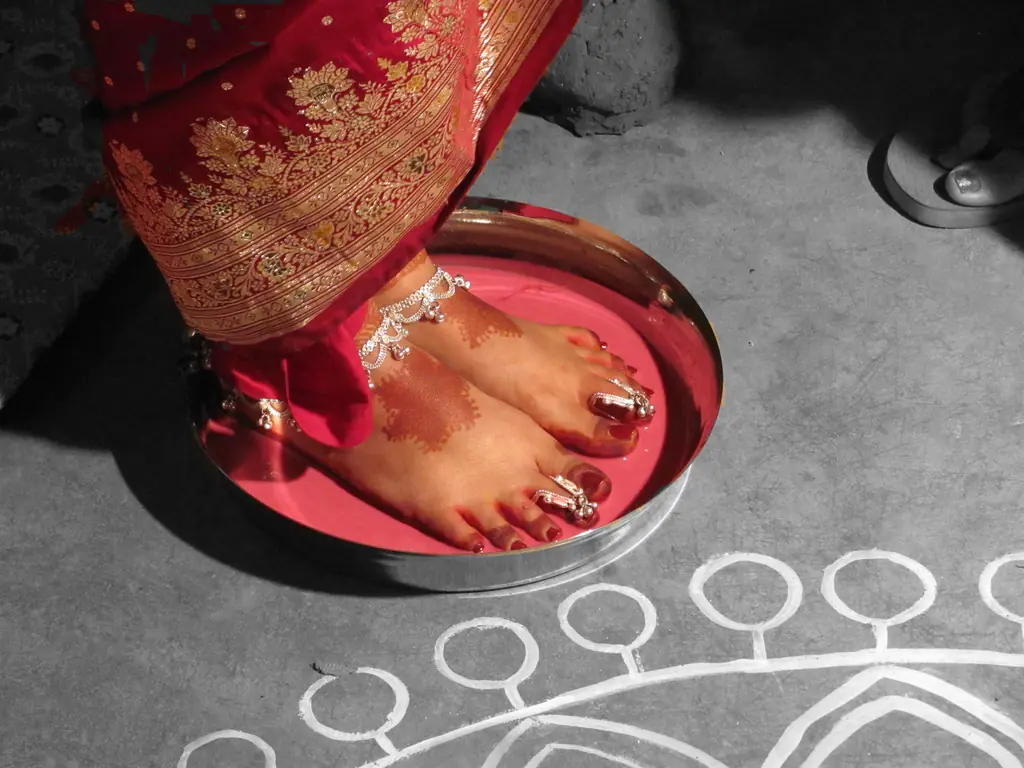 आलता · Red foot dyeAlta
Alta is the red border painted round the feet of the bride, and the soles of dancers. In Bengal it is often counted among the bride's signs with sindoor and shankha-pola. She steps into alta and milk at her new home and leaves Lakshmi's footprints.
Lakshmi's feet, auspicious arrival.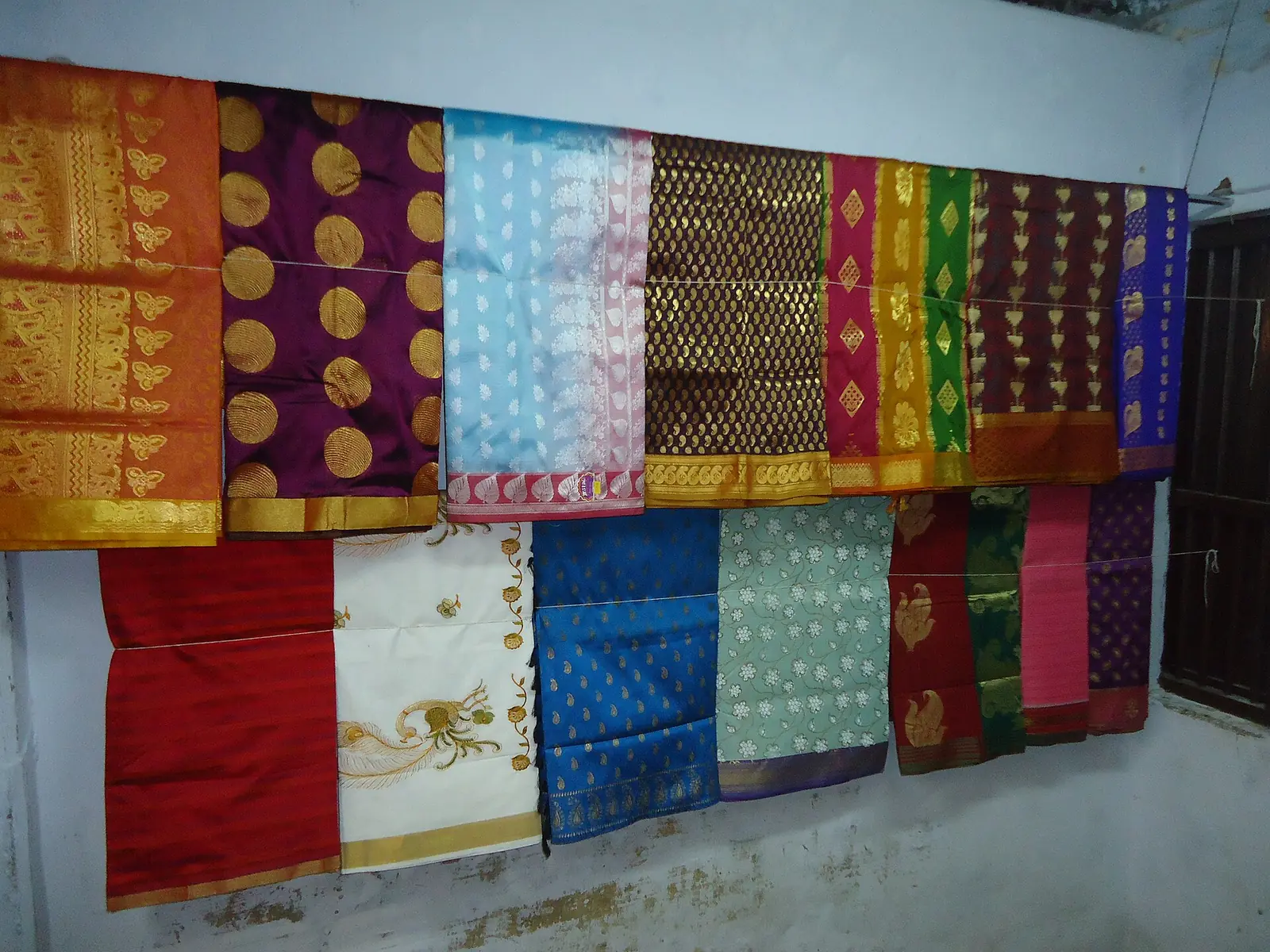 लाल जोड़ा · Bridal dressLal joda
The bridal dress itself, most often red, is counted among the sixteen. Red is worn in most of the north; Bengal favours red Banarasi, Kerala the white-and-gold kasavu, Maharashtra the green or yellow paithani, and Tamil brides the Kanjeevaram in deep colours. The odhni or veil is part of it.
The bride as Lakshmi and as Gauri.२१केशपाश · Dressed hairKeshpashaThe dressing of the hair, braided or in a bun with ornaments, is one of the sixteen. Kalidasa's heroines wear flowers in their braids. Hair ornaments include the southern rakodi on the bun and the jadai billai discs down the braid, and the northern paranda tassel.
Order and beauty; loose hair is kept for mourning.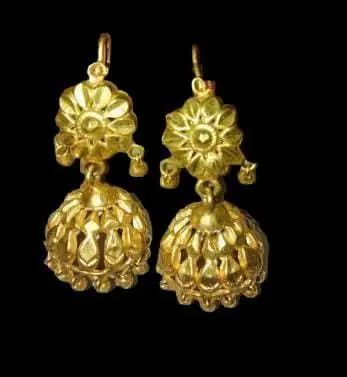 झुमका · Bell earringJhumka
The jhumka is a bell-shaped earring that sways and chimes with every turn of the head. It hangs below a stud, often with pearl or bead drops round the bell's rim. Temple sculptures show the form, and every region has its own: the jimikki of Kerala, the Dogri jhumka of Jammu.
Movement and music in the ornament.२३वंकी · V-shaped armletVankiThe vanki is a South Indian armlet bent in an inverted V so it sits snugly on the upper arm. It is worn by brides and Bharatanatyam dancers, usually in pairs. Designs carry peacocks, Lakshmi or a serpent, set with kemp stones.
A bridal armlet of the south, worn on both arms.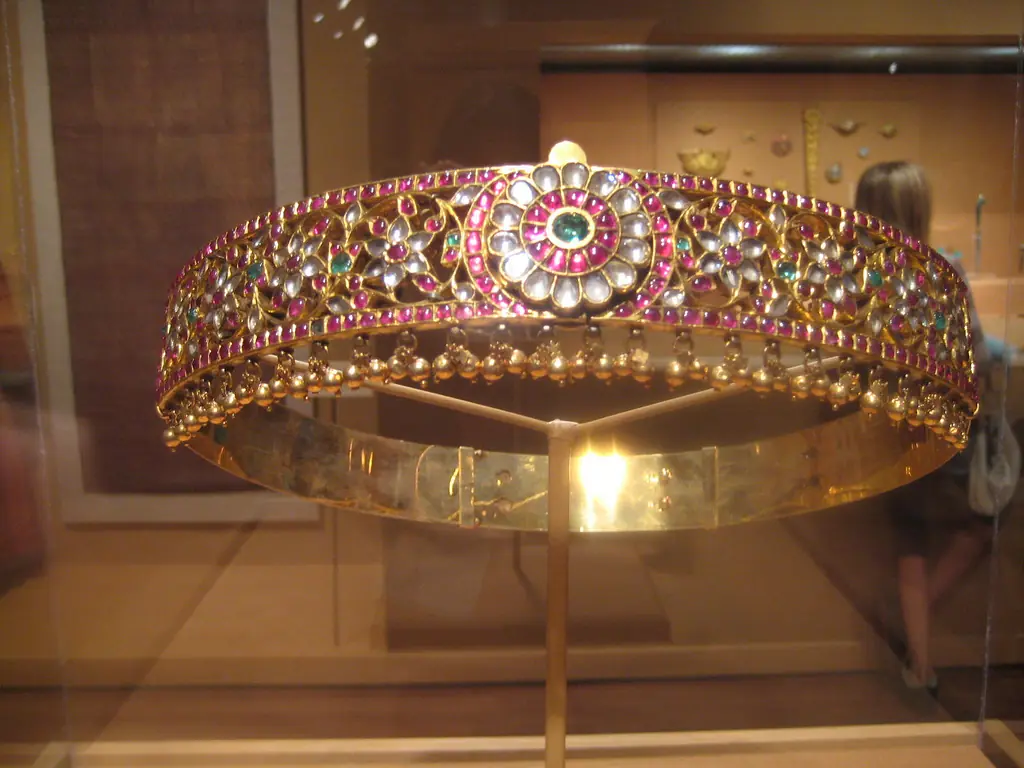 ओड्डियाणम् · South Indian waist beltOddiyanam
The oddiyanam is the broad gold belt of a South Indian bride, often with Lakshmi at its centre. It holds the heavy silk sari at the waist. Old pieces are set with rubies, emeralds and diamonds; dancers wear lighter ones in temple jewellery.
The girdle of the goddess, seen on murtis of Devi.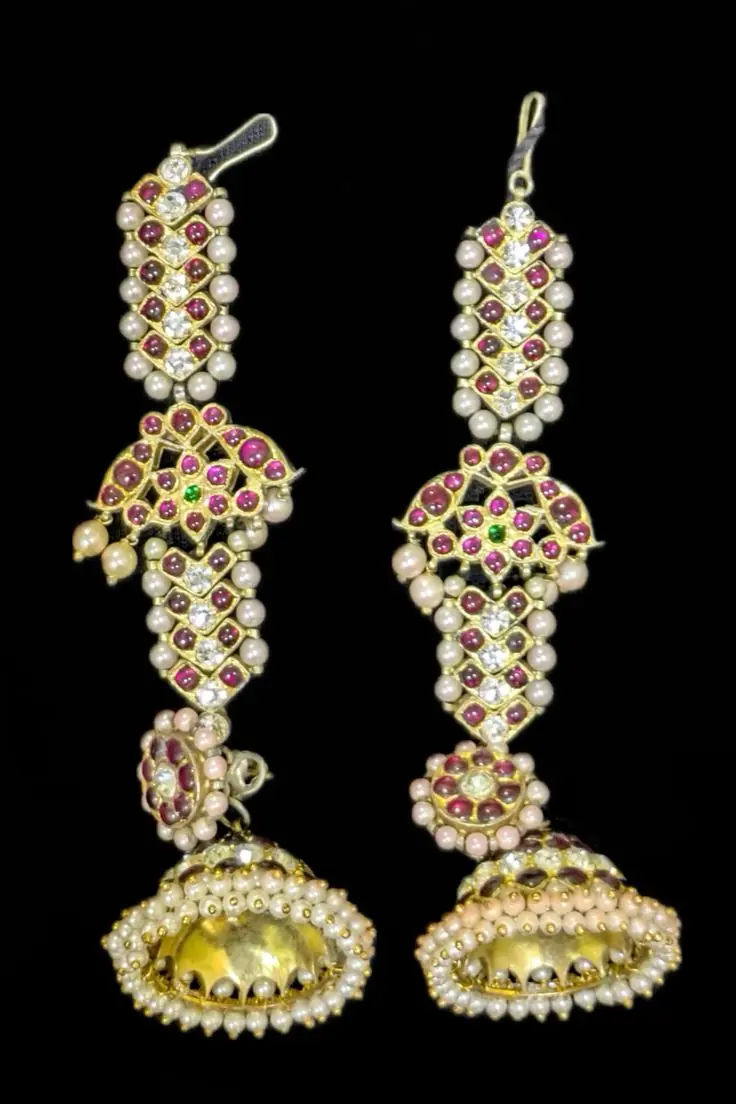 मंदिर आभूषण · Jewellery for deitiesTemple jewellery
Temple jewellery was first made to adorn the murtis of South Indian temples, then for dancers and brides. At Vadasery near Nagercoil, artisans shape silver, cover it with gold and set it with red and green kemp stones in lac. "Temple Jewellery of Nagercoil" is a registered Geographical Indication. The set includes nethi chutti, rakodi, vanki, oddiyanam and layered haram.
What adorns Bhagwan in the sanctum, adorns the dancer who offers to him.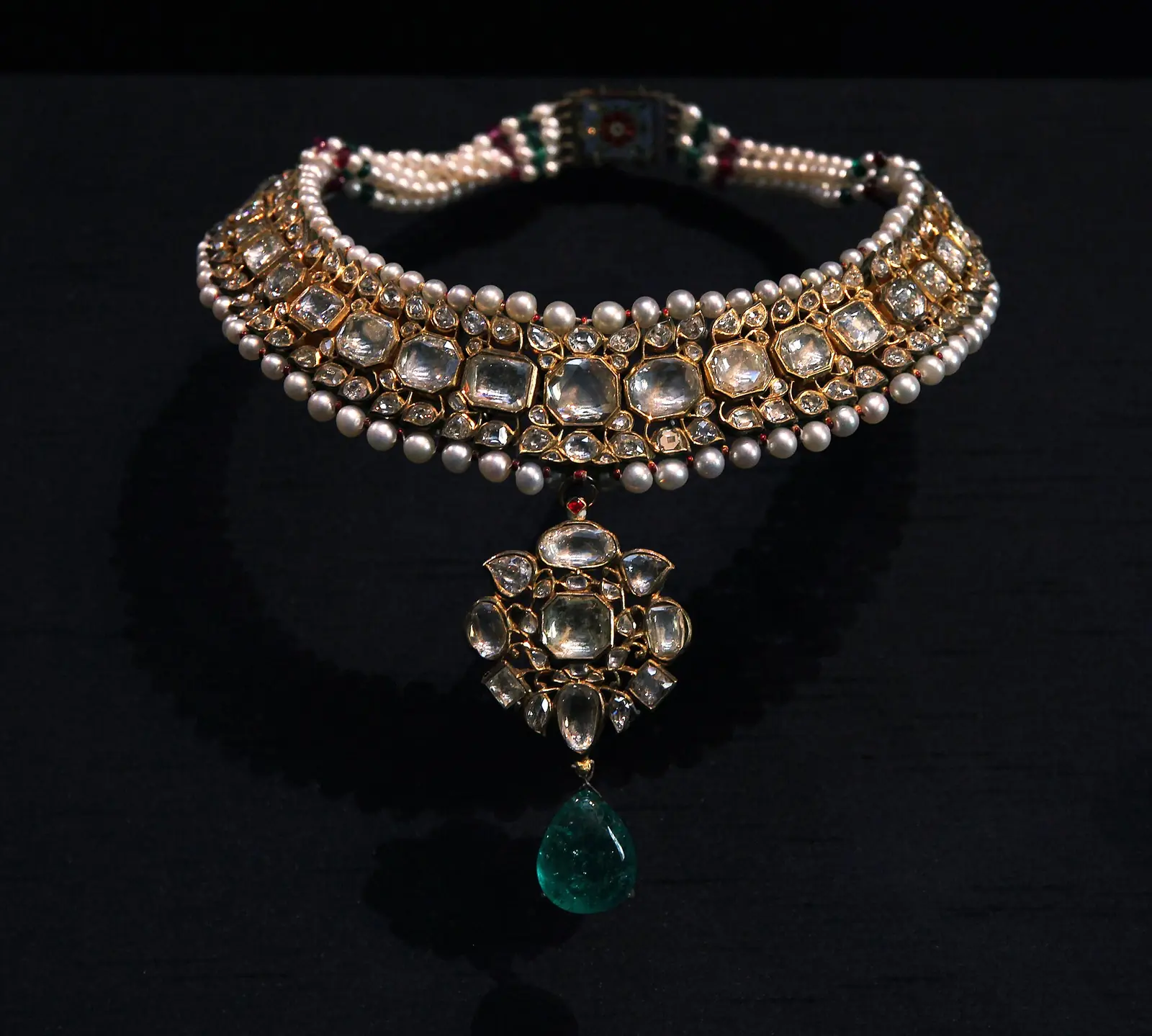 कुंदन · Gems set in pure goldKundan
Kundan is the craft of setting stones in very pure gold foil instead of claws. Kundan means the purest gold. The setter presses thin strips of it round each stone by hand. It came to its height in the Rajput and Mughal courts; the back of a good piece is often enamelled in meenakari.
Royal bridal jewellery of Rajasthan.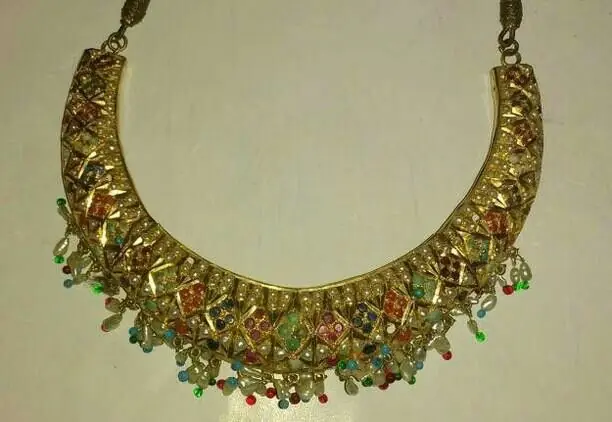 मीनाकारी · Enamel on metalMeenakari
Meenakari is enamel fired onto gold or silver, in reds, greens and blues. Jaipur is the best-known centre for enamelled gold. Varanasi has its own pink-enamel craft, Banaras Gulabi Meenakari, registered as a GI. Meenakari often covers the hidden back of kundan jewellery.
Colour that never fades, kept for the inside of the ornament.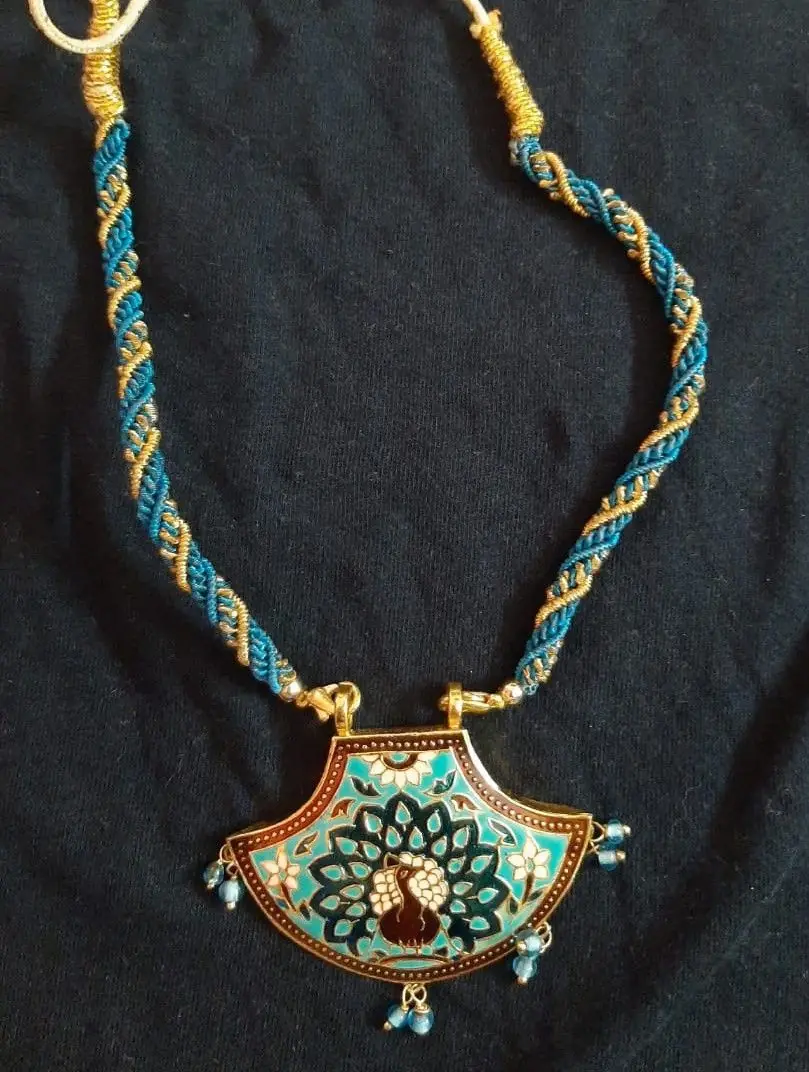 थेवा · Gold on glassThewa
Thewa is a fine gold sheet worked into scenes and fused onto coloured glass. It comes from Pratapgarh in southern Rajasthan, where the Raj Soni family has kept the craft. Mahesh Raj Soni received the Padma Shri in 2015. Designs show Hindu kathas, court scenes, flowers and animals.
A family secret of Pratapgarh, carried for generations.२९नक्शी · Carved goldNakshiNakshi work raises figures of gods, peacocks and flowers in relief on gold. It is a South Indian goldsmith's style, common in Lakshmi pendants, kasu malas and temple jewellery. The gold is pressed and chased from behind so the deity stands out on the front.
The deity worn close to the heart.३०कासु माला · Coin necklaceKasu malaThe kasu mala is a long necklace of gold coins, many stamped with Mata Lakshmi. Kasu means coin. Worn by brides in Kerala, Tamil Nadu and Andhra, where it is called kasulaperu, it is also called Lakshmi mala. The coins once were real; now they are made for the necklace.
Lakshmi's wealth, worn by the bride who is Lakshmi entering the house.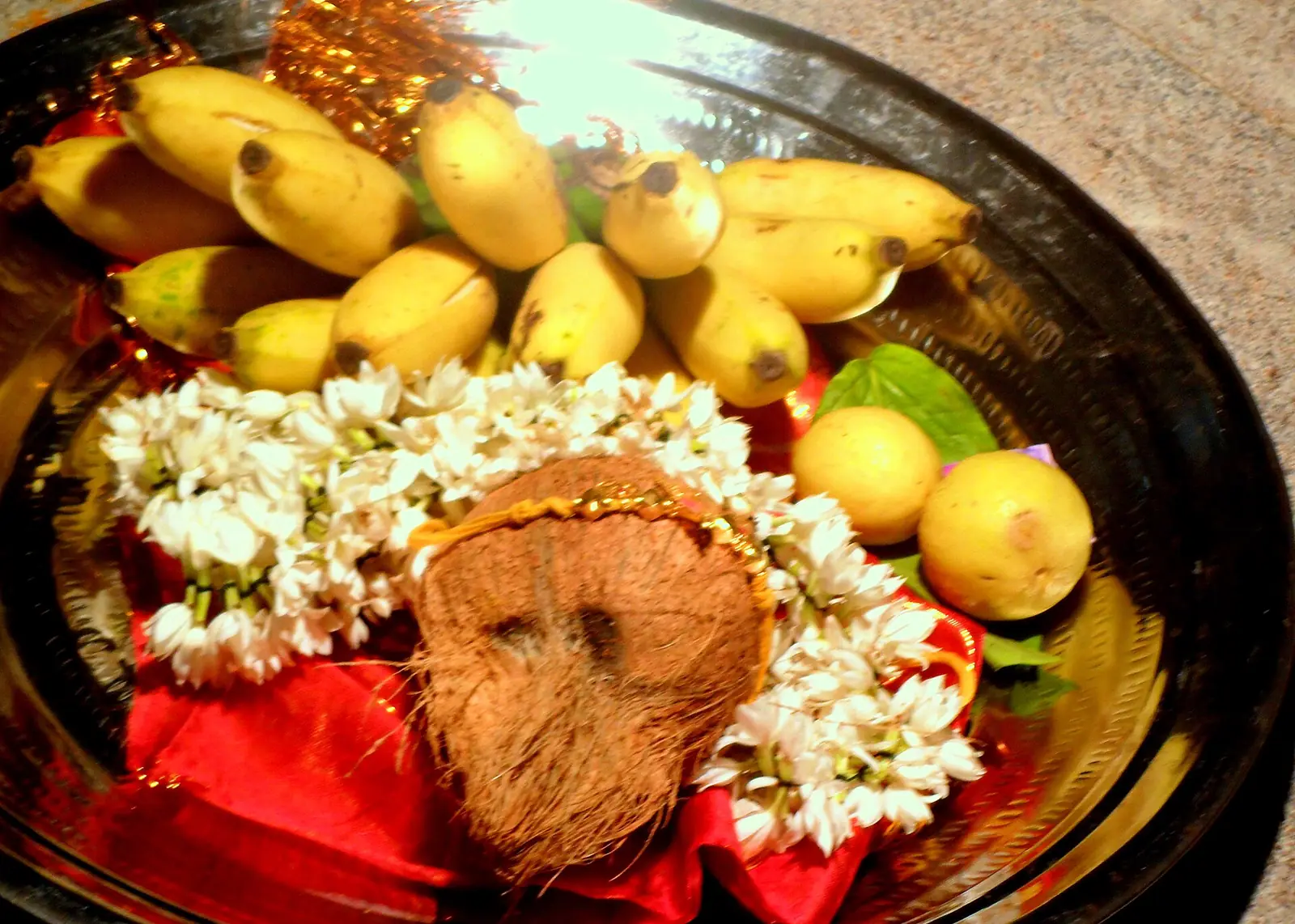 ताली · Southern marriage pendantThali
The thali is the marriage pendant of the south, tied by the groom at the auspicious moment. The Sangam poem Purananuru already speaks of a marriage tali. Designs differ by community: the Lakshmi tali, the kumbha tali, the Pillaiyar tali. In Kerala it is the small leaf-shaped ela tali.
The moment of marriage itself.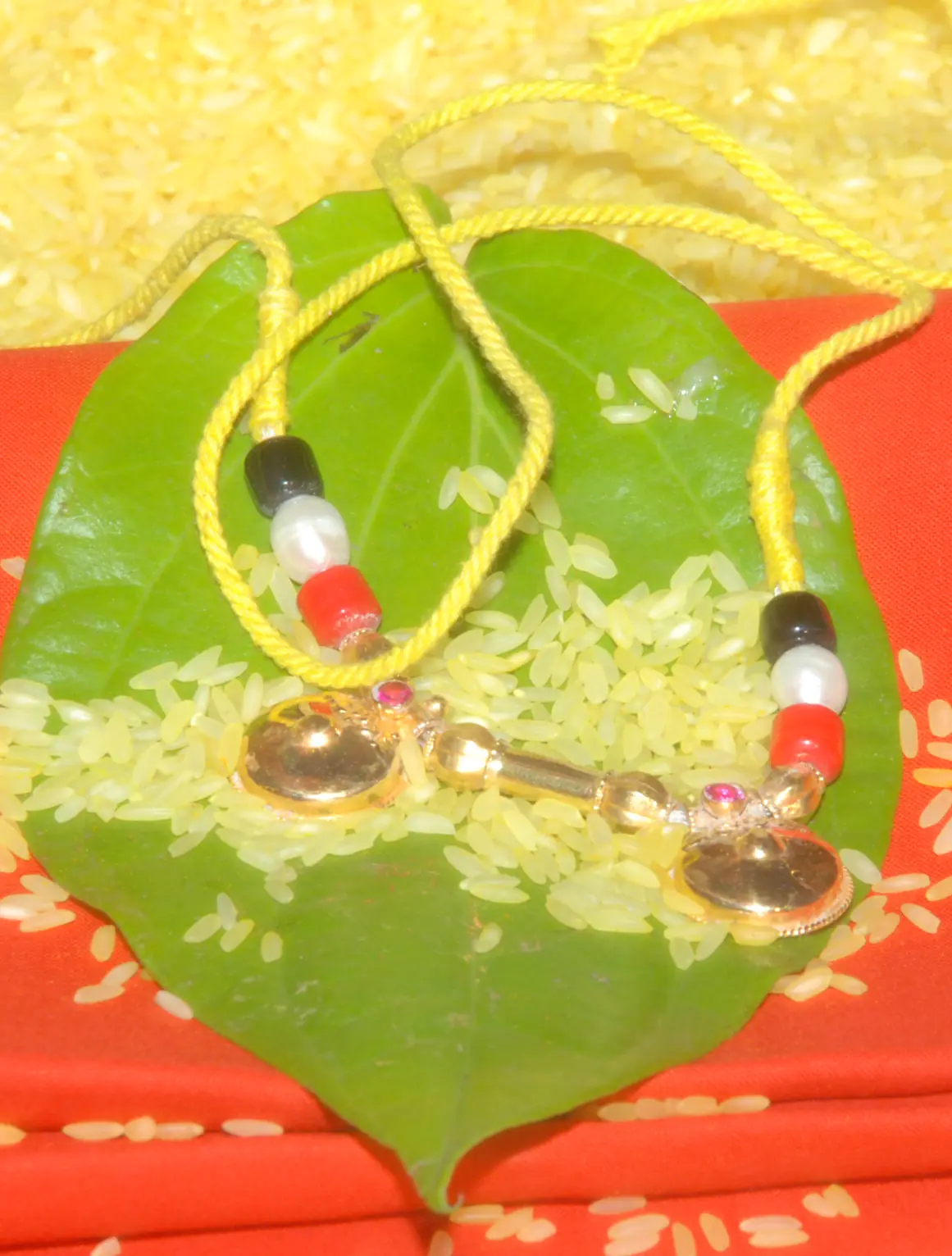 पुस्तेलु · Telugu marriage discsPustelu
Pustelu are the two small gold discs of a Telugu mangalsutra, one from each family. They are tied on a turmeric-coloured thread at the wedding and later strung on a chain, often with black and coral beads between them.
Two families joined at the bride's throat.३३वाटी मंगलसूत्र · Maharashtrian two cupsVati mangalsutraThe Maharashtrian mangalsutra carries two small gold cups, the vati, on strands of black beads. Families explain the two cups as the two households the bride now belongs to. The black beads are worn long, often in two strands.
The bride's two families.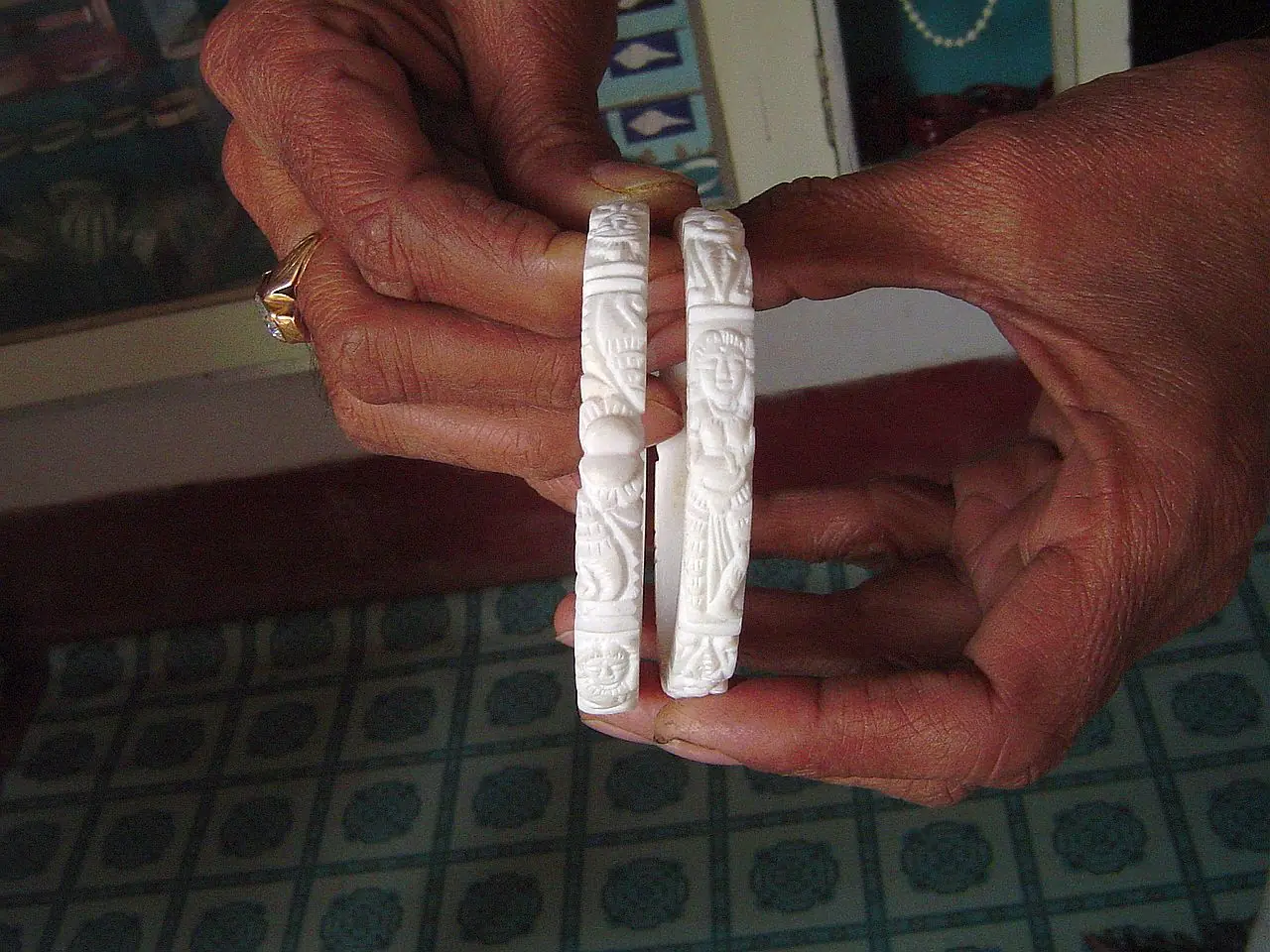 शंखा-पोला · Shell and coral banglesShankha-pola
A married Bengali woman wears a white shankha of conch shell and a red pola of coral or lac. The bride puts them on the morning of her wedding. The shankha is cut from conch by the shankhari craftsmen of Bengal; the pola beside it was coral and is now often red lac.
Marriage in Bengal and among Odia and Assamese families.३५लोहा · Iron bangleLohaThe loha is an iron bangle, often covered in gold, given to a Bengali bride by her mother-in-law. It is worn on the left wrist beside the shankha and pola and is not taken off during marriage.
Strength and permanence of the bond.३६चूड़ा · Punjabi bridal banglesChoodaThe chooda is a set of red and ivory-white bangles a Punjabi bride receives from her maternal uncle. It is put on in a ceremony on the wedding morning, after being washed in milk. Brides traditionally keep it on for many weeks, sometimes a year, and kaleere hang from it.
The new bride, and the blessing of her mother's family.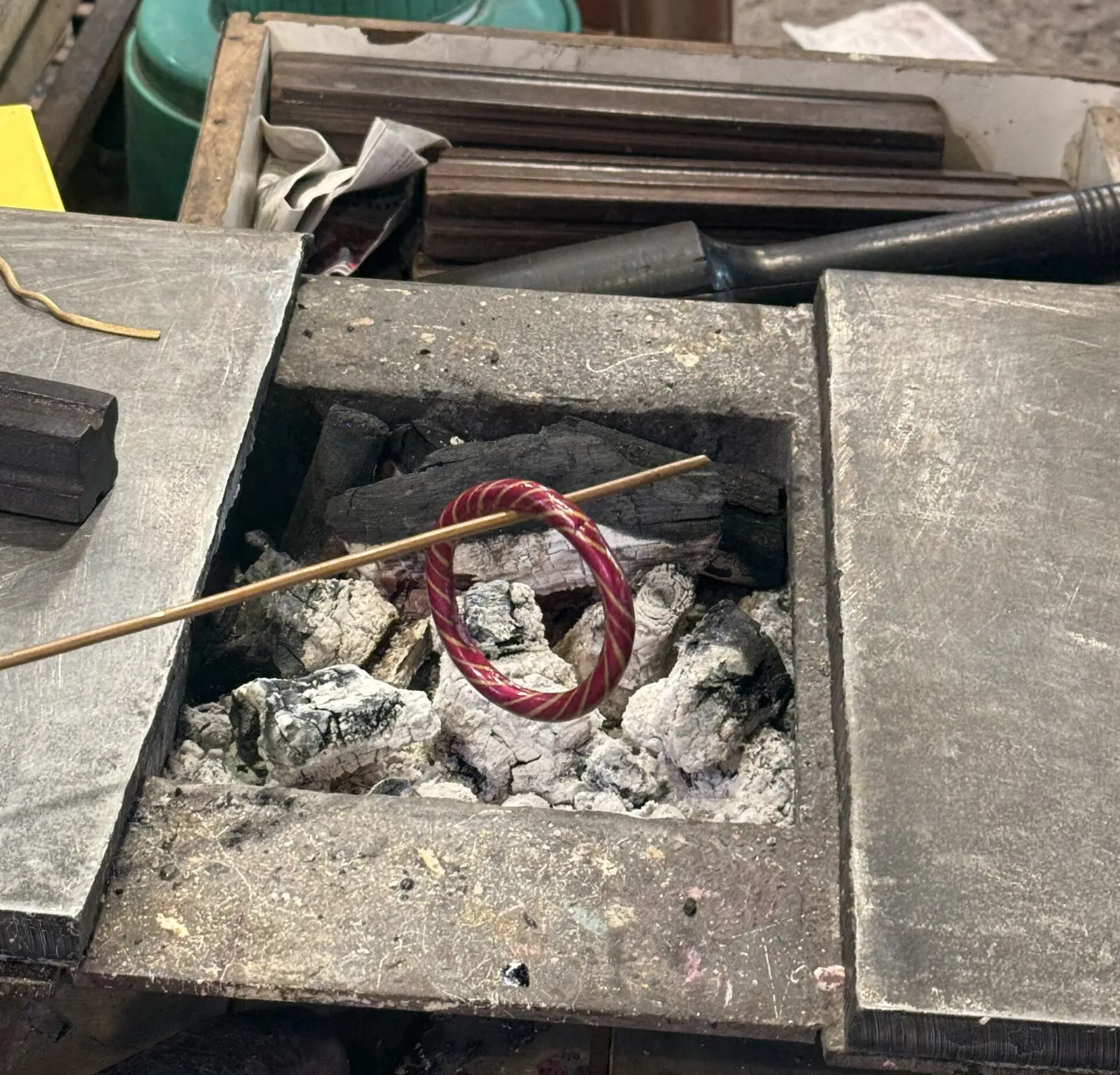 लाख की चूड़ियाँ · Lac banglesLac bangles
Lac bangles are shaped from heated lac resin and studded with glass, stones and mirrors. Rajasthan and Hyderabad's Laad Bazaar are famous for them. Married women in Rajasthan wear them for Teej and Gangaur, and new brides receive sets in red.
Suhaag, colour and festival.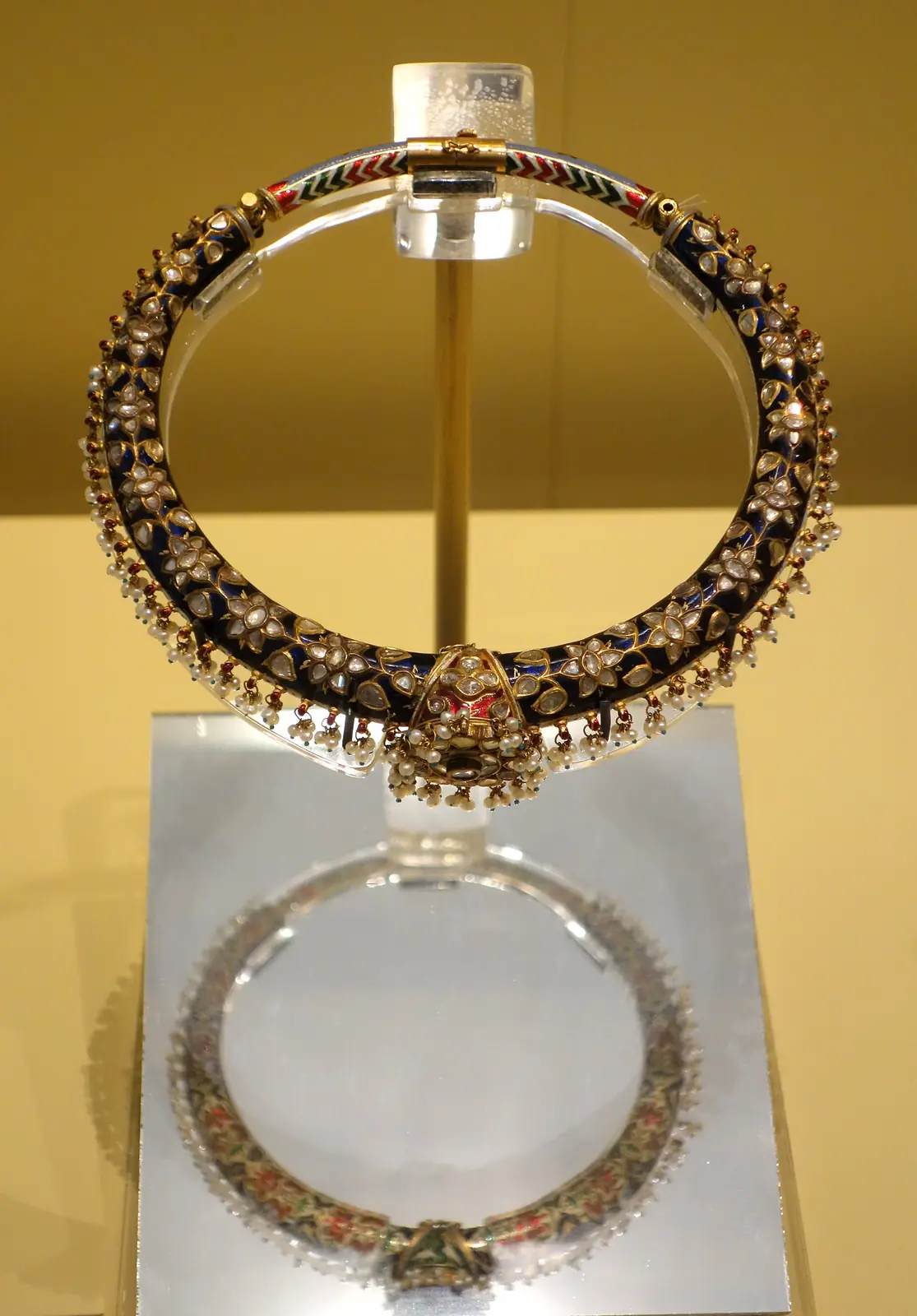 हंसली · Collar ringHansli
The hansli is a rigid ring worn round the neck, named after the collarbone it sits on. Villages across the north wear it in heavy silver; courts made it in gold with diamonds, pearls and enamel. It is often a child's first ornament too.
Wealth worn safely on the body.३९बोरला · Rajasthani forehead ballBorlaThe borla or rakhdi is a round, seed-like ornament that a Rajasthani married woman wears on her forehead. It hangs from a cord along the parting. For many Rajput and Marwari women it is as much a sign of marriage as sindoor.
Marriage, in place of a maang tikka.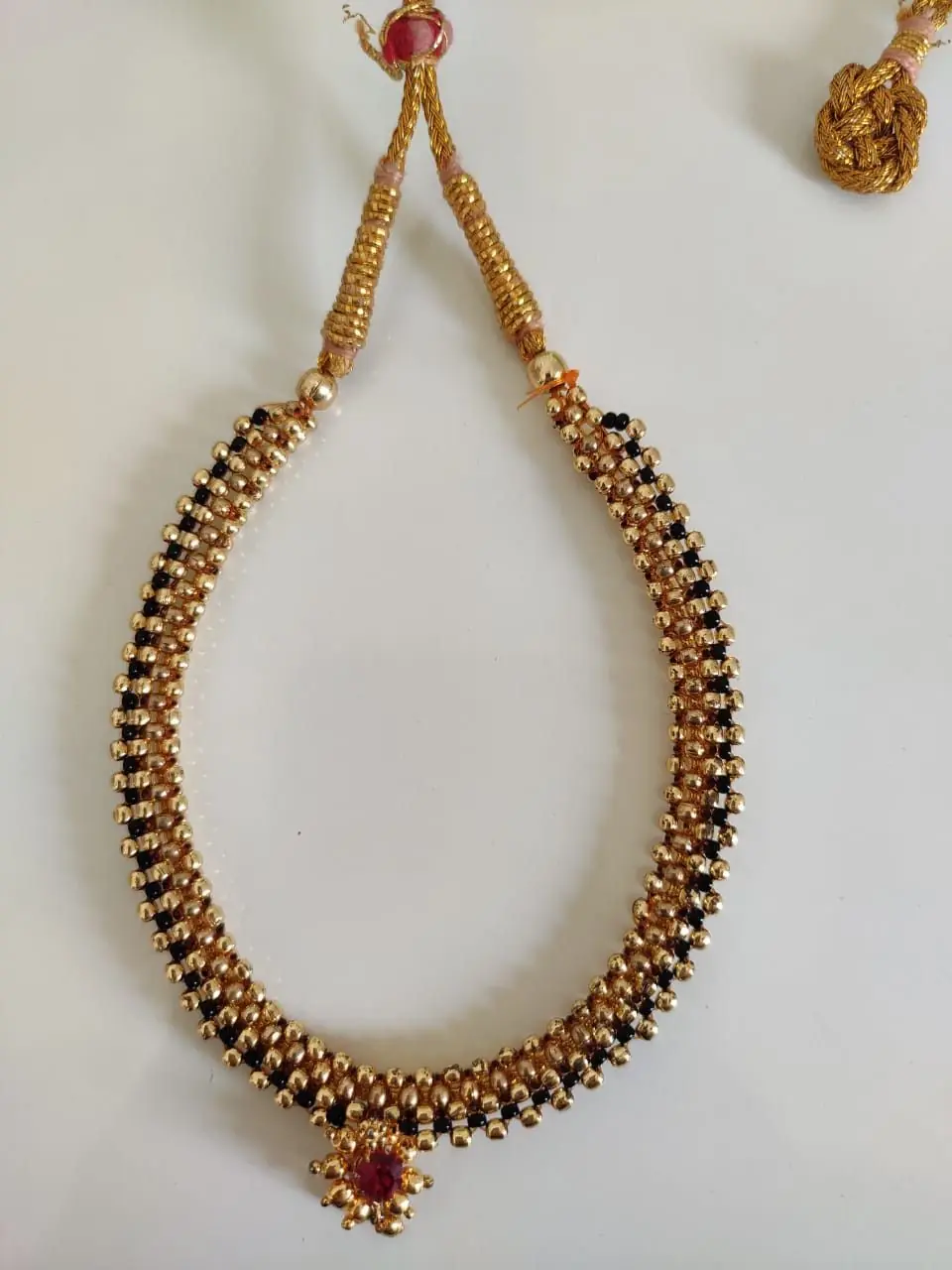 ठुशी · Bead chokerThushi
The thushi is a close choker of tightly strung gold beads from Kolhapur. It is worn by Maharashtrian brides and on festival days with the nauvari sari, often tied with a silk cord at the back.
A Maharashtrian bride's essential choker.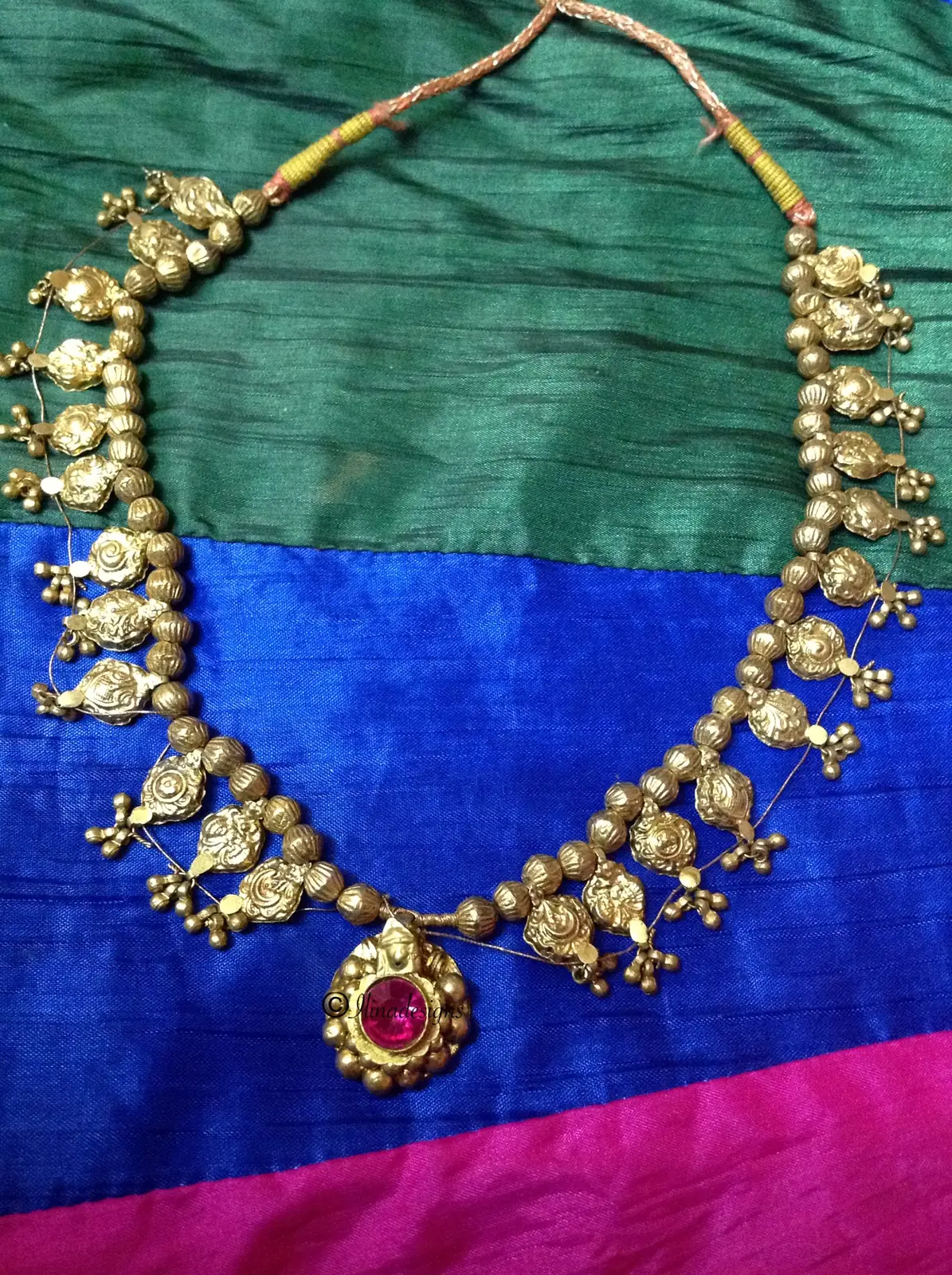 कोल्हापुरी साज · Kolhapur necklaceKolhapuri saaj
The Kolhapuri saaj is a long gold necklace of small leaf and charm pendants with a centre jewel. In Kolhapur and southern Maharashtra it has served as a marriage necklace, like a mangalsutra. Many sources count twenty-one pendants, each with its own meaning, though pieces vary.
A married woman's necklace in Kolhapur.४२देजहोर · Kashmiri marriage earringsDejhoorThe dejhoor is a pair of hexagonal gold pendants a Kashmiri Pandit bride wears from her wedding eve. They hang from the upper ear on threads or chains, and a gold chain (atah) joins them over the head. Kashmiri Pandit women keep the dejhoor as their sign of marriage, as others keep the mangalsutra.
Marriage among Kashmiri Pandits.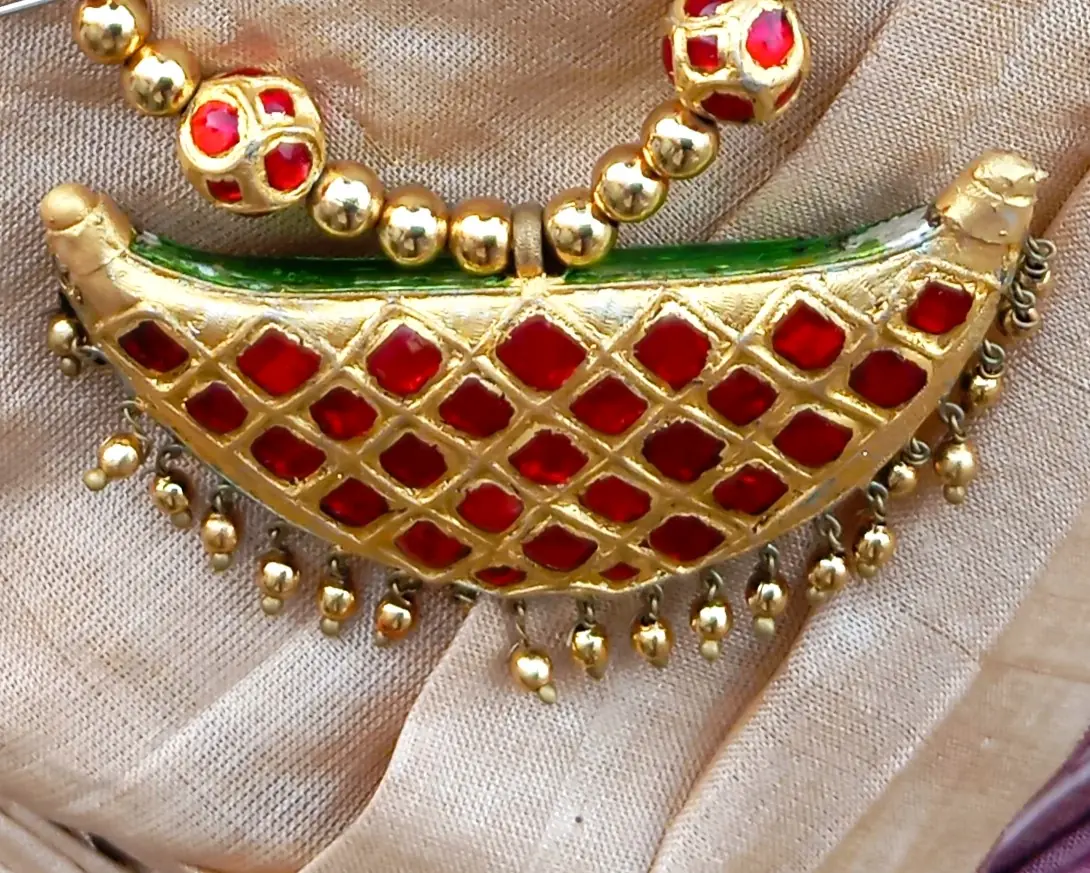 जोनबिरी · Crescent pendantJonbiri
Jonbiri is an Assamese necklace with a crescent-moon pendant, worn at Bihu and weddings. Jon means moon. Made in gold or silver, often with red stones, it is one of the best-known pieces of Assamese jewellery, which was registered as a GI in 2025.
The moon's beauty, worn by Assamese women.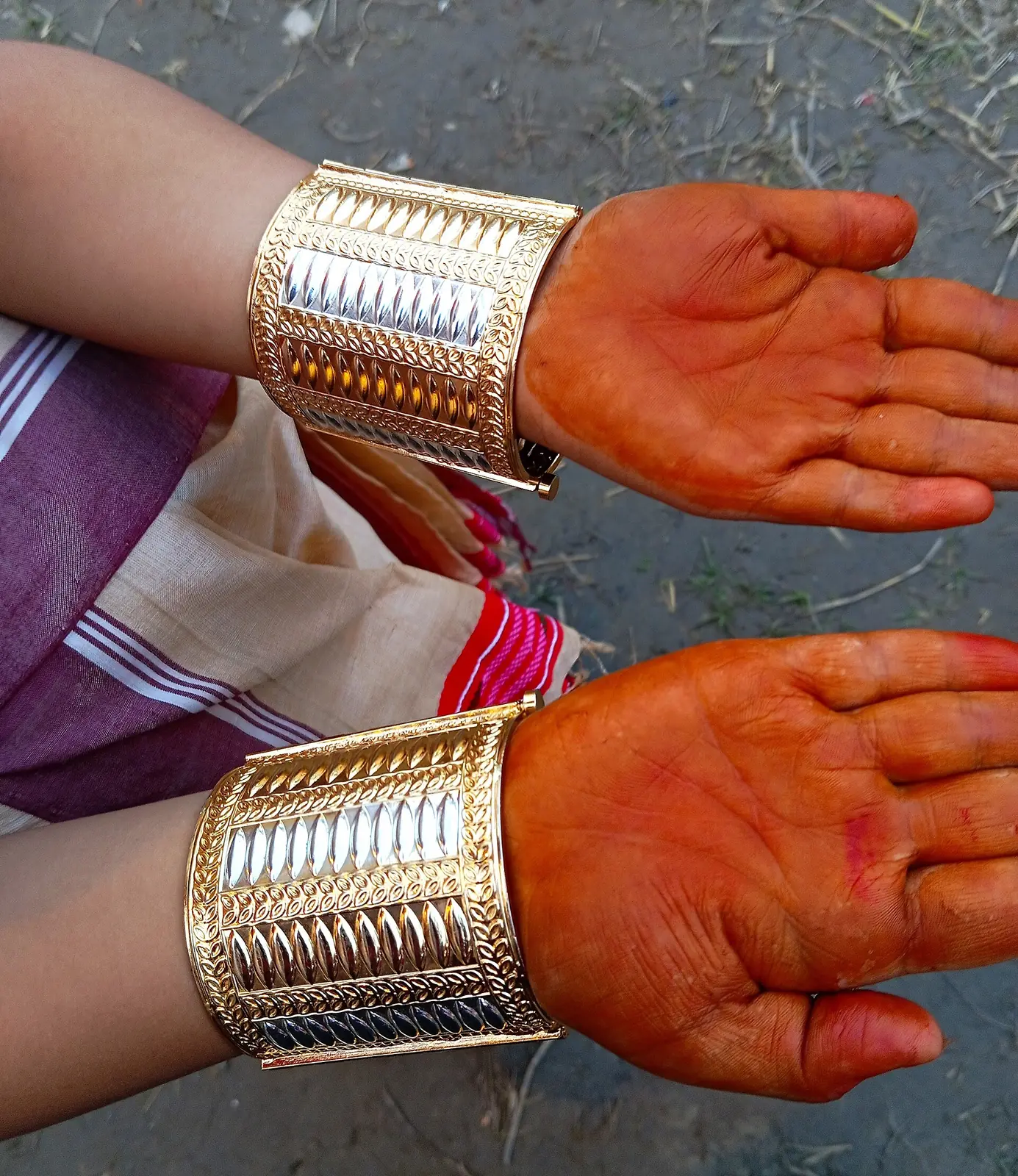 गामखारू · Assamese broad bangleGamkharu
Gamkharu is a broad, hinged Assamese bangle of gold or silver. Men once wore it; now it is part of the Bihu dancer's dress and of an Assamese bride's jewellery. Old ones were made in brass and silver too.
Bihu, festivity, the married woman.४५पालक्का माला · Kerala green necklacePalakka malaThe palakka mala is a Kerala necklace of small green, leaf-shaped stones set in gold. It is a favourite of Kerala brides, worn with the cream-and-gold kasavu sari. Its green glass or stones stand out against the white.
Kerala's bridal green.४६नागपदम् · Serpent-hood pendantNagapadamThe nagapadam is a Kerala pendant shaped like a cobra's spread hood. Serpent worship is old in Kerala, with sarpa kavus, the snake groves, still kept near homes. The pendant is set with red and green stones and is held to protect the wearer.
The nagas' protection.