Vesham
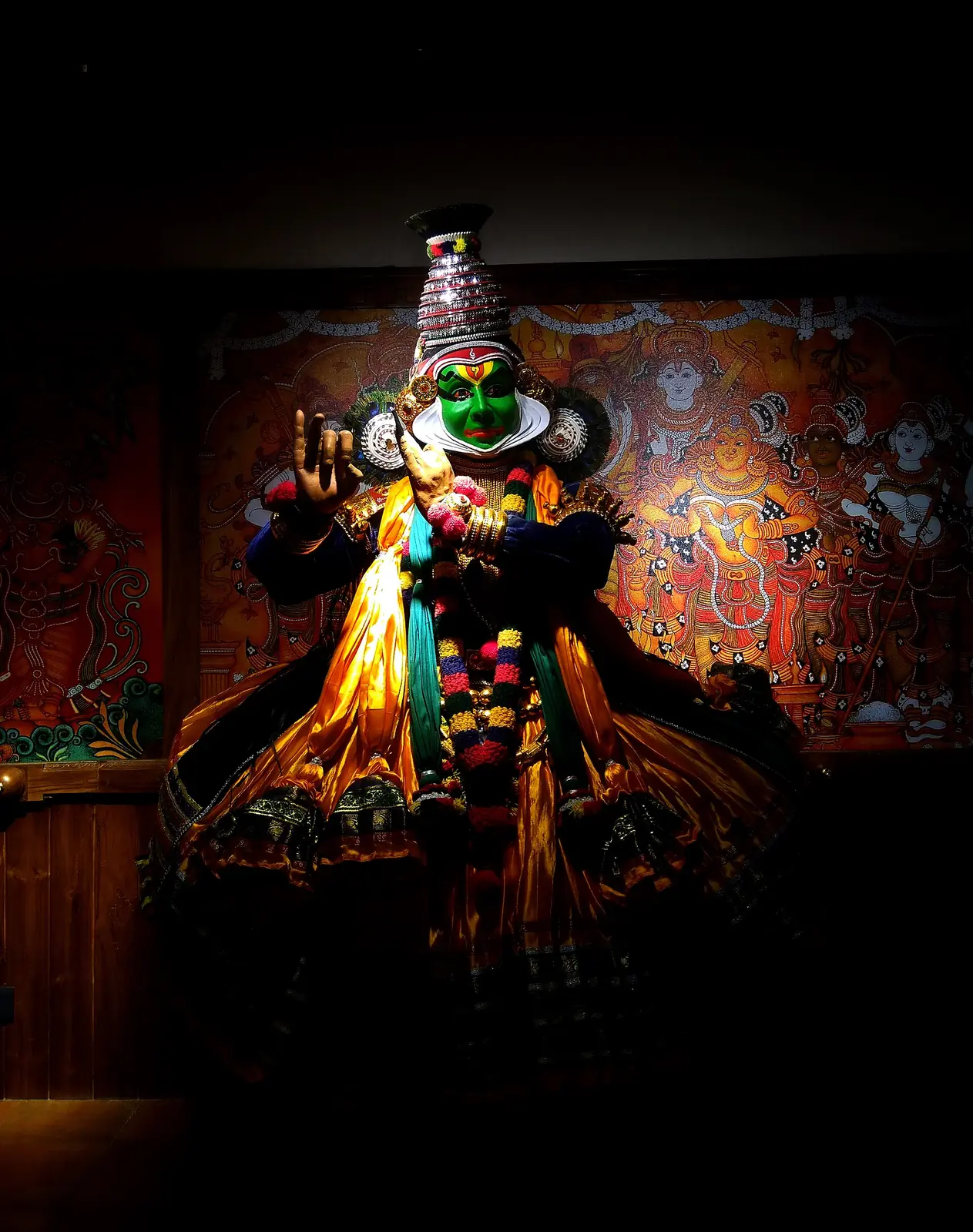
Character types are read from the face paint. Pacha, green, for noble heroes such as Arjuna; kathi, green slashed with red, for proud villains like Ravana; thadi, bearded; kari, black; minukku, soft yellow for women and sages.

कथकली
Kerala’s dance-drama of the epics, played by painted actors in great skirts through the night by the light of a brass lamp.
Character types are read from the face paint. Pacha, green, for noble heroes such as Arjuna; kathi, green slashed with red, for proud villains like Ravana; thadi, bearded; kari, black; minukku, soft yellow for women and sages.
The white ridge that frames the face is built up from rice paste and lime, layer by layer, while the actor lies still. It can take hours.
The actor speaks with 24 basic hand gestures from the Hastalakshana Deepika, combined into a full vocabulary. The face, especially the eyes, works with them.
Two singers stand behind the actors and sing the attakatha, the play text. The chenda, maddalam, chengila gong and ilathalam cymbals drive the drama.
At dusk the drums are played outside to tell the village there will be Kathakali that night. The play often runs until dawn.
By Kerala tradition the ruler of Kottarakkara, Veera Kerala Varma, composed eight plays on the Ramayana after the Zamorin refused to lend him a Krishnanattam troupe. Ramanattam grew into Kathakali.
The ruler of Kottayam in North Malabar wrote plays from the Mahabharata, such as Bakavadham and Kalyanasaugandhikam, and shaped the style.
The poet Vallathol Narayana Menon, with Manakkulam Mukunda Raja, founded Kerala Kalamandalam in November 1930. It moved to Cheruthuruthy in 1936.