Ras Lila
Krishna and the gopis dance in a circle. The Maha Ras is danced on the full moon of Kartik, the Vasanta Ras on the full moon of spring, the Kunja Ras in the forest bowers.

मणिपुरी
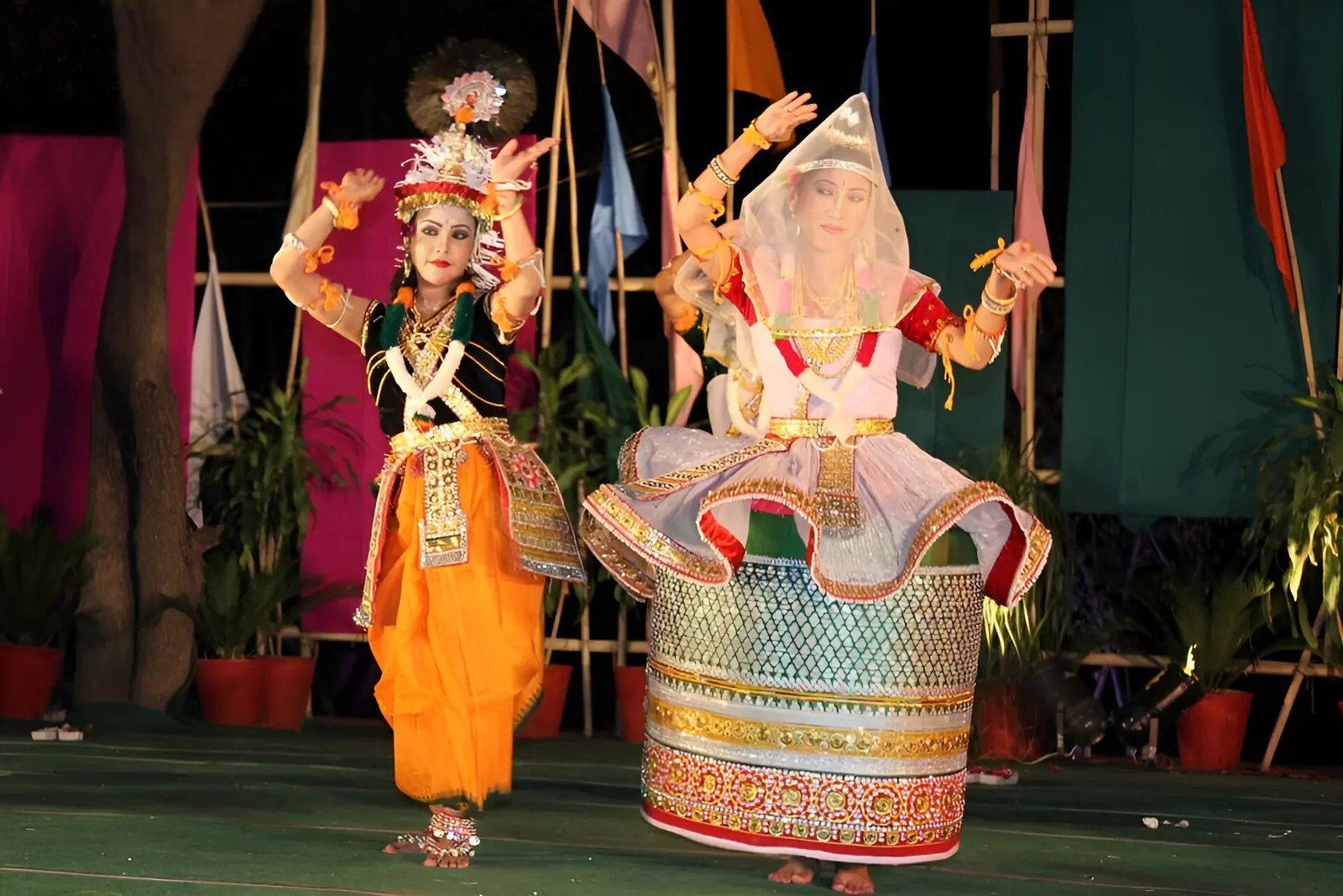
The gentlest of the classical dances: no ankle bells, eyes lowered, and the Ras Lila of Radha and Krishna at its centre.
Krishna and the gopis dance in a circle. The Maha Ras is danced on the full moon of Kartik, the Vasanta Ras on the full moon of spring, the Kunja Ras in the forest bowers.
The gopi wears a stiff, mirrored, barrel-shaped skirt with a fine veil over the face. The dancer seems to glide, the feet hidden.
Curves, never sharp angles. Feet touch the floor softly with no ankle bells, and the gaze stays modest.
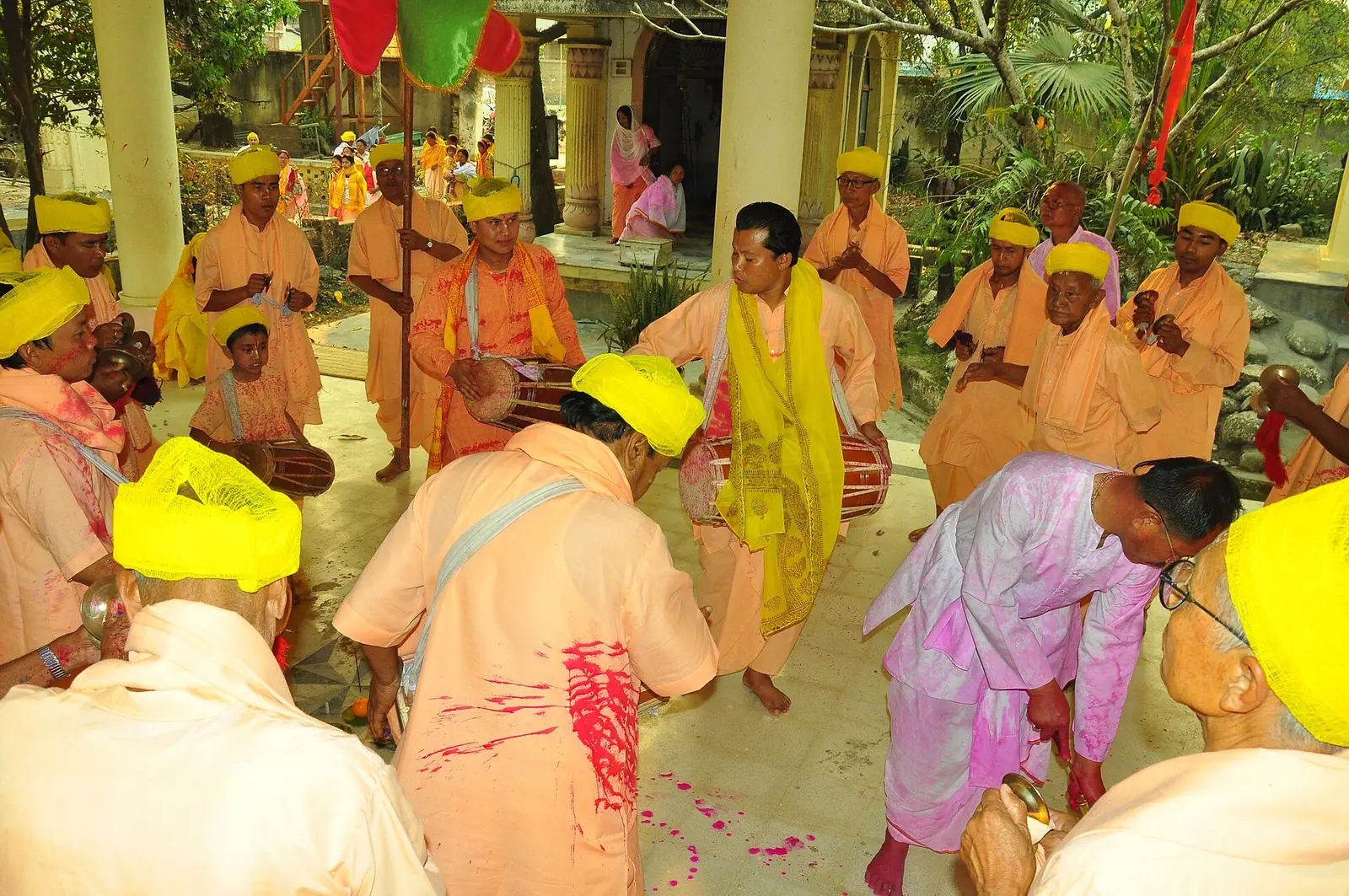
Men dance while playing the pung, a barrel drum, leaping and spinning without losing the beat. It opens the sankirtana.
Manipuri tradition says Shri Govindaji appeared to the king in a dream and showed him the Ras Lila, its dance and its costume.
The murti of Shri Govindaji was installed at the palace temple in Imphal and the Maha Ras was danced before him on the full moon, as the Cheitharol Kumbaba royal chronicle records.
Rabindranath Tagore brought Manipuri dance teachers to Santiniketan. Guru Bipin Singh and the Jhaveri sisters later took it to stages across India.