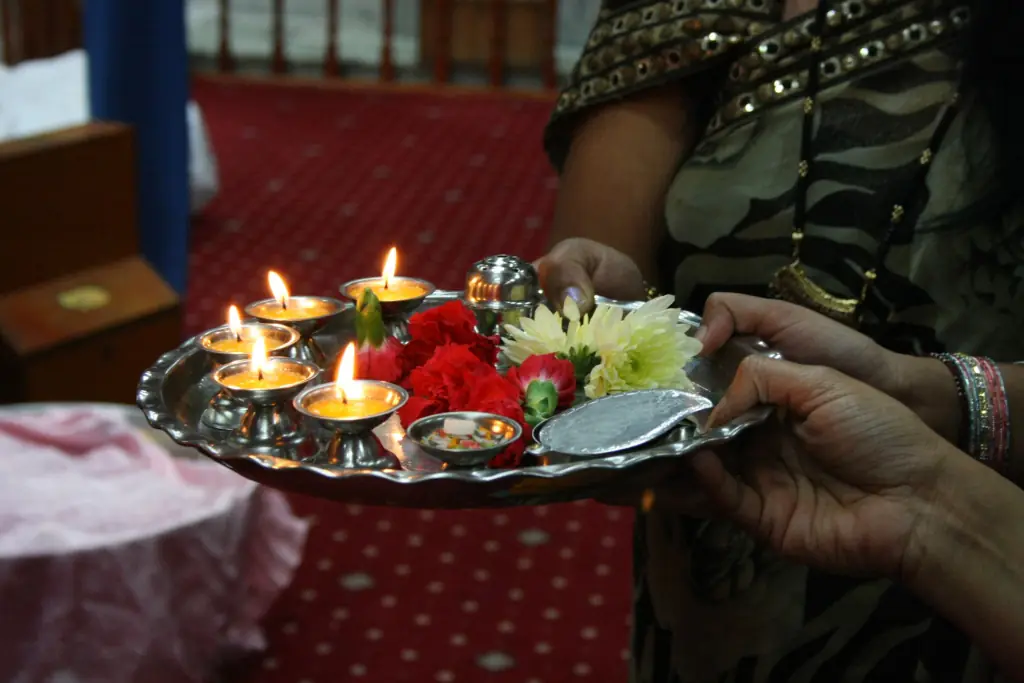
 आरती की थाली · Puja plateAarti thali
A round brass or steel plate that carries the whole puja in one hand: lamp, kumkum, rice, flowers, camphor, a bell. The plate is laid out before the puja begins and carried to the altar. At the end the lamp on it is waved for the aarti and then brought round so each person can hold their palms over the flame.
पंचपात्र और उद्धरणी · Water cup and spoonPanchapatra and uddhariniA small tumbler of water with a long thin spoon, used for every offering of water and for achamana. The spoon carries water from the cup to the deity, a few drops at a time, through padya, arghya and achamana. In South India the pair is usually silver or copper; many homes keep a separate plate for the water once offered.
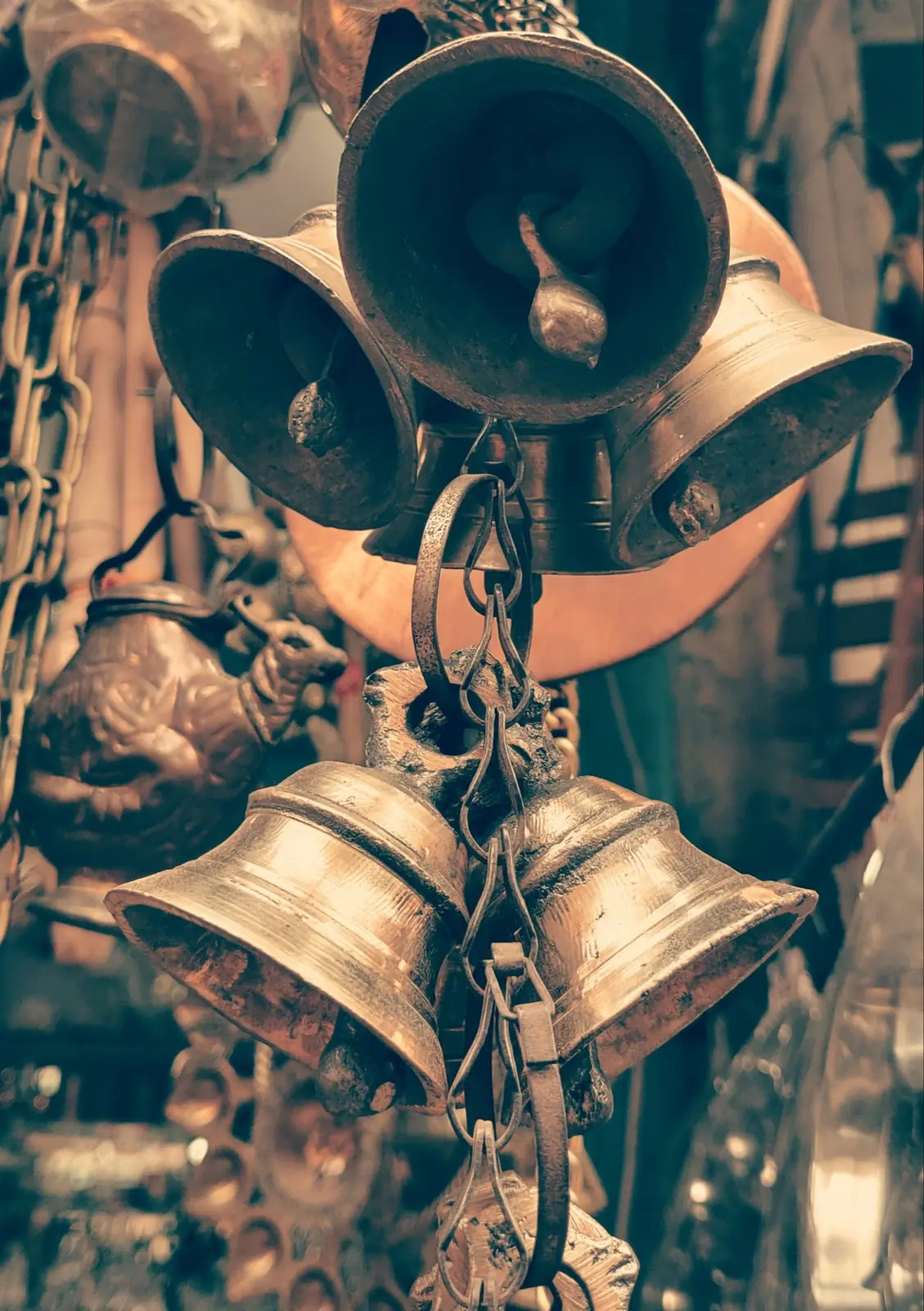 घंटा · Hand bellGhanta
A brass hand bell with a handle, often crowned with a small figure of Garuda for Vishnu or Nandi for Shiva. It is rung when puja begins and all through the aarti. The handle is held in the left hand. Temples also hang larger bells at the door, which the devotee rings on entering.
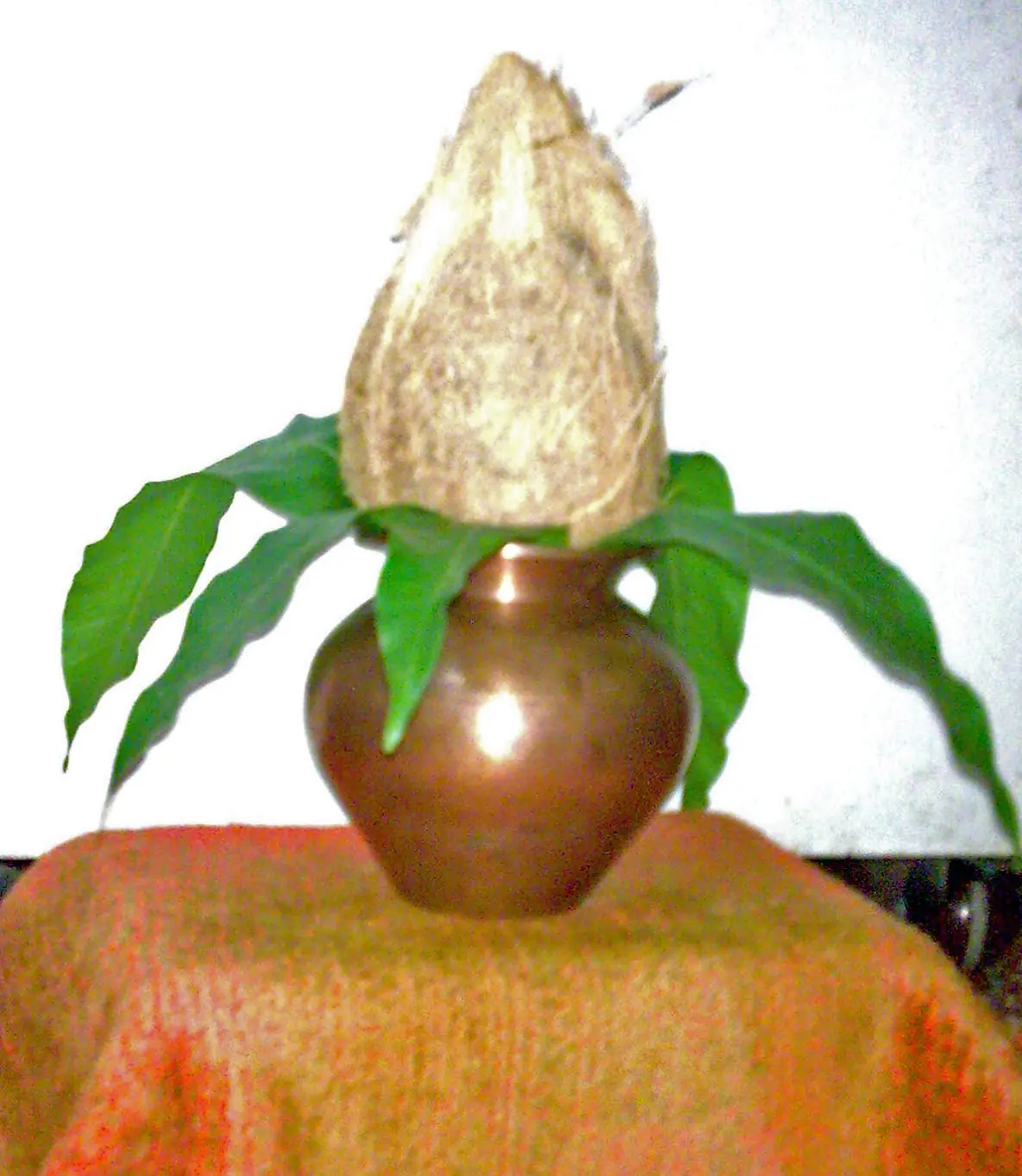 पूर्ण कलश · The full potPurna kalasha
A pot of water with mango leaves at its mouth and a coconut on top, worshipped as a seat of the devatas. The kalasha is filled with water, sometimes with a coin, rice or betel nut dropped in, tied at the neck with red thread and marked with a swastika in kumkum. It stands at the start of every big puja, at the door of a wedding house and in the mandap.
पंचमुखी दीपक · Five-wick lampPanchmukhi deepaA brass lamp with five spouts set in a ring, so five flames burn at once. Lit for aarti and on festival days. The single-wick diya of clay is the everyday lamp; the five-faced lamp is brought out when the puja is a large one.
निरांजन · Footed ghee lampNiranjanA small cup-shaped lamp on a stem and foot, filled with ghee and lit with a cotton wick. In Maharashtra and many homes of the north it is the lamp waved at aarti. The rite itself is also called nirajana, the showing of the light.
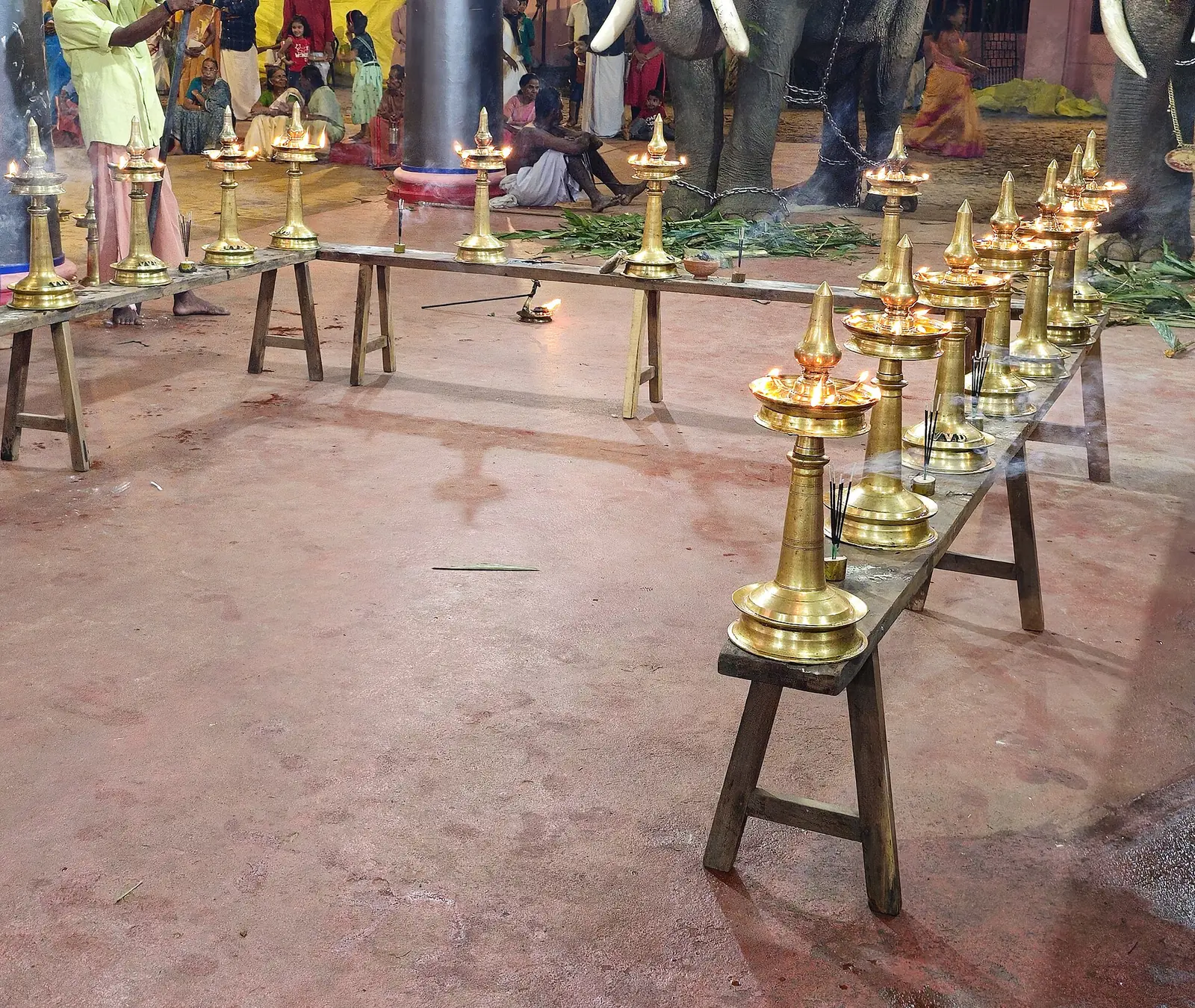 कुत्तुविलक्कु · Standing lampKuthuvilakku and nilavilakku
A tall standing lamp of brass or bell metal from Kerala and Tamil Nadu, with one, two or five wicks. In Kerala the nilavilakku is lit at dawn and dusk, and before every auspicious act, a wedding or a house-warming among them. With a single wick, the flame faces the deity. Mannar in Alappuzha is known for casting them in bell metal.
नंदादीप · Unbroken lampNanda deepA lamp kept burning day and night without a break, through Navratri or through a vow. Also called the akhand jyoti. A deep brass lamp, a thick wick and plenty of ghee or sesame oil keep it going. In many homes it burns for the nine nights; some light it from Saptami only.
धूपदानी · Incense holderDhoop daniA stand for agarbatti sticks, or a small covered bowl for cones and resin on coals. Incense is the eleventh offering, waved before the image just before the lamp. Brass stands are made in the shape of a lotus, a peacock or a small temple.
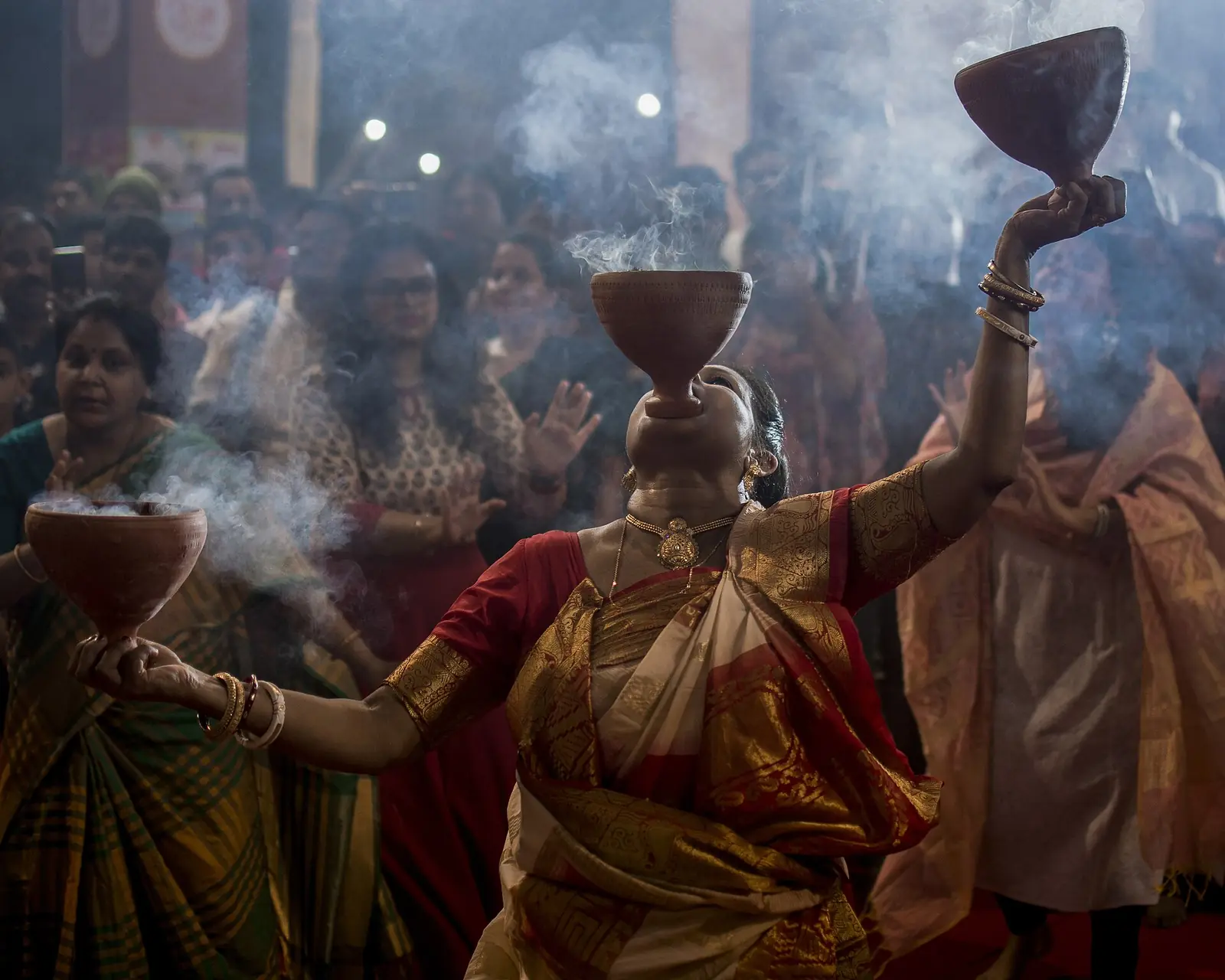 धुनुची · Bengal clay censerDhunuchi
A clay incense burner with a flared mouth on a stem, filled with burning coconut husk and dhuno resin. Dhuno is the resin of the sal tree. At Durga Puja in Bengal the dhunuchi is carried in the hands and danced with to the beat of the dhak, above all on Ashtami and Dashami evenings.
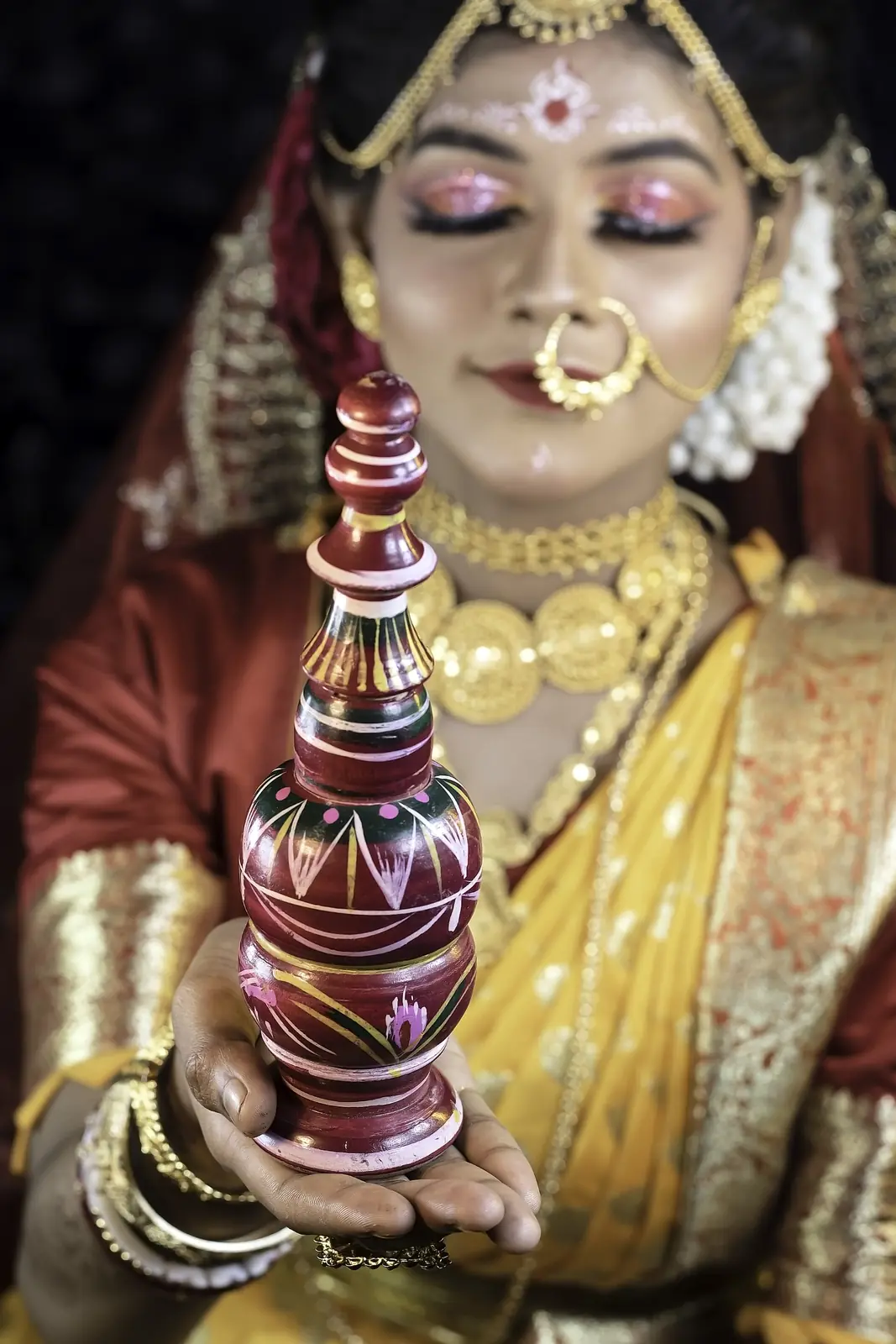
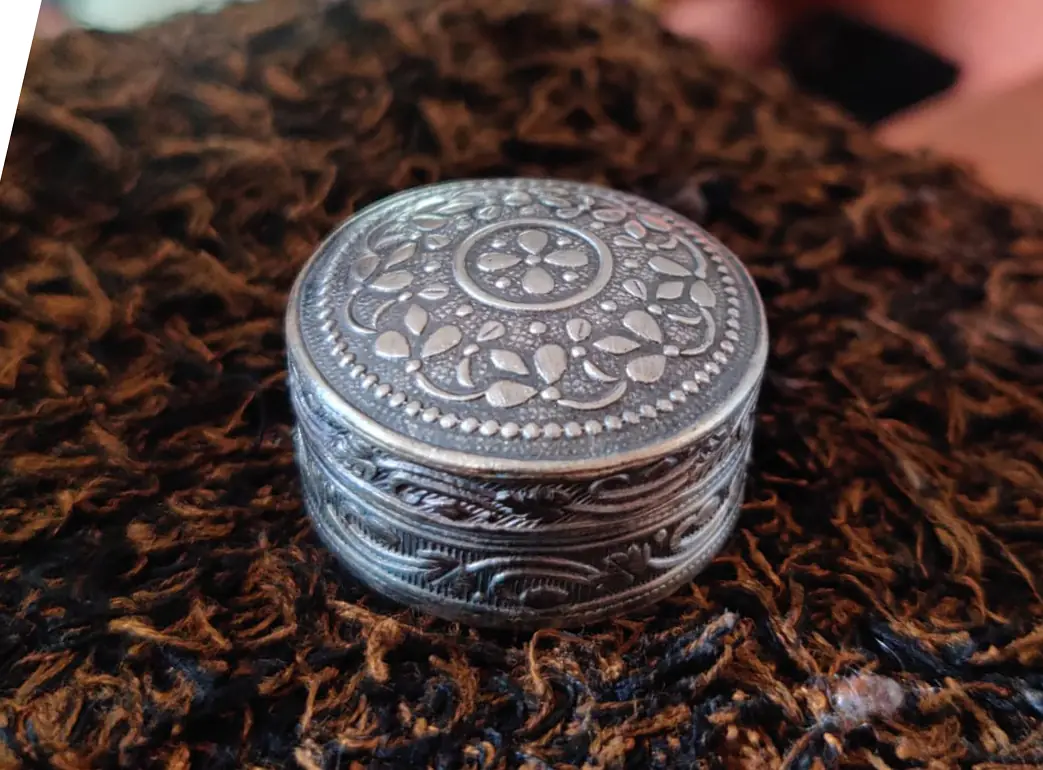 सिंदूरदानी · Vermilion boxSindoor dani
A small lidded box of silver, wood or lac that holds sindoor or kumkum. It sits on the puja plate and goes into the bride's trousseau. In Bengal the bride carries a wooden sindoor box, the gachh kouto, from the day of the wedding.
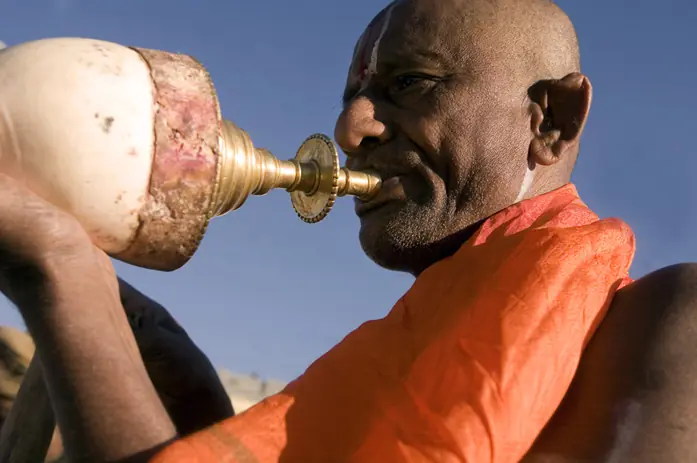 शंख · ConchShankha
A sea conch, blown before aarti and at the high points of a puja; Shri Krishna's conch is Panchajanya. A right-turning conch, the dakshinavarti, is rare and kept on the altar for worship. Many traditions do not pour water from a shankha over the Shivling.
चामर · Yak-tail fanChamaraA whisk of white yak hair on a handle, waved before the deity as before a king. It belongs to the rajopacharas, the royal honours, offered in temples and at large pujas after the sixteen services. Carved attendants holding chamaras flank the doorways of many old temples.
छत्र · ParasolChhatraA small silver or cloth umbrella held over the deity, the oldest sign of kingship in India. Another of the royal honours. In procession a large chhatra is carried above the utsava murti, and home altars often have a tiny silver one above the image.
पुष्प पात्र · Flower basketPushpa patraA basket, plate or leaf cup that holds the morning's flowers before they are offered. Flowers are gathered into it after the bath. Tulsi, bilva and durva are kept apart so each reaches the right deity.
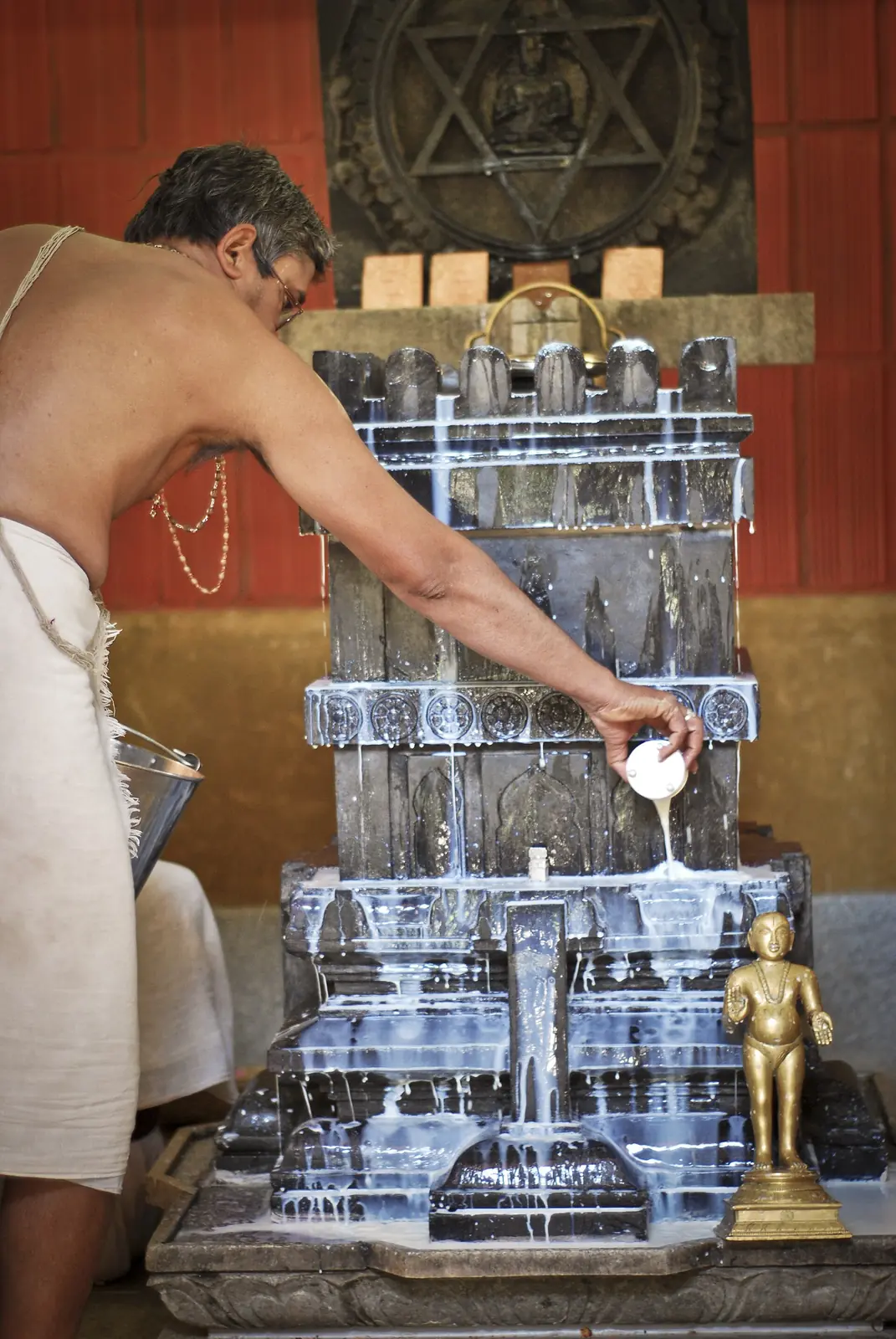 अभिषेक पात्र · Bathing vesselsAbhisheka vessels
Spouted pots, a stand to bathe the image on, and over the Shivling a hanging pot that drips water through a hole. For abhisheka the murti is bathed in turn with milk, curd, ghee, honey and sugar, the panchamrita, then with water. The hanging pot, the dhara patra, keeps a thin stream falling on the Shivling.
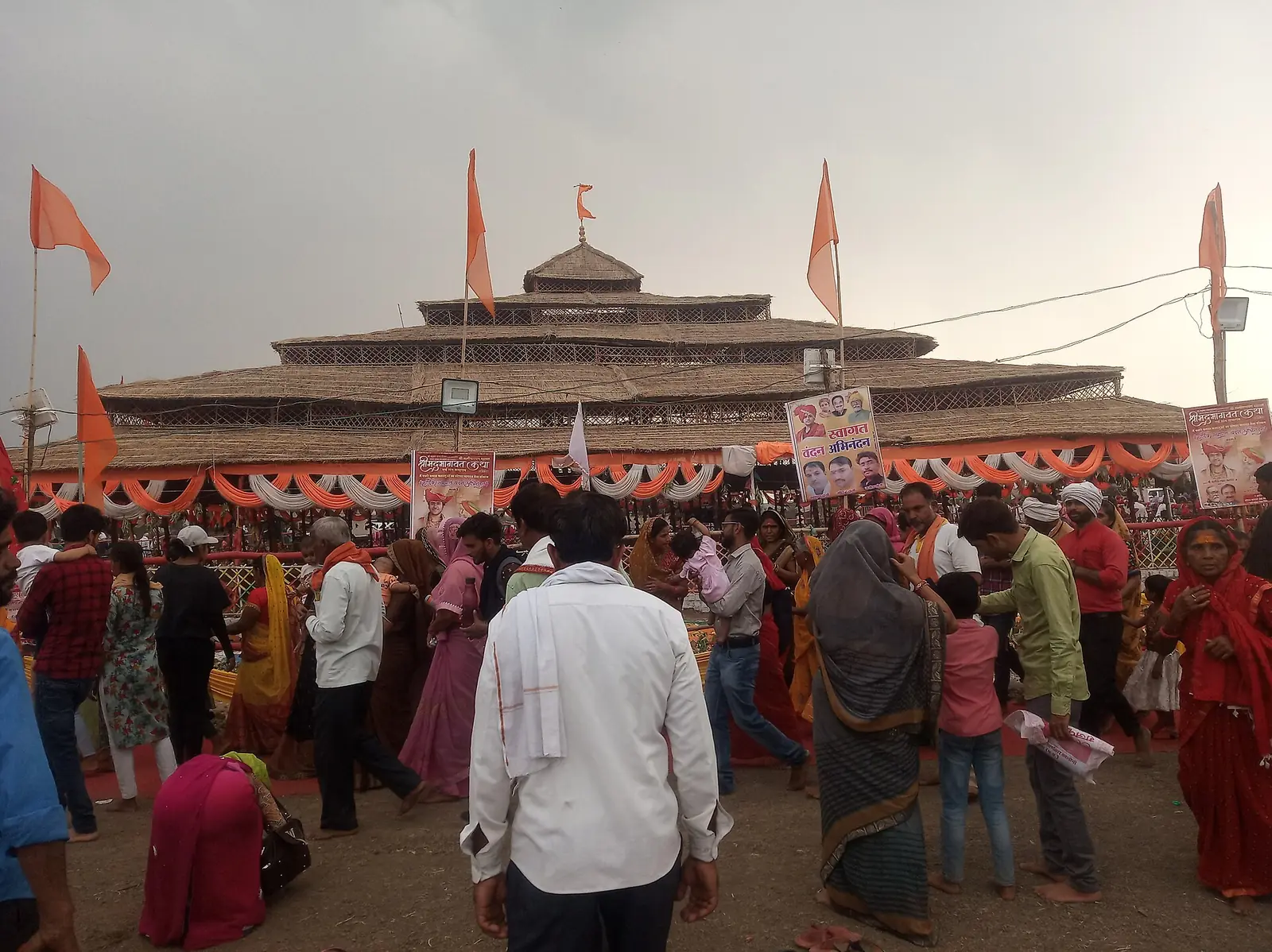 यज्ञकुंड · Fire altarYajna kund
A square pit or copper box for the sacred fire, stepped inward so the fire sits in a hollow. Square is the usual form for a home havan. Ghee, samagri and rice are offered into it with svaha. The wedding fire is lit in such a kund at the centre of the mandap.
स्रुक् और स्रुवा · Fire ladlesSruk and sruvaTwo wooden ladles for the fire: the broad sruk for a large pour, the narrow sruva for a measured spoonful of ghee. Both are cut from sacred wood, most often palasha. The sruva dips ghee from the pot; the sruk pours it into the fire. Agni is shown in sculpture holding a sruva.