Kathakars
The name comes from katha. Kathakars were travelling bards who told the Itihasa and the Puranas at temples, acting out the katha as they sang it.

कथक
The story-tellers’ dance of the north, all fast footwork, spins and the leelas of Krishna.
The name comes from katha. Kathakars were travelling bards who told the Itihasa and the Puranas at temples, acting out the katha as they sang it.
A recital opens with thaat, slow poses with tiny movements of neck and brow. Tatkar is the footwork, the heel and ball striking the floor in exact time with the tabla.
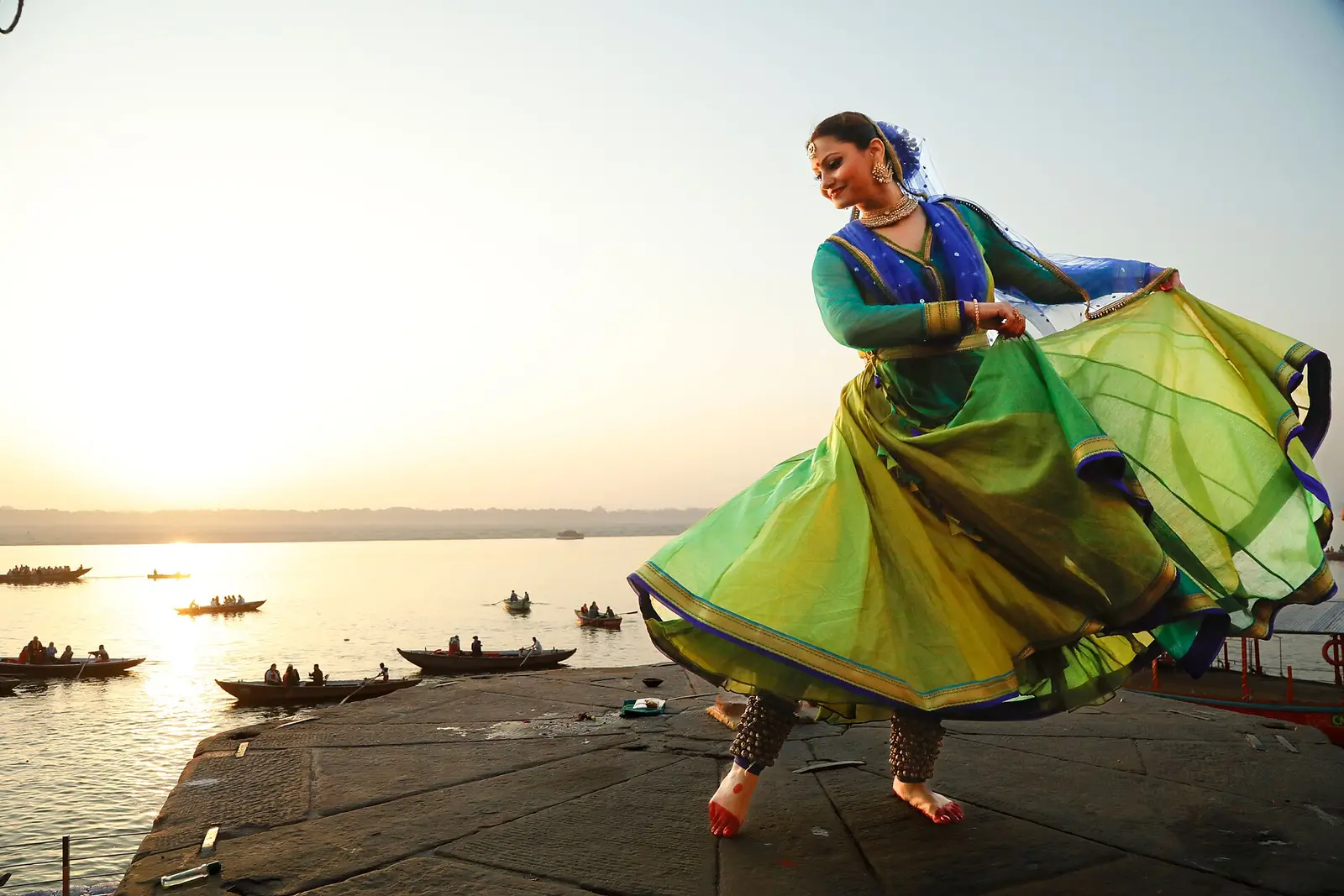
Short rhythmic pieces built on bols, the spoken syllables. Parans use the heavy syllables of the pakhawaj. Many end in a burst of chakkars, rapid spins on the heel.
Bhav batana, showing the feeling of a line, is often given to Krishna: Makhan chori, the gopis at the Yamuna, Radha waiting. A single line may be shown many ways.
Women wear a lehenga and choli or an anarkali tunic with churidar; men wear a dhoti or angarkha. Ghungroo bells are tied on in rows around each ankle.
Tabla leads, with sarangi or harmonium keeping the lehra, the repeating melody. A singer may add a thumri, bhajan or tarana.
Lucknow tradition tells of Ishwari, a devotee told in a dream to make dance a form of worship. The leelas of Shri Krishna became Kathak’s chief subject.
At the courts the dance gained speed, spins and courtly costume, while the Krishna repertoire was kept alive in the families of hereditary dancers.
Jaipur grew famous for footwork and pure rhythm, Lucknow for grace and abhinaya, Banaras for its Krishna repertoire. Raigarh grew at a royal court in Chhattisgarh.