Chauka and tribhanga
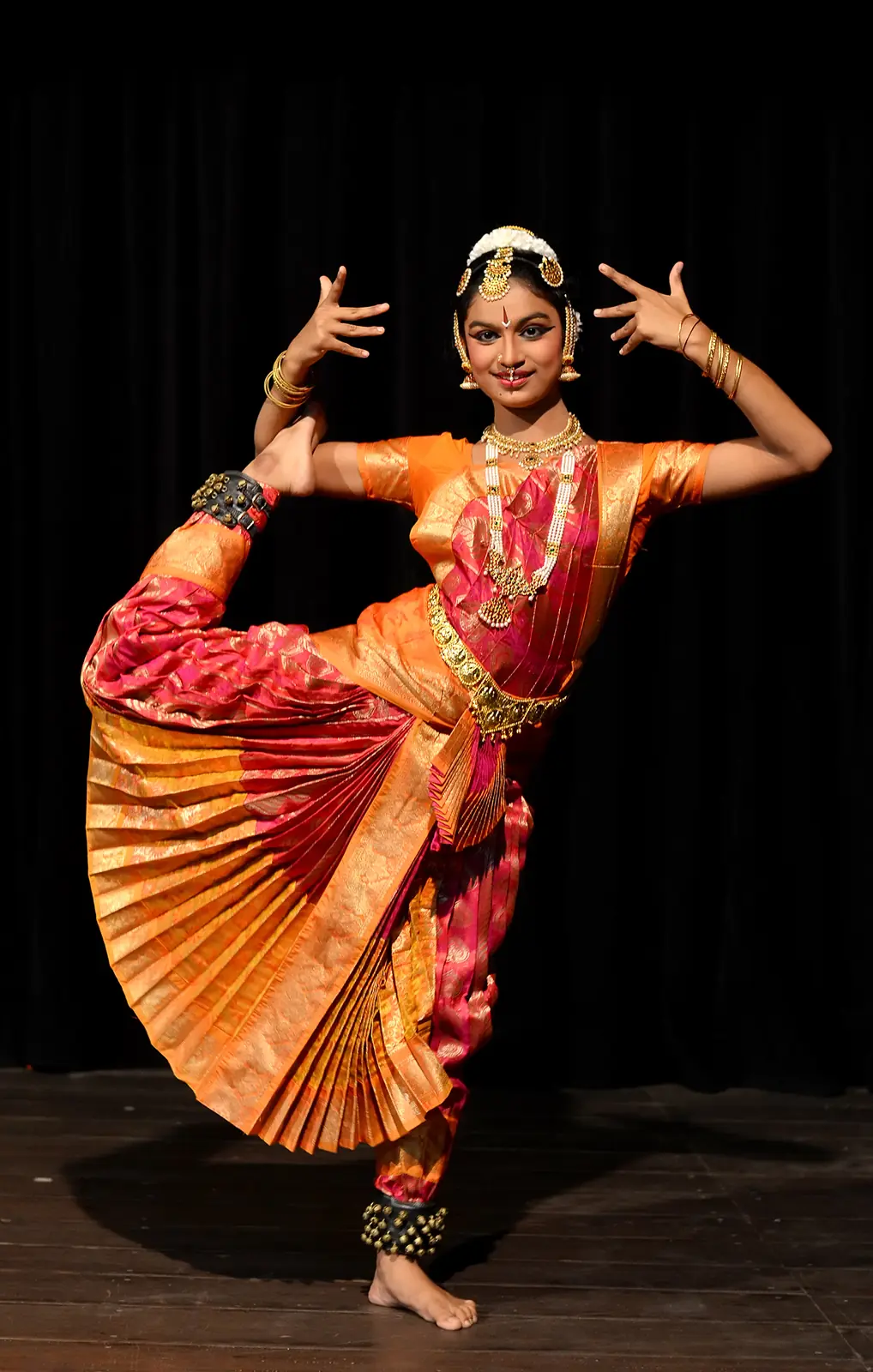
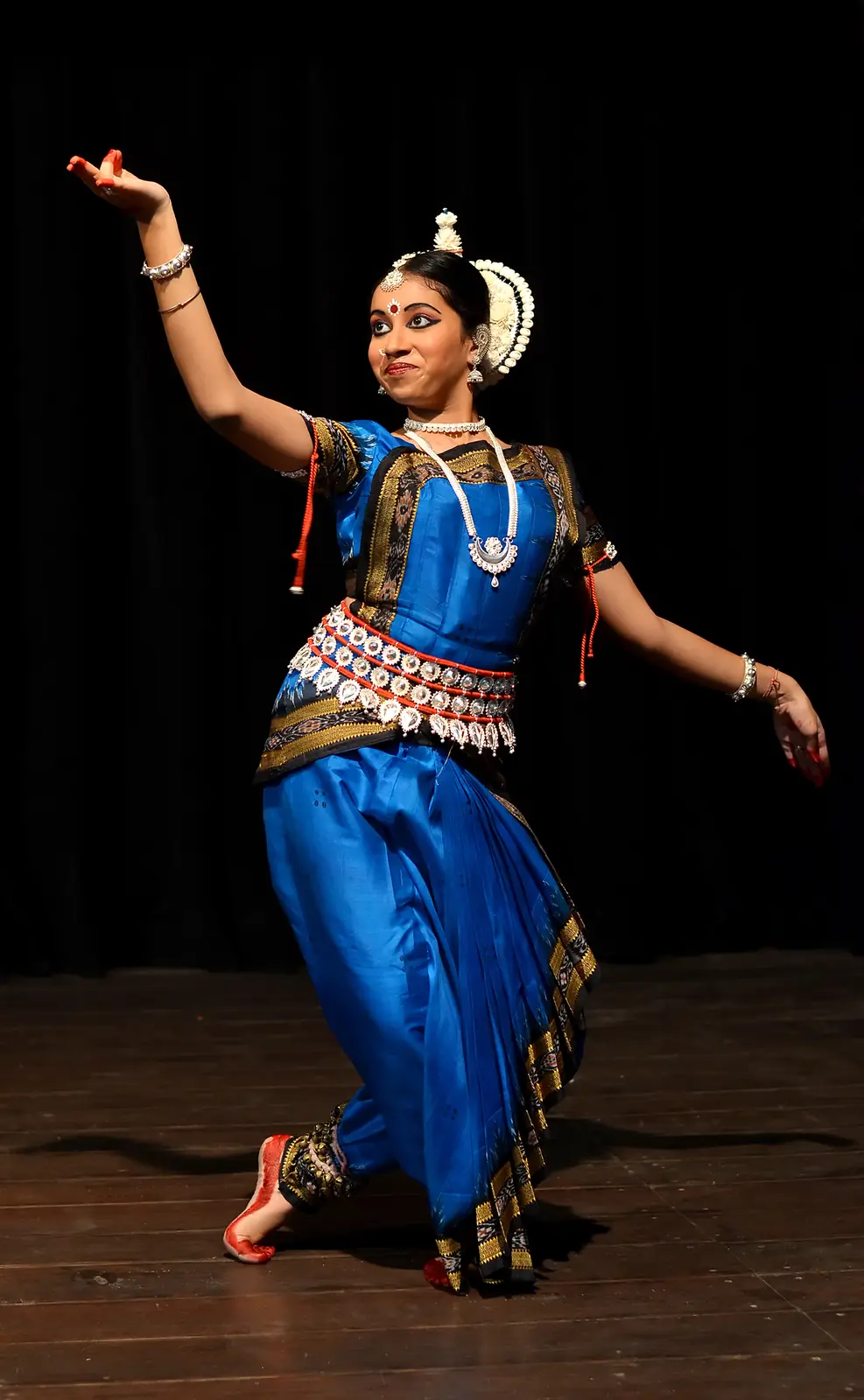
Chauka is the square, open stance of Jagannath. Tribhanga bends the body three times, at neck, waist and knee, like the sculptures on the temple walls.

ओडिसी
Odisha’s temple dance, carved before it was danced: the tribhanga curve, the square chauka stance, and the songs of the Gita Govinda.
Chauka is the square, open stance of Jagannath. Tribhanga bends the body three times, at neck, waist and knee, like the sculptures on the temple walls.
Mangalacharan offers flowers and bows to Jagannath and the earth. Batu, or sthayi, is pure dance; pallavi blossoms in a raga; abhinaya follows; moksha closes in stillness.
Jayadeva’s ashtapadis are the heart of Odissi abhinaya. The maharis sang them before Shri Jagannath at Puri.
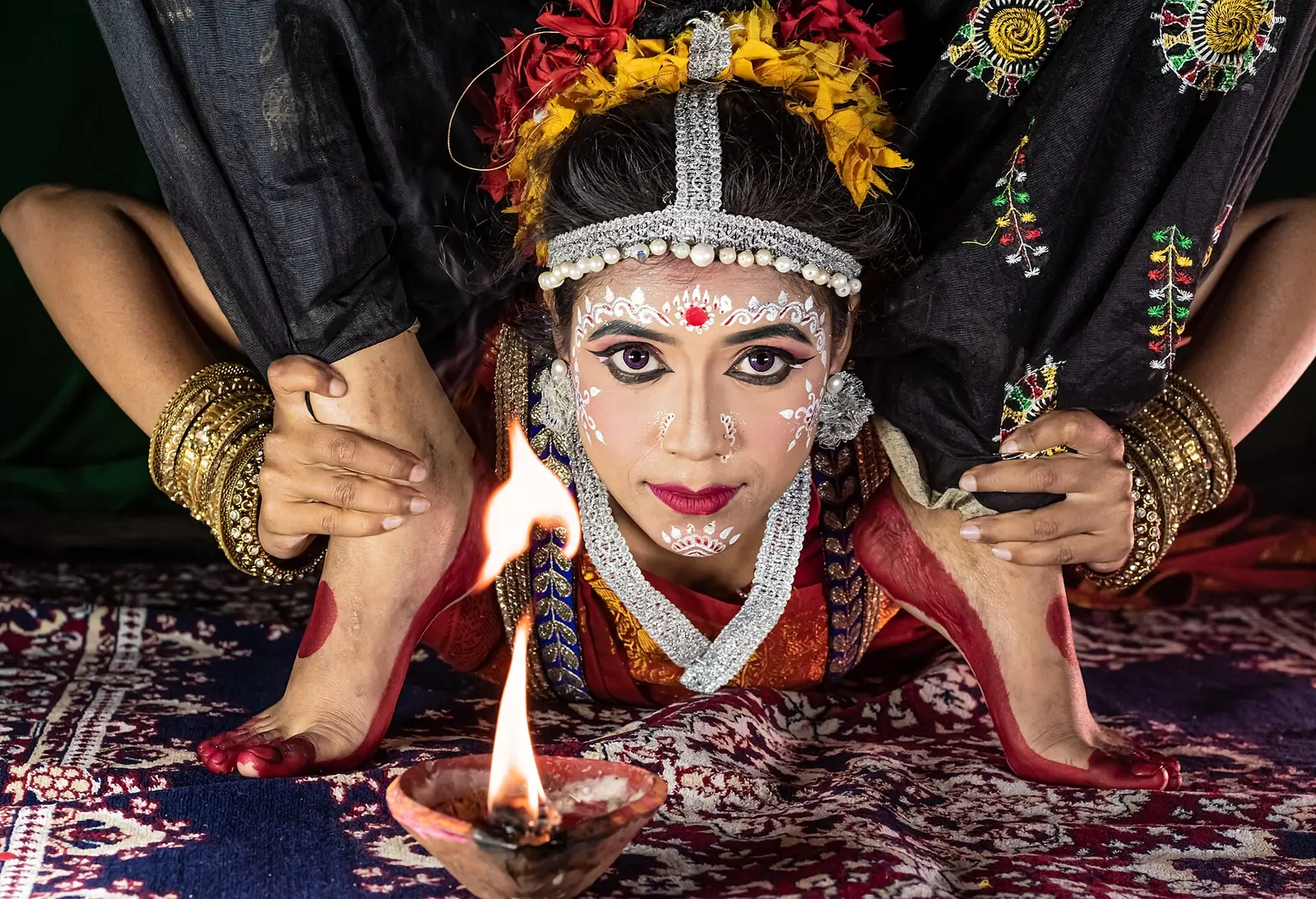
A pleated sambalpuri or bomkai silk sari, silver filigree jewellery, a tahiya crown of sola pith shaped like a temple spire over the bun.
Odissi music, with the mardala drum, flute, sitar or violin, and gini cymbals. The bols are spoken by the guru.
The Rani Gumpha caves at Udayagiri near Bhubaneswar carry reliefs of dancers and musicians, among the oldest dance images in Odisha.
Temple dancers served Jagannath at Puri. Boys dressed as girls, the gotipuas, danced outside the temple and kept the technique alive.
Gurus Kelucharan Mohapatra, Pankaj Charan Das, Deba Prasad Das and Mayadhar Raut, with scholars, met as Jayantika to set the repertoire of modern Odissi.