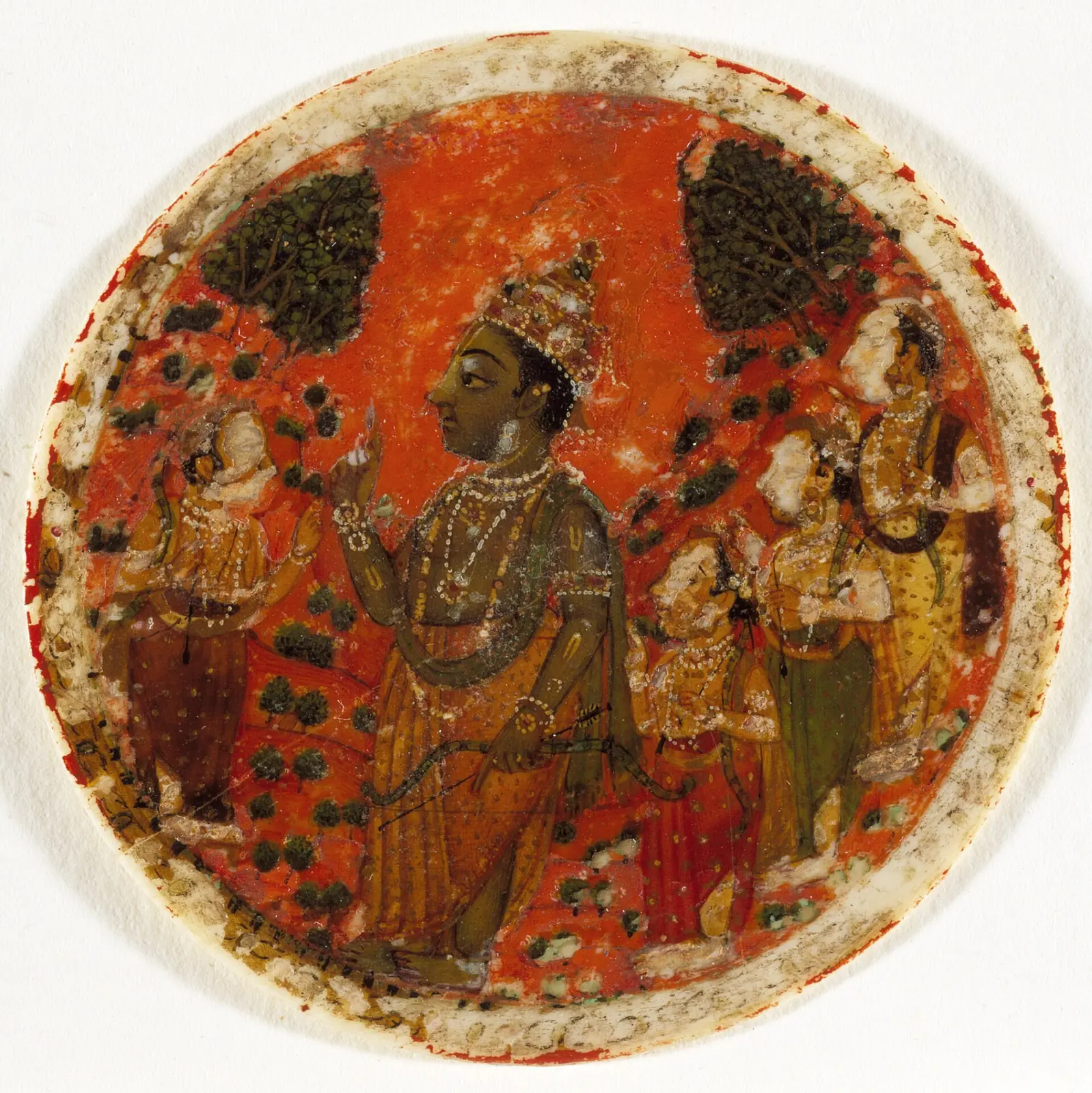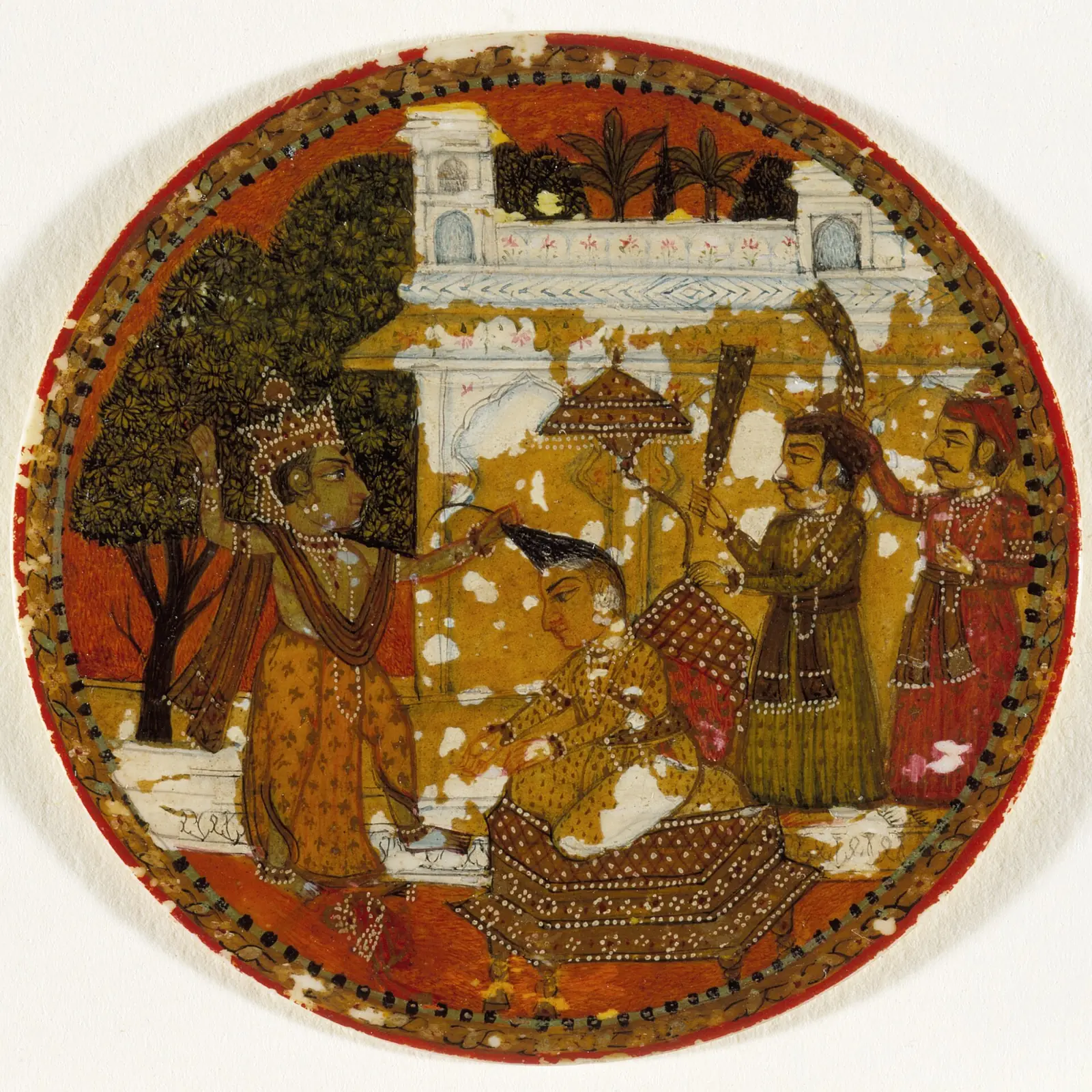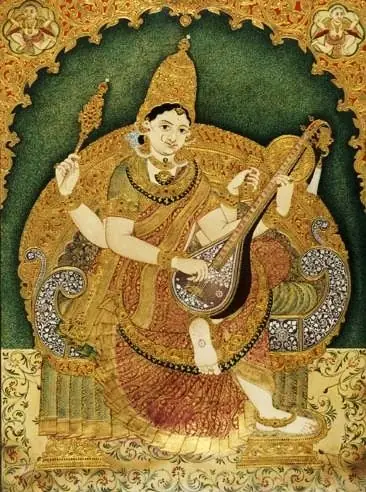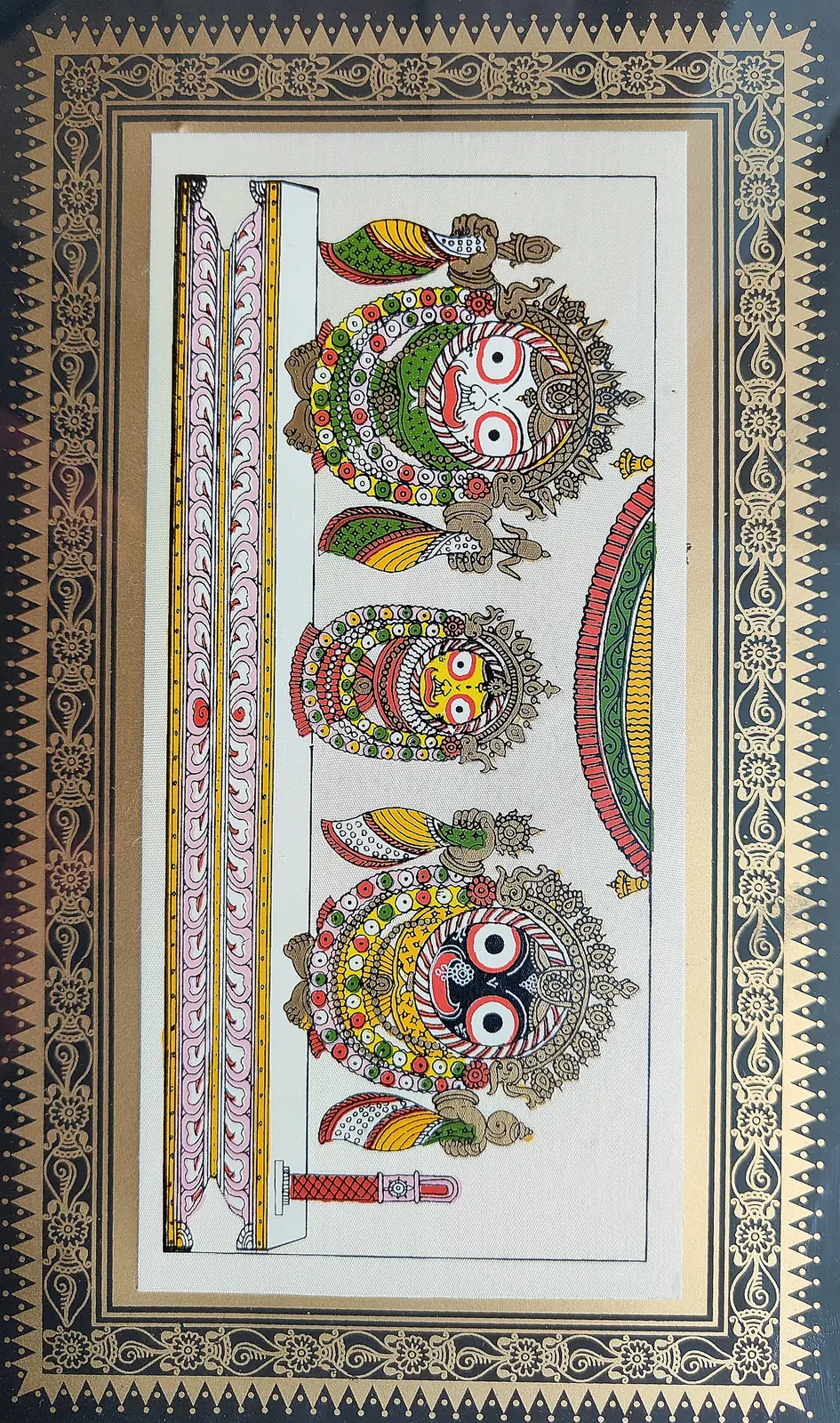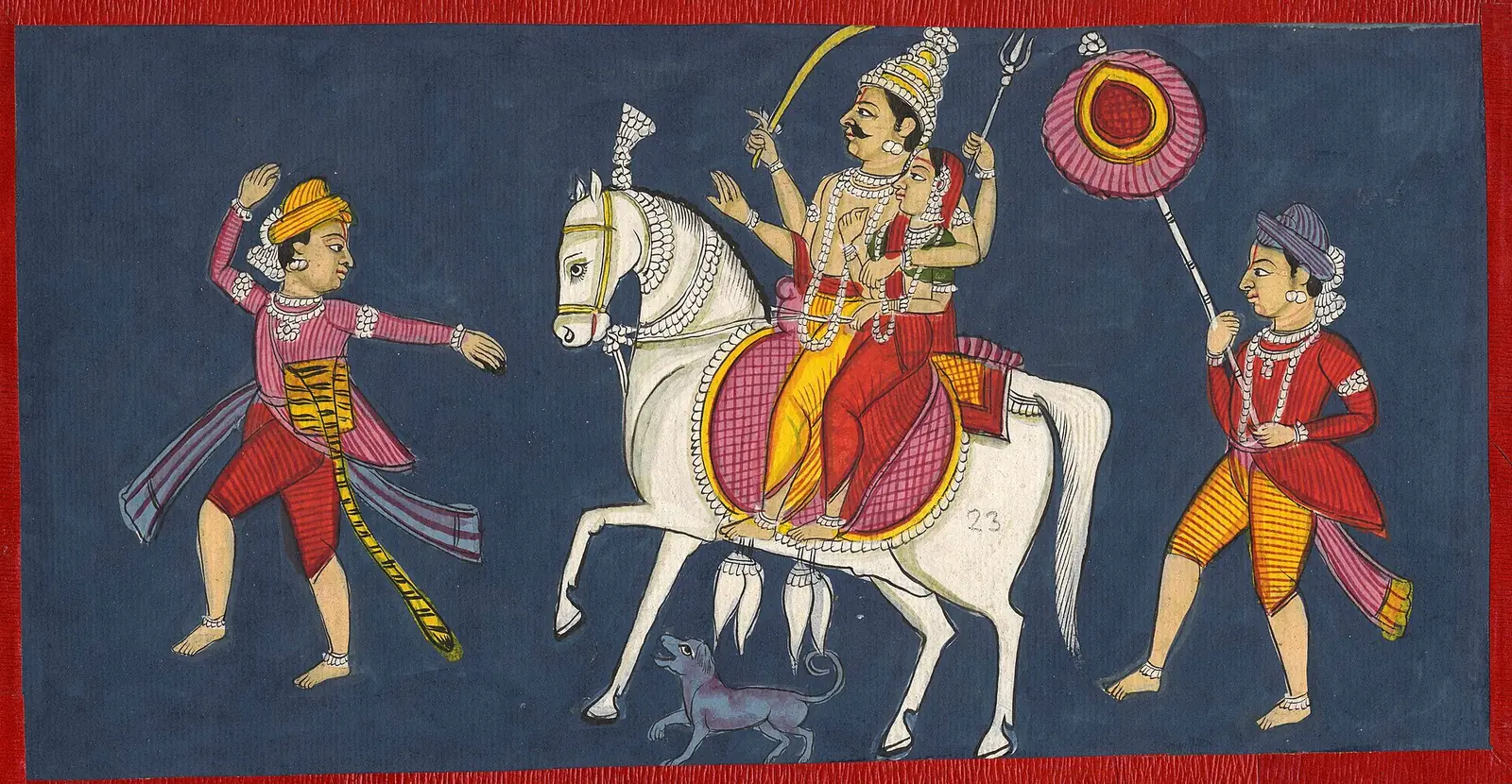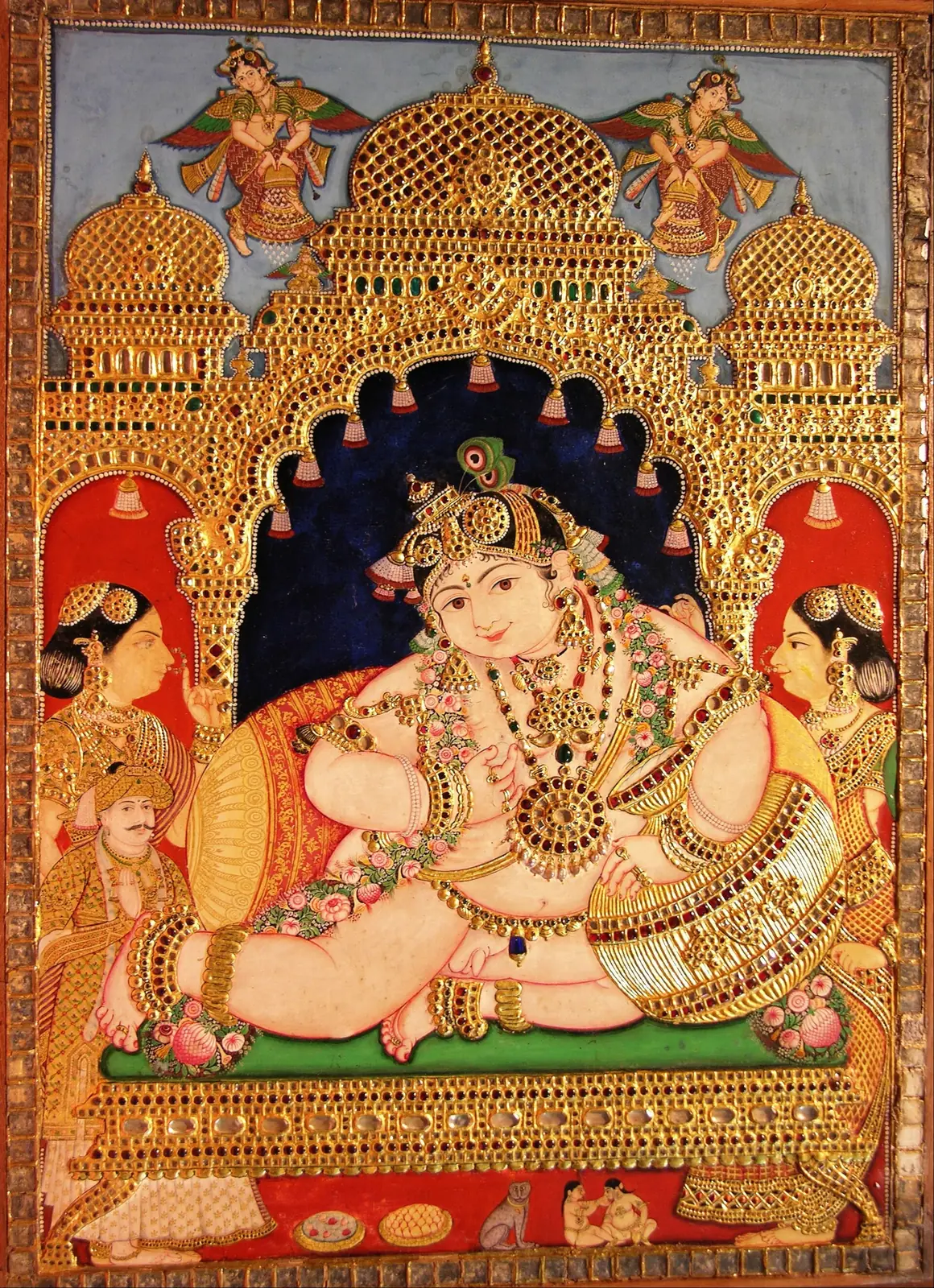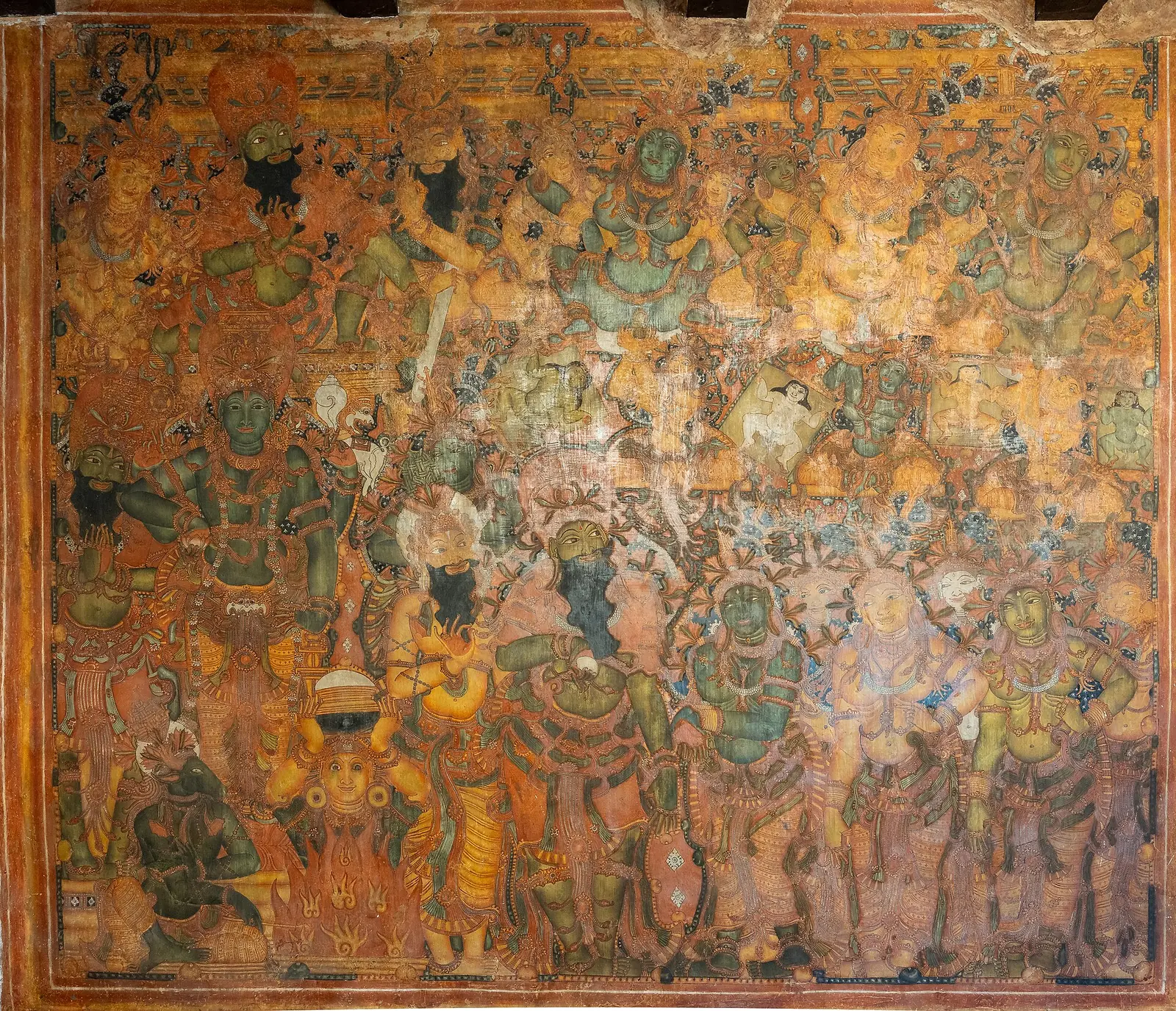
Dashavatara and Navagraha sets, played by three.
Dashavatara Ganjifa
दशावतार गंजीफा
Round hand-painted playing cards whose ten suits are the ten avatars of Vishnu, made at Sawantwadi, Mysore and in Odisha.
- Also calledDashavatara ganjifa; ganjapa (Odisha)
- Cards10 suits of 12, 120 cards
- Made atSawantwadi, Mysore, Odisha, Bishnupur
- Protected?GI: Mysore 2007–08; Sawantwadi 2023–24
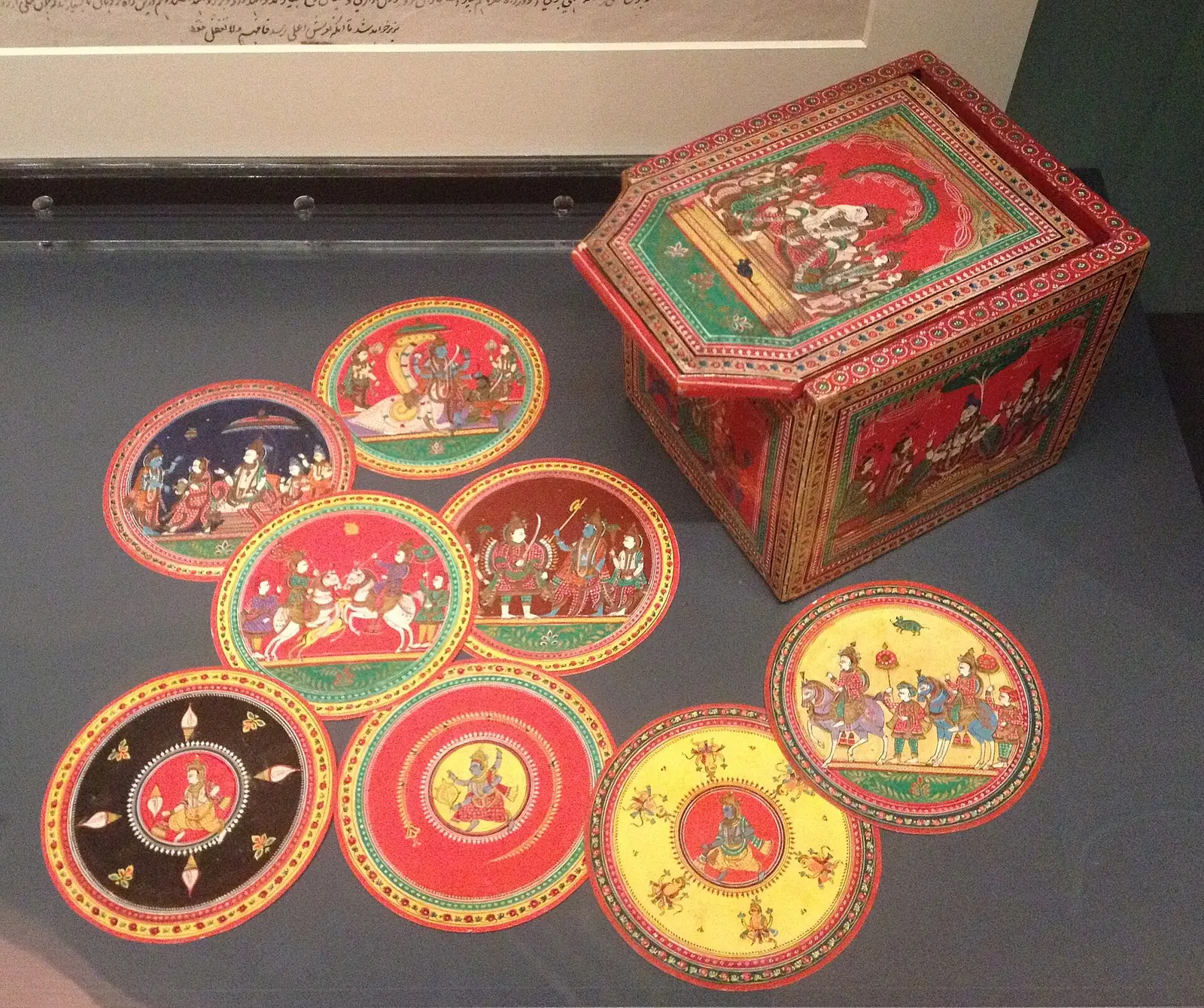
Sawantwadi, Mysore, Ganjapa and Bishnupur
Krishnaraja Wodeyar III devised games of up to 18 suits; packs reached 360 cards.
Odisha's cards, with bold stylised suit signs and extra suits.
Bengal's ganjifa, played by five.
King and minister cards
१Ten suitsMatsya to Kalki, one avatar each
२King cardThe avatar himself, as in Krishna and Kamsa
३Minister cardThe second court card of each suit
४Round shapeMost likely an Indian change to the cards
Lacquer red and avatar blue
Fine sets were painted on ivory; most on stiffened cloth, palm leaf, wood or pasteboard, painted by hand one card at a time.
The 17th-century avatar set
- c. 1600Old rules
The earliest surviving Indian rules for ganjifa date to about 1600.
- 17th centuryThe Dashavatara set
The Dashavatara pack, with suits for Vishnu's ten avatars, was made in the 17th century.
- 1799–1868The Mysore games
Krishnaraja Wodeyar III devised complex games; the Sritattvanidhi shows the card designs in colour.
- 2023–24Sawantwadi protected
Sawantwadi Ganjifa Cards were registered as a Geographical Indication, after Mysore's in 2007–08.
Four of the Rama suit