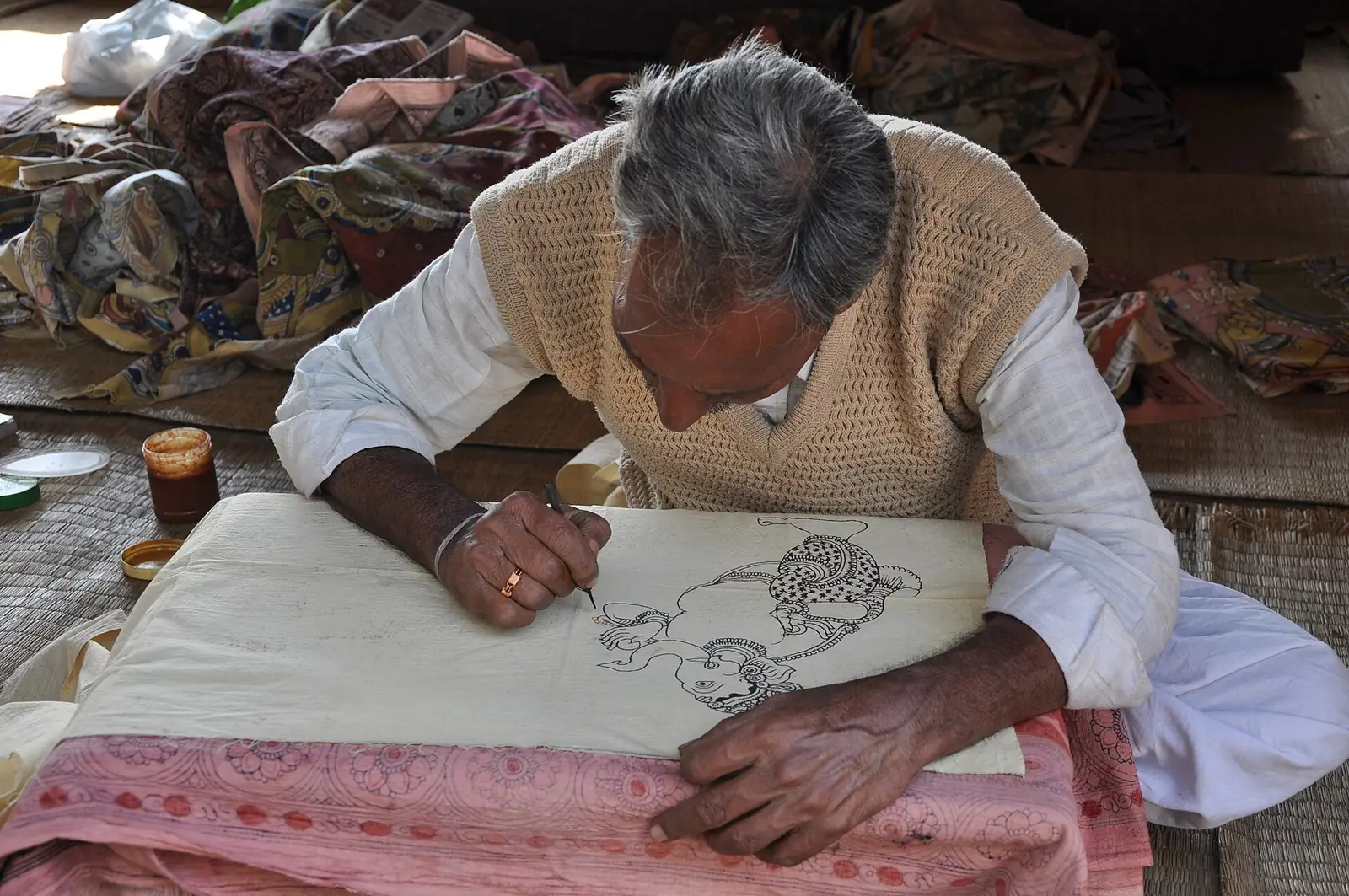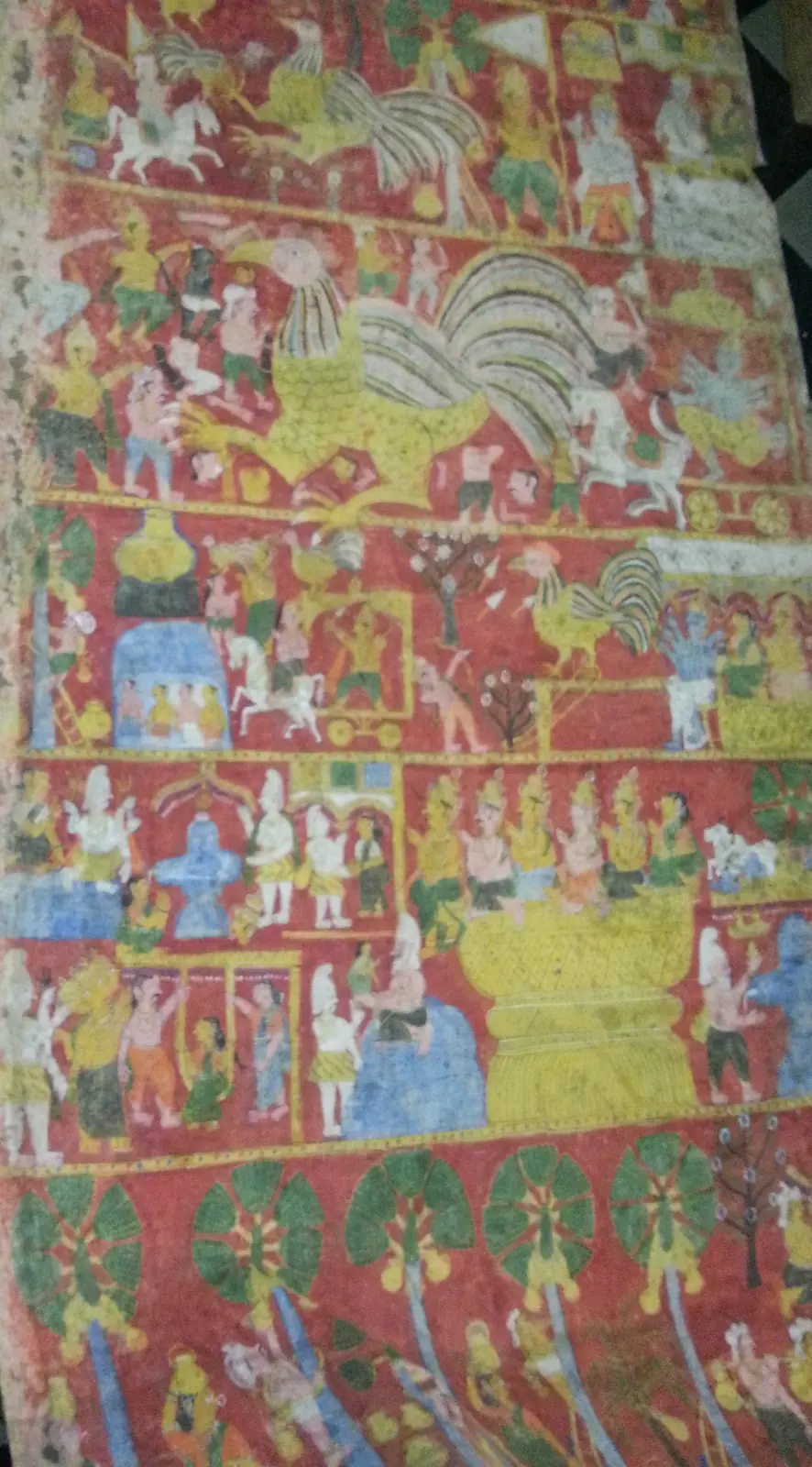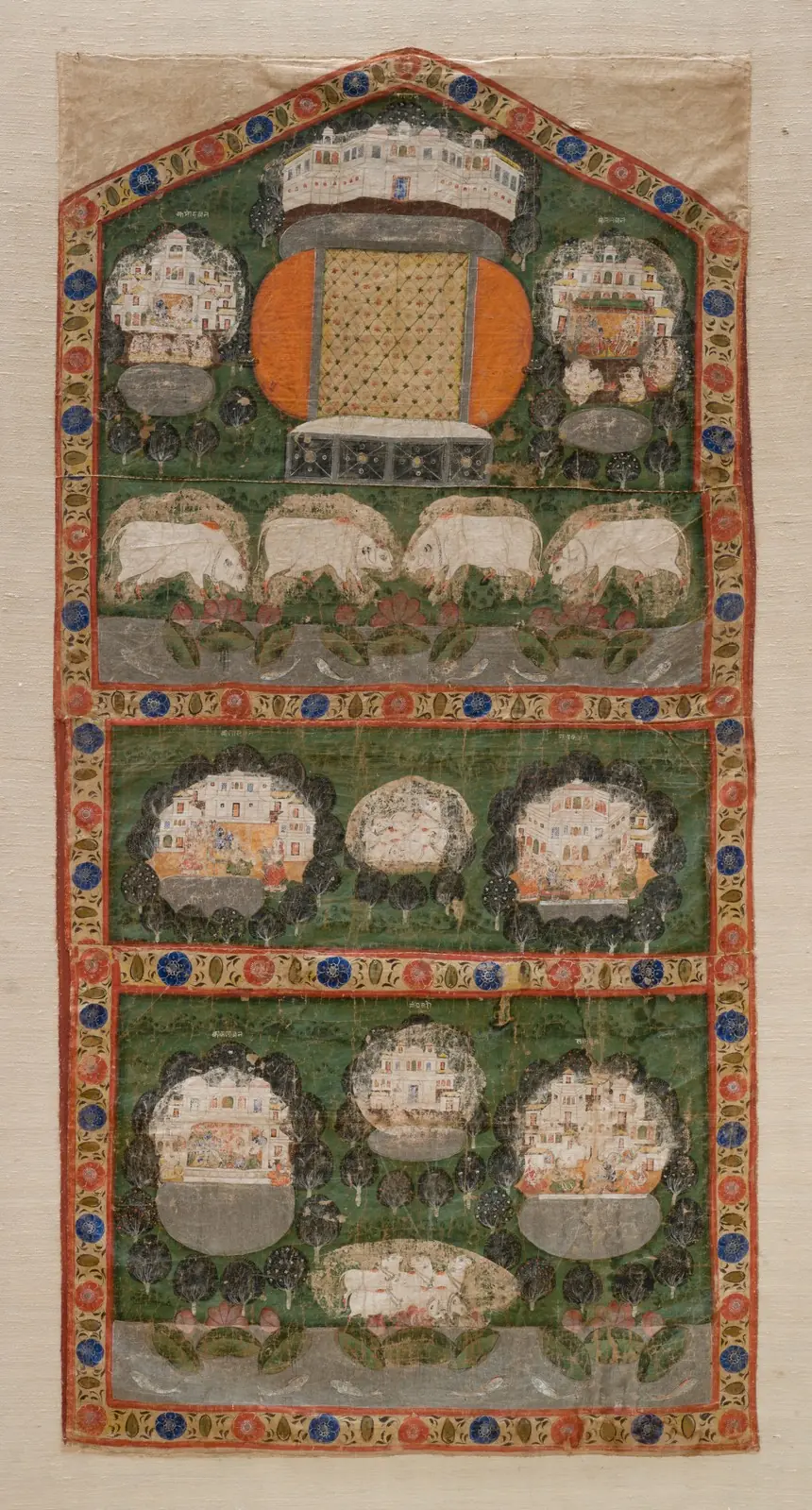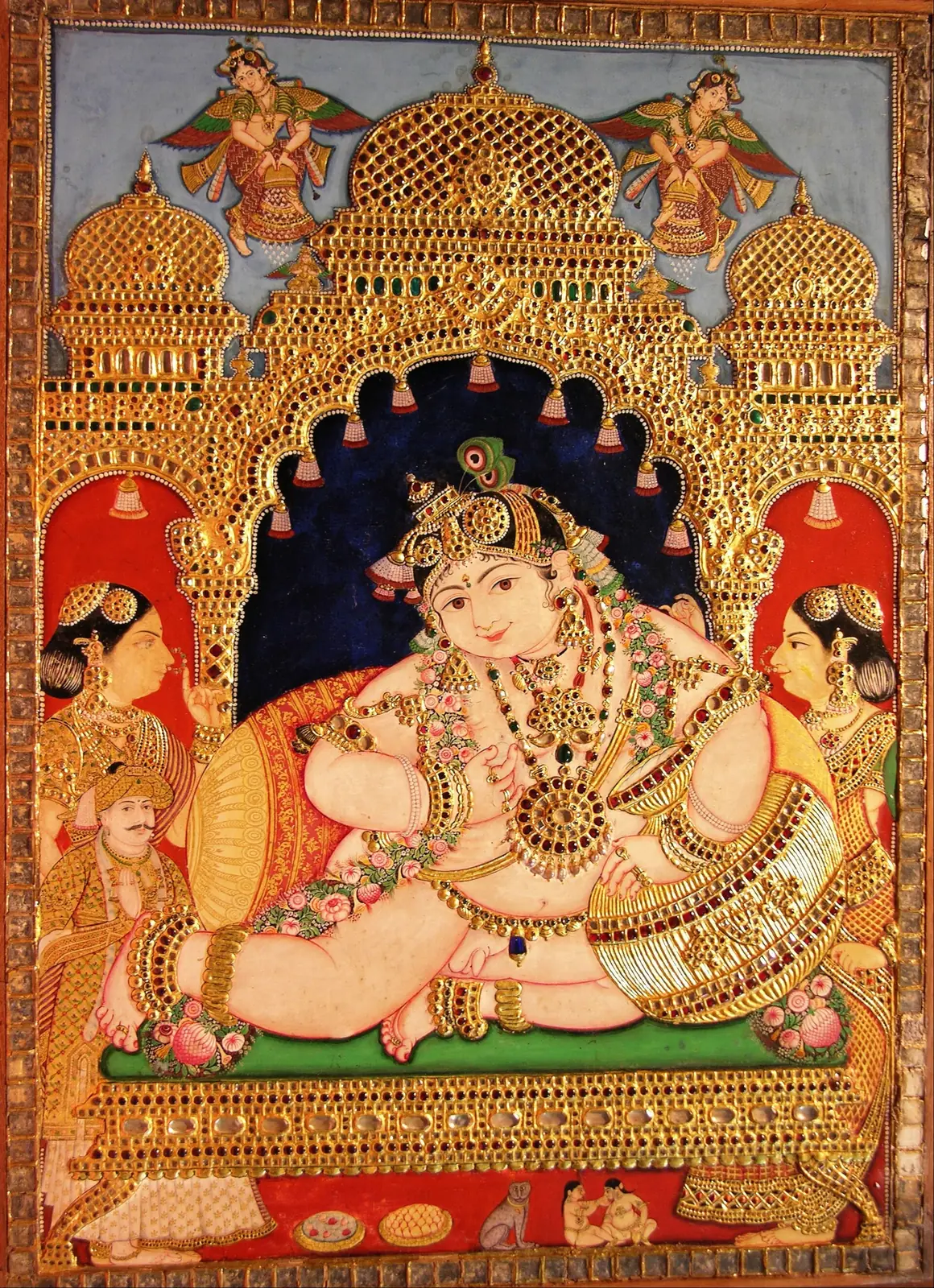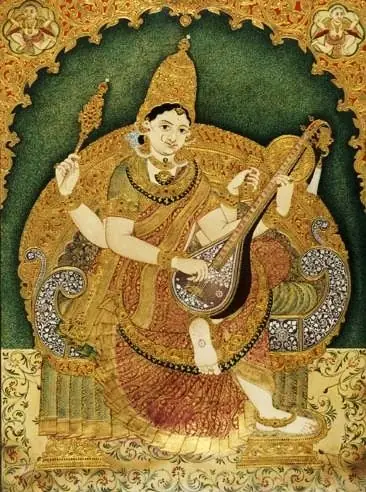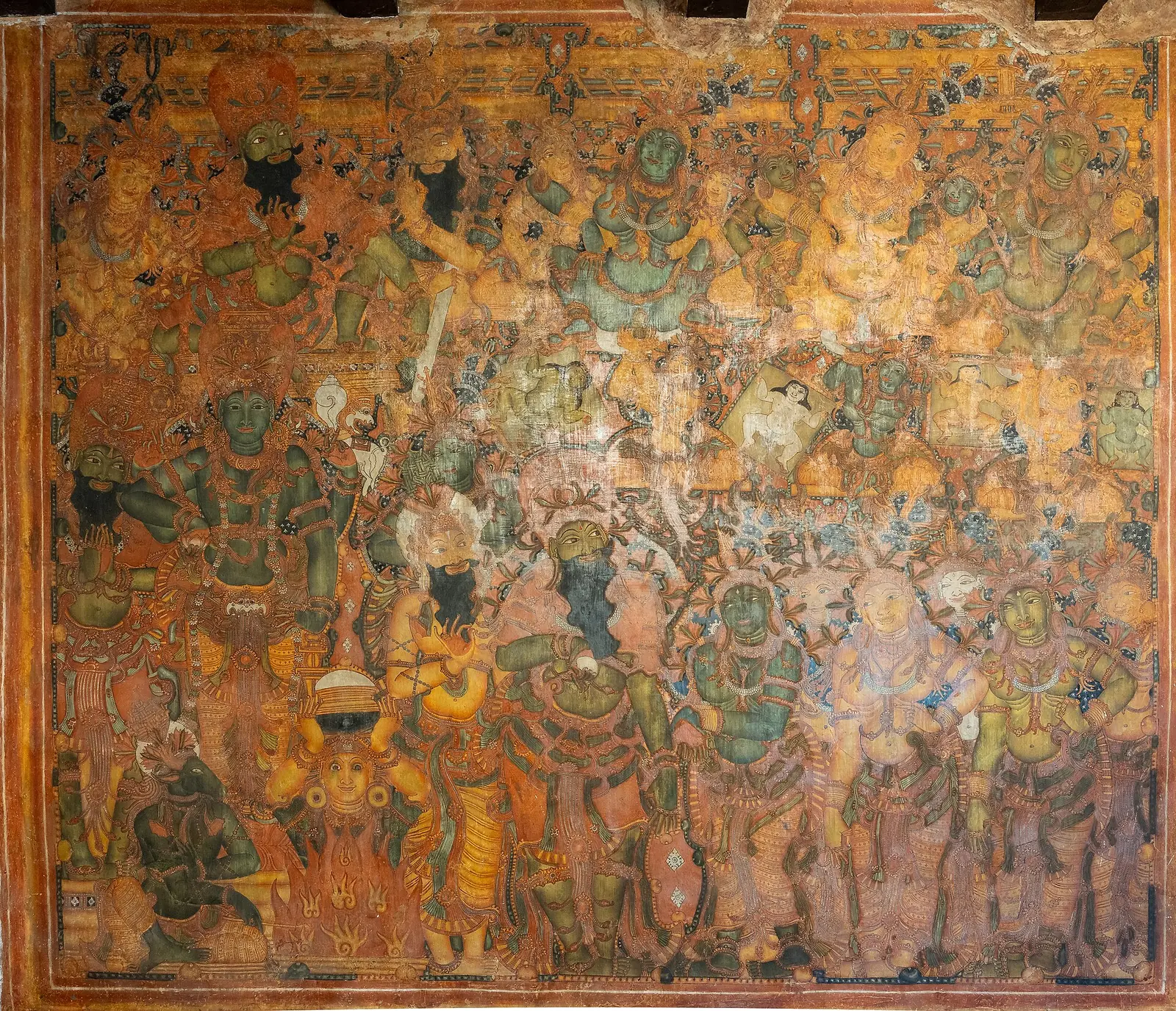
Wholly drawn and filled by hand with the kalam. Temple hangings, scrolls and chariot banners of deities and epics.
Kalamkari
कलमकारी
Cloth drawn with a bamboo pen and dyed again and again, made for temple chariots and hangings at Srikalahasti.
- Also called"Pen work"
- FromSrikalahasti; Machilipatnam (Pedana)
- StepsAbout twenty-three
- Protected?GI tags, 2005–06 and 2008–09
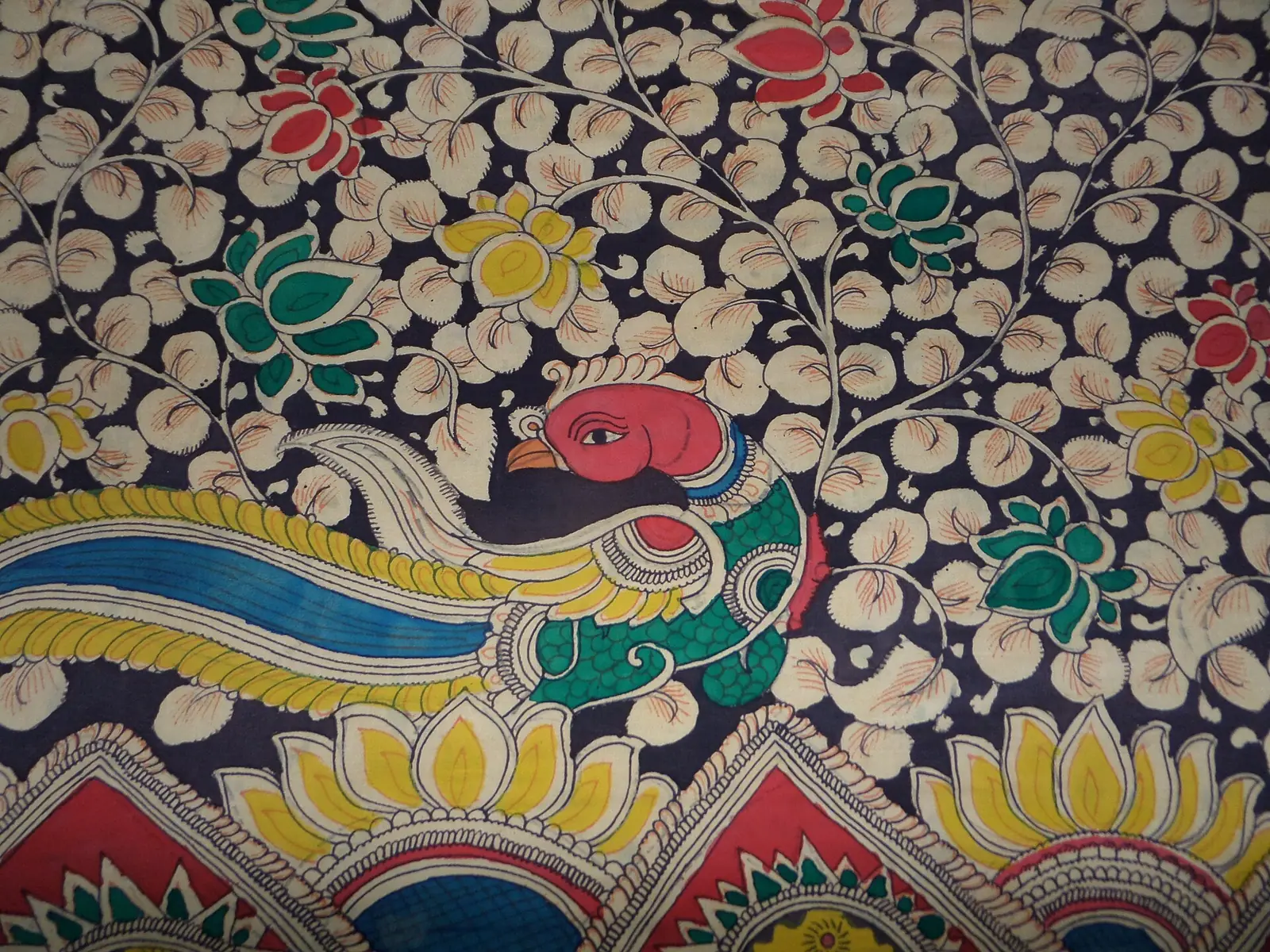
Srikalahasti pen, Machilipatnam block
Block-printed with vegetable dyes; trade cloth shaped by the courts of the Deccan.
The chariot banner and deity panels
१Deities in panelsTemple hangings tell a katha in rows
२Ramayana and MahabharataThe epics, scene by scene
३Chariot bannerCloth painted for the temple car
४Kalam lineThe pen drawing that gives the craft its name
Alizarin red and wax-resist indigo
Cloth is steeped in myrobalan and buffalo milk and dried. With the kalam, a pointed bamboo or date-palm stick with a pad of hair, mordants are drawn for each colour, and the cloth goes through the dye bath. Wax keeps areas white for indigo.
Two protected names, 2005–09
- OldResist-dyed cloth
Resist-dyed cotton has a very long history in India, back to finds at Harappa.
- TempleFor Srikalahasti
The Srikalahasti work grew around the temples, for hangings and chariot banners.
- 20th centuryRevival
Kamaladevi Chattopadhyay, as head of the All India Handicrafts Board, championed the Srikalahasti work.
- 2005–09Two protected names
Srikalahasthi Kalamkari (2005–06) and Machilipatnam Kalamkari (2008–09) were registered as Geographical Indications.
Gallery