Kerala Mural
केरल भित्तिचित्र
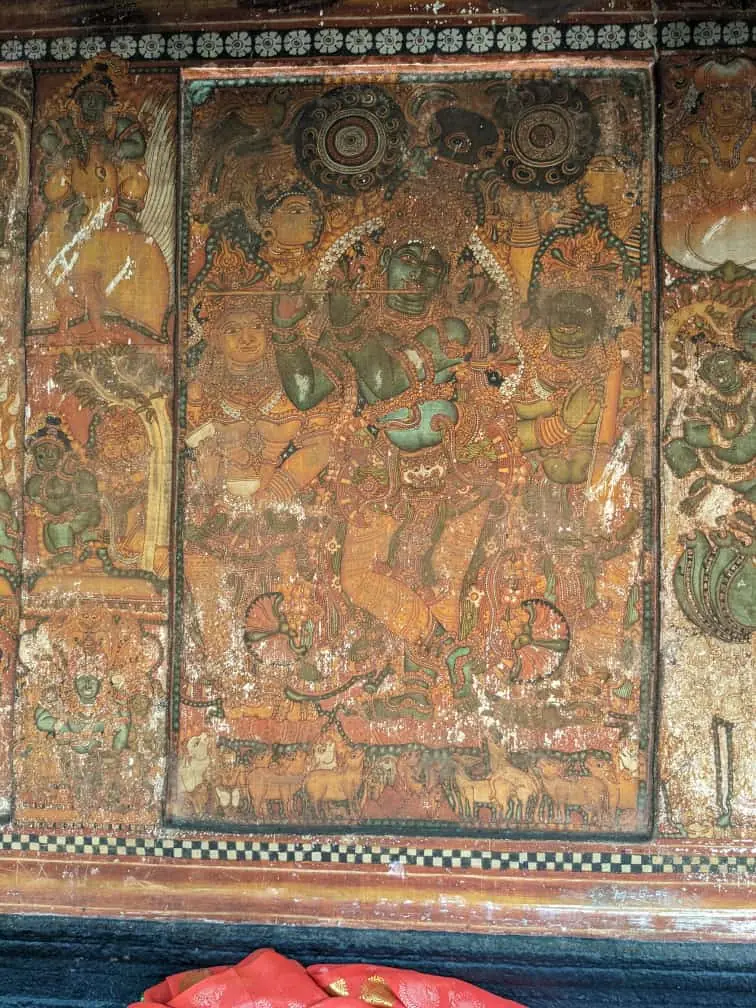
Temple and palace walls of Kerala in five colours, the deities broad-faced and calm, the white wall itself left to shine.
- Also calledChuvarchitram
- FromKerala temples and palaces
- ColoursPanchavarna, the five colours
- Seen atMattancherry, Ettumanoor, Vadakkunnathan
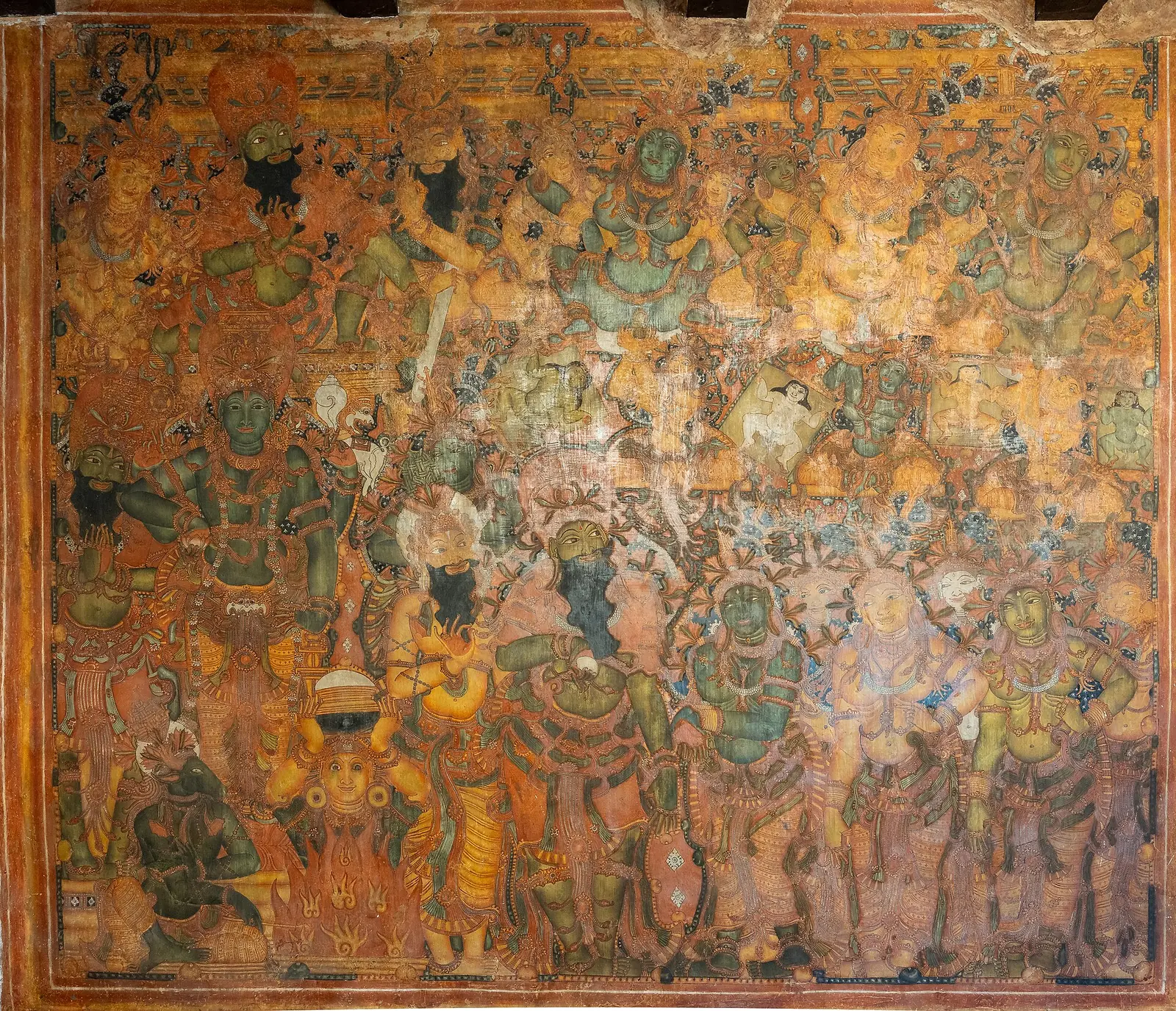
Gajendra moksha and Ramayana panels
Two laterites and neelamari leaves
The wall gets three plasters: lime and sand, then lime and sand with cotton, then 25 to 30 washes of quicklime and tender coconut water. The outline is drawn, colours laid in, details added. Tender coconut water and neem serve as binders.
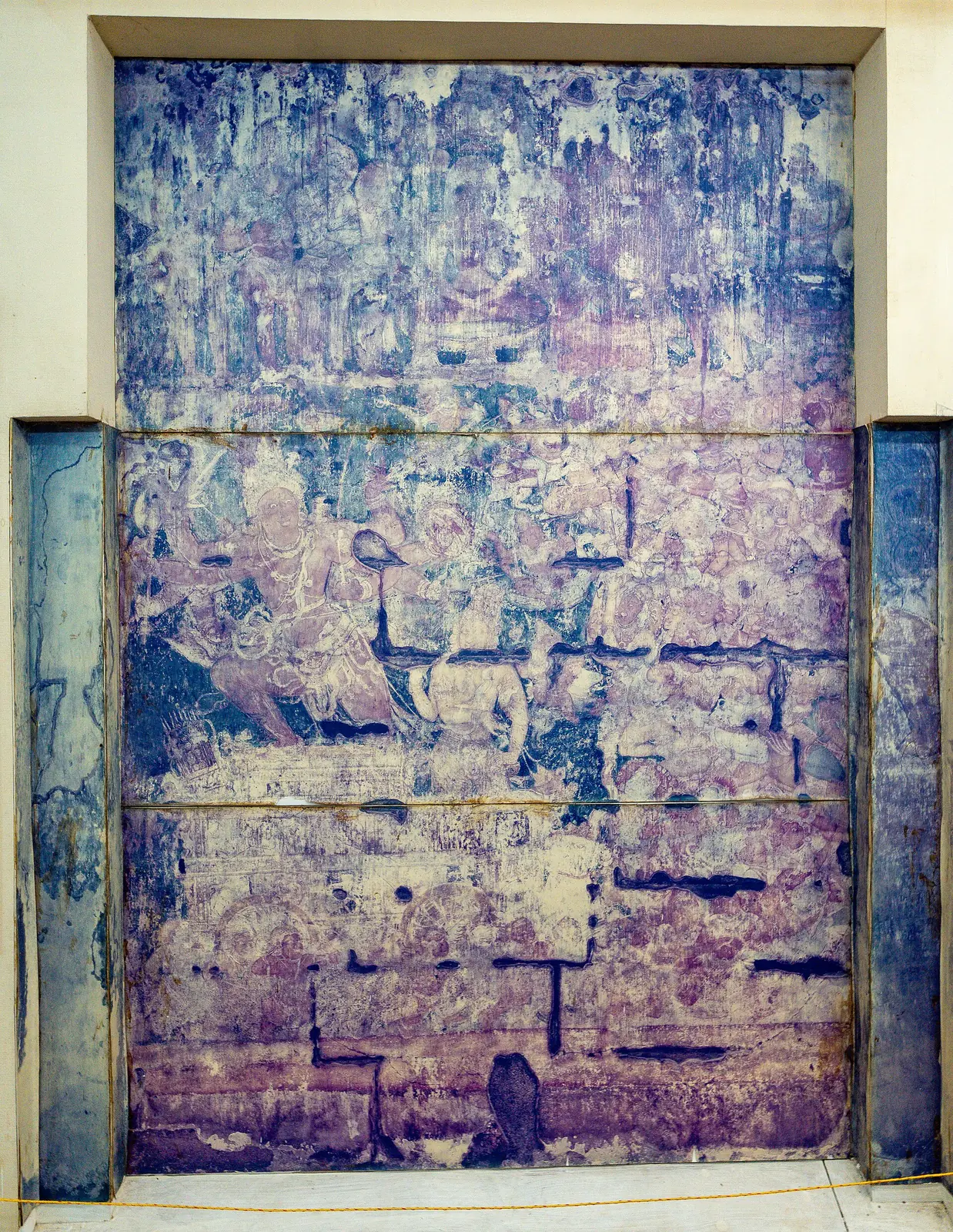
Oldest walls, 9th–12th century
- 9th–12th c.Oldest walls
The paintings of the Thirunandikkara cave temple and of Tiruvanchikulam are counted the oldest in Kerala's own style.
- ShastraPainters' texts
The painters follow texts such as the Chitrasutra, the Abhilashitartha Chintamani and the Silparatna.
- 16th–17th c.Mattancherry
The Ramayana murals of the Mattancherry Palace, Kochi, are among the finest.
- After 1947Revival
The Guruvayur Devaswom set up a centre for mural painting under Mammiyoor Krishnan Kutty Nair.
Mammiyoor Krishnan Kutty Nair at Guruvayur
- Mammiyoor Krishnan Kutty Nair
- Led the Guruvayur Devaswom's mural centre.
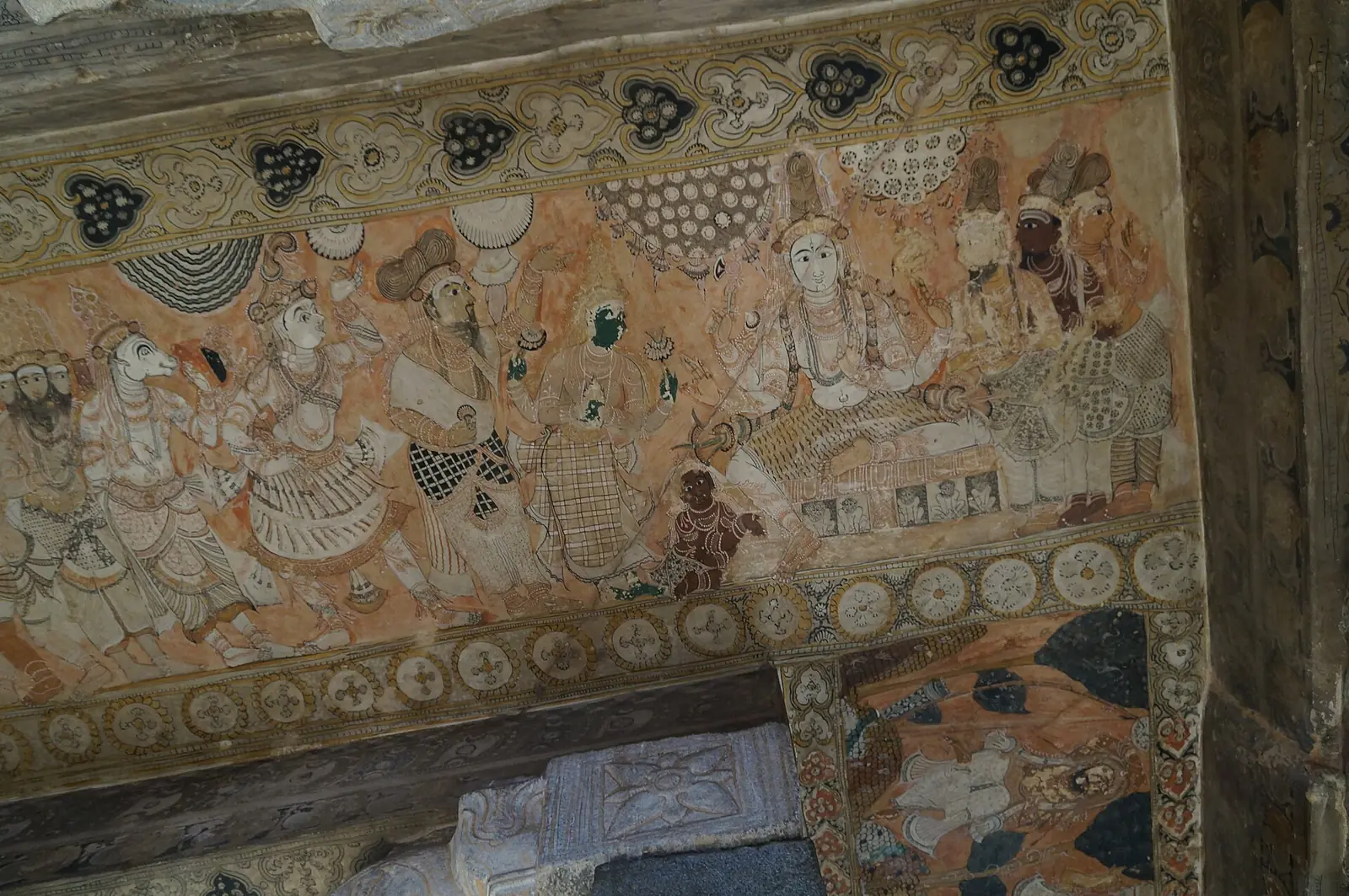
Mattancherry Palace Ramayana