Pochampally ikat
पोचमपल्ली इकत · Yadadri Bhuvanagiri, Telangana
Sharp geometric ikat from the villages around Bhoodan Pochampally, in cotton, silk and the silk-cotton mix called sico.
- FibreCotton, silk, sico
- TechniqueSingle and double ikat
- GI tagYes, 2004
- Worn forDaily wear to festivals
Rubber ties and repeated dye baths
- १
Yarn is stretched on a frame and the design marked across it.
- २
Sections are tied with rubber or thread to resist the dye, then dyed.
- ३
The process repeats for each colour; then the ties are cut.
- ४
Warp and weft are woven so the dyed sections meet in the pattern.
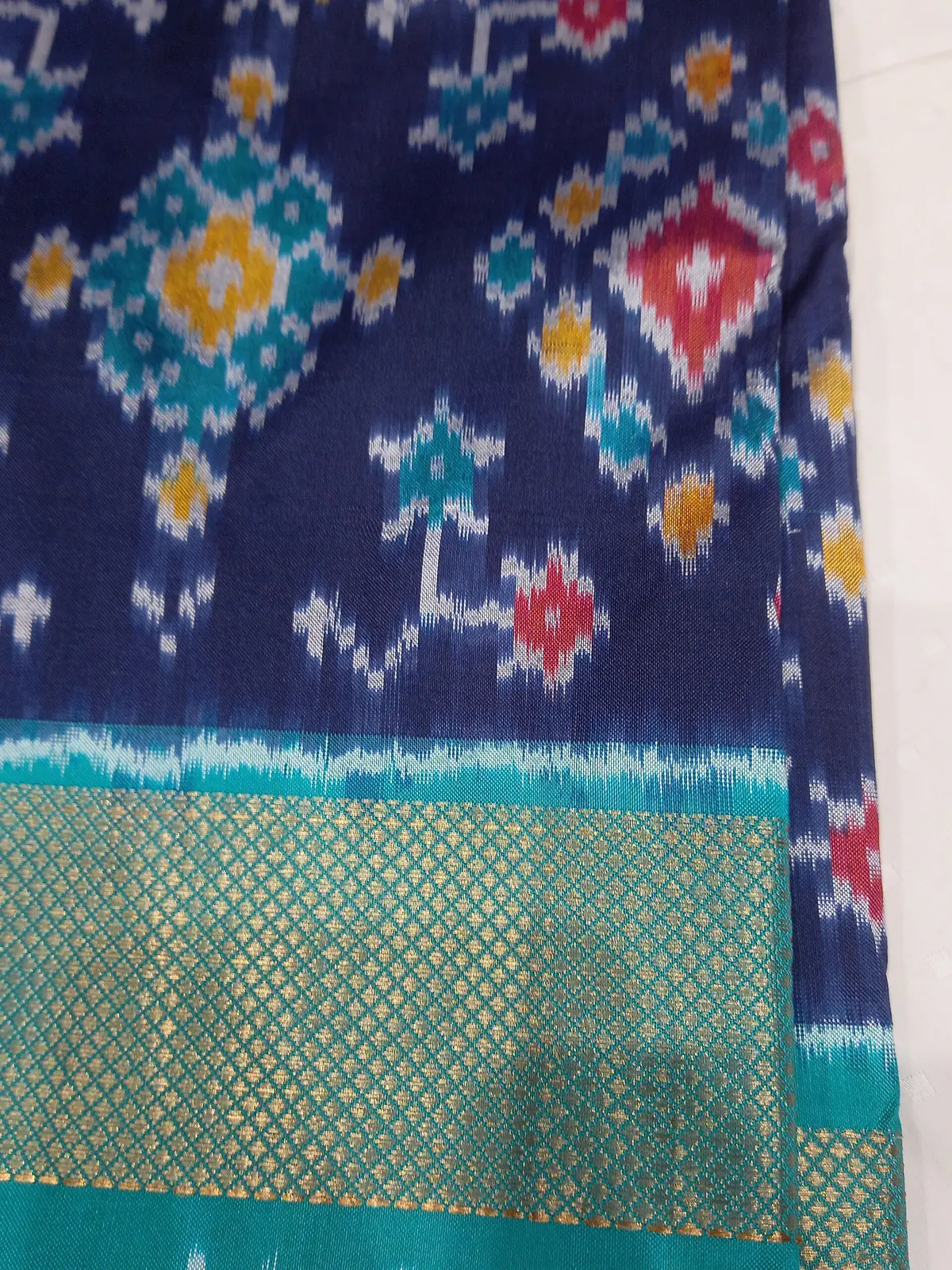
Diamonds, chevrons and telia squares
A reverse as bright as the front
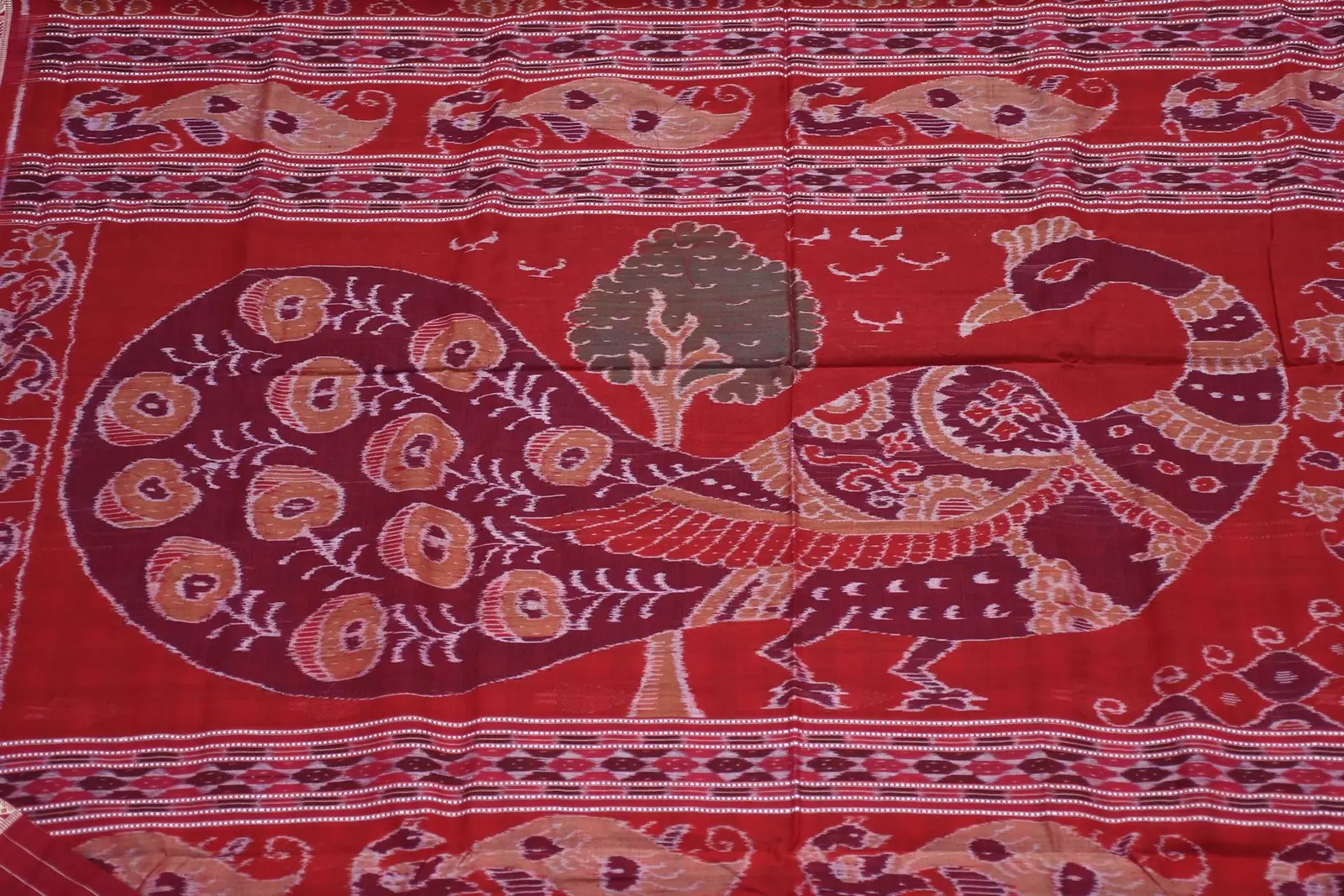
- Each motif has a soft, stepped edge where dyed threads meet.
- The pattern goes right through: the back is as bright as the front.
- Printed "ikat" copies have hard edges and a pale reverse.
Bhoodan, 1951, and the first textile GI
- 1951Bhoodan
Vinoba Bhave received the first gift of land in his Bhoodan movement here, and the village took the name Bhoodan Pochampally.
- 2004First textile GI
Pochampally Ikat was filed in December 2003 and registered on 31 December 2004, one of India's earliest GI tags.
- TodayIconic cluster
Pochampally is on UNESCO's tentative list as part of the iconic sari weaving clusters of India.
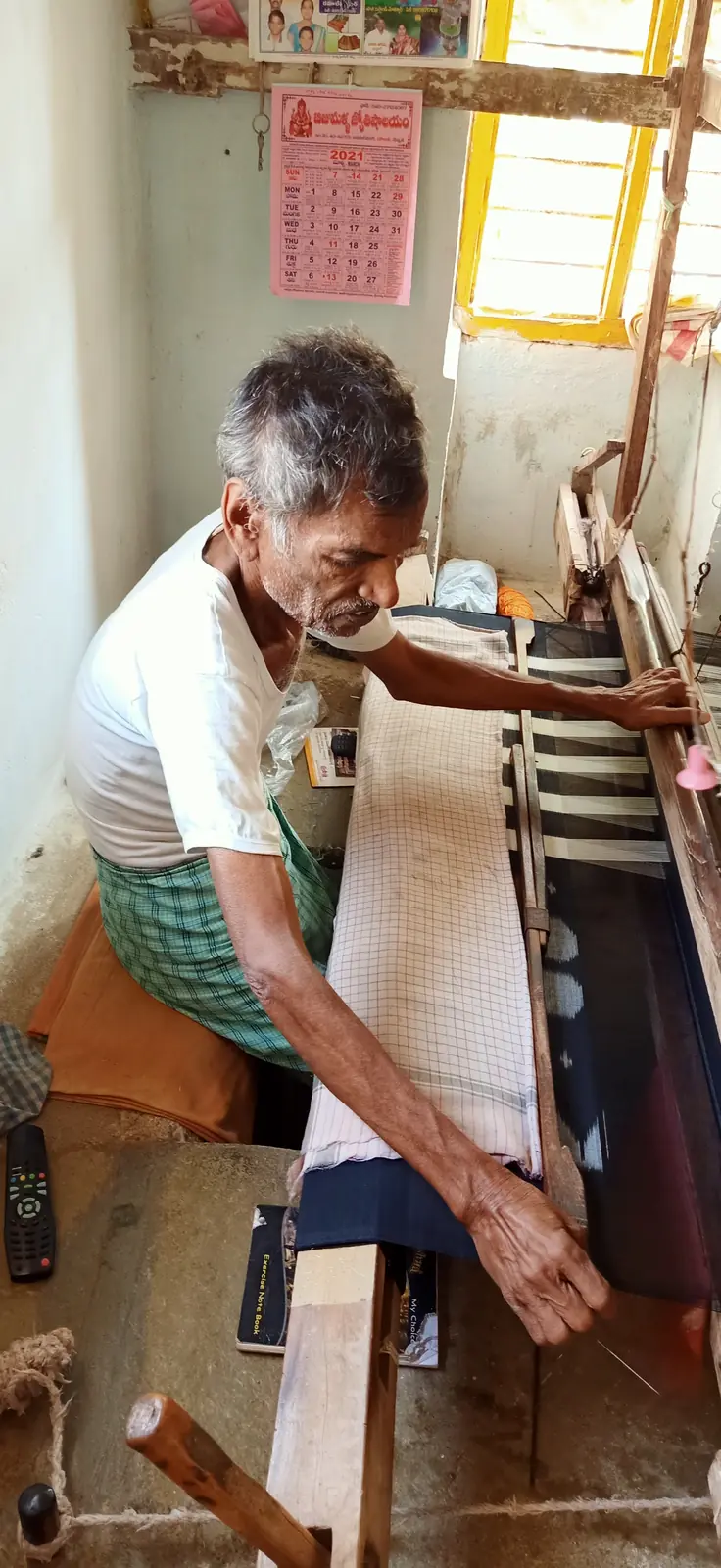
At the loom in Mothkur