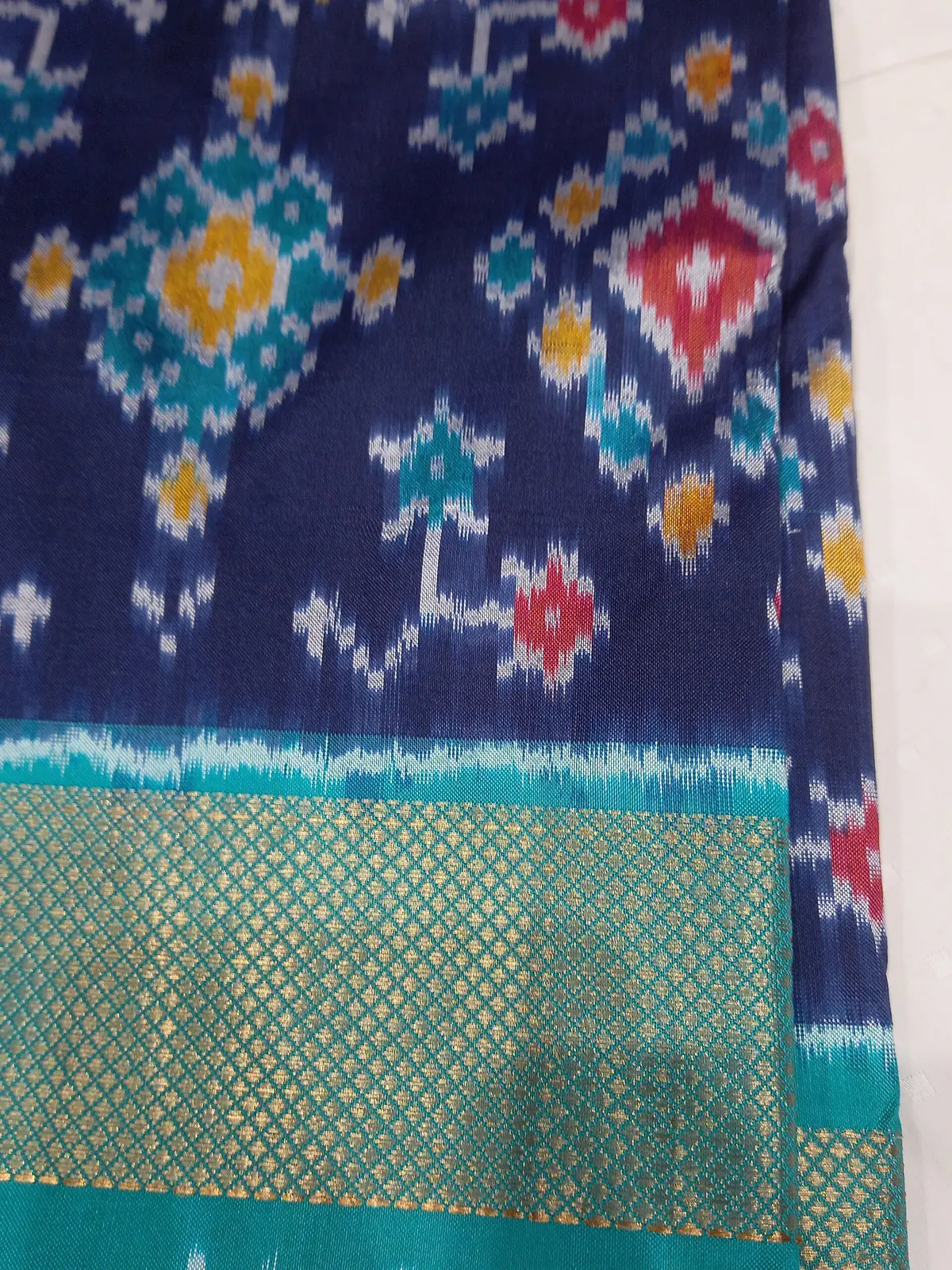
Kanjeevaram
कांजीवरम साड़ी · Kanchipuram, Tamil Nadu
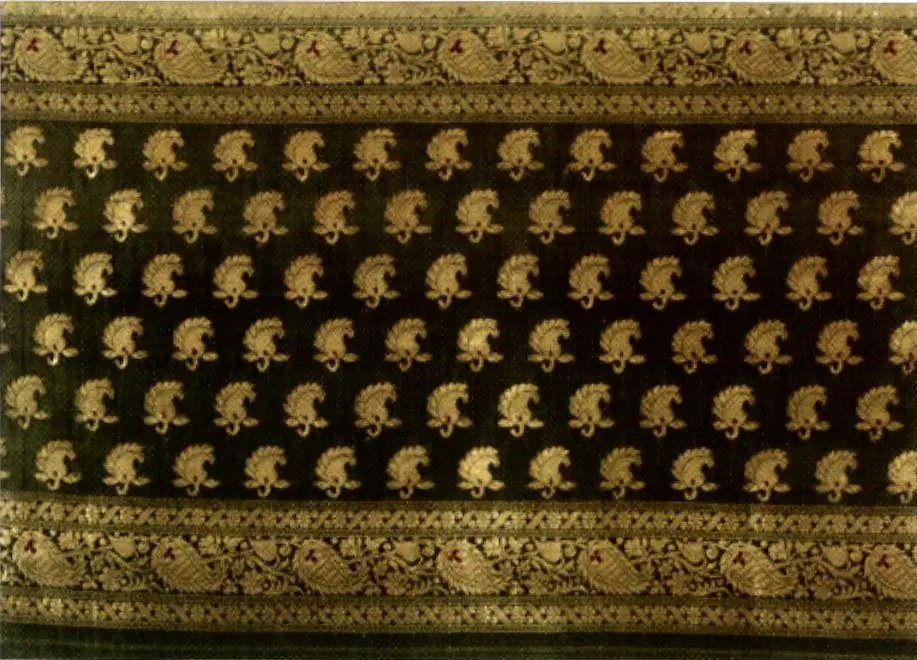
Heavy mulberry silk from the temple town of Kanchipuram, with a wide contrast border locked into the body.
- FibreMulberry silk, silver-gold zari
- TechniqueKorvai, three-shuttle weave
- GI tagYes, 2005
- Worn forWeddings, temple days
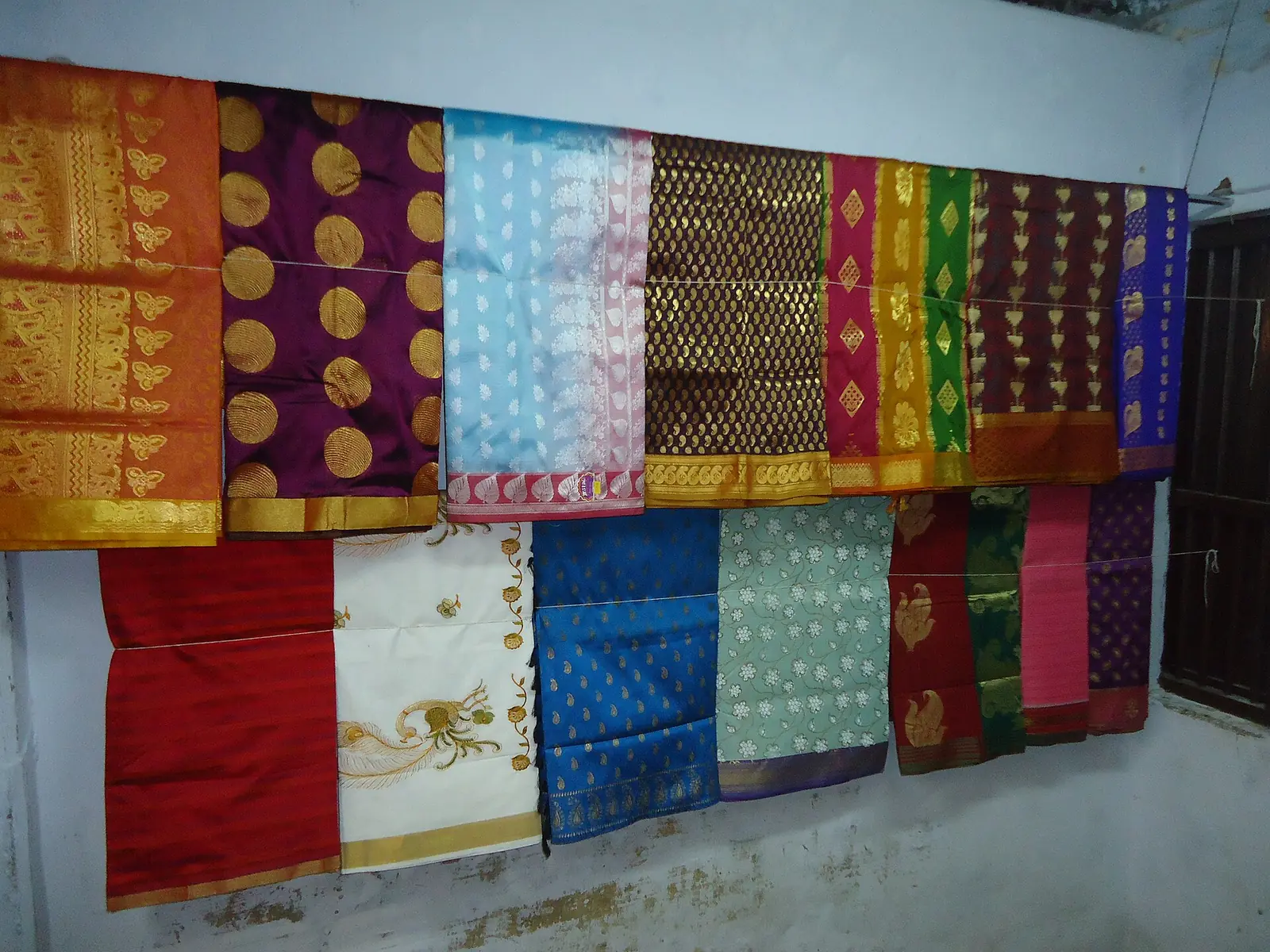
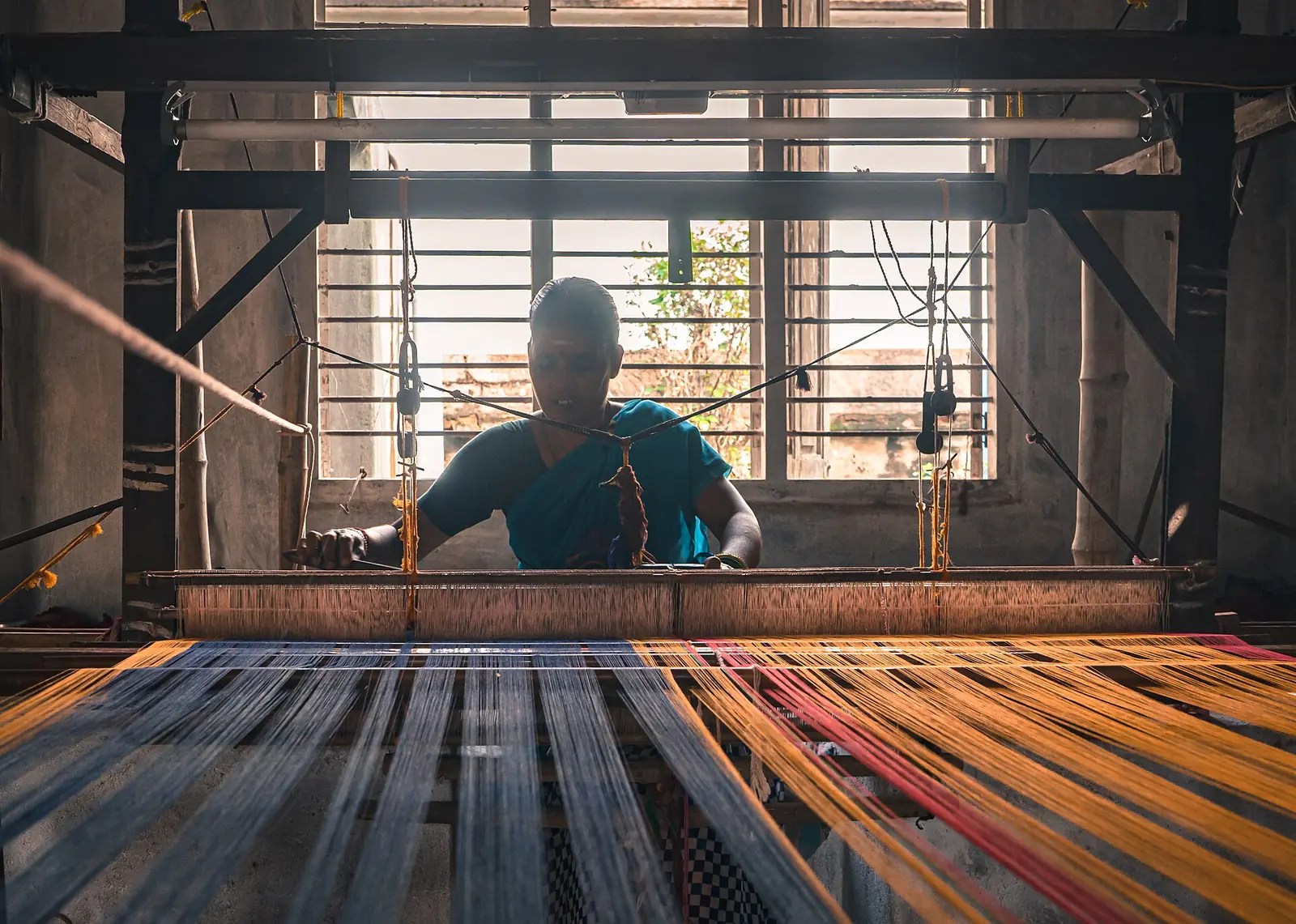
Korvai joins, two weavers at one loom
- १
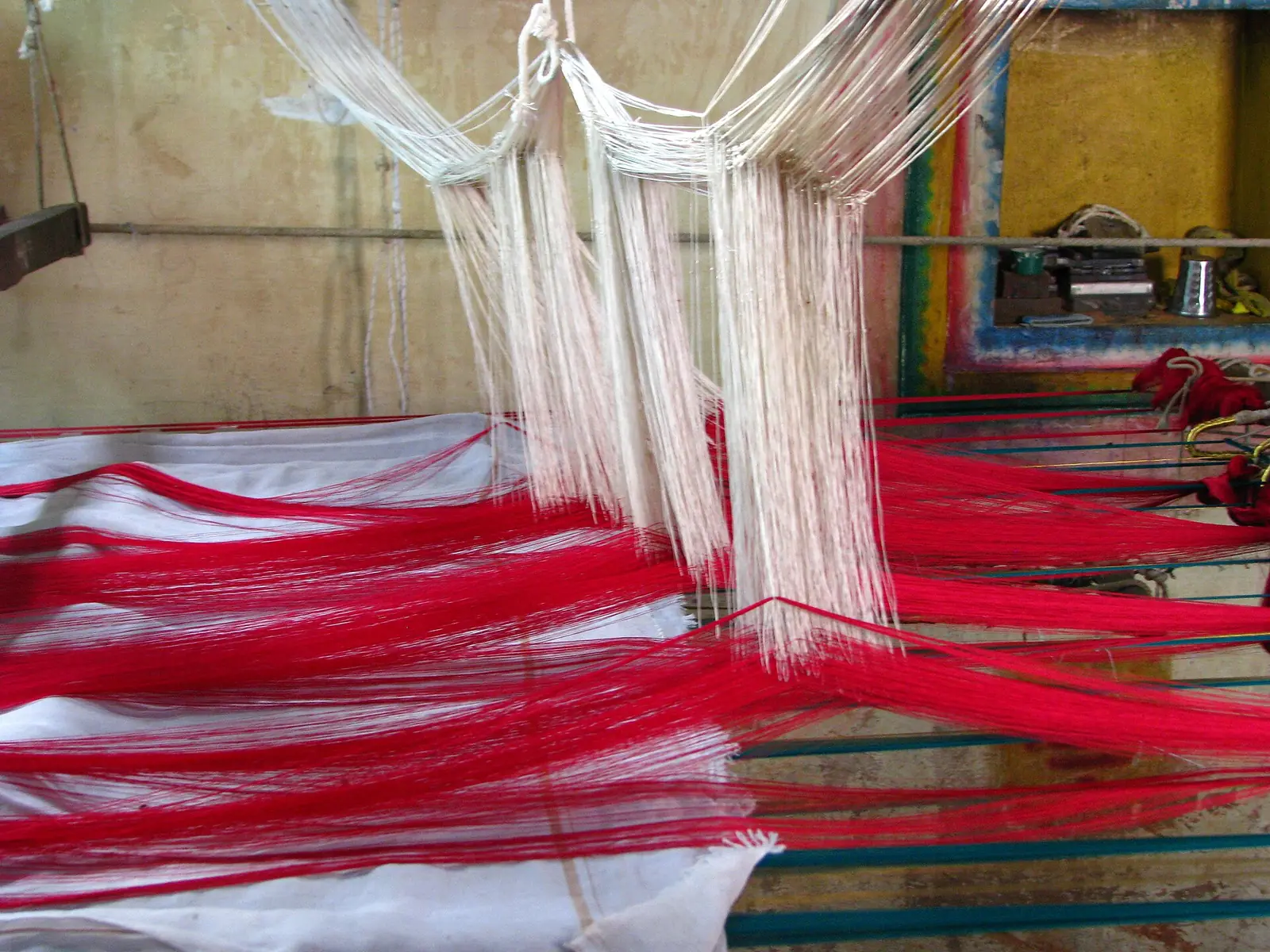
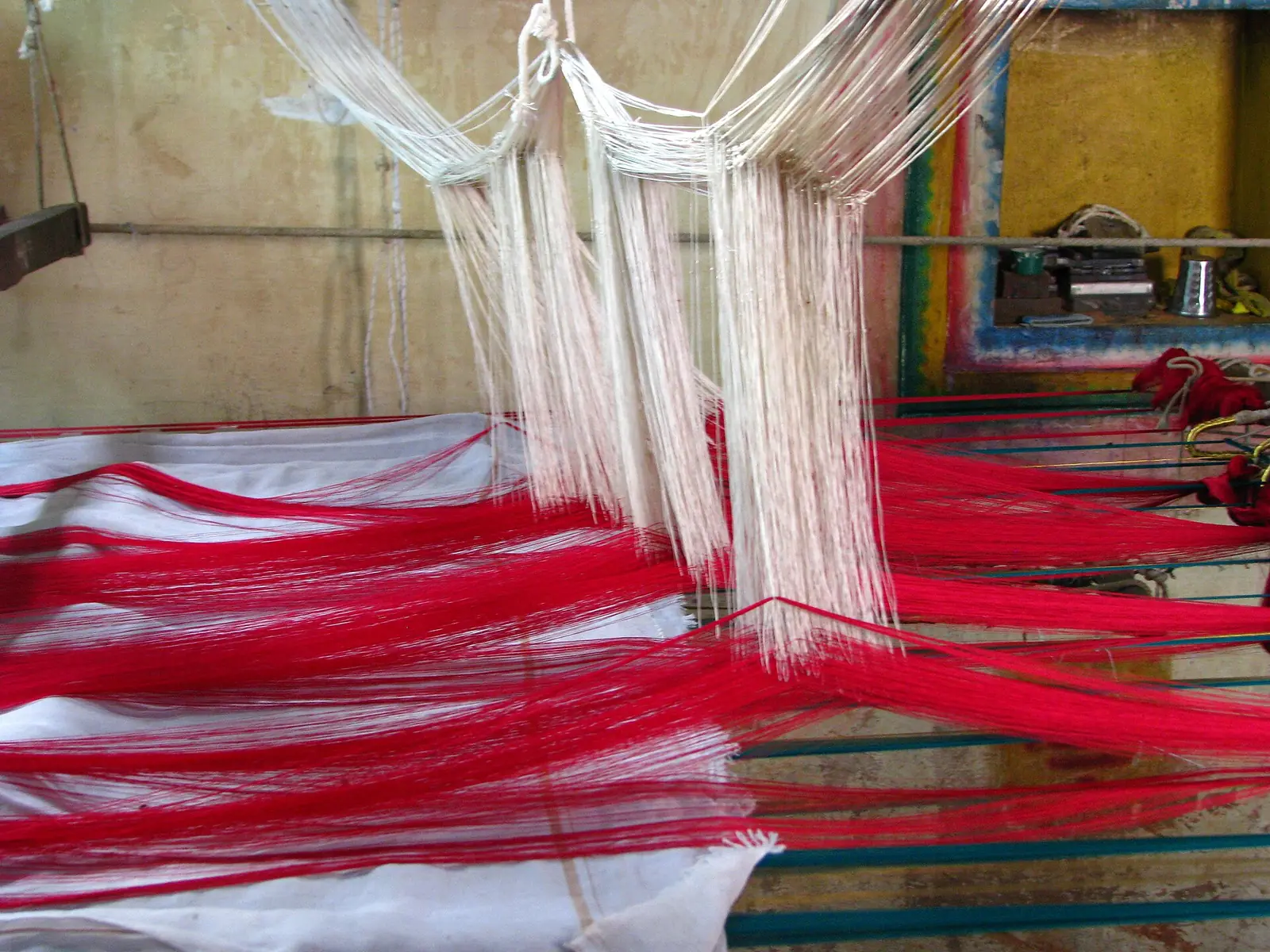
Pure mulberry silk is dyed and starched; zari is silver wire gilded and wound on silk.
- २
Body, border and pallu are woven as separate parts on one loom.
- ३
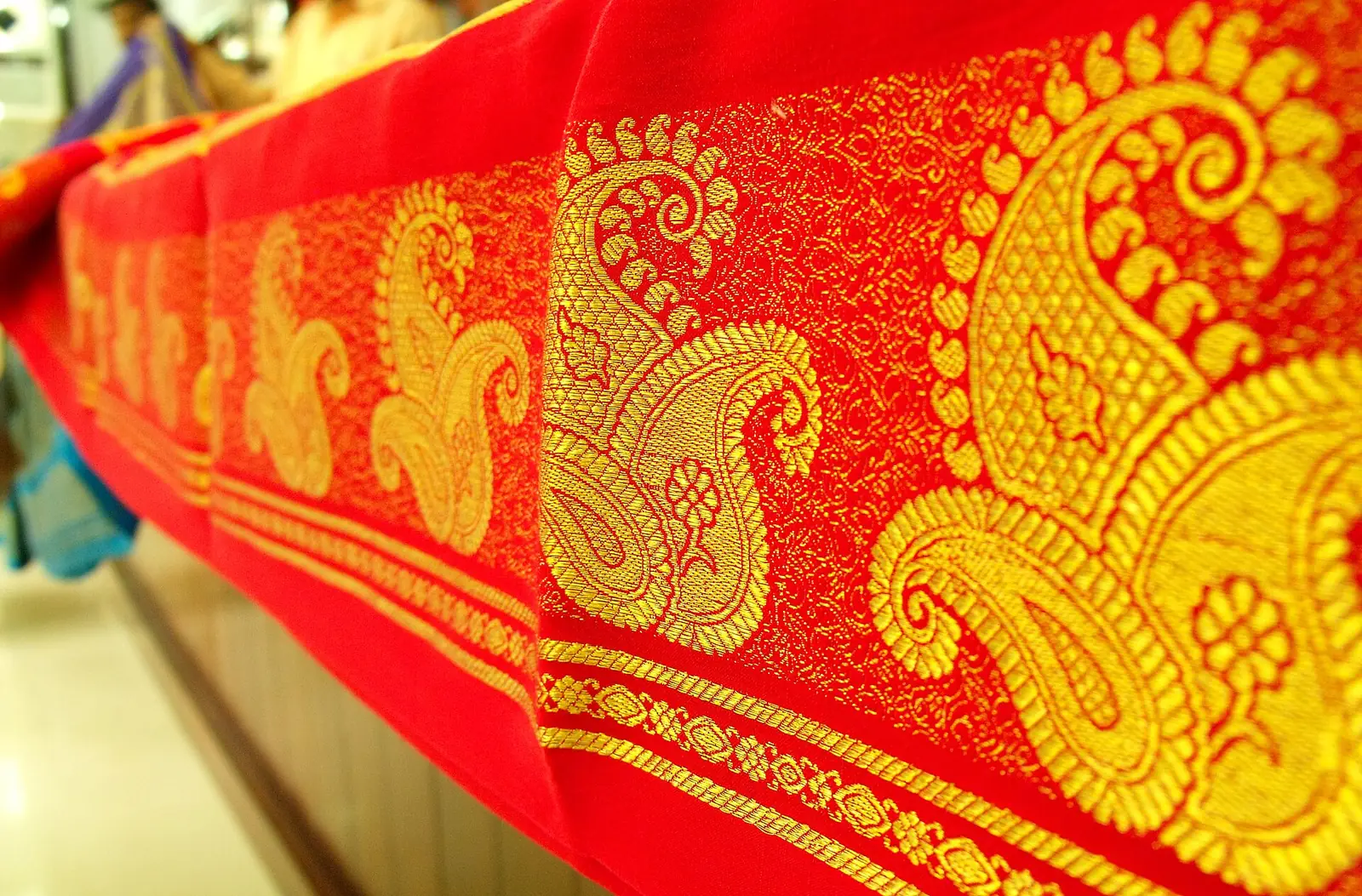
In korvai, the border is interlocked with the body, often by two people working one loom.
- ४
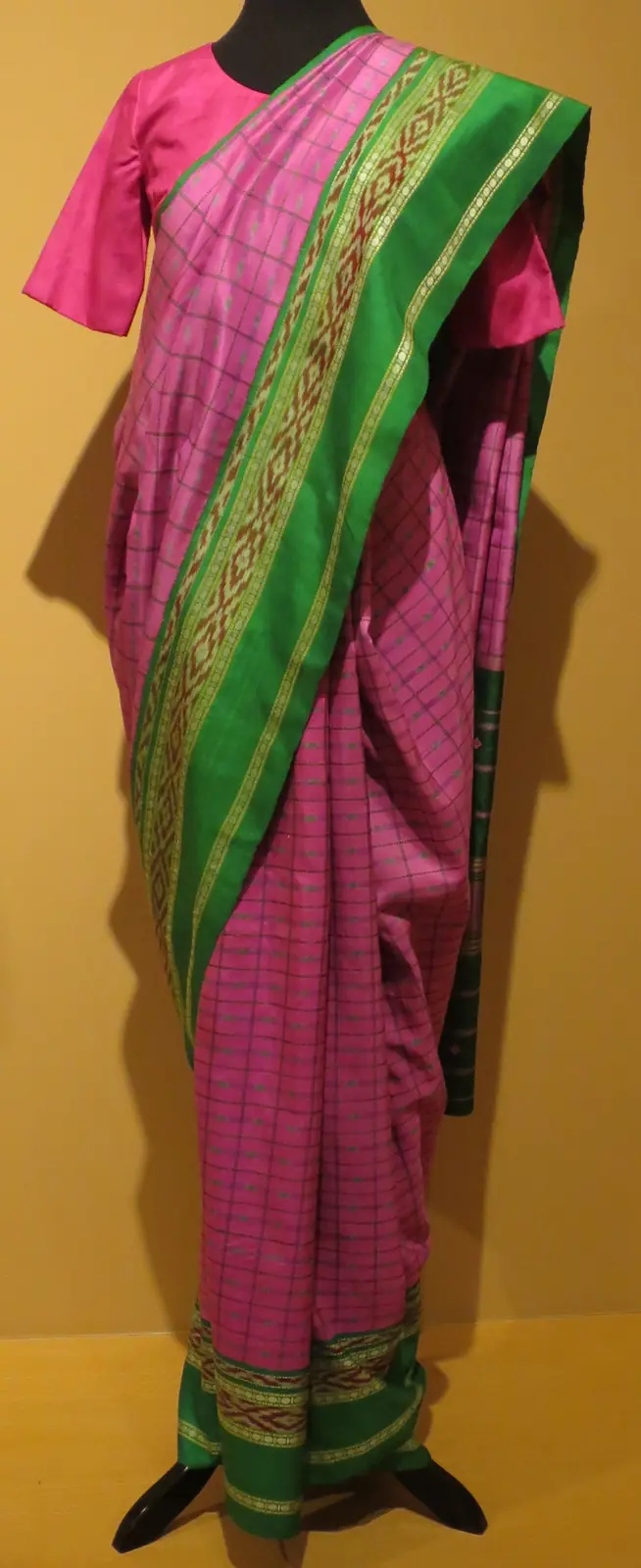
A zigzag line usually marks where the body meets the pallu.
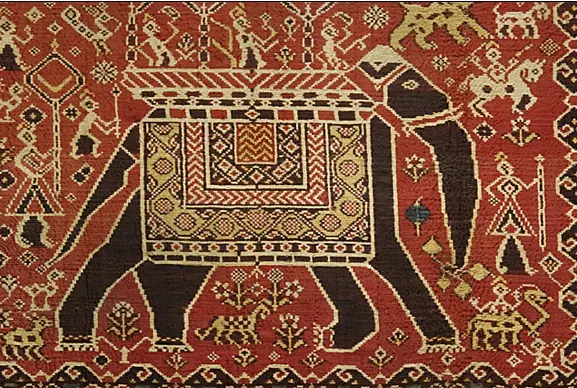
Temple towers and Murugan's peacock
A border that will not peel
- The border is woven into the body: it will not peel away even if the sari tears.
- The contrast between body and border is sharp, with no smudged join.
- Ask for the GI label and the Silk Mark.
Temple silk, GI-tagged in 2005
- By traditionWeavers of the Devas
Kanchi weavers trace their line to Maharshi Markandeya, said to have woven the first cloth for the Devas from lotus fibre.
- Temple townSilk for the deities
The weavers settled among the great temples of Kanchi; motifs came from temple walls and the epics.
- 2005GI tag
Kancheepuram Silk was among the first textiles registered in India (filed October 2004, certificate 2 June 2005).
A mid-1950s sari in Honolulu