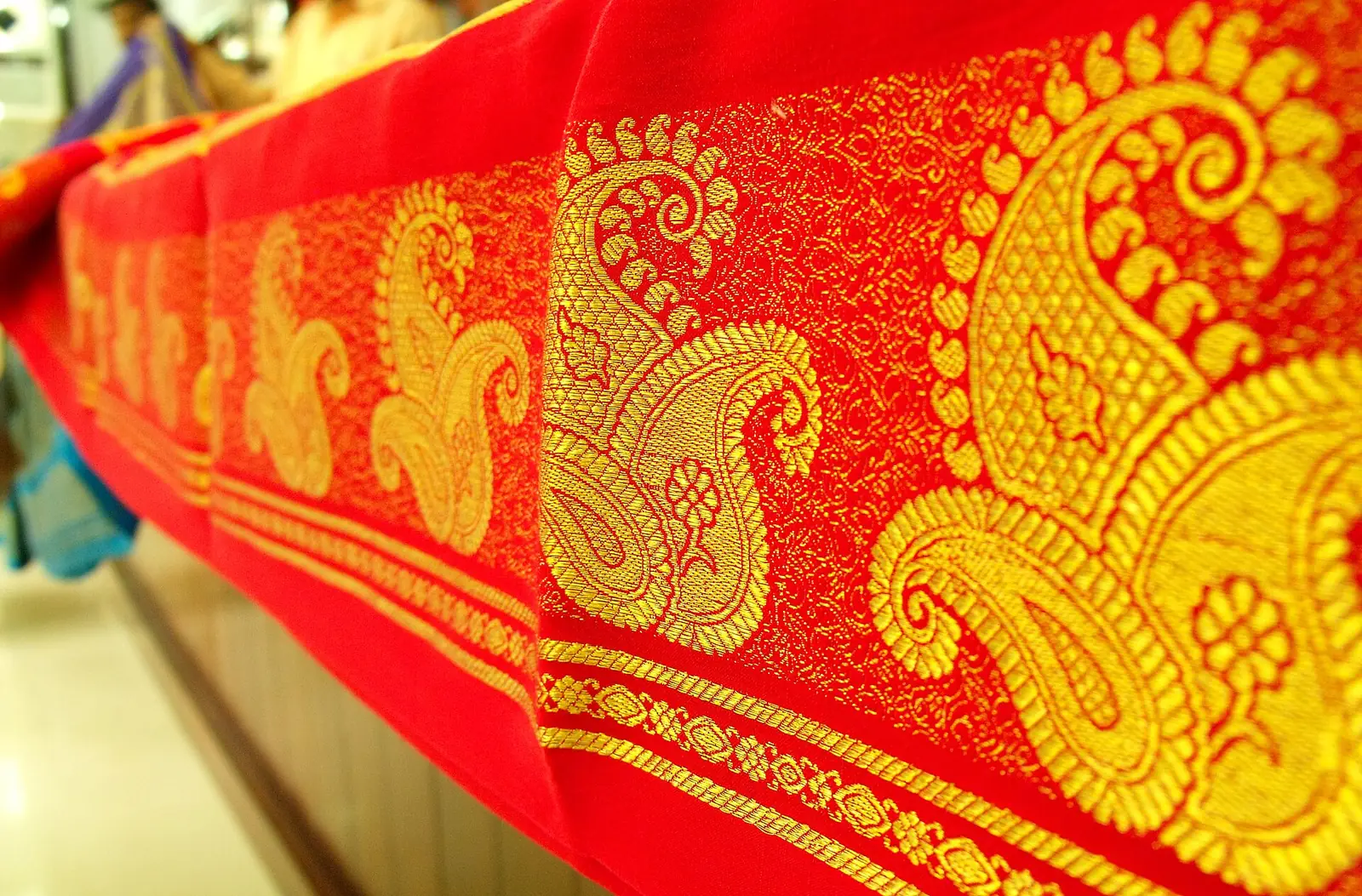
Patola
पटोला · Patan, Gujarat
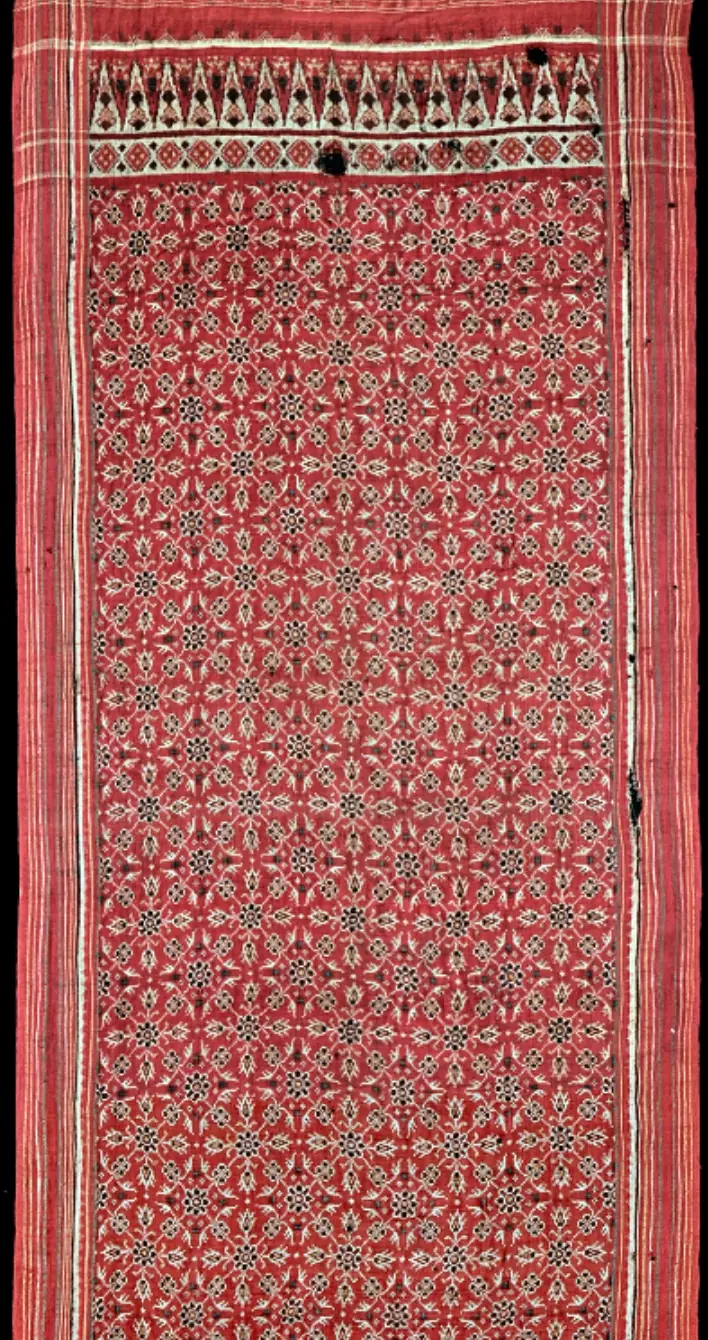
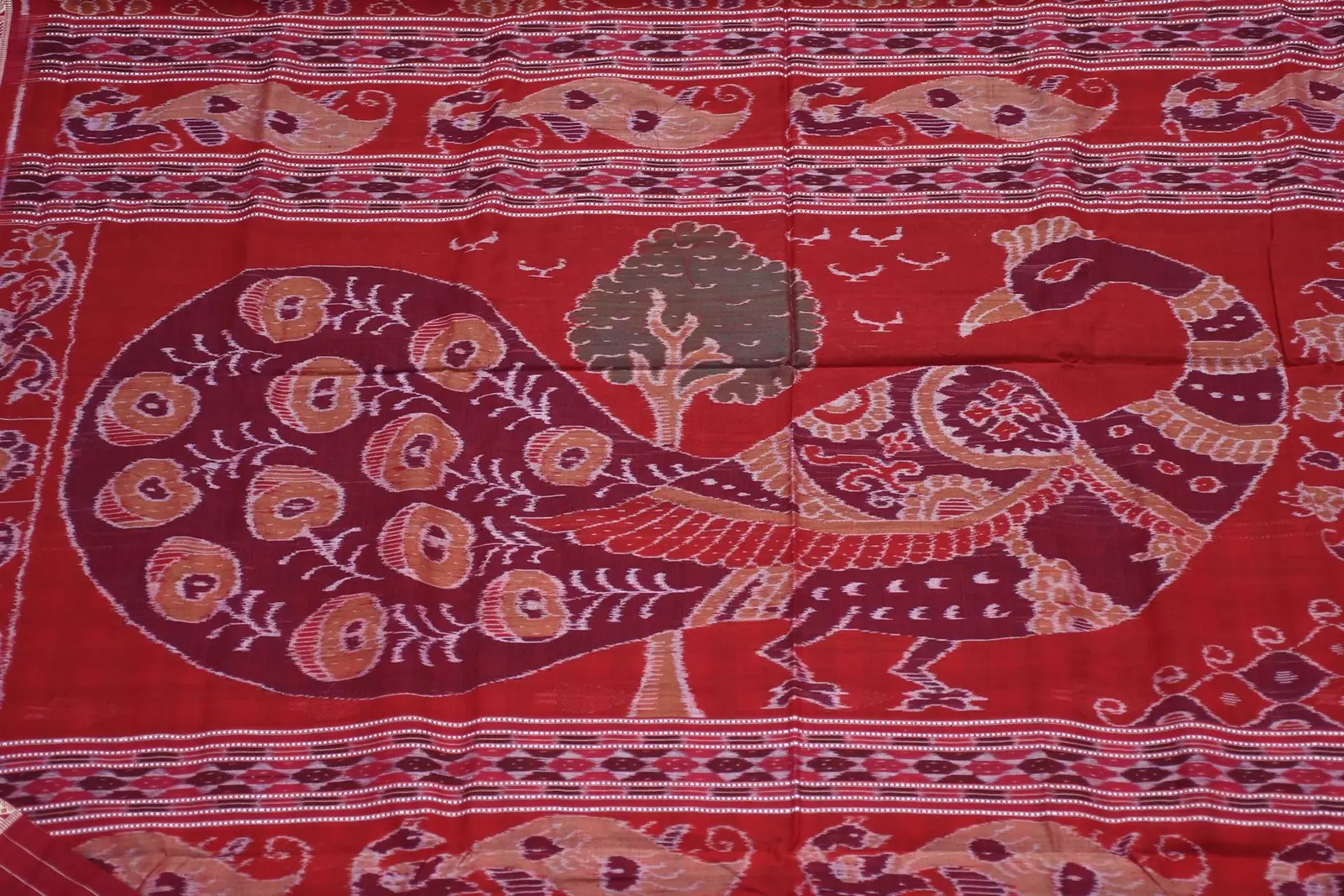
Double ikat silk from Patan: warp and weft are both tie-dyed before weaving, so both faces match.
- FibreSilk
- TechniqueDouble ikat
- GI tagYes, 2013 (Patan)
- Worn forWeddings, heirloom
Bundles tied and re-dyed, lightest first
- १
Warp and weft threads are measured and bundled to the design.
- २
Each bundle is tied tightly with cotton thread where the colour must not go.
- ३
The threads are dyed, untied and re-tied for every colour, lightest first.
- ४
On the loom the weaver aligns warp and weft, nudging the threads so each motif meets exactly.
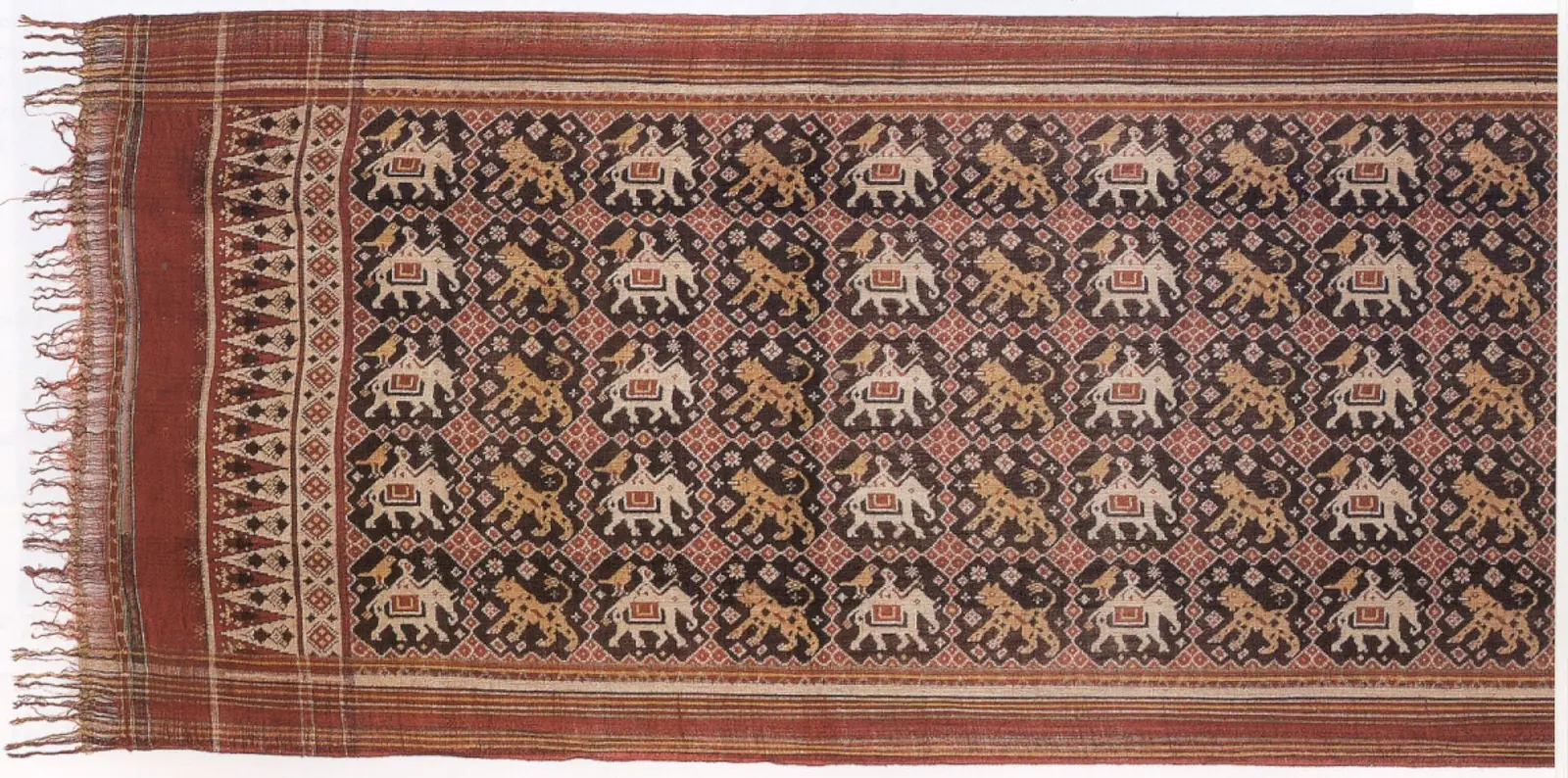
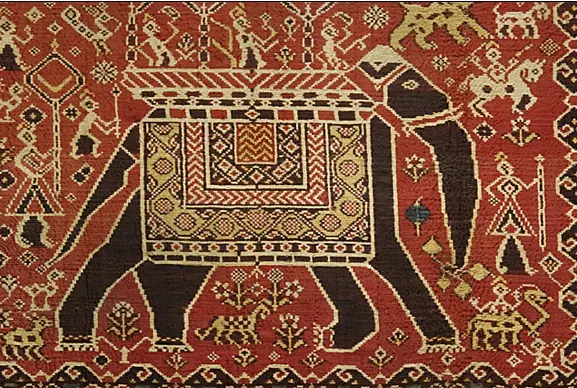
Women and elephants in a grid
Feathered edges and no wrong side
- Both faces look the same; there is no wrong side.
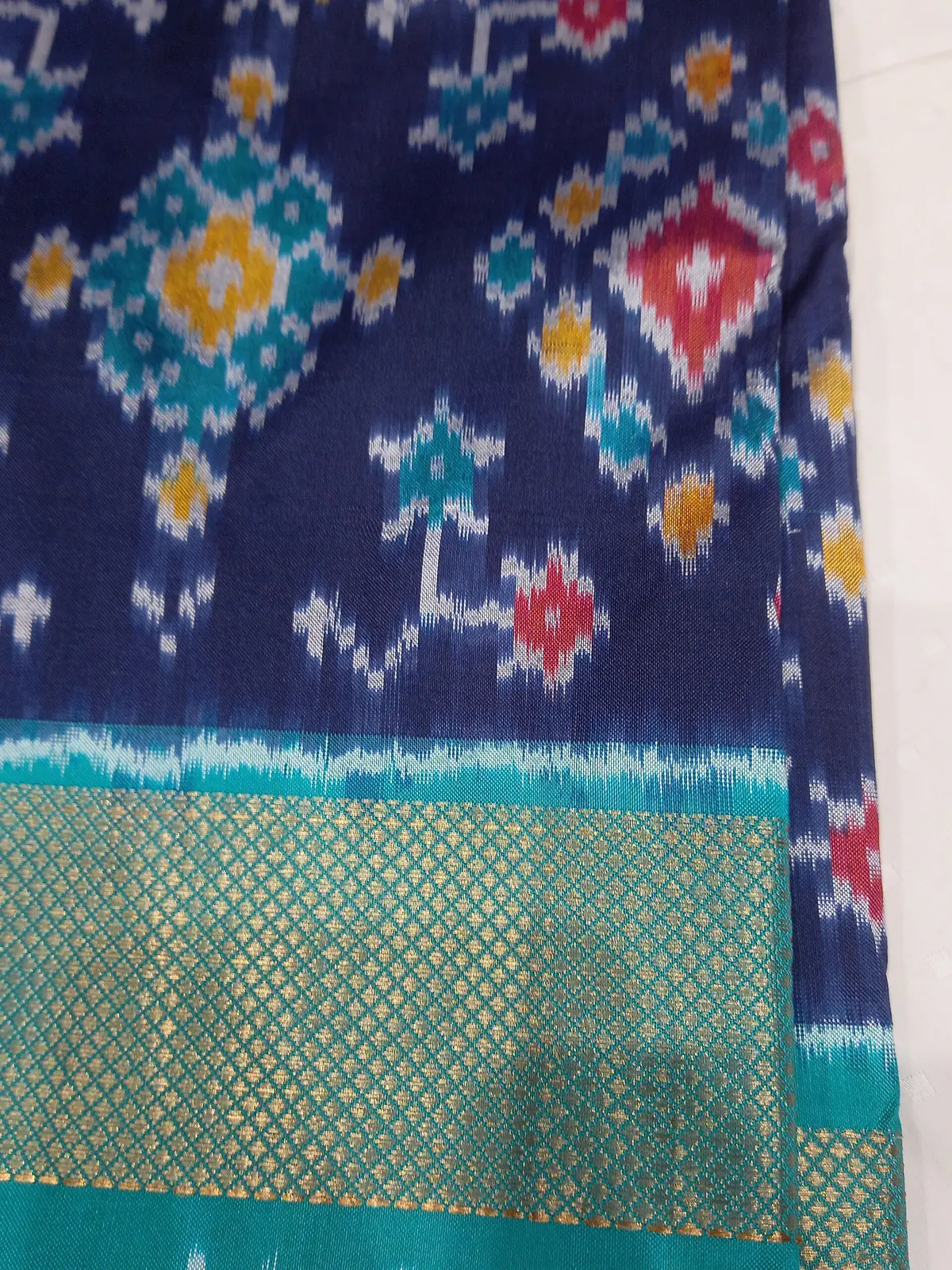
- Motif edges are slightly feathered, the mark of ikat.
- True Patan patola comes from a few Salvi families; ask who wove it.
Salvi weavers and cloth sent abroad
- By local accountThe Salvis come to Patan
Salvi families say their ancestors came to Patan under the Solanki kings and have woven patola there for many generations.
- 17th–18th centurySacred cloth abroad
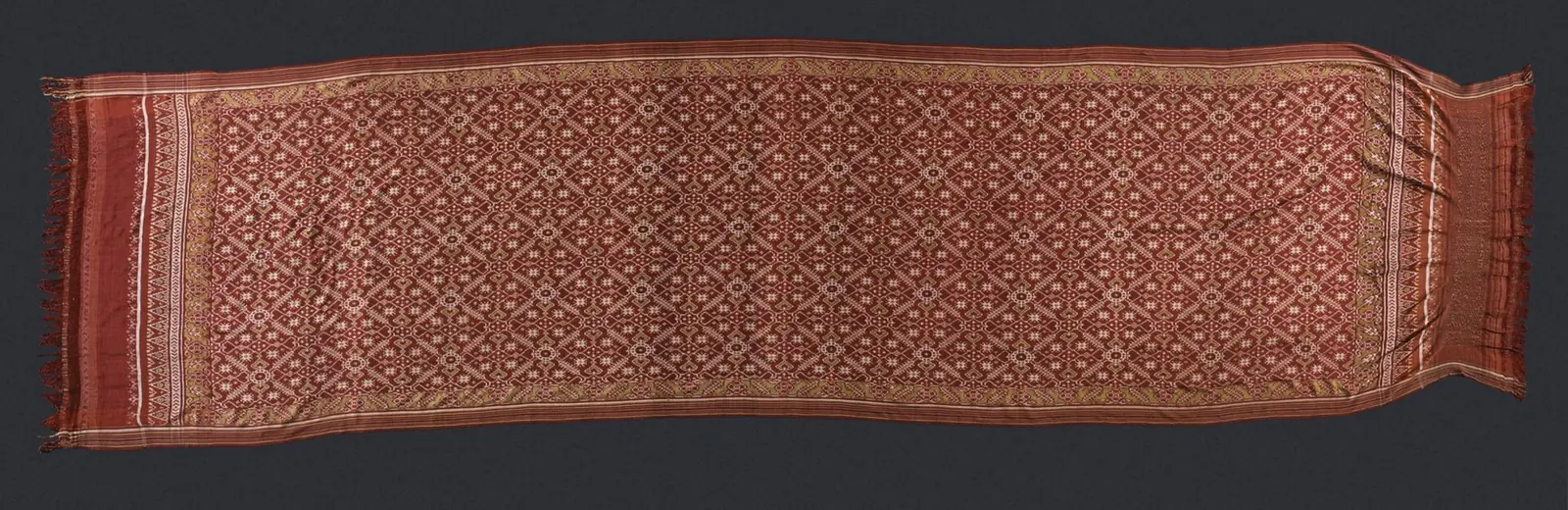
Patola travelled to Southeast Asia, where they became ritual heirlooms. Some of the finest surviving pieces were kept there.
- 2013GI tag
Patan Patola registered (certificate 9 September 2013); Rajkot Patola followed in 2018.
A wedding sari and a ritual heirloom