Bomkai
बोमकाई · Ganjam and Subarnapur, Odisha
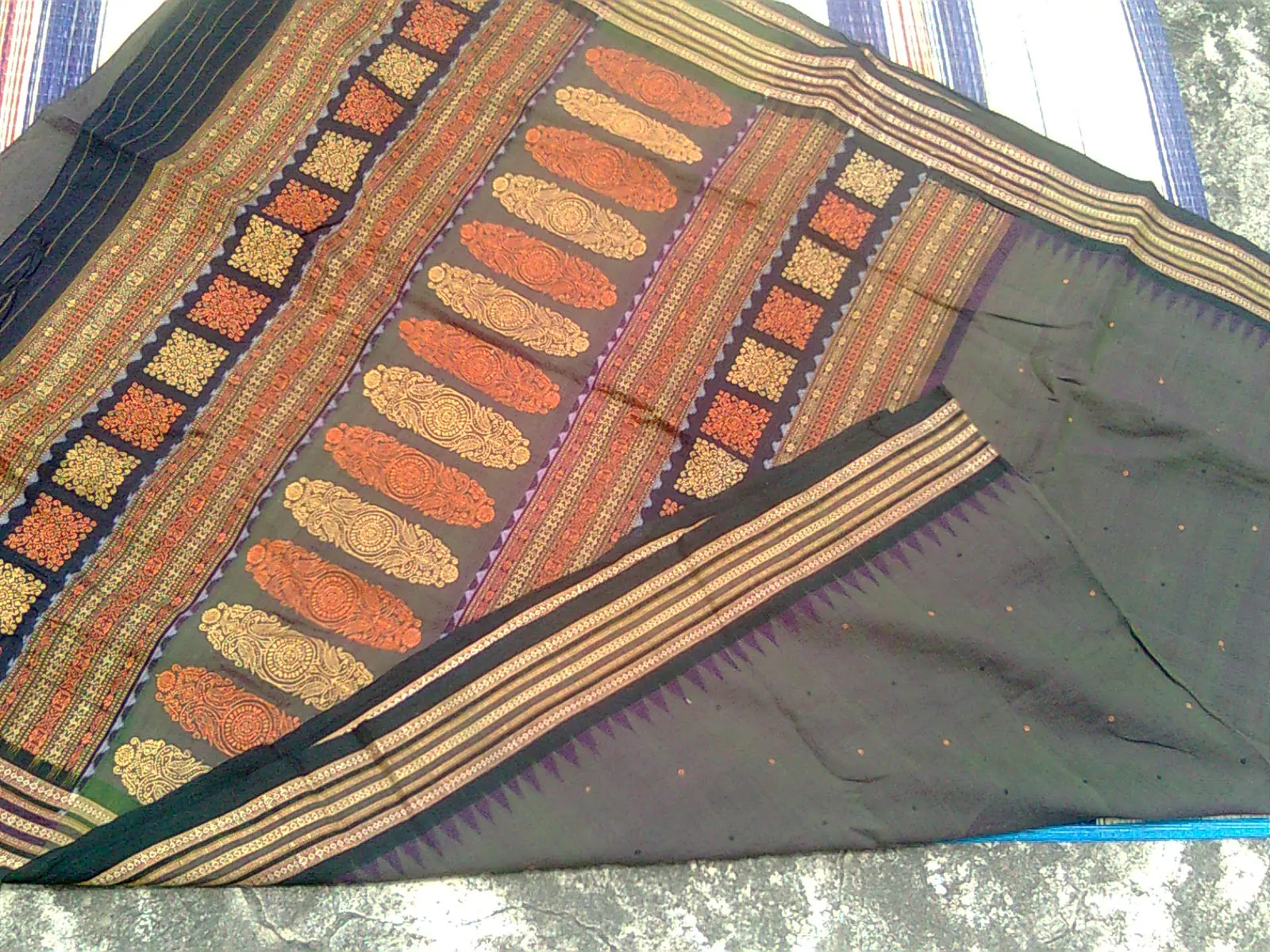
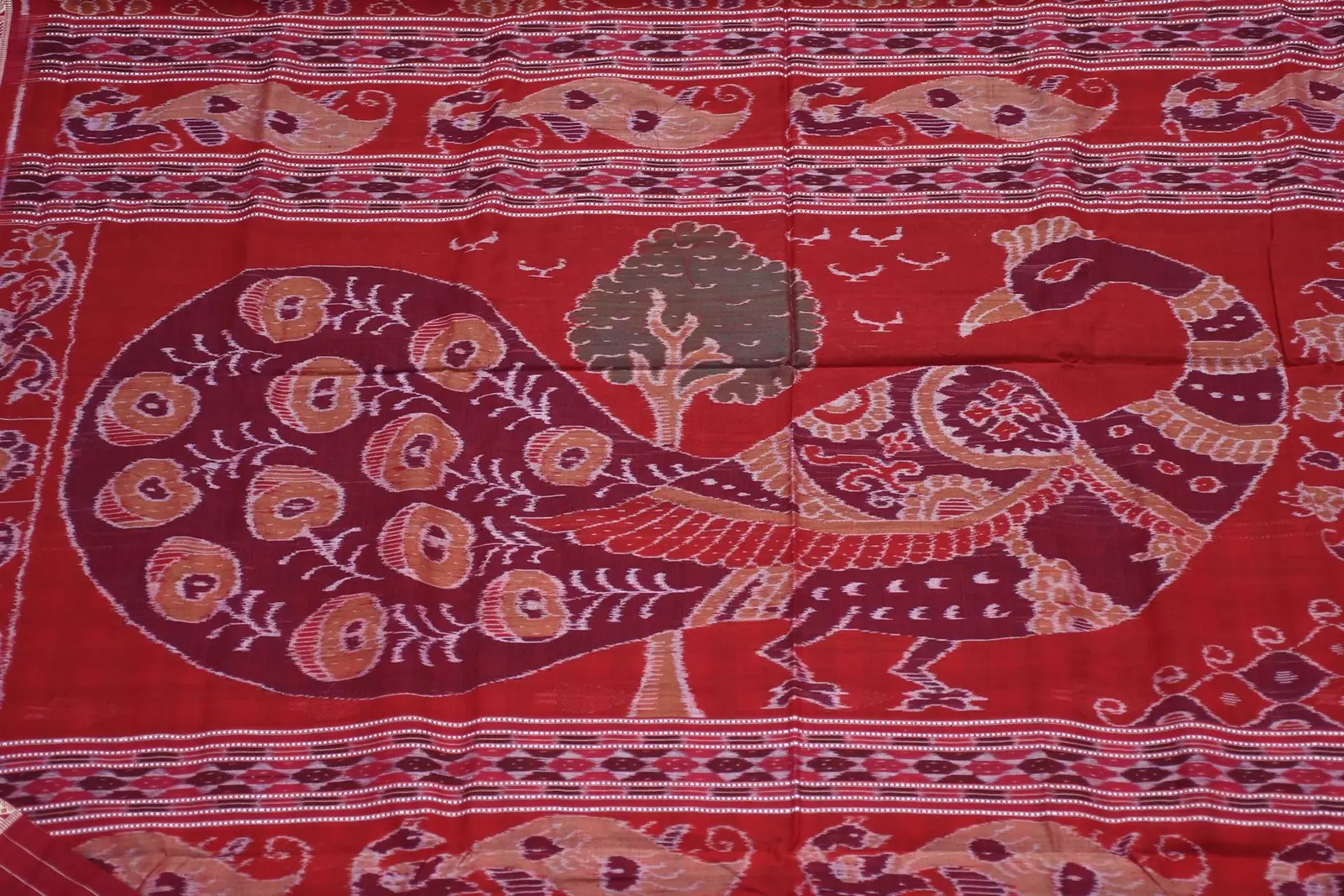
An Odia sari with a solid border and a richly figured pallu, often with the fish that stands for plenty.
- FibreCotton, silk, tussar
- TechniqueExtra warp and weft
- GI tagYes, 2012
- Worn forCotton daily, silk for rites
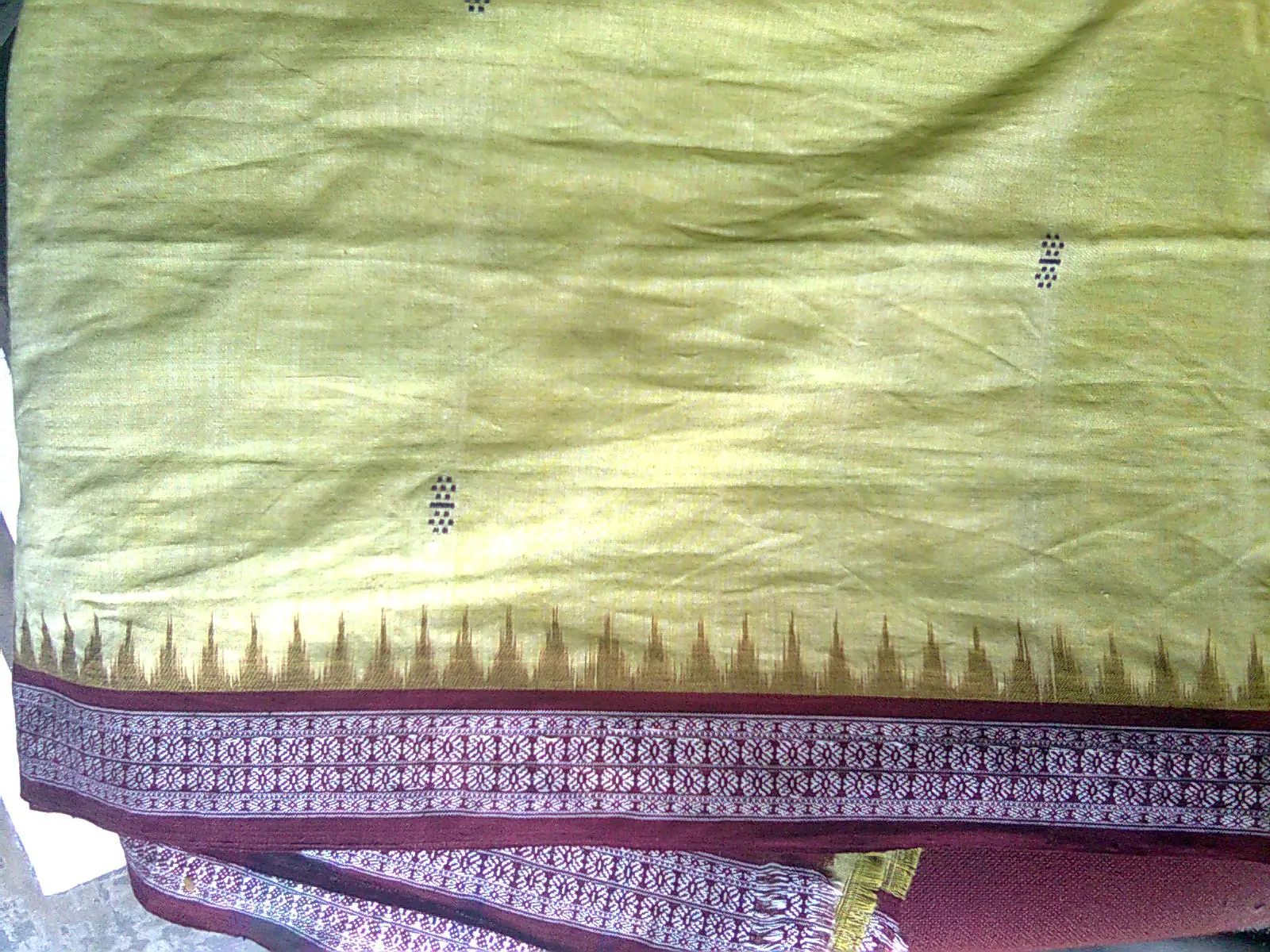
Three shuttles for the muhjorha border
- १
The weaver uses three shuttles to get a solid border, locally called muhjorha.
- २
Border designs are raised in extra warp; body and pallu in extra weft.
- ३
A dobby, jacquard or jala lifts the threads for the figures.
Temple towers and the steady tortoise
१FishPlenty and good fortune
२LotusPurity
३Temple (deula)Temple-tower shapes on the border
४TortoiseKurma, steadiness
Flip it to see the extra threads
- The figures sit on top of the cloth as extra threads; flip it to see them carried behind.
- Classic colours are red, black and white.
History
- OriginBomkai village
The style began in Bomkai village of Ganjam and was later taken up by the Bhulia weavers of Sonepur.
- 2012GI tag
"Bomkai Saree & Fabrics" registered, certificate 17 July 2012.
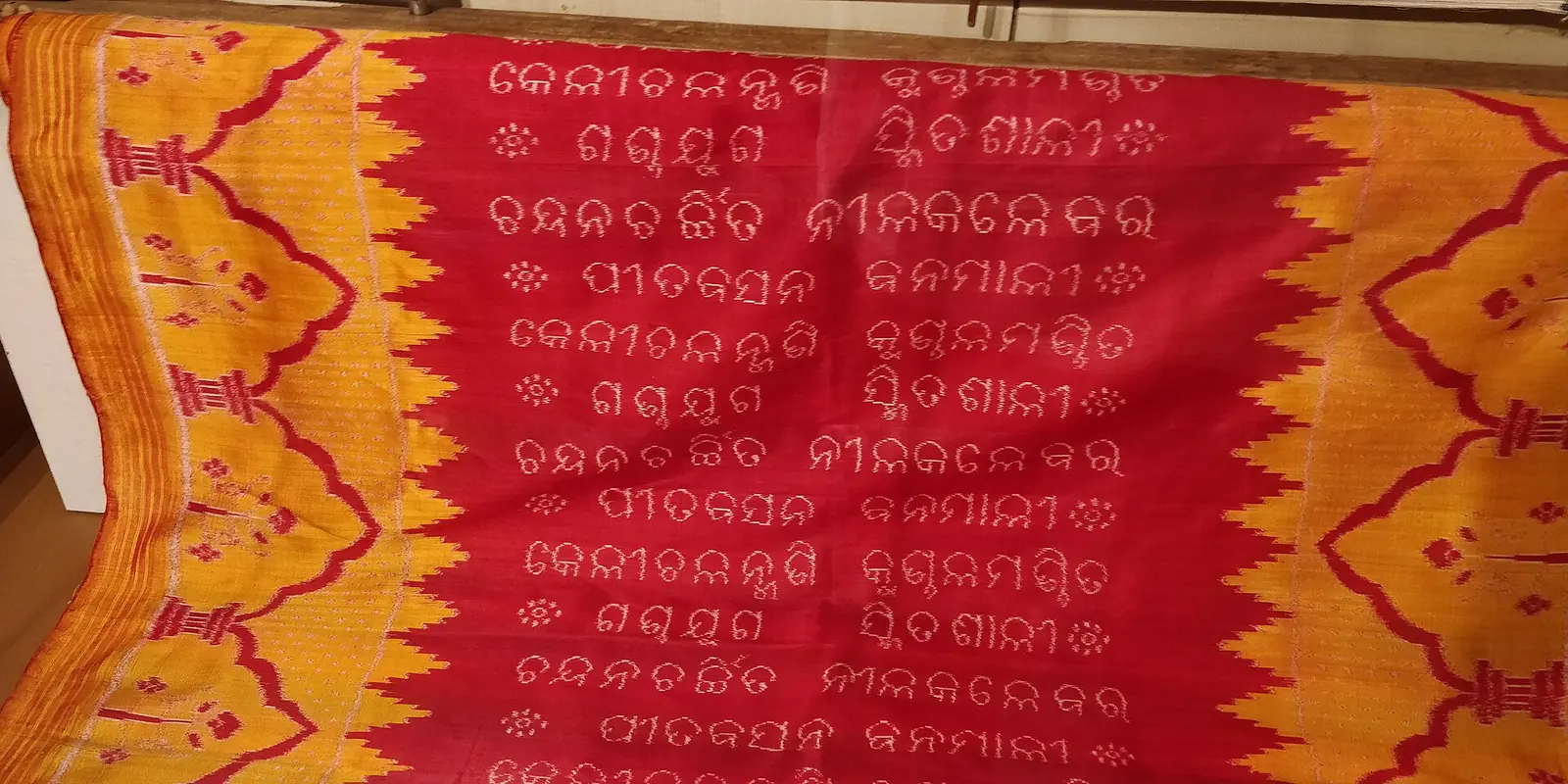
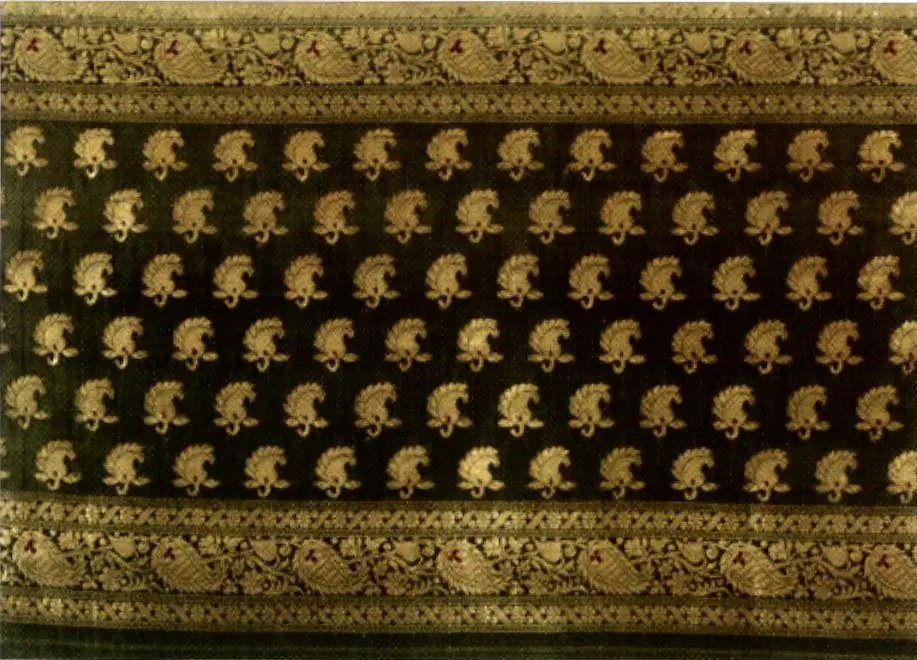
Saris from Ganjam and Sonepur