Kangra
कांगड़ा चित्रकला
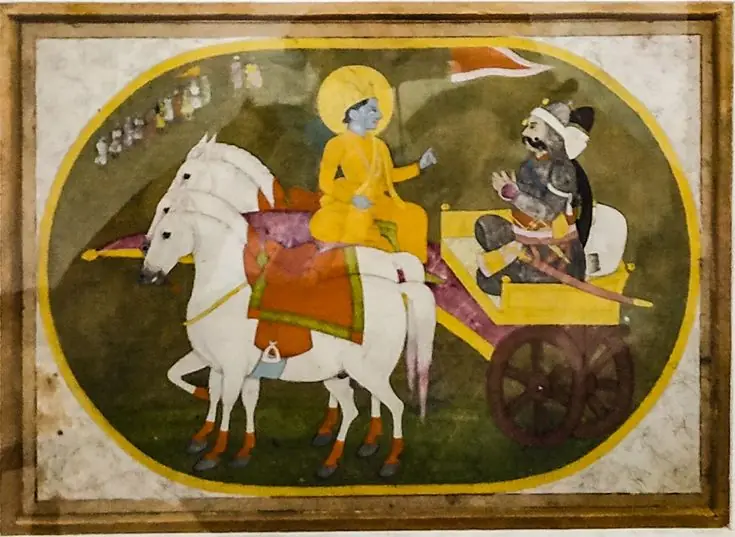
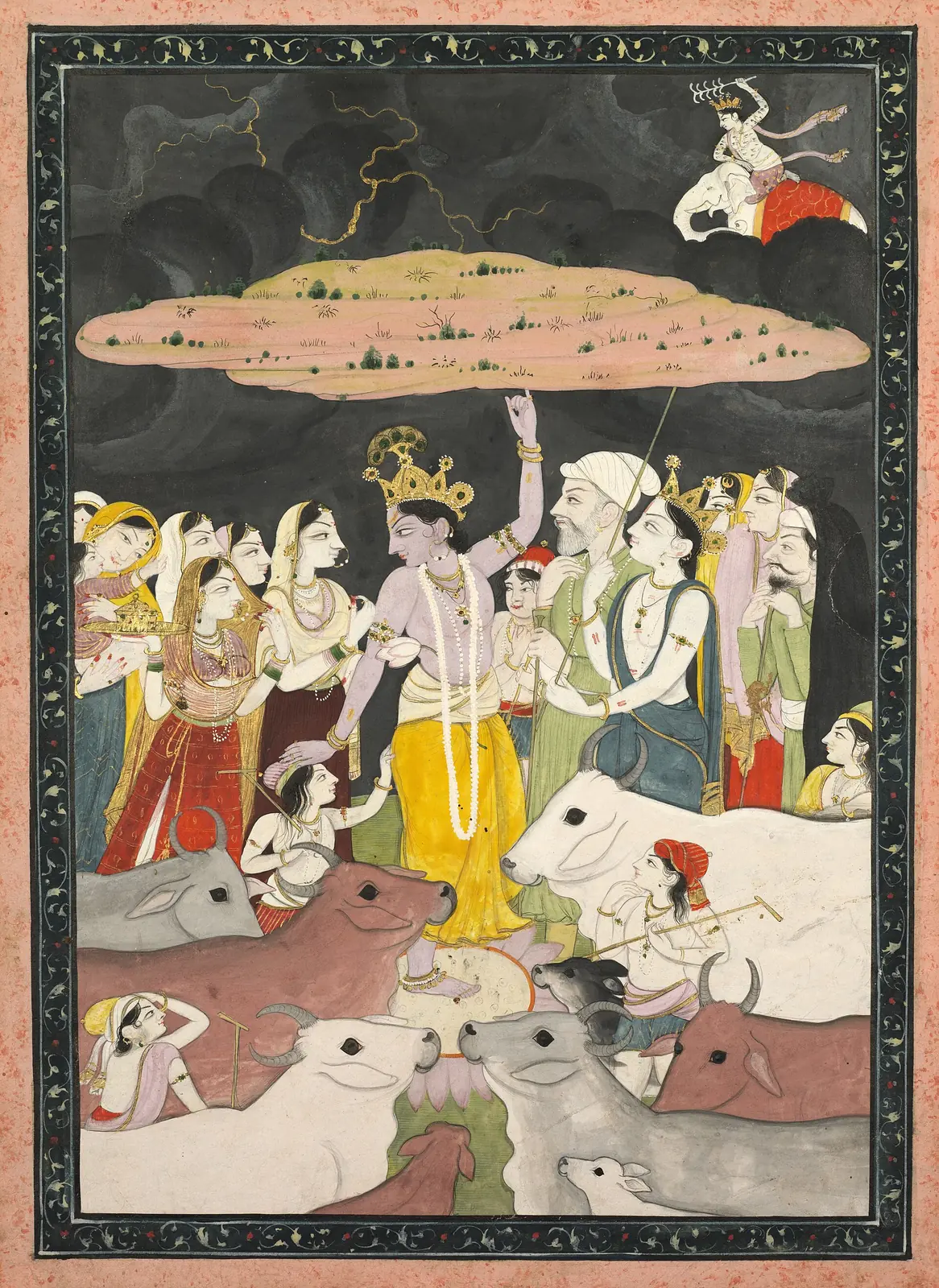
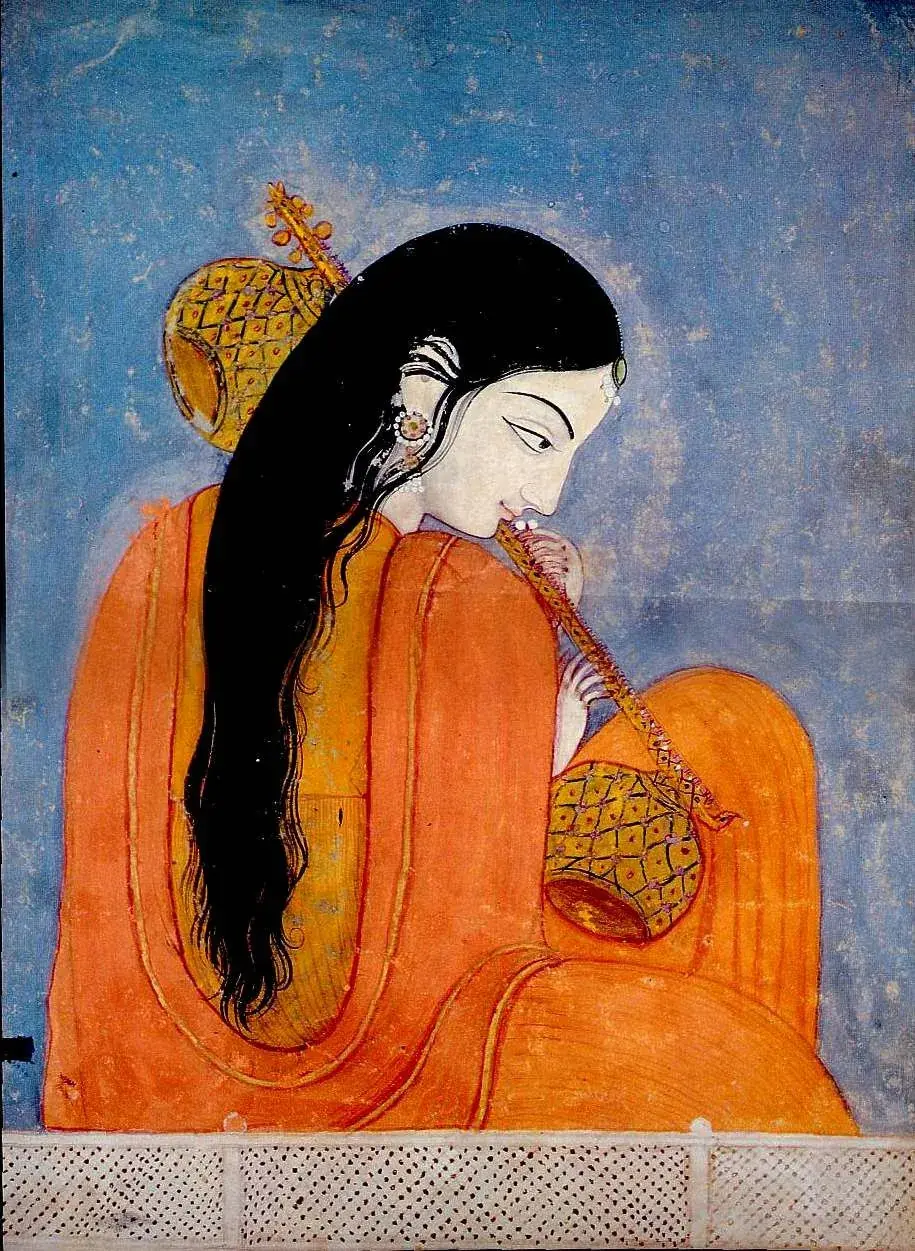
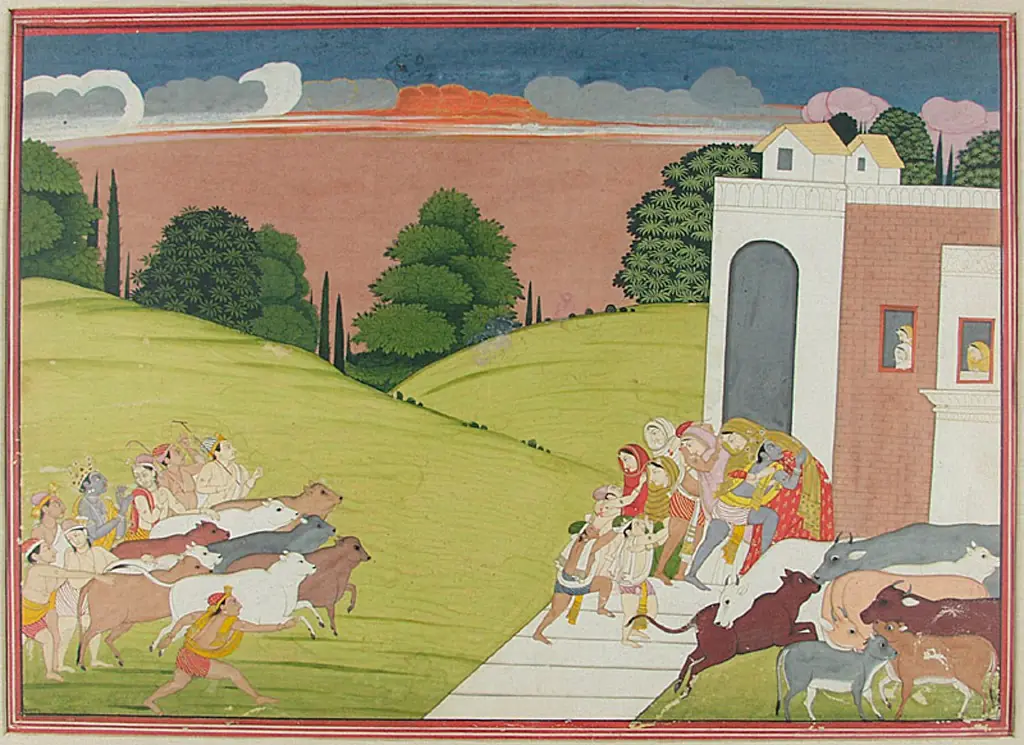
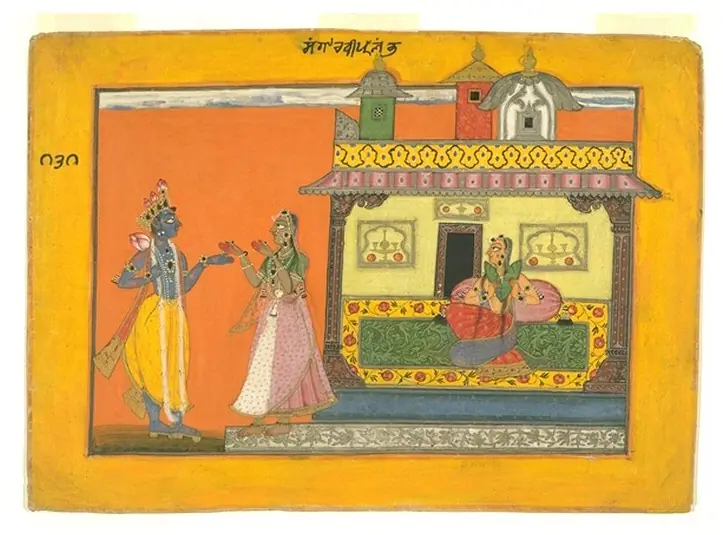
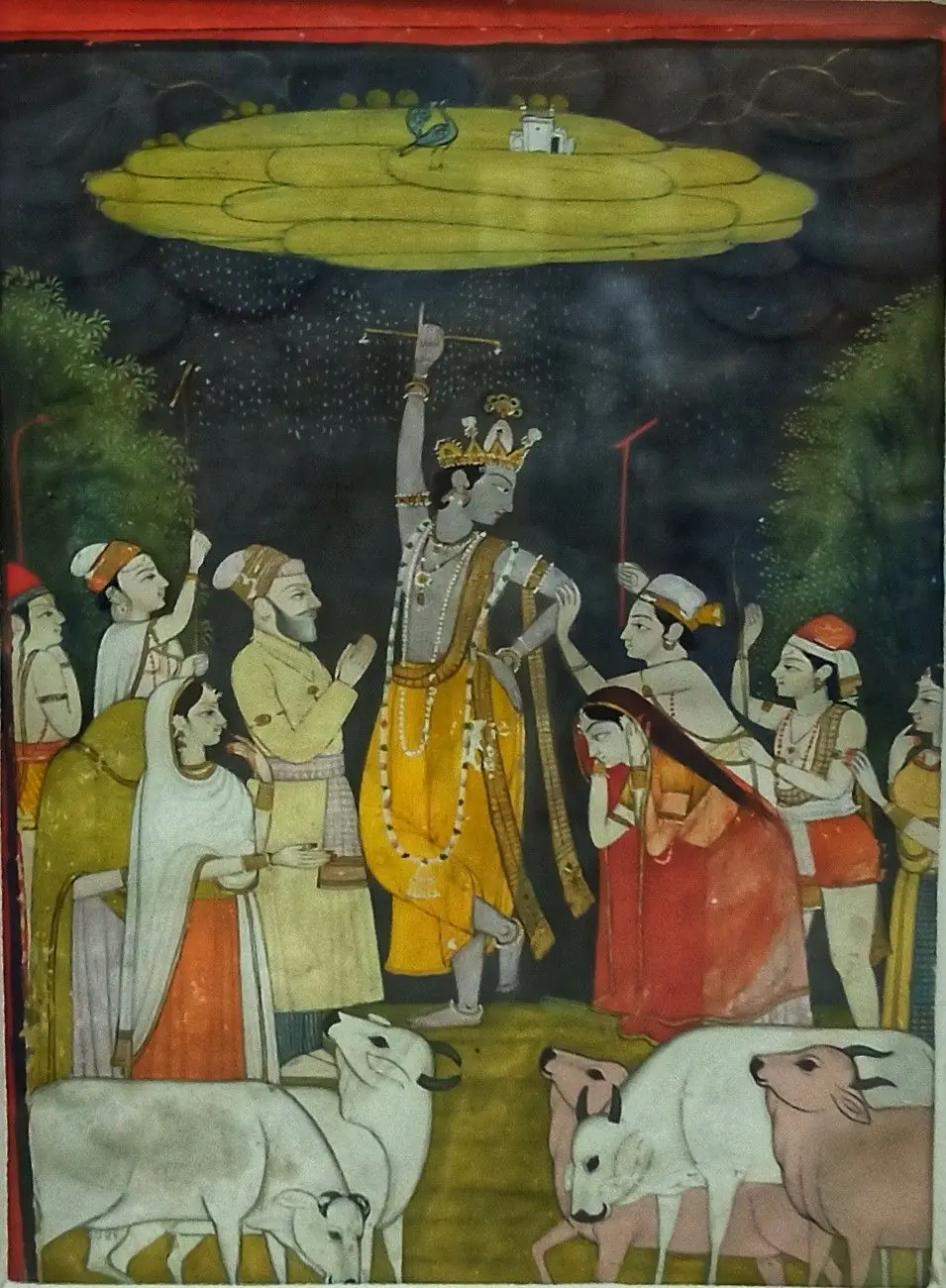
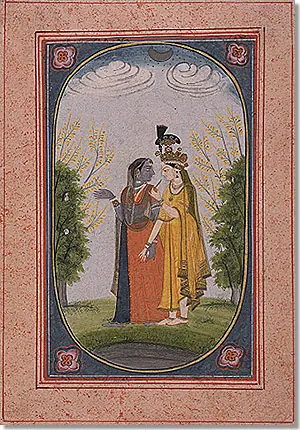
Cool greens, flowering trees and gentle Radhas: the Kangra painters of Sansar Chand set Krishna leela in their own hills.
- Also calledKangra kalam, Pahari painting
- FromKangra valley, Himachal Pradesh
- PeriodMid-18th to 19th century
- Protected?GI tag, registered 2013–14
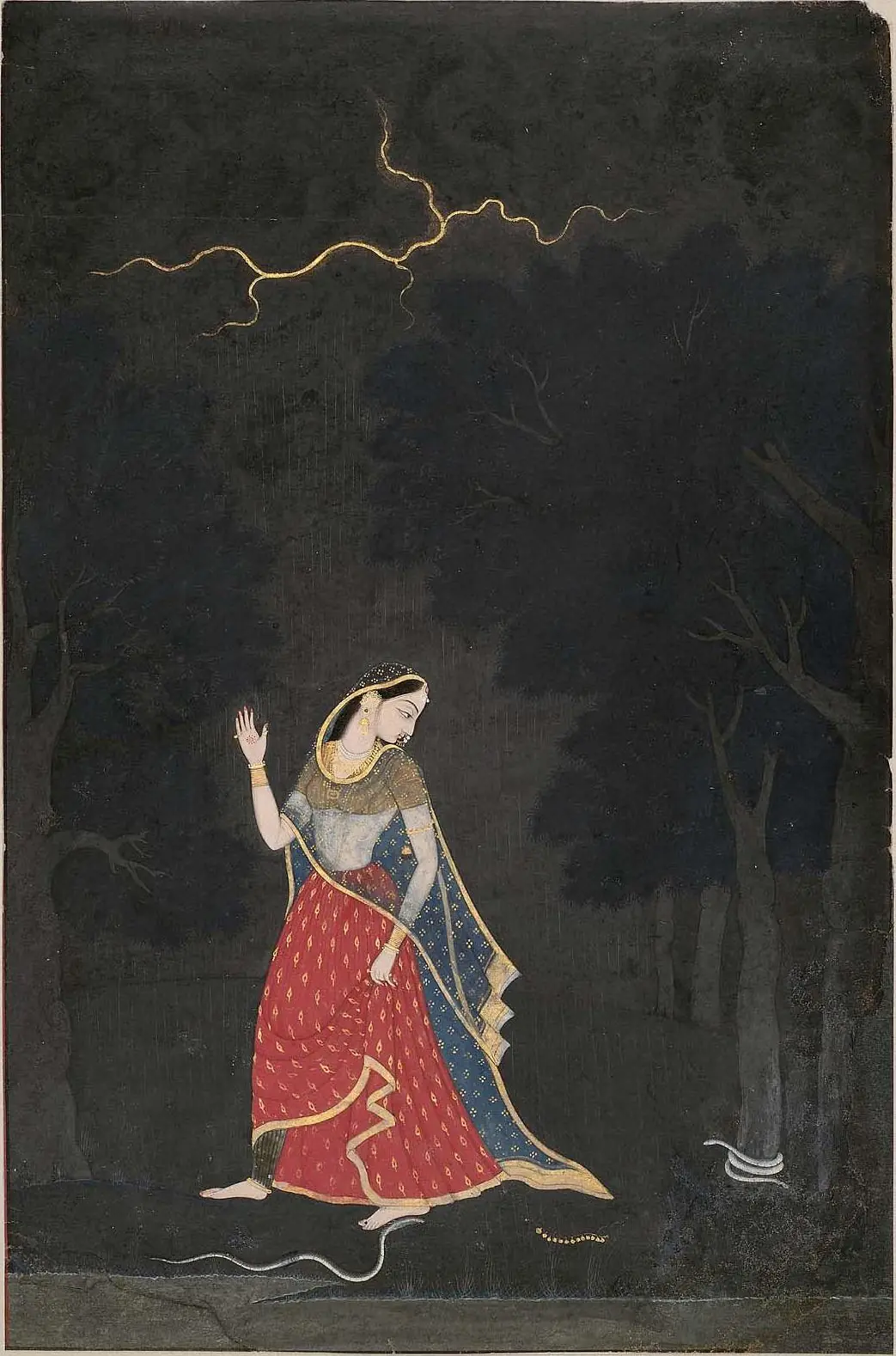
Lightning in dark clouds
Lapis or indigo for Krishna
Mineral and vegetable colours in fine layers on paper, burnished between coats. Line is light and sure, the faces refined, the landscape full of streams and greenery; later works add night scenes, storms and distant towns.
Sansar Chand, 1775–1823
- Early 18th c.From Guler
The style began at Guler, where painters trained in Mughal ways met hill artists and turned to hills and Radha-Krishna.
- 1775–1823Sansar Chand
Maharaja Sansar Chand Katoch, a devotee of Krishna, became the great patron. Purkhu (fl. c. 1790–1820) worked in his time.
- 1812Hard years
Kangra was invaded by the Sikhs in 1812, and court patronage waned.
- 1973Training at Rait
A government training centre for Kangra painting opened at Rait.
- 2013–14A protected name
Kangra Paintings were registered as a Geographical Indication.
Purkhu, c. 1790–1820
- Purkhu
- Fl. c. 1790–1820.
Radha and Krishna exchange clothes