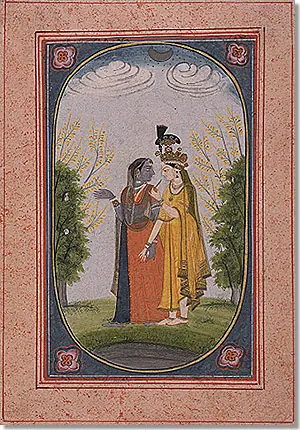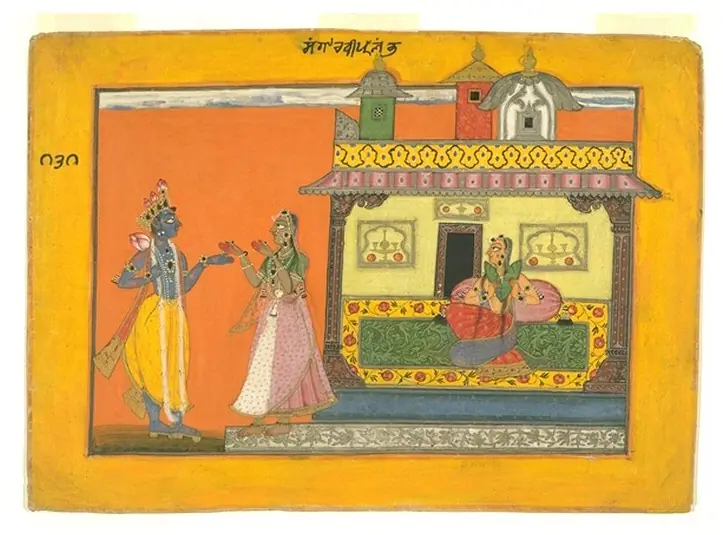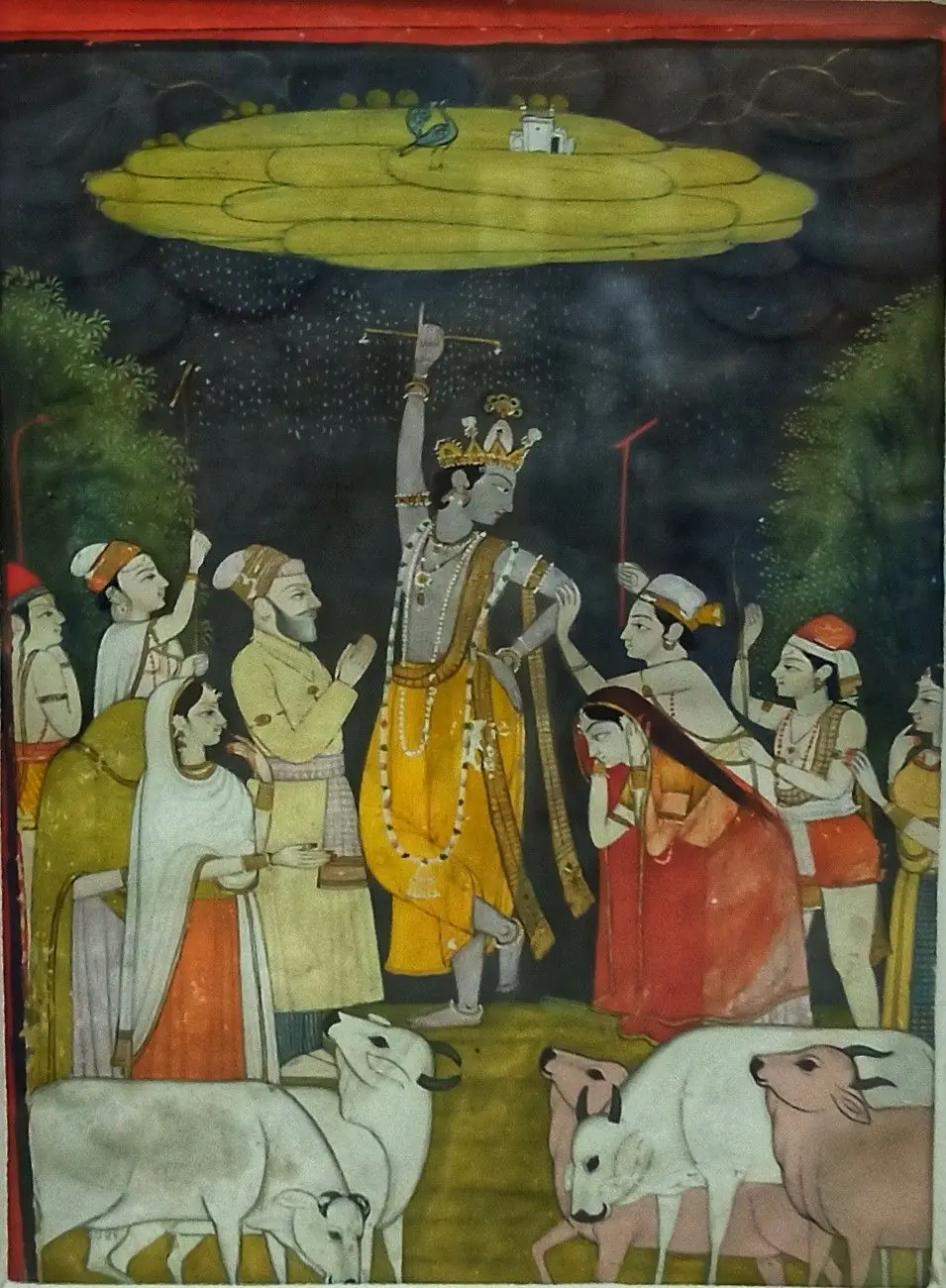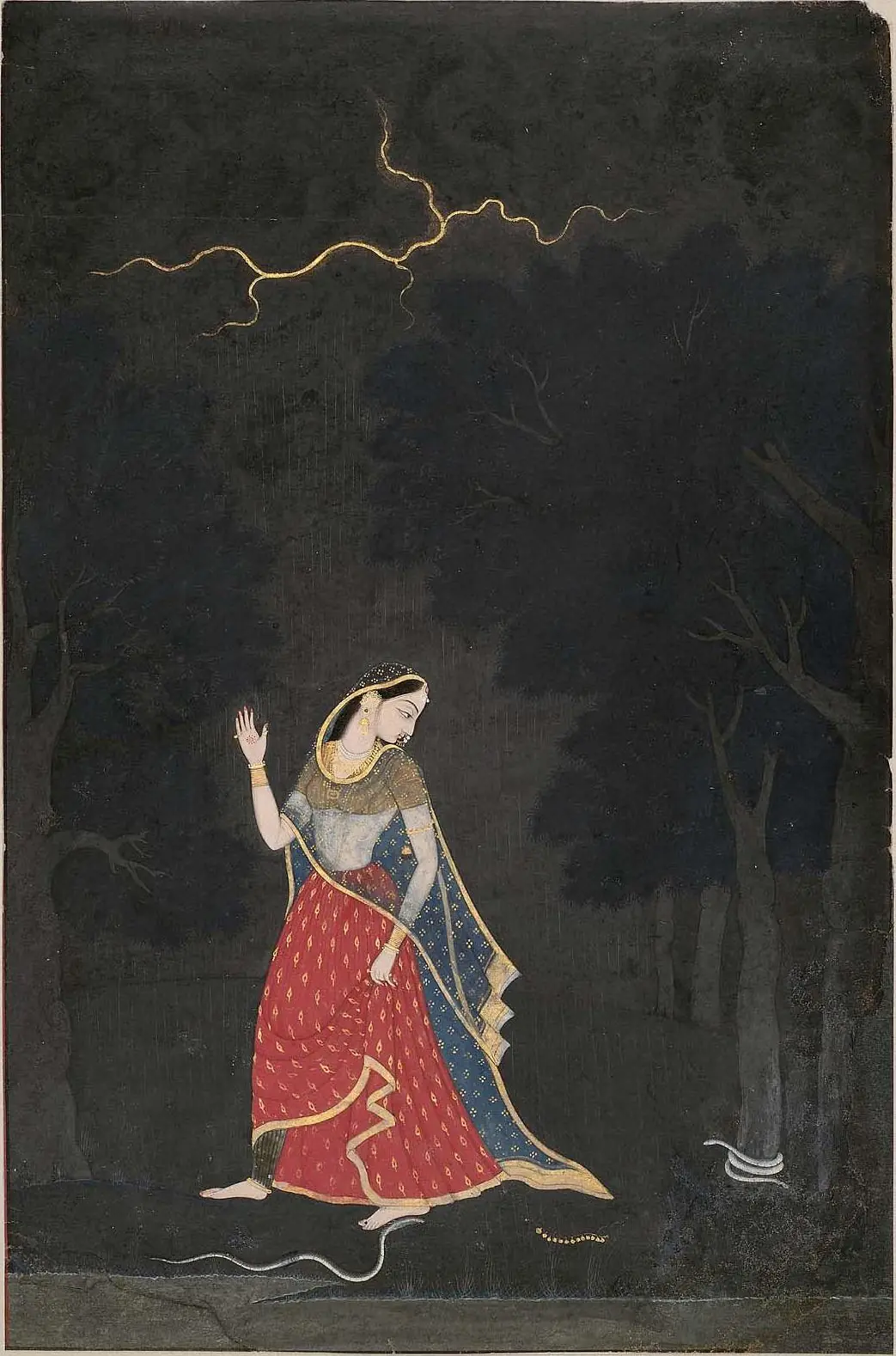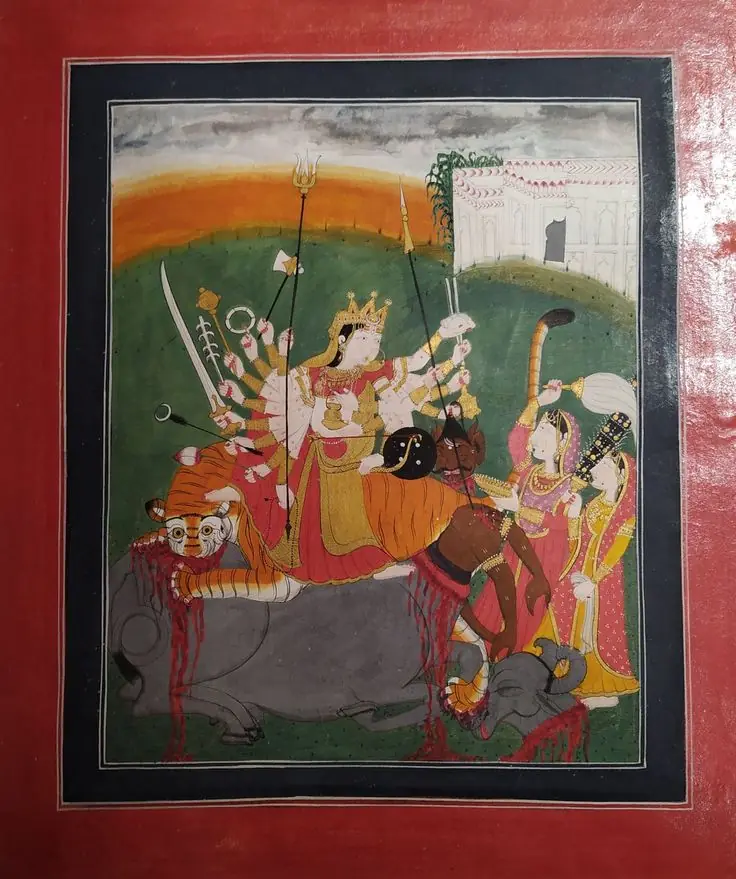
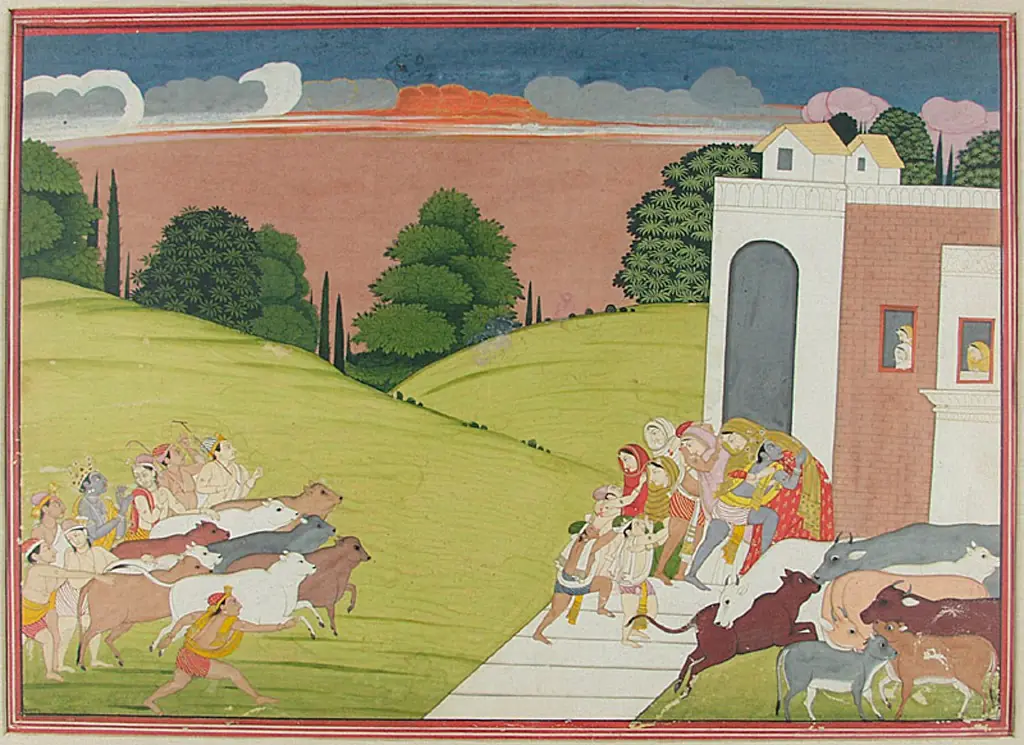
The elder son: the Gita Govinda (c. 1730) and Bhagavata pages, still close to Basohli.
Guler
गुलेर चित्रकला
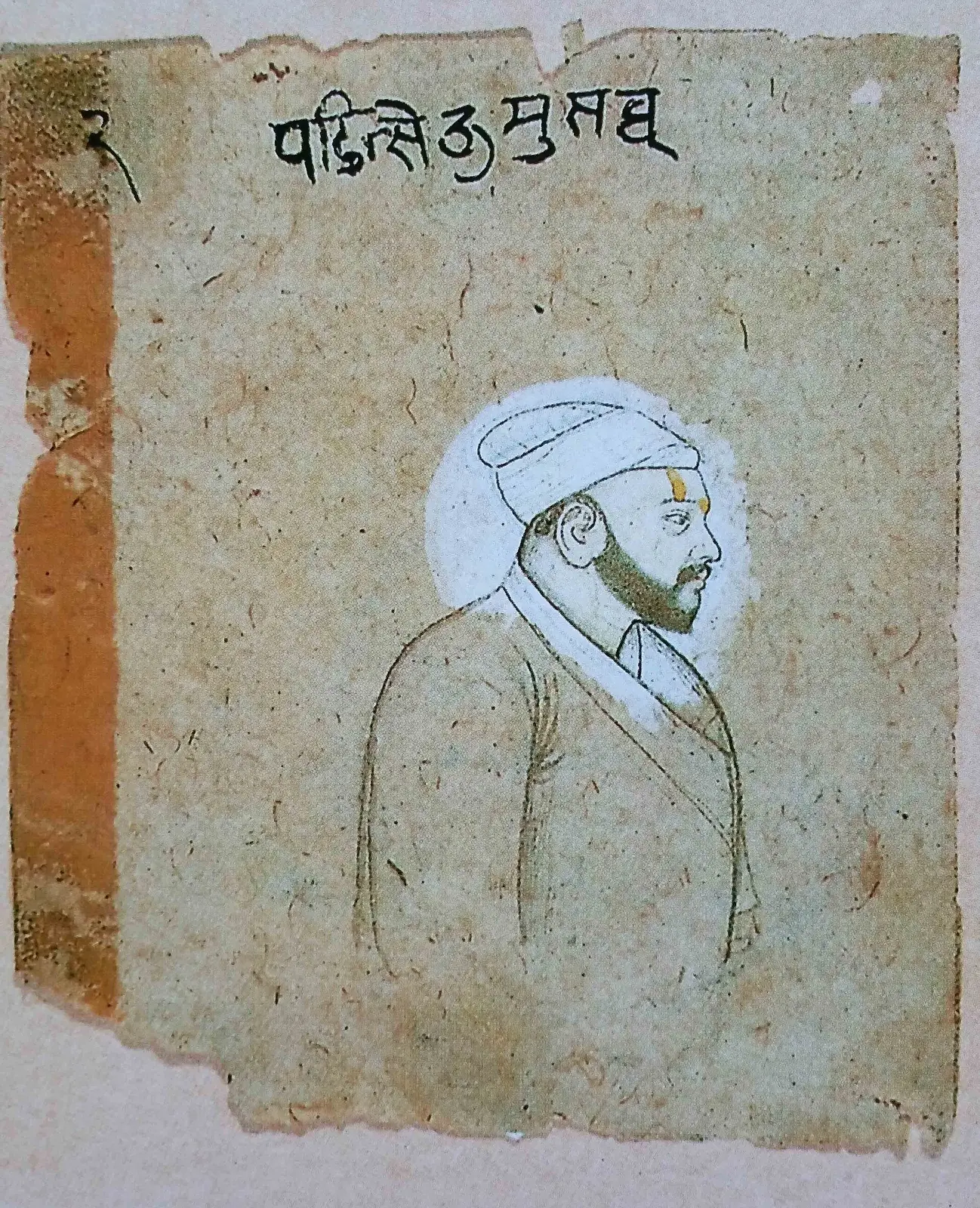
One family of Guler, Pandit Seu and his sons Manaku and Nainsukh, carried hill painting from fierce colour to quiet grace.
- Also calledGuler kalam
- FromGuler state, near Kangra
- Periodc. 1730 to the 19th century
- Painted byThe family of Pandit Seu
Pandit Seu's two sons
The younger son, who worked for Balwant Singh of Jasrota and later went to Basohli (c. 1765).
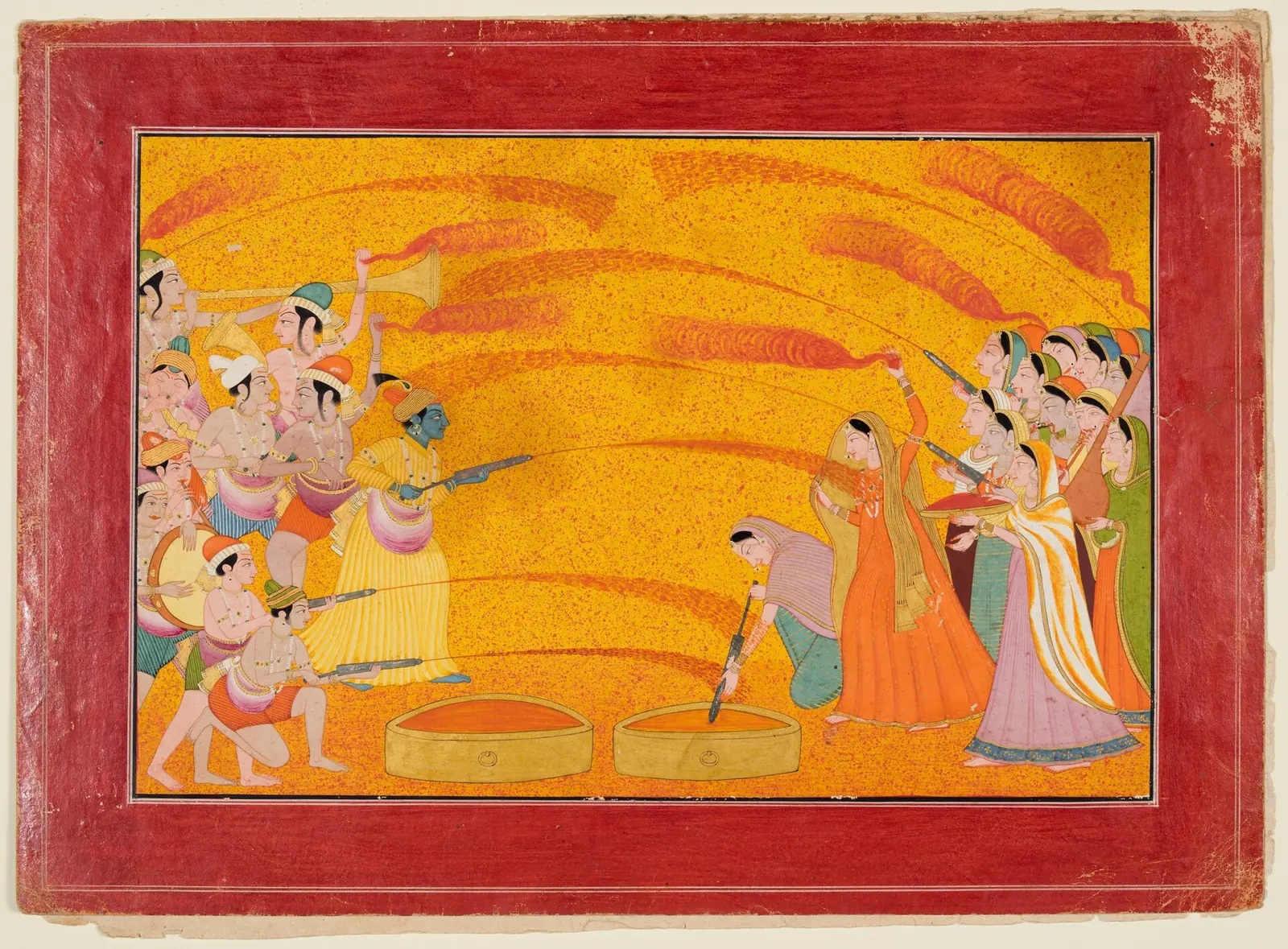
Cow-dust hour and Holi
१Cow-dust hourKrishna and the cowherds coming home at dusk
२HoliKrishna among the colours of spring
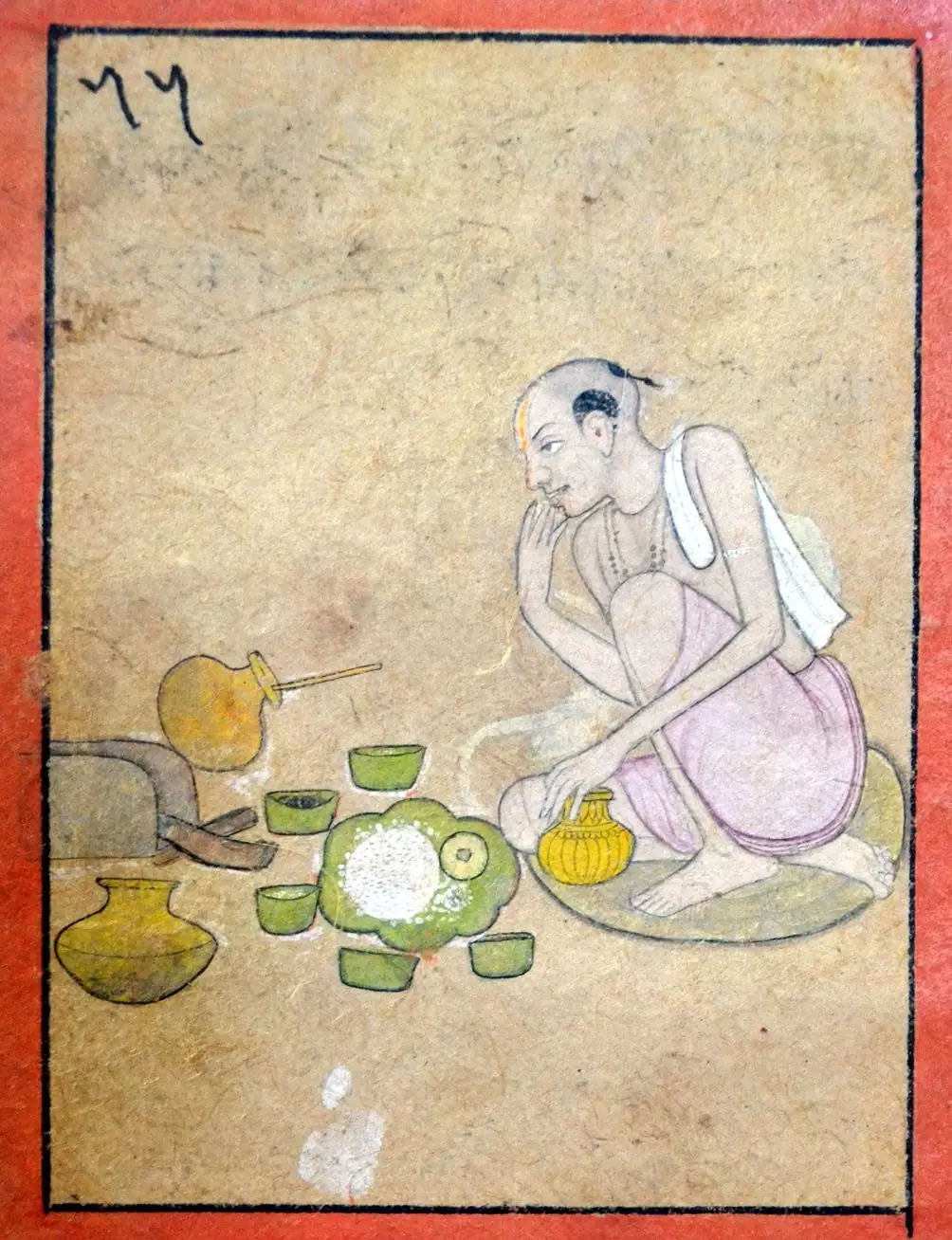
३Brahmana fed at shraddhaHousehold dharma, painted plainly
४Soft hillsSpace and quiet around the figures
Rose and pale green
Fine colour on paper with refined lines and delicate shades, the landscape drawn with great care.
Jasrota, 1724–63, then Kangra
- c. 1680–1740Pandit Seu
The painter Pandit Seu of Guler raised two sons, Manaku (c. 1700–1760) and Nainsukh (c. 1710–1778).
- c. 1730The Gita Govinda
Manaku painted a Gita Govinda series about 1730, and Bhagavata Purana series followed around 1740 and 1765.
- 1724–63Jasrota
Nainsukh worked for Raja Balwant Singh of Jasrota, painting him at the most private moments of his day.
- LaterTo Kangra
The family's pupils took the Guler manner to Kangra and other courts.
Pandit Seu, Manaku and Nainsukh
- Pandit Seu
- c. 1680–1740.
- Manaku
- c. 1700–1760.
- Nainsukh
- c. 1710–1778.
A brahmana fed at shraddha