The court of Kirpal Pal (r. 1678–93) and his heirs.
Basohli
बसोहली चित्रकला
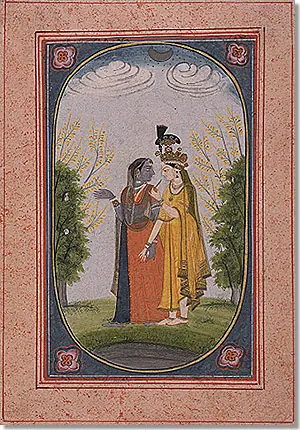
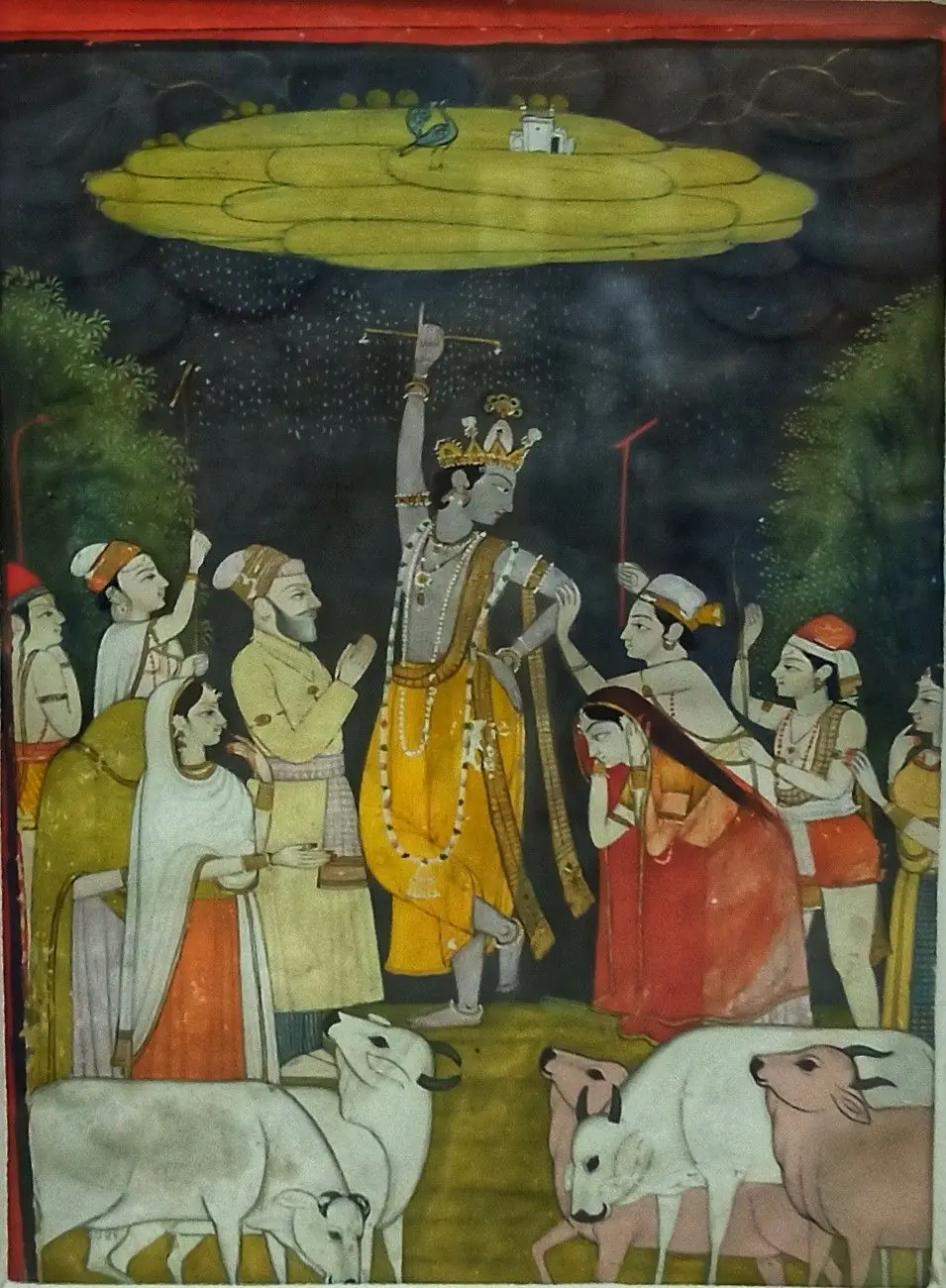
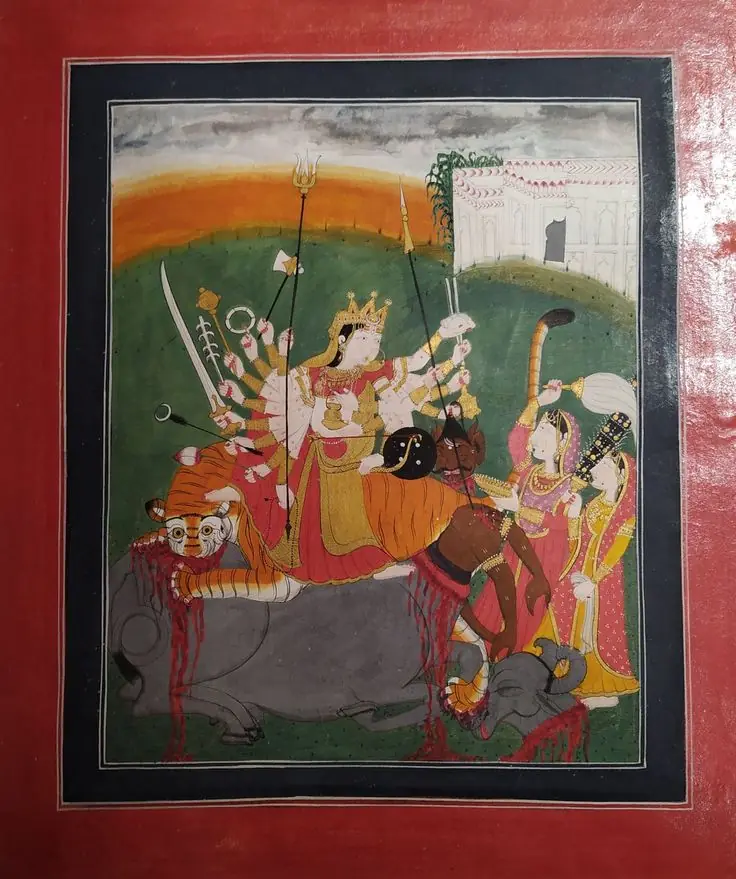
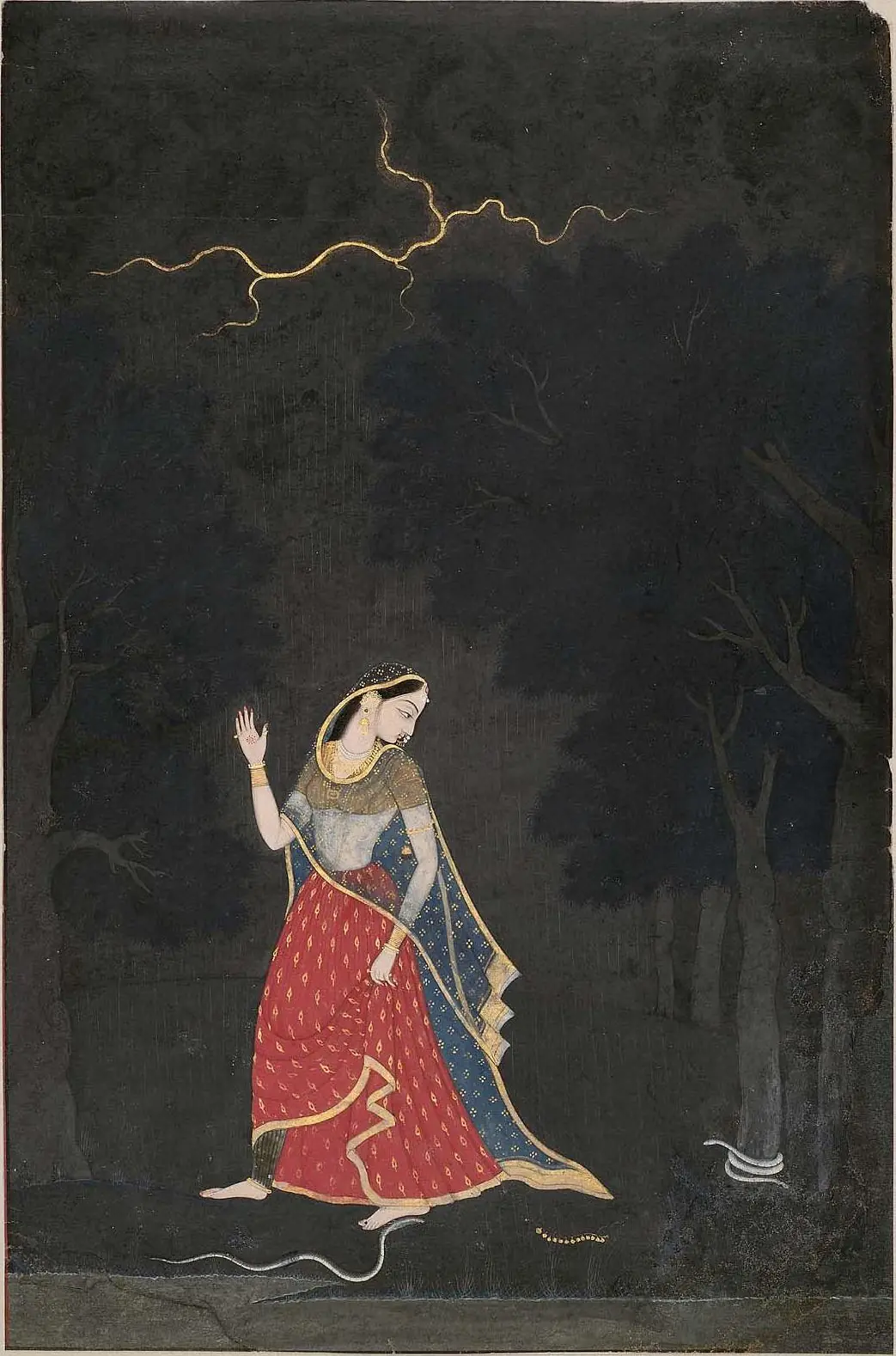
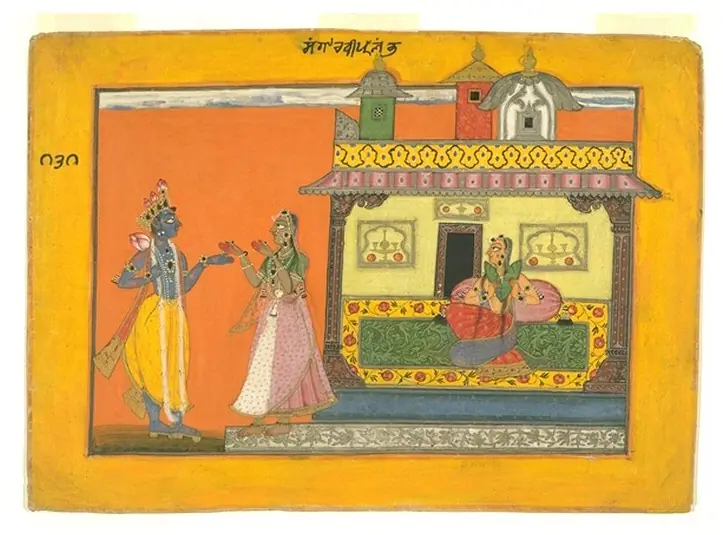
Hot reds and mustard yellows, big eyes and square frames: Basohli painted Devi and the Rasamanjari with fierce colour.
- Also calledBasohli kalam
- FromBasohli, on the Ravi
- PeriodMid-17th to 18th century
- Protected?GI tag, registered 2022–23
Kirpal Pal's court and its neighbours
A neighbouring hill court painting in the same manner.
A smaller centre that shared the early hill style.
Two-storey pavilions and lotus
१DeviTantric Devi series, c. 1660–70
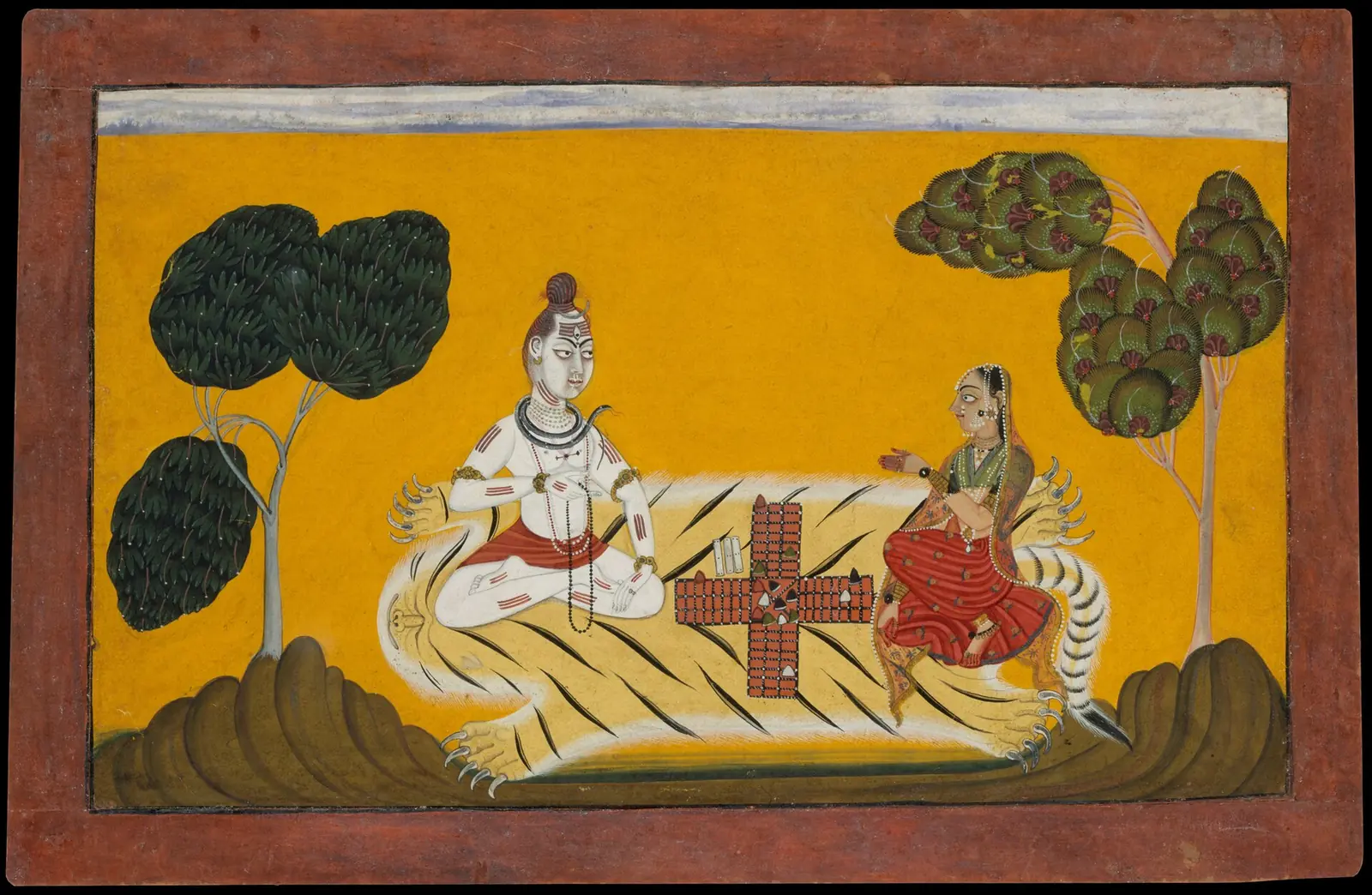
२Shiva and Parvati at chauparThe divine couple at play, Rasamanjari
३Krishna and RadhaBhanudatta's Rasamanjari
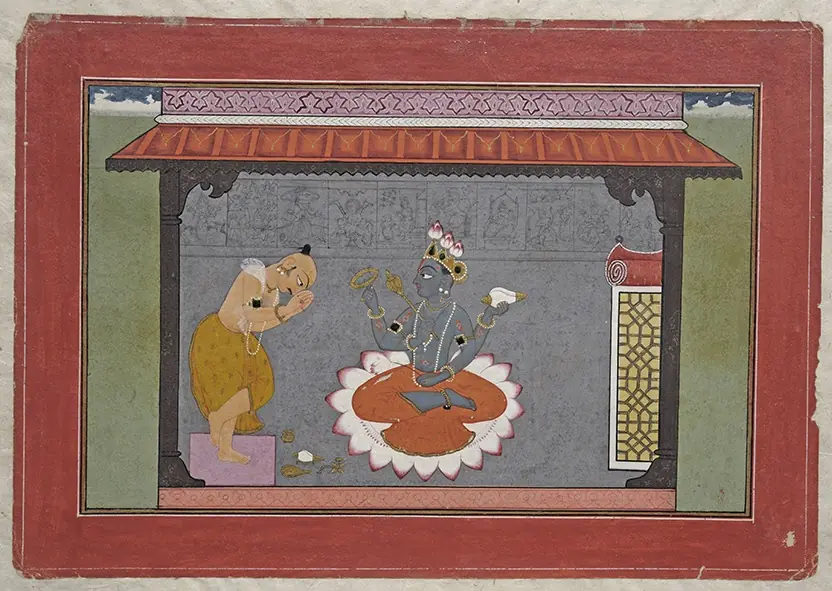
४Two-storey pavilionThe square, stage-like Basohli frame
५LotusSet in borders and ponds
Mustard ground, red lead border
Opaque colour on paper in flat, hot fields, with jewellery picked out in raised white and bits of green beetle-wing in some early works.
Two Rasamanjaris and a Gita Govinda
- c. 1660–70Devi and Rasamanjari
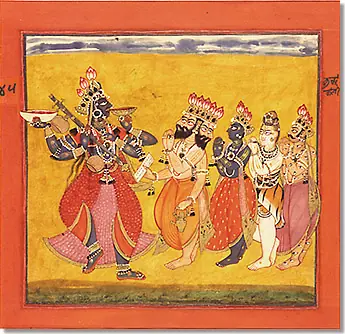
Painters linked to Kripal of Nurpur made a Rasamanjari series and a Tantric Devi series in the Basohli manner.
- 1694–95Devidasa's Rasamanjari
Devidasa, working for Raja Kirpal Pal, painted the Rasamanjari that includes Shiva and Parvati at chaupar.
- c. 1730Manaku's Gita Govinda
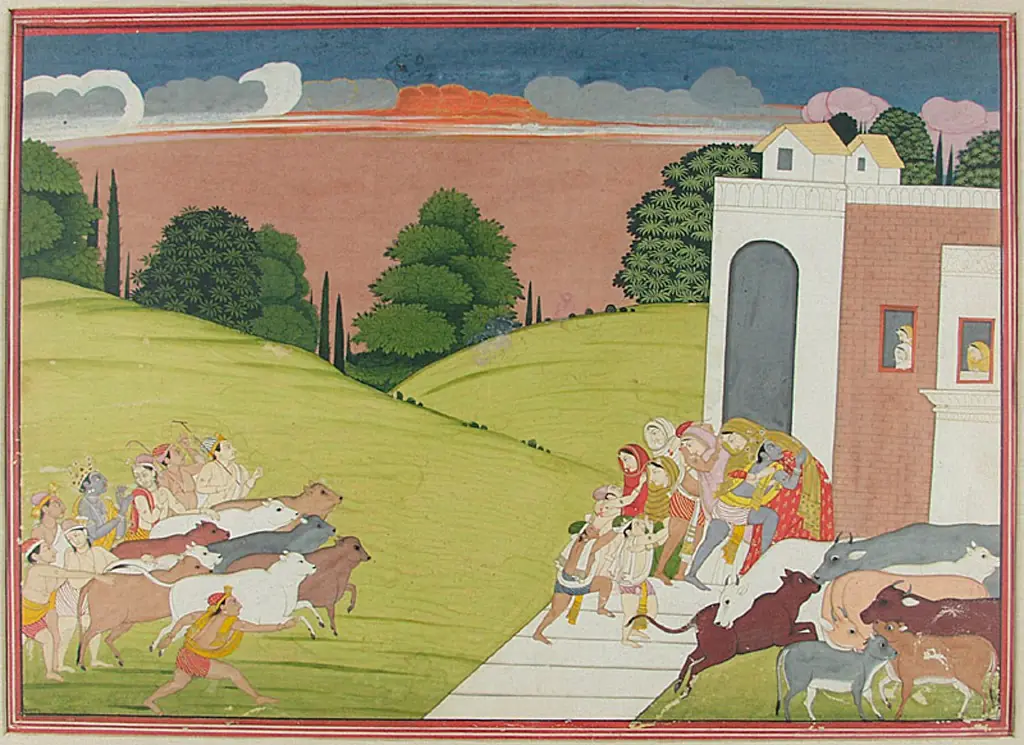
A Gita Govinda series of about 1730, by Manaku of Guler, is painted in the Basohli manner.
- 2022–23A protected name
Basohli Painting was registered as a Geographical Indication of Jammu and Kashmir.
Devidasa, fl. c. 1680–1720
- Devidasa
- Fl. c. 1680–1720; Rasamanjari, 1694–95.
Dancing Bhadrakali, c. 1660–70