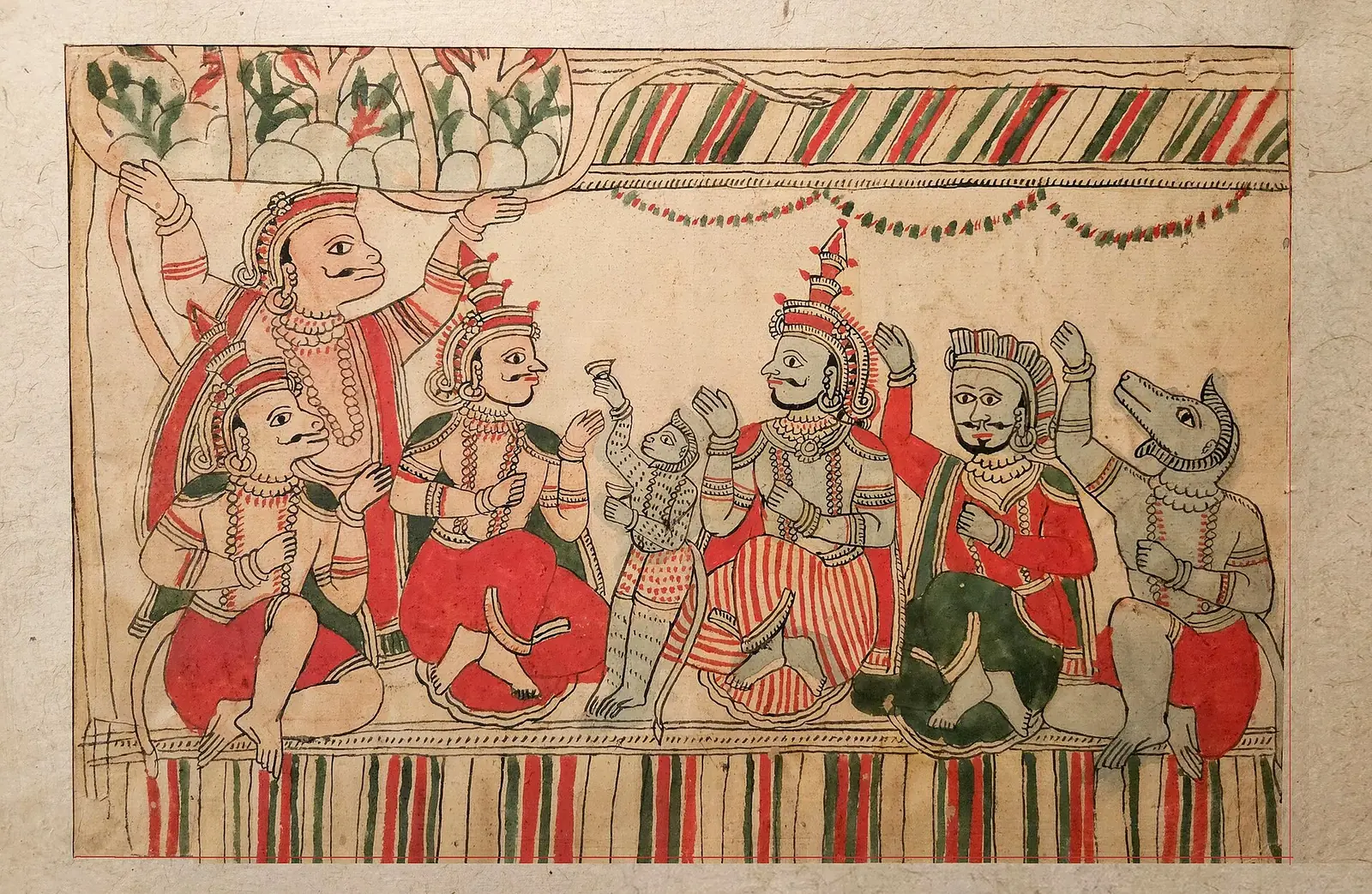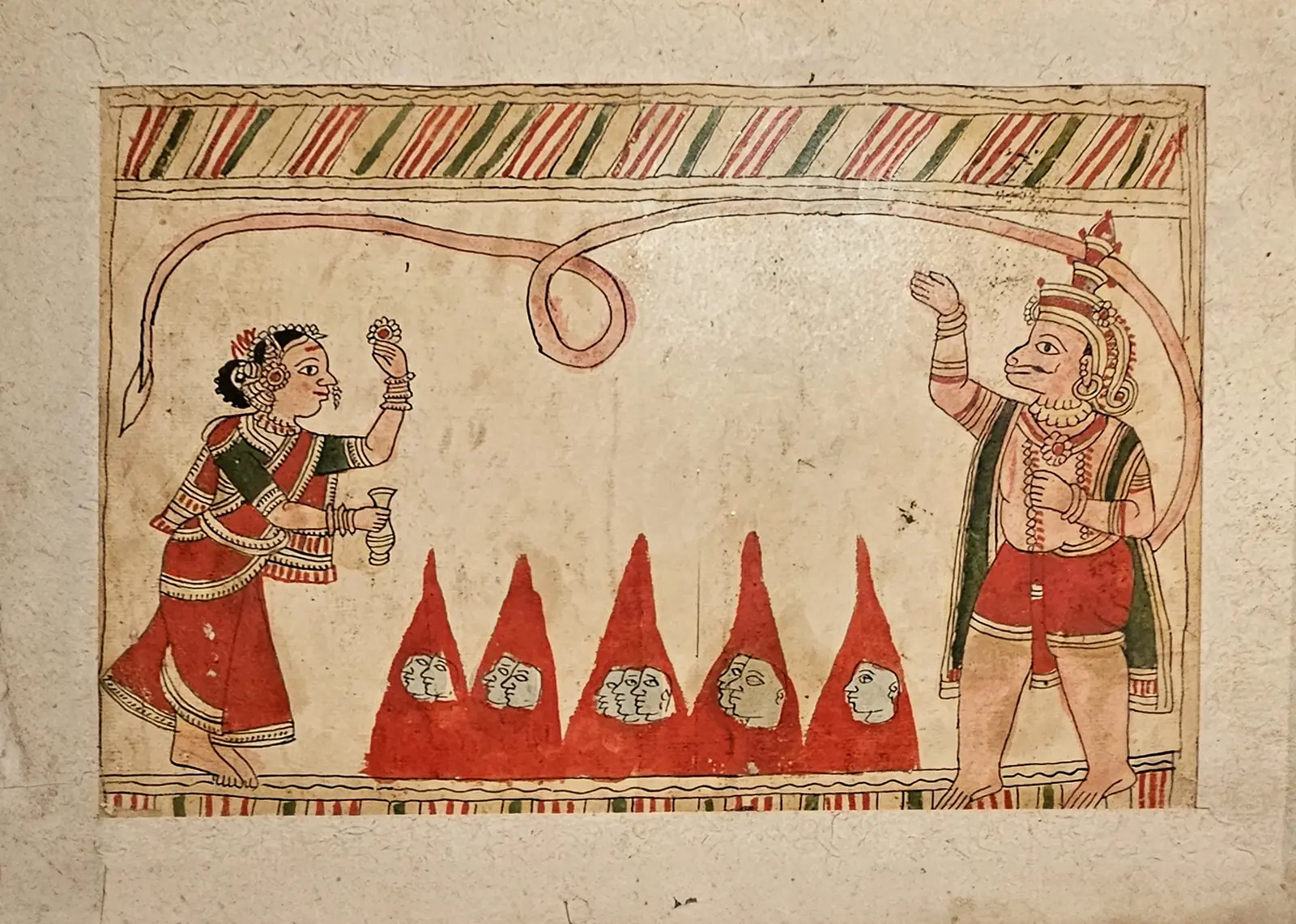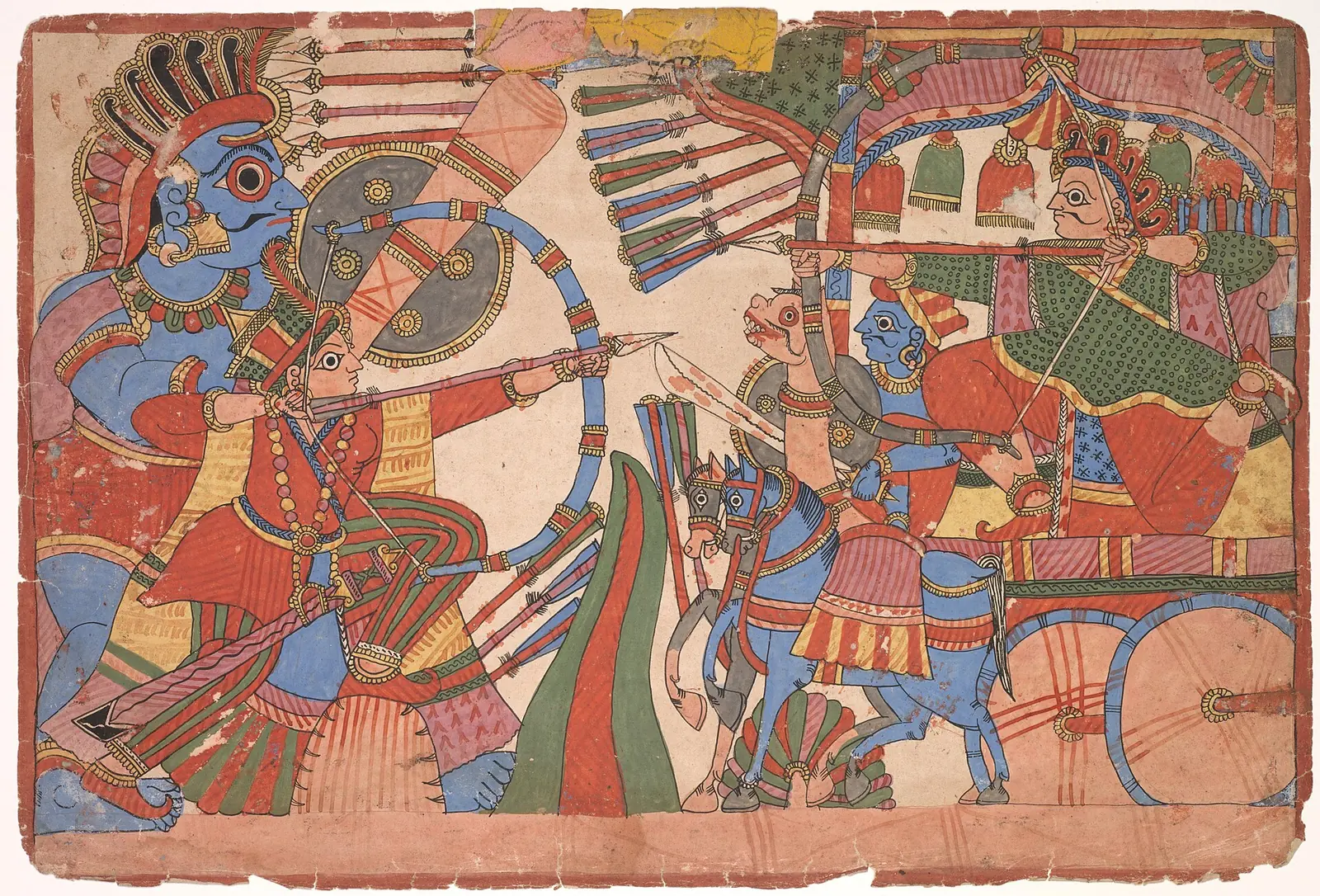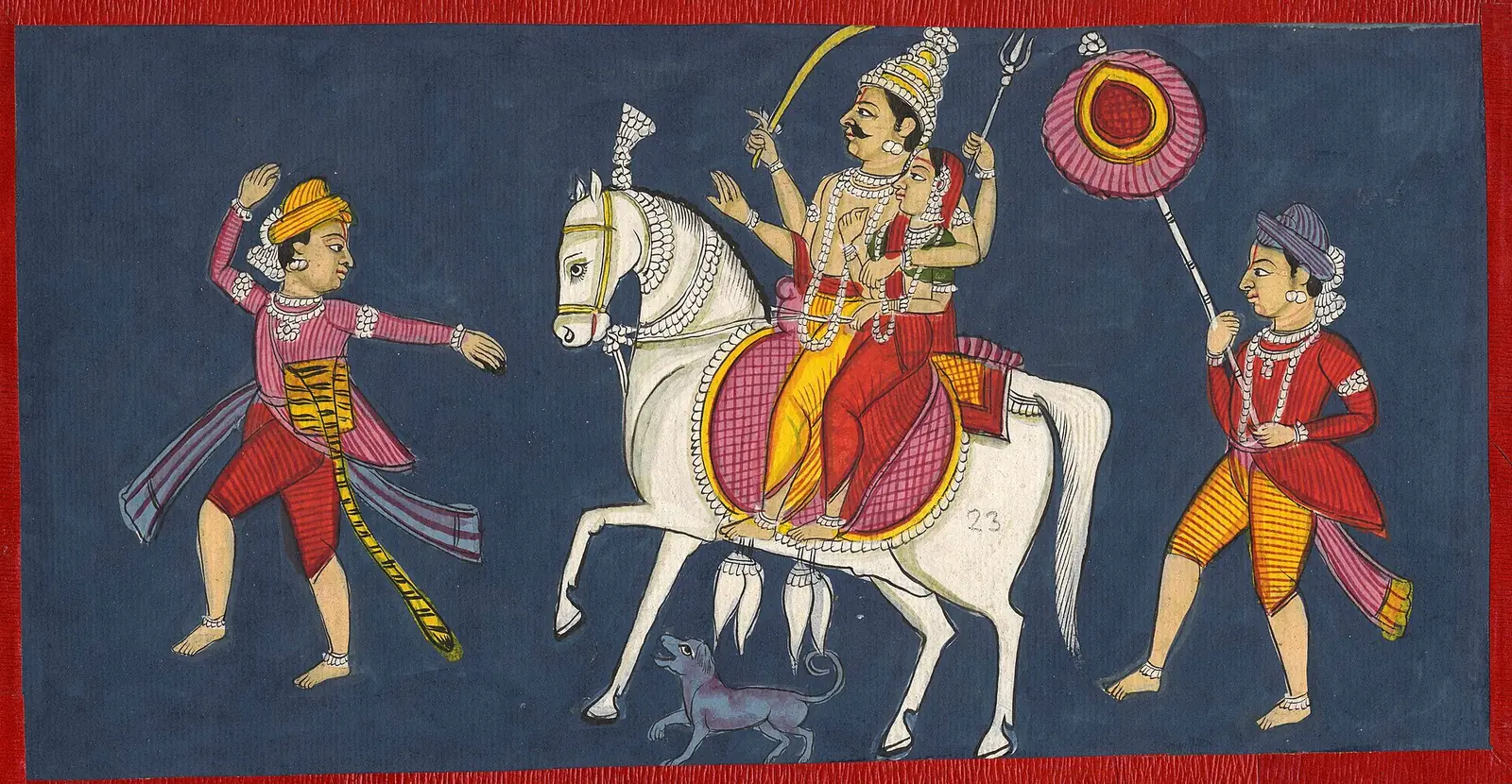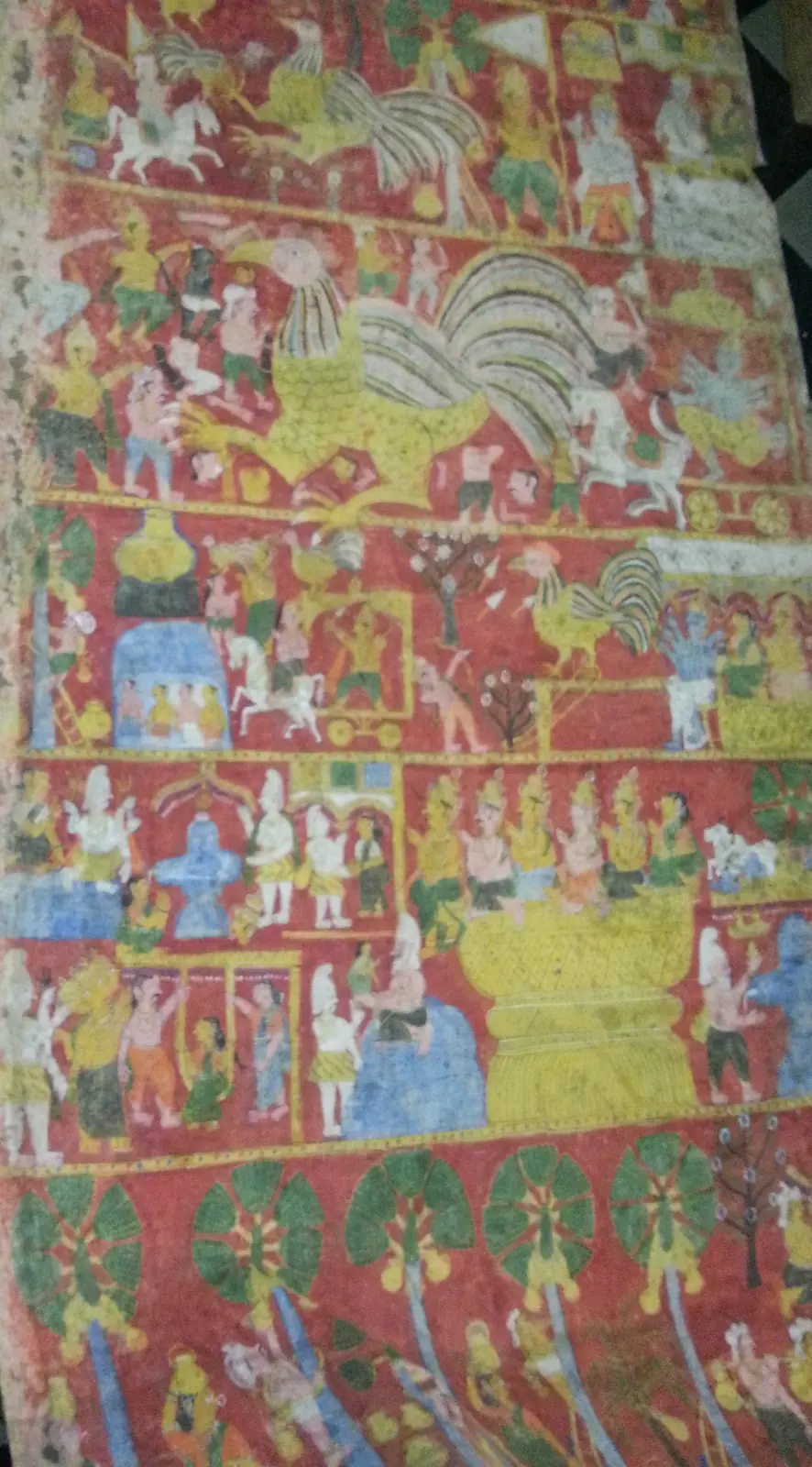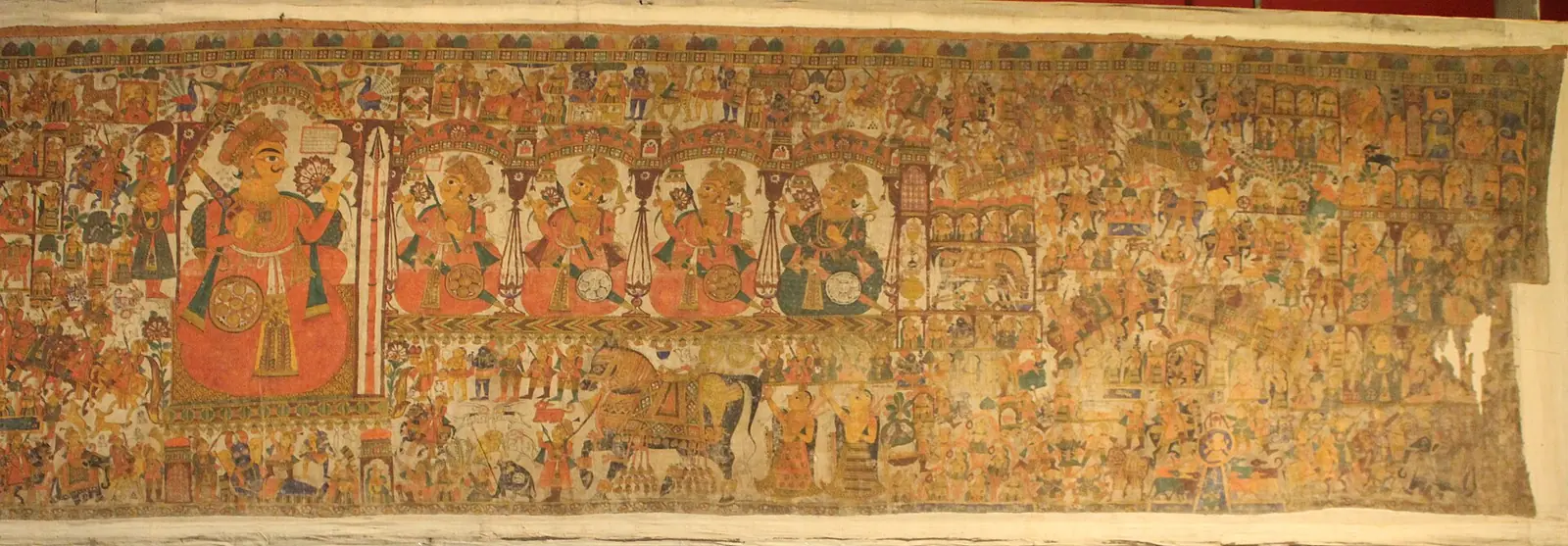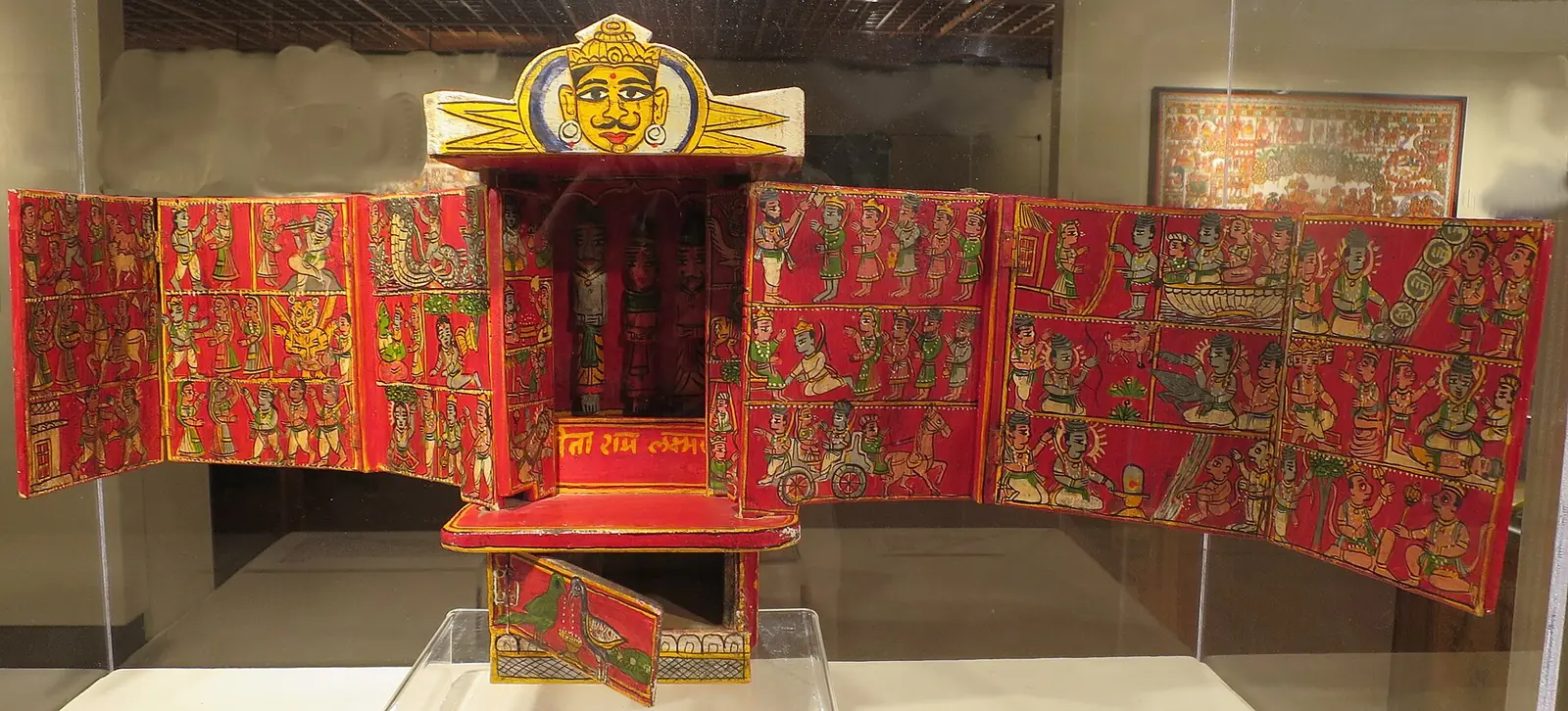
Painted sheets shown in order; today only this is called Chitrakathi.
Chitrakathi
चित्रकथी
Bundles of Ramayana and Mahabharata pictures that Thakar storytellers of Pinguli turned over one by one as they sang.
- Also calledPinguli chitrakatha; Paithan painting
- FromPinguli, Sindhudurg; Paithan
- Painted byThakar storyteller families
- FormatA pothi of 30–50 loose sheets
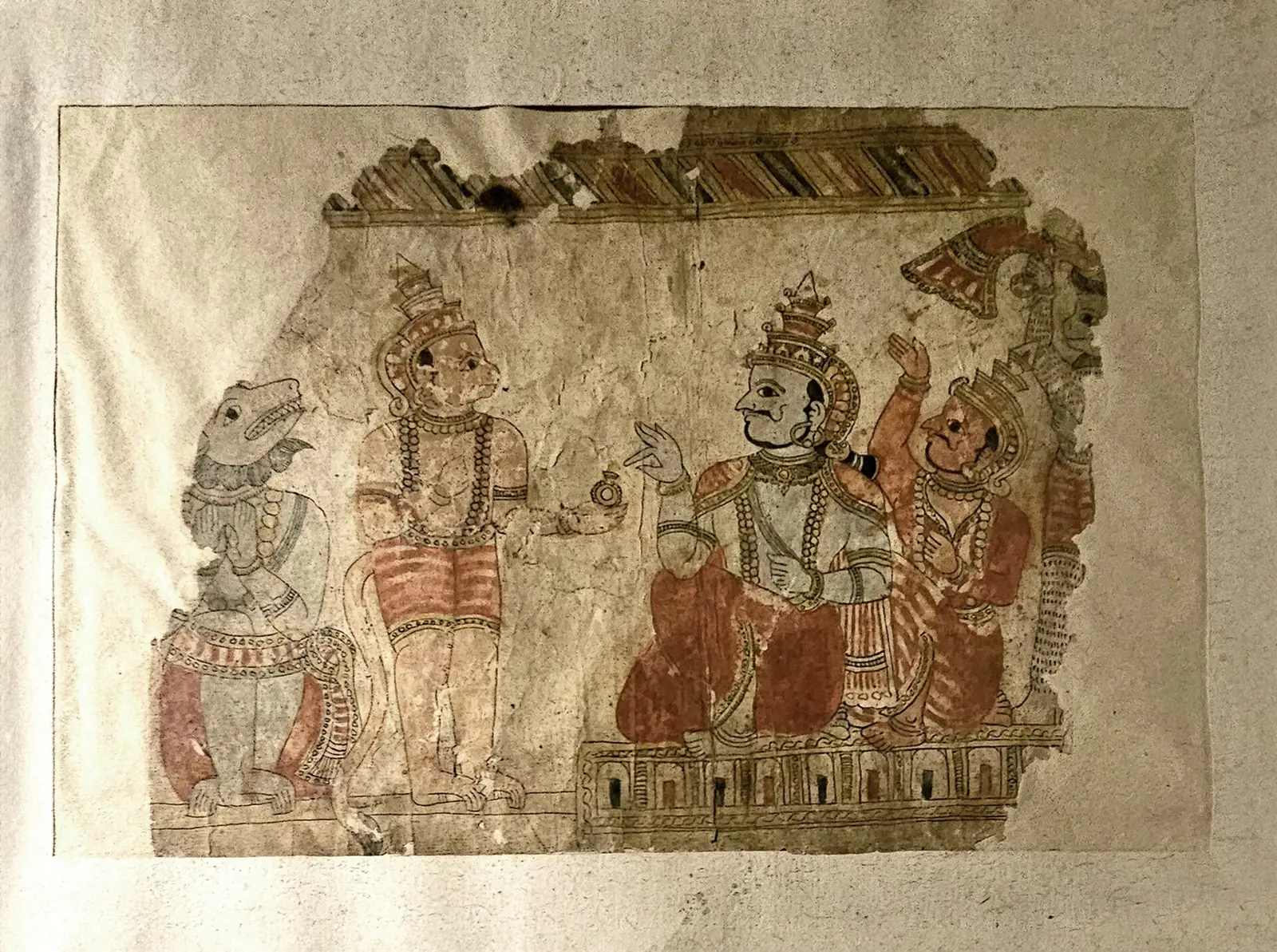
Painted sheets and string puppets
The same families also told kathas with string puppets and leather shadow puppets.
Hanuman with Dronagiri
१Rama and RavanaThe Ramayana, the favourite pothi
२Hanuman with DronagiriThe flight for the healing herb
३The PandavasLocal tellings of the Mahabharata
४Stiff, tall figuresMade to be read from a distance
Stone browns on handmade paper
Each sheet is one scene. All the sheets of one katha are kept in order in a bundle, the pothi, of about 30 to 50 pages, and turned while the katha is sung.
Old pothis and a cowshed museum
- 17th–19th c.Old pothis
Surviving Chitrakathi sheets are dated by most writers between the 17th and 19th centuries.
- 2006A cowshed museum
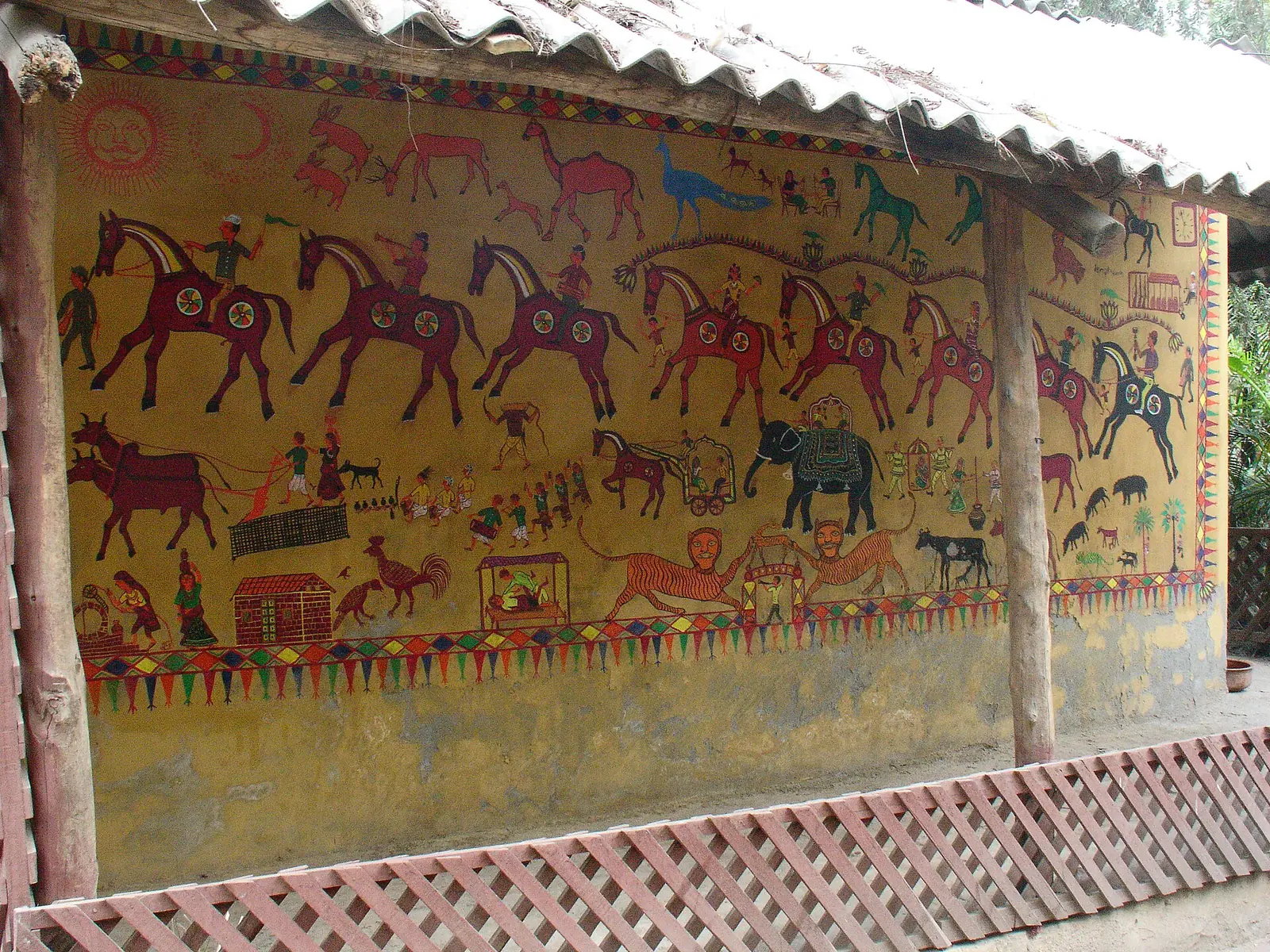
Parshuram Gangavane turned his cowshed in Pinguli into the Thakar Adivasi Kala Aangan museum of paintings, puppets and instruments.
- 2021Padma Shri
Parshuram Gangavane received the Padma Shri for keeping the Thakar arts alive.
Parshuram Gangavane of Pinguli
- Parshuram Gangavane
- Thakar artist of Pinguli. Padma Shri, 2021.
Pinguli Ramayana and a Paithan Mahabharata