
Step 1 of 7
The flower itself
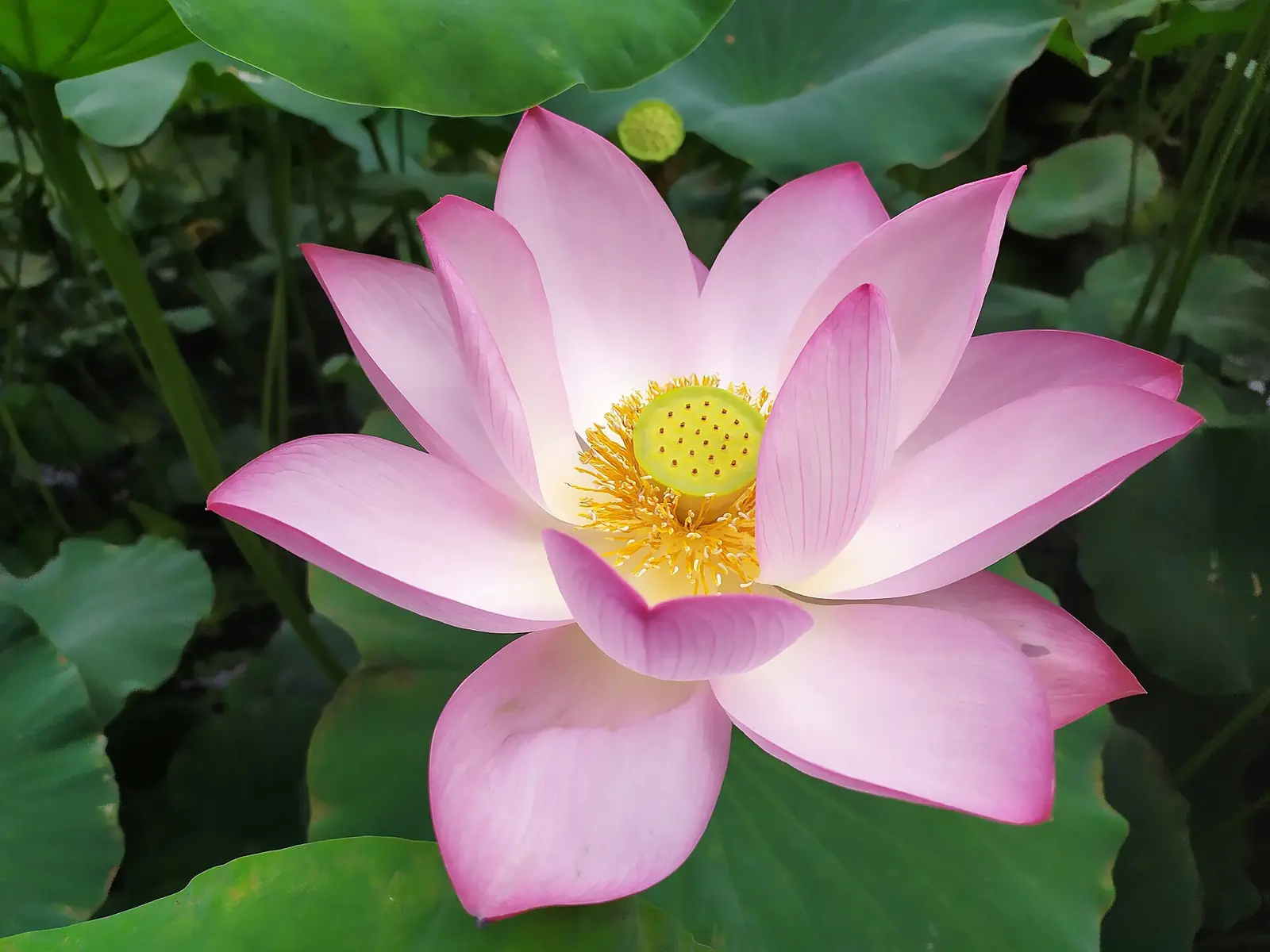
The lotus has three common Sanskrit names, padma, kamala and pankaja, and the last means mud-born. Its roots sit in mud, yet the flower opens spotless and water runs off its leaves. The Gita (5.10) uses this for one who acts without attachment, untouched by sin as a lotus leaf is by water.
Look for: Find the yellow seed pod at the centre and the ring of petals round it.
Quick question. What does the name pankaja mean?
- Mud-born
- Thousand-petalled
- Seat of Lakshmi
Show the answer
Mud-born. Pankaja means mud-born: the roots sit in mud, yet the flower opens spotless.
Step 2 of 7
Painting: Lakshmi on her lotus
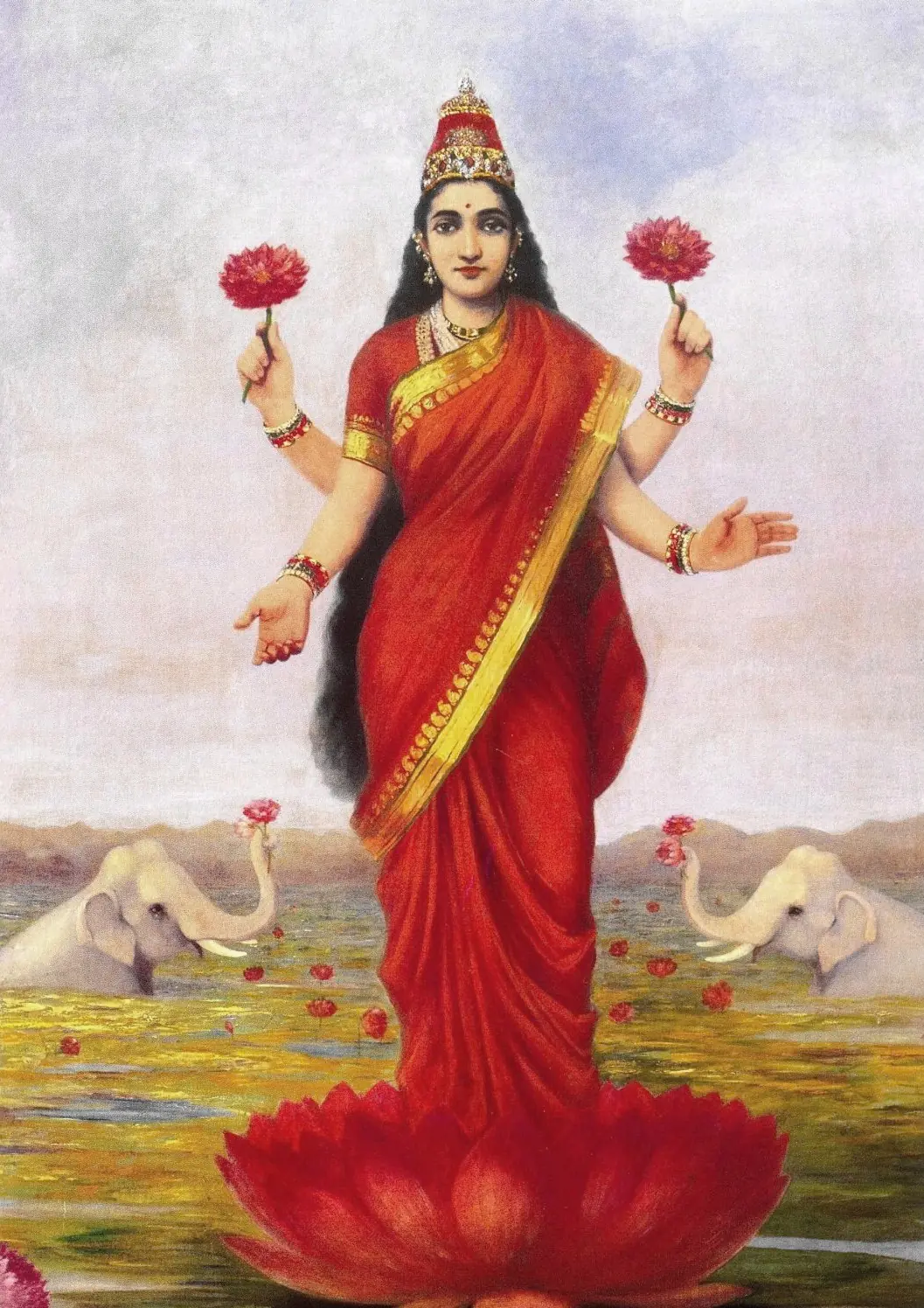
Raja Ravi Varma painted Lakshmi standing on a lotus in 1896. The Shri Sukta calls her lotus-coloured and lotus-seated, and she holds two lotuses with a third as her seat. On the wedding walls of Mithila the flower has another sense. The kohbar painting sets it with bamboo and fish, and there the lotus is the bride.
Look for: Count the lotuses: one under her feet and one in each raised hand.
Quick question. In a Madhubani painting, what does the lotus stand for?
- The family line growing on
- The bride; beauty and purity
- A long life for the couple
Show the answer
The bride; beauty and purity. Among the Madhubani symbols the lotus is the bride, beauty and purity; bamboo is the family line, and sun and moon a long life.
Step 3 of 7
Sculpture: Gajalakshmi
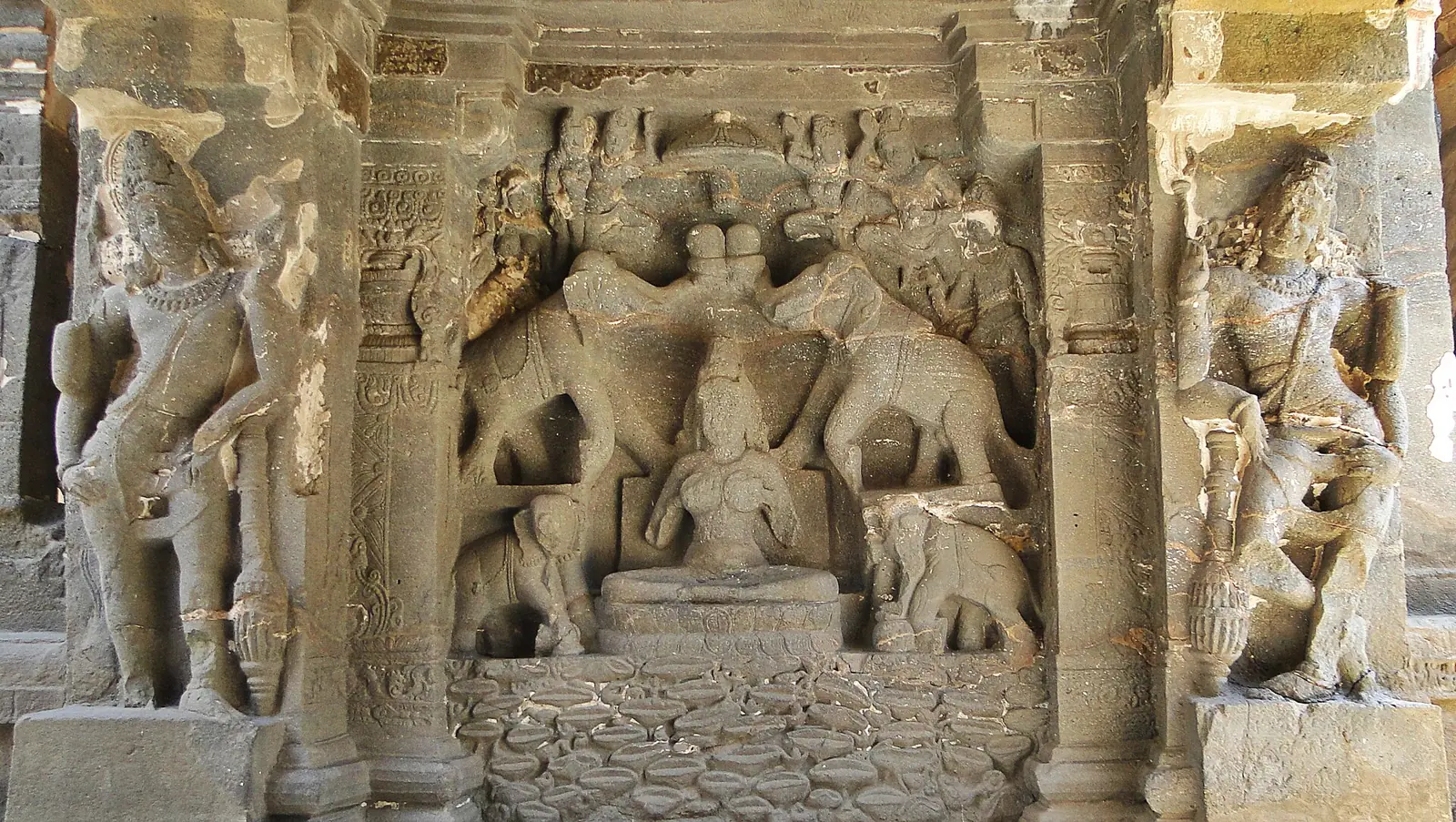
Gajalakshmi is Lakshmi seated on a lotus while two elephants pour water over her from raised trunks. She is among the earliest images of the goddess, carved on the Bharhut railing in Shunga times. The water is linked with rain and a good harvest. In Odisha’s temples she often sits at the centre of the lintel over the sanctum door.
Look for: Find the goddess seated at the centre and the elephants on either side of her.
Step 4 of 7
Sculpture: the lotus pedestal
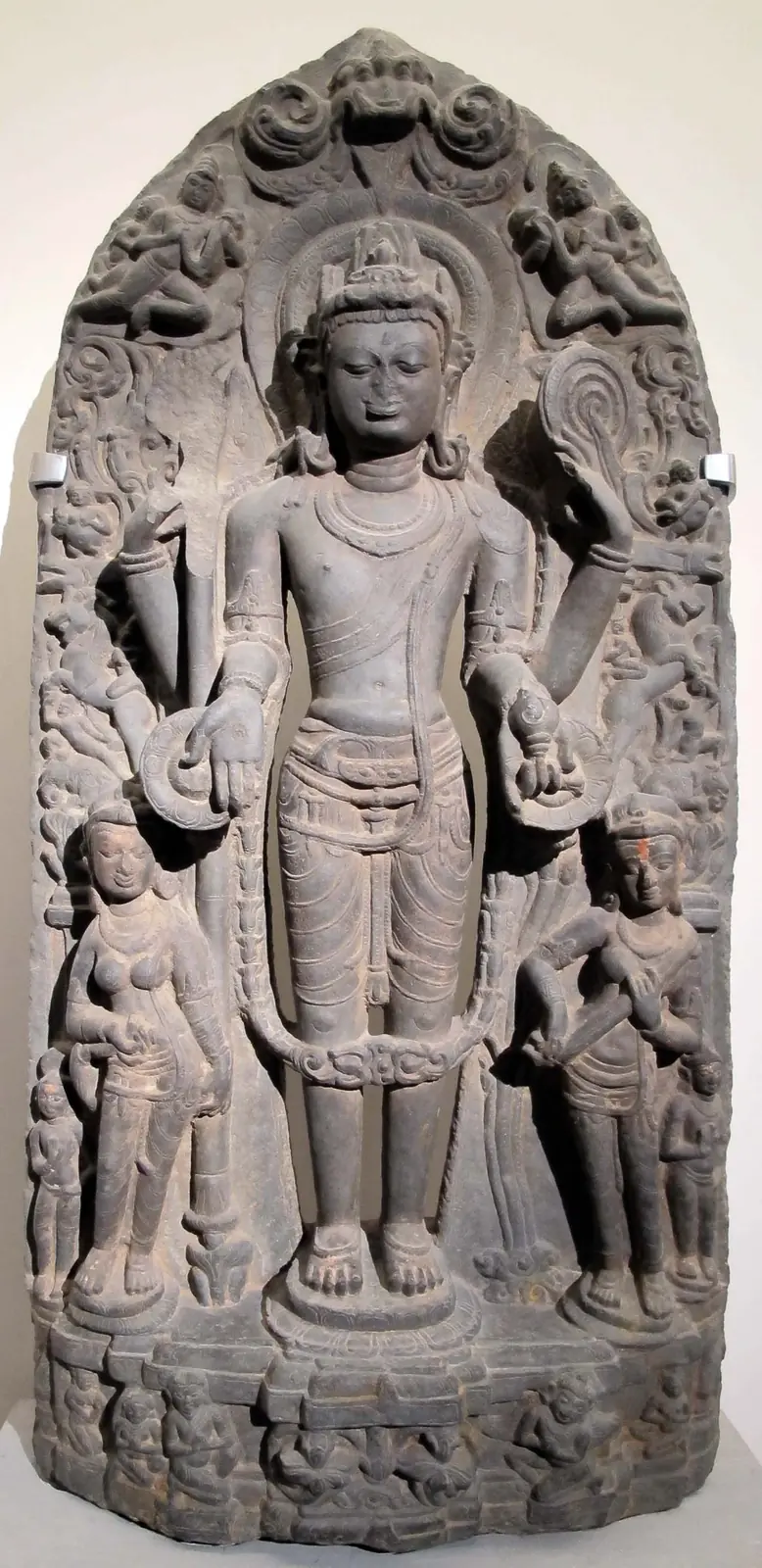
Lakshmi, Brahma and Saraswati are shown on lotuses, and for this reason a murti’s pedestal is often carved as an opened lotus. The Pala-Sena carvers of Bengal and Bihar, from the 8th to the 12th century, set each devata on a black stone stele with a pointed top and a lotus pedestal. Vishnu stands straight, with Lakshmi and Saraswati at his sides.
Look for: Look under Vishnu’s feet for the ring of petals that makes his pedestal.
Quick question. What does a Pala-Sena devata stand on?
- A makara
- A plain square block
- A lotus pedestal
Show the answer
A lotus pedestal. Eastern Indian carvers set each devata on a stele with a pointed top and a lotus pedestal.
Step 5 of 7
Temple ceiling: the padmashila
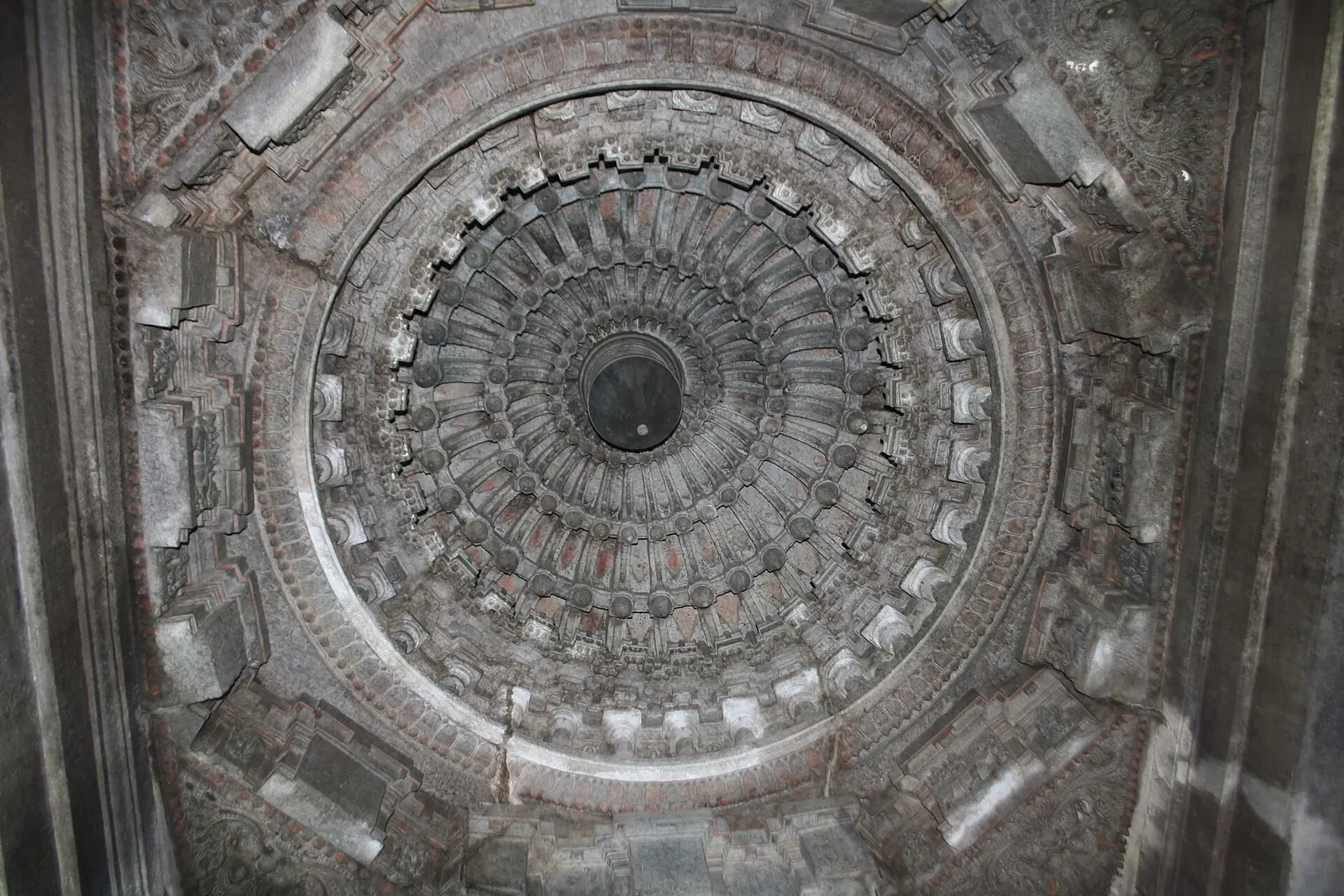
The padmashila is the lotus carved at the centre of a ceiling. It opens downwards over the devotee. The ceiling itself, the vitana, is built of corbelled rings of stone that narrow towards a central pendant. The eight-petalled lotus, the ashtadala, is the lotus of most temple ceilings and yantras, and its petals are read as the eight directions.
Look for: Count the rings of petals from the rim in to the centre.
Step 6 of 7
Textile: the kantha quilt
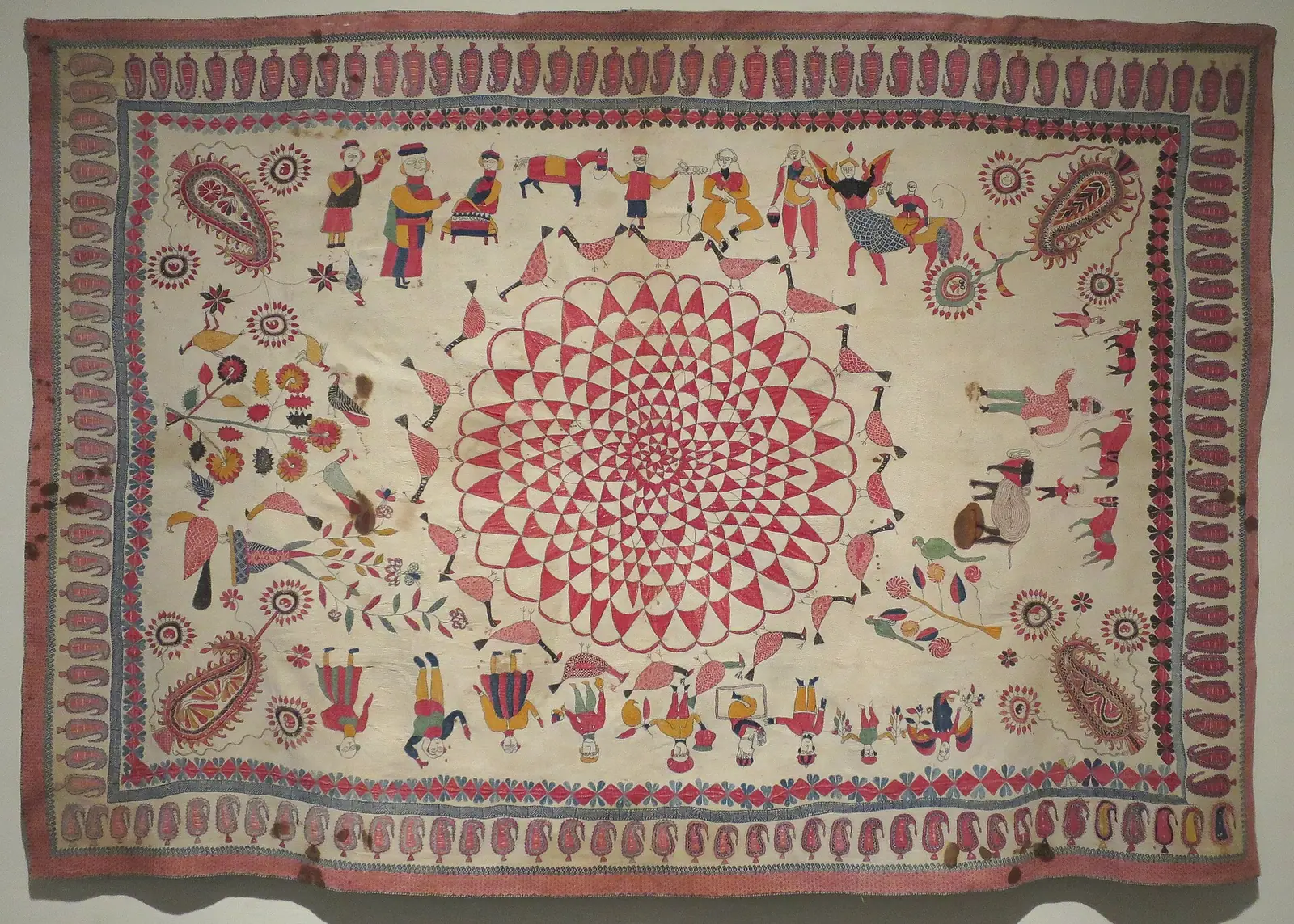
Kantha is the quilt of Bengal, made at home from old saris layered and stitched in running stitch. A lotus usually sits at the centre, read as the seat of the divine, with paisley kalkas in the four corners. Weavers use the flower too. On a Paithani the kamal is the seat of Lakshmi, and on a Bomkai sari of Odisha it stands for purity.
Look for: Find the great round lotus in the middle and the four paisleys in the corners.
Quick question. Where does the lotus usually sit on a kantha?
- In the four corners
- At the centre
- Along the border
Show the answer
At the centre. Figures and borders are filled in with a lotus usually at the centre; the paisley kalka goes in the four corners.
Step 7 of 7
Floor art: the alpana
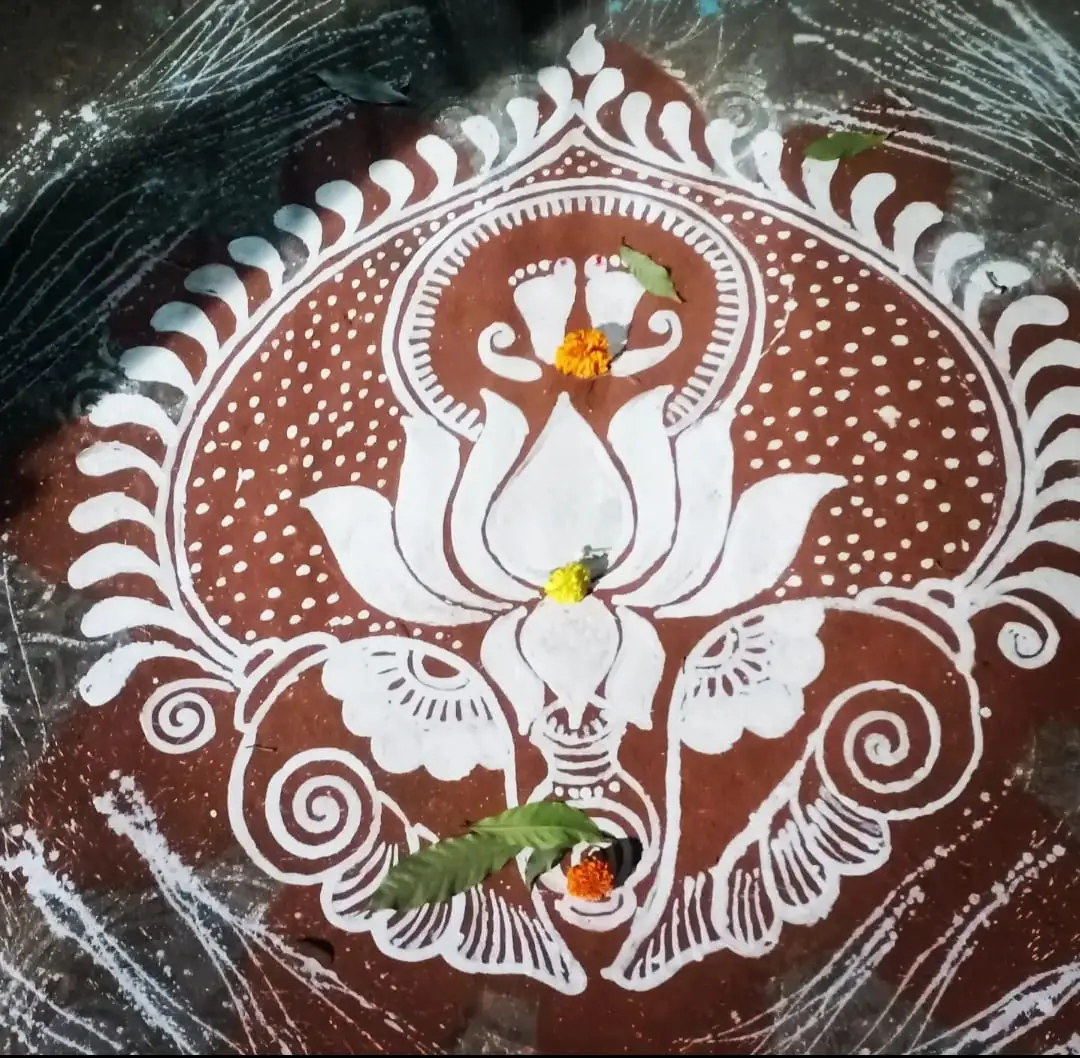
In Bengal the alpana is painted with a finger or a twist of cloth dipped in white rice paste. For Kojagari Lakshmi Puja a lotus usually sits at its centre, with Lakshmi’s small footprints leading to it. Odisha’s jhoti draws lotus, conch, footprints and creepers in the same wet paste. The rangoli of Maharashtra is dry stone powder, and the lotus is among its oldest motifs.
Look for: Find the two footprints at the top, the lotus below them and the kalasha at the foot.
Quick question. What is an alpana painted with?
- White rice paste
- Dry stone powder
- Wheat flour and turmeric
Show the answer
White rice paste. Alpana uses rice soaked and ground into a white paste; dry stone powder is the base of rangoli.
Recap
- The lotus grows in mud and opens clean. The Gita (5.10) uses its leaf as a picture of acting without attachment.
- As a seat it belongs to Lakshmi, Brahma and Saraswati, and a murti’s pedestal is often carved as an opened lotus.
- On a temple ceiling it opens downwards. On a kantha and in an alpana it sits at the centre.
- Its meaning shifts with the tradition. It is the bride in a Mithila wedding painting, purity on a Bomkai sari, the seat of Lakshmi on a Paithani.
Keep in mind: Each medium is shown here by one or two examples. Many other traditions use the lotus and are not covered. The meanings given are the ones recorded for each tradition. They differ from place to place, and no one reading holds for every lotus. The floor painting in step 7 is shown without a region, so it may be an alpana, a jhoti or another rice-paste drawing.
hinduaesthetics.com · Follow the lotus across the arts
Lotus hunt
A sheet for a child or a class, to do at home, in a temple or with a book of pictures.
You need: pencil, eraser, plain paper, colour pencils or crayons.
- Find a lotus at home, under a murti, on a sari border or in a picture of Lakshmi, and note where it is.
- Draw an ashtadala padma. Start with a small circle for the seed pod, add eight petals, then eight larger petals behind them in the gaps.
- Look at a picture of Lakshmi and count her lotuses. Write how many she holds and how many she stands or sits on.
- In a temple hall, look up at the centre of the ceiling and sketch what you see.
- Ask an elder which floor drawing your family makes at festivals, and whether it has a lotus in it.
- Write one sentence on what the lotus means in two of the works in this trail.