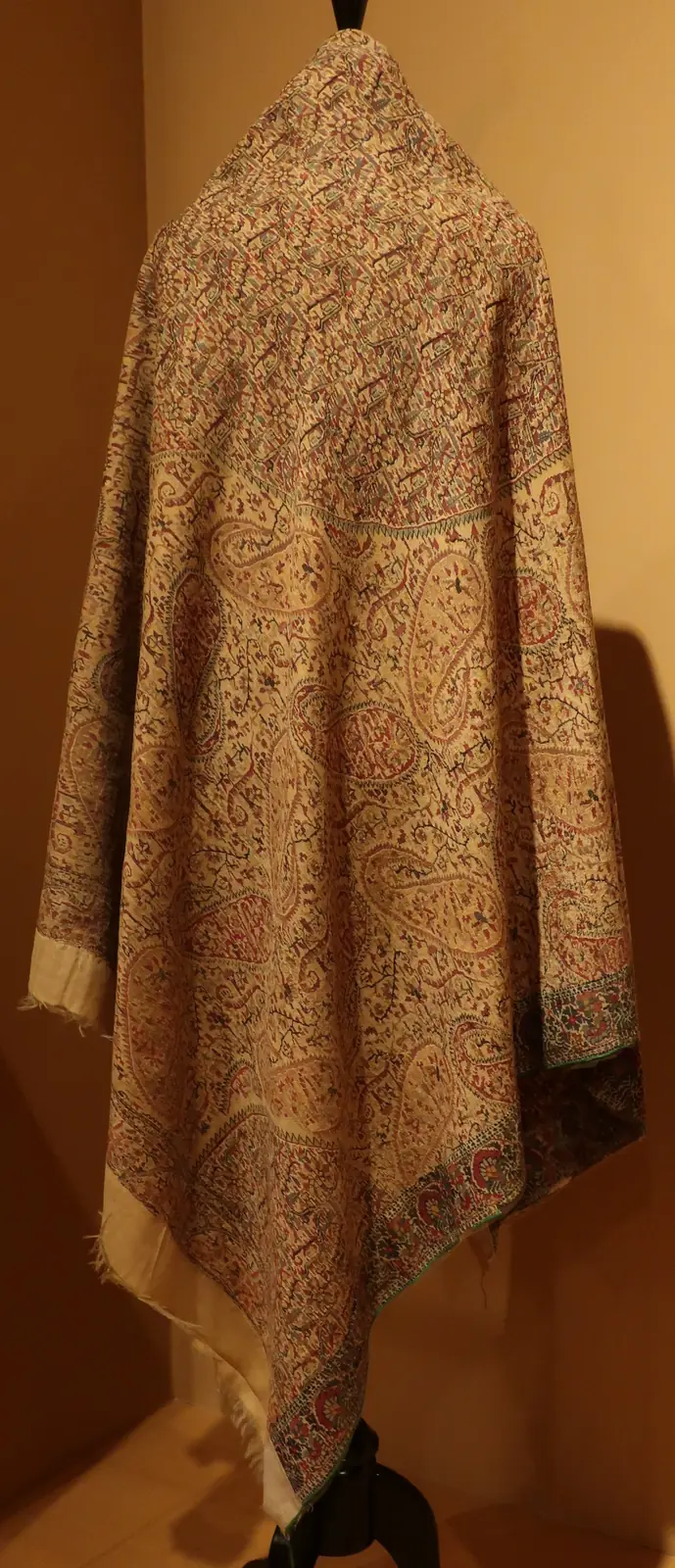
Clean out of the mud
Its roots sit in mud, yet the flower opens spotless and water runs off its leaves. The Gita (5.10) uses this: one who acts without attachment is untouched by sin, as a lotus leaf by water.

पद्म
It rises clean out of the mud and opens to the sun, the seat of the devas and the flower of creation.
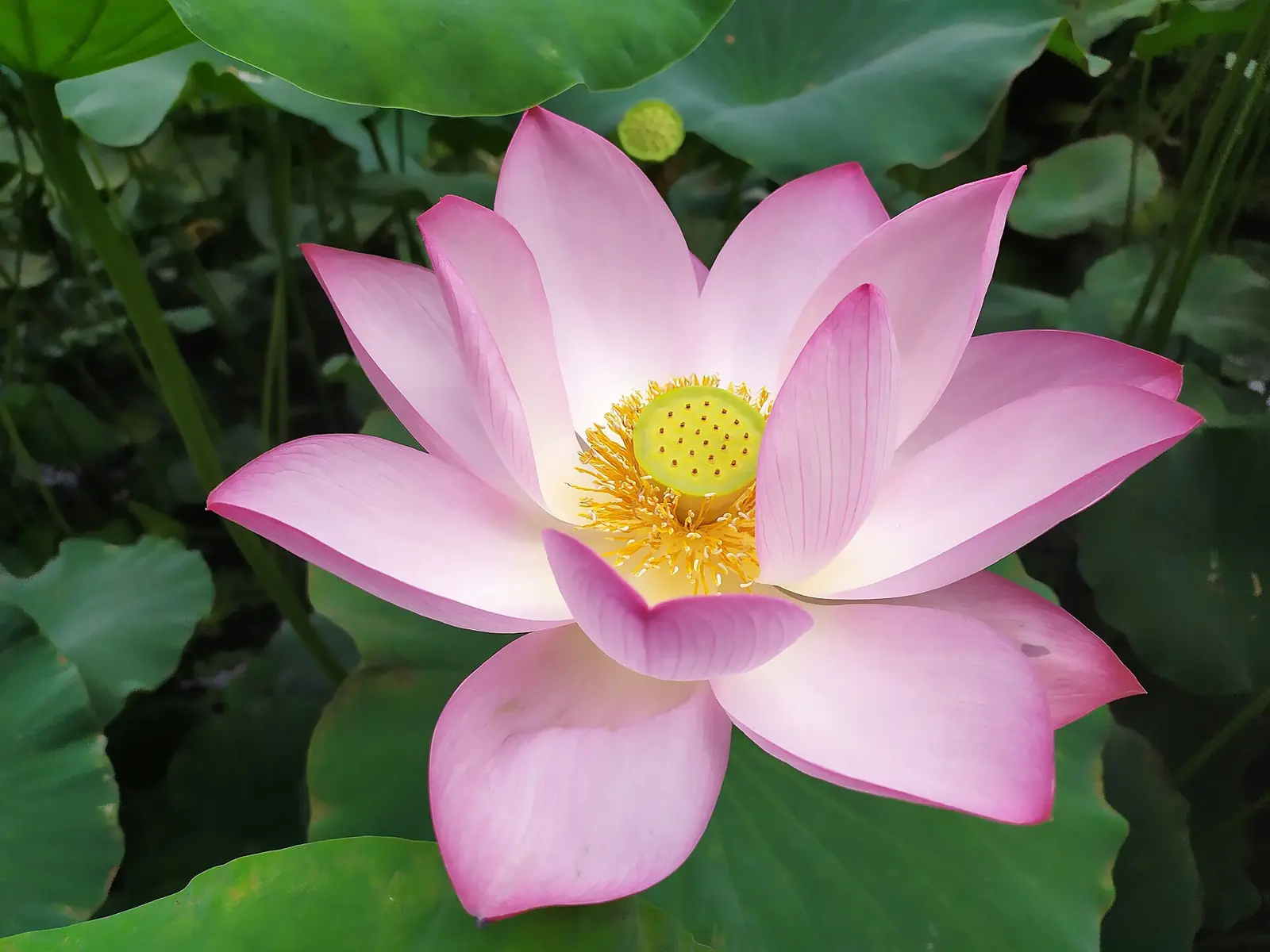
Its roots sit in mud, yet the flower opens spotless and water runs off its leaves. The Gita (5.10) uses this: one who acts without attachment is untouched by sin, as a lotus leaf by water.
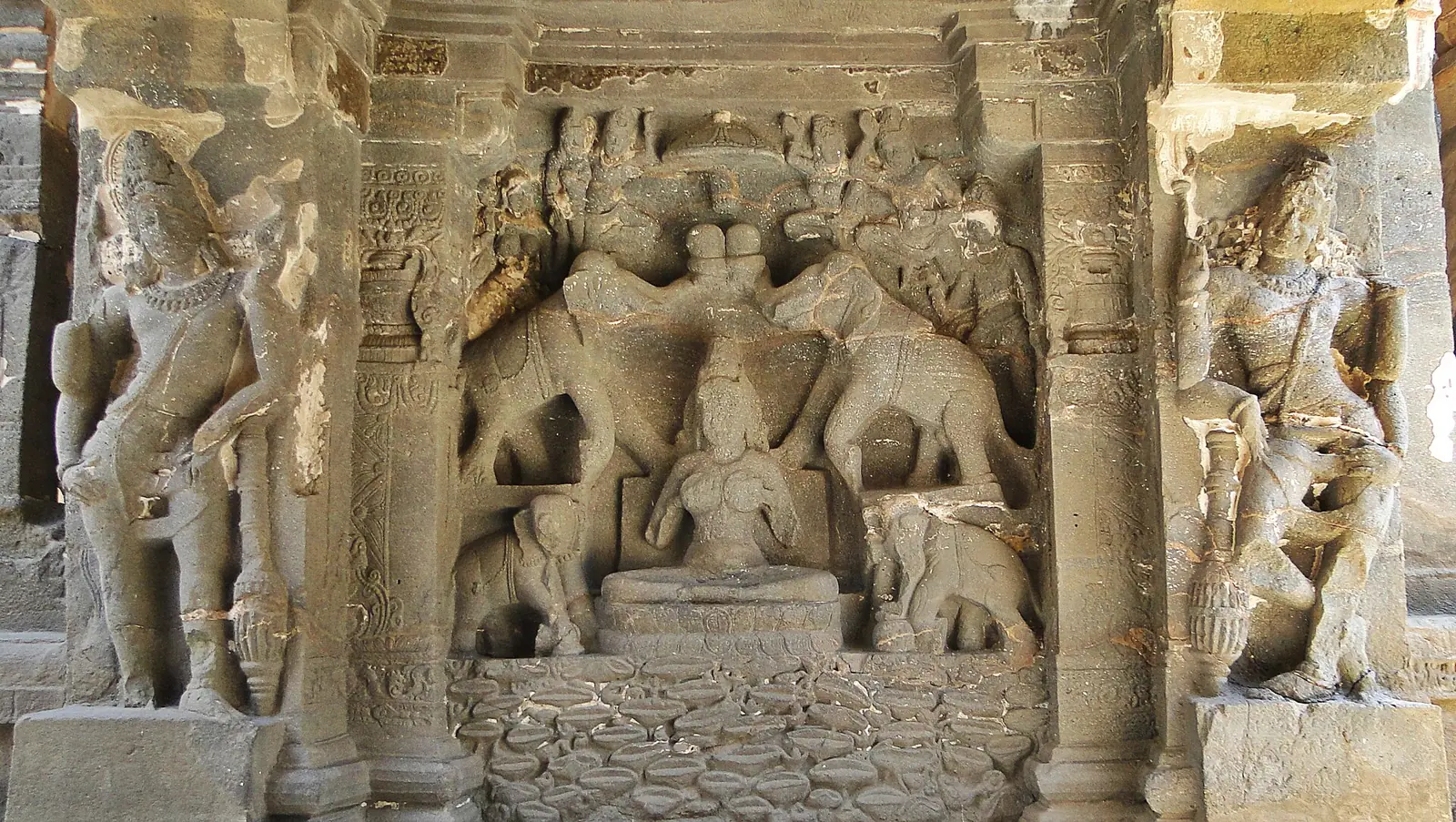
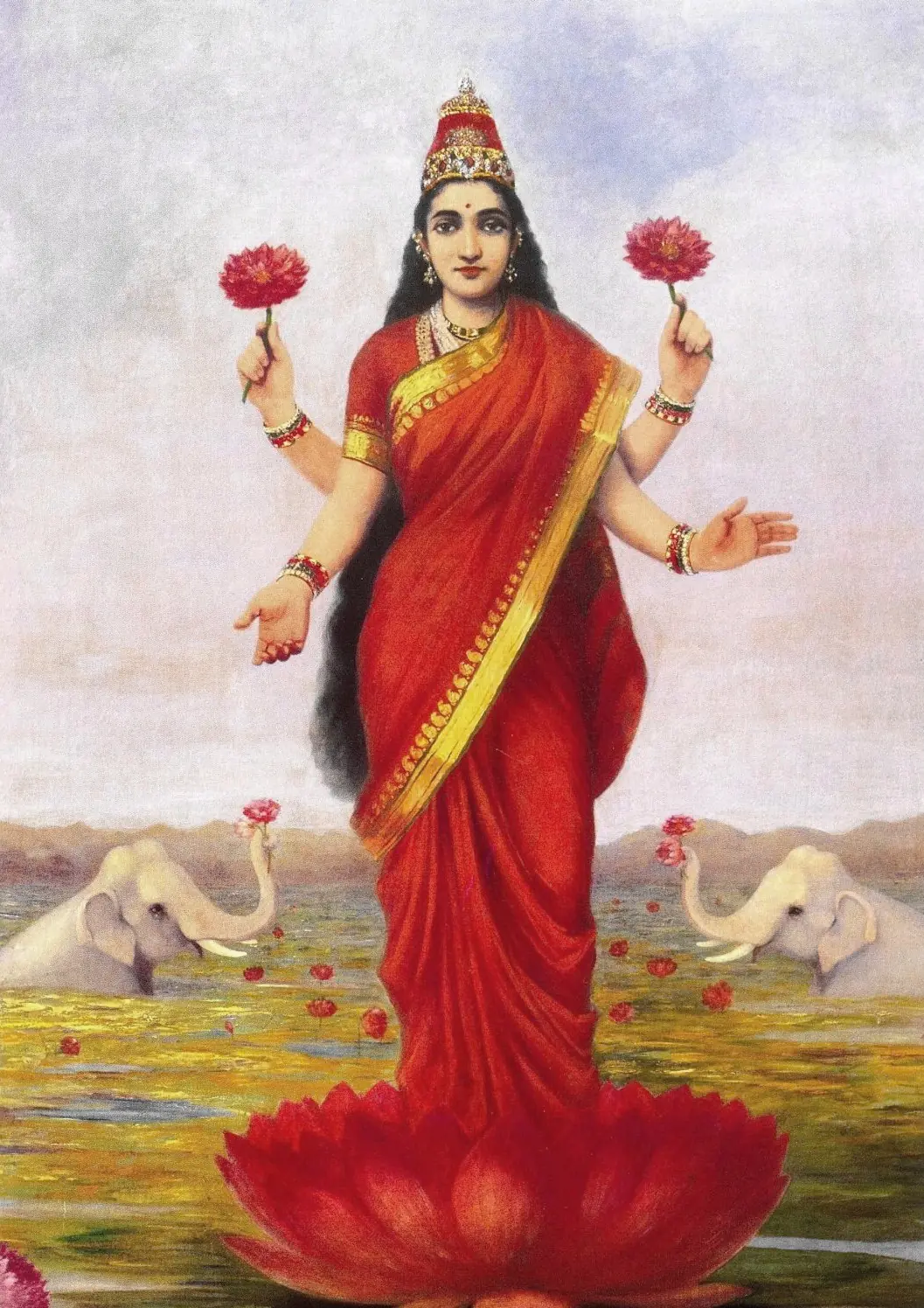
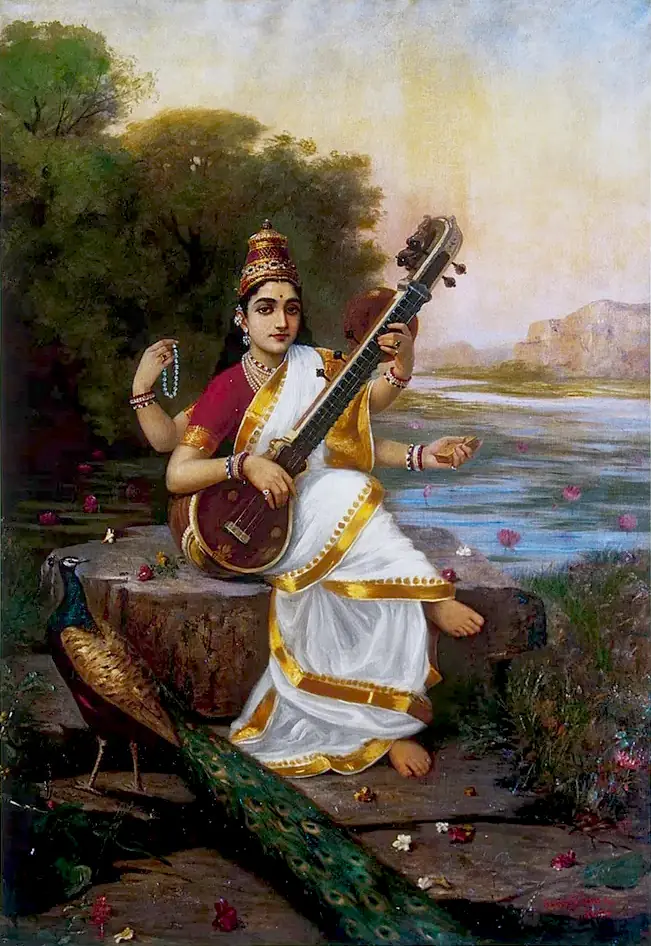
The Shri Sukta calls Lakshmi lotus-coloured and lotus-seated. She stands on one, holds two, and Brahma and Saraswati sit on lotuses too. A murti's pedestal is often carved as an opened lotus for this reason.
Yoga maps the subtle body as lotuses (chakras) that open one by one, from four petals at the base of the spine to the thousand-petalled sahasrara at the crown.
Move the slider through the petal counts that texts and diagrams name. The drawing is a simple illustration of each count, not a ritual diagram.
8 petals · Ashtadala
Eight petals: the eight directions, the lotus of most yantras and temple ceilings.
Between ages, Bhagwan Vishnu lies on Ananta Shesha upon the waters. A lotus rises from his navel, and Brahma, seated in it, begins creation. Hence his name Padmanabha, the lotus-navelled, worshipped in the great temple at Thiruvananthapuram.
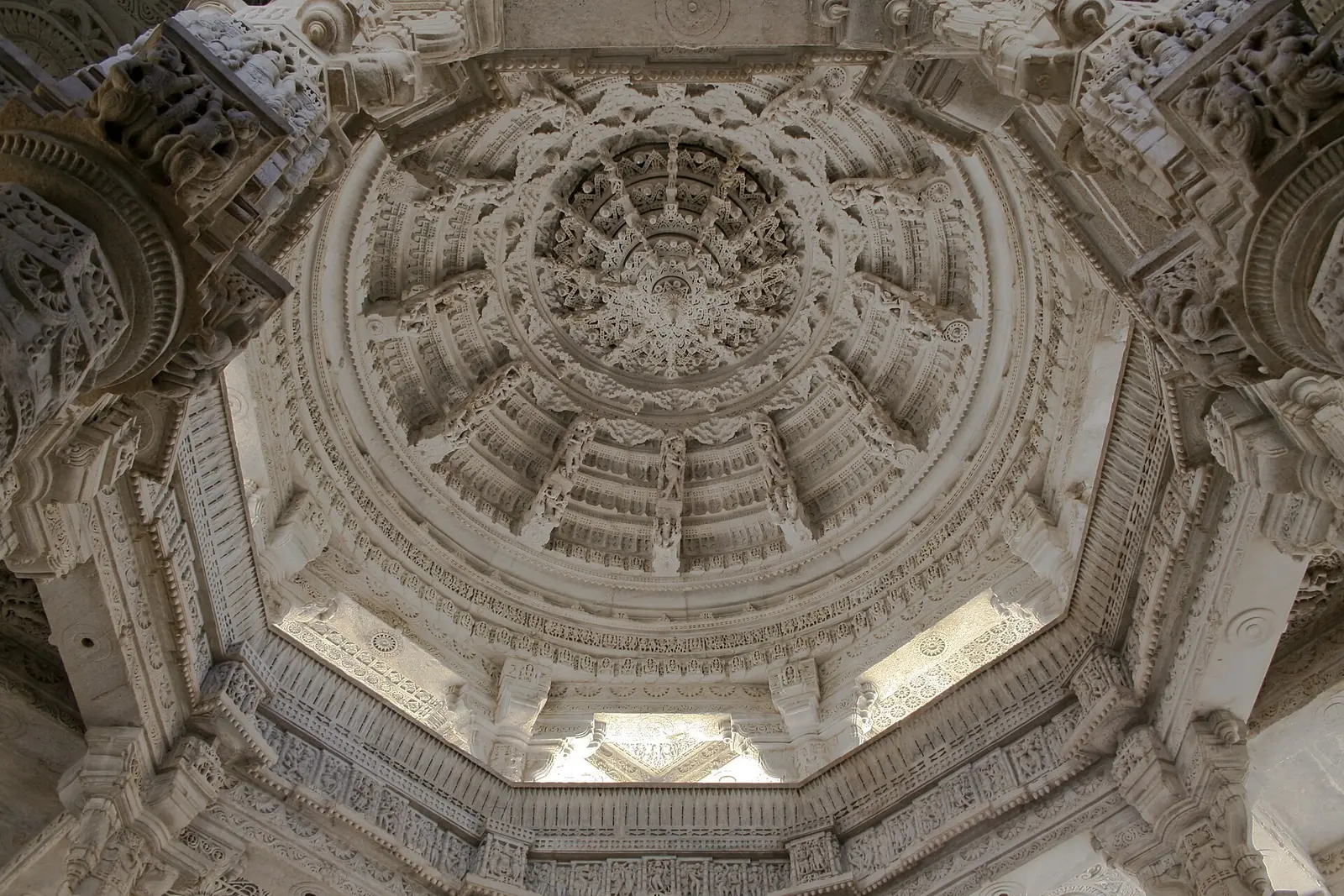
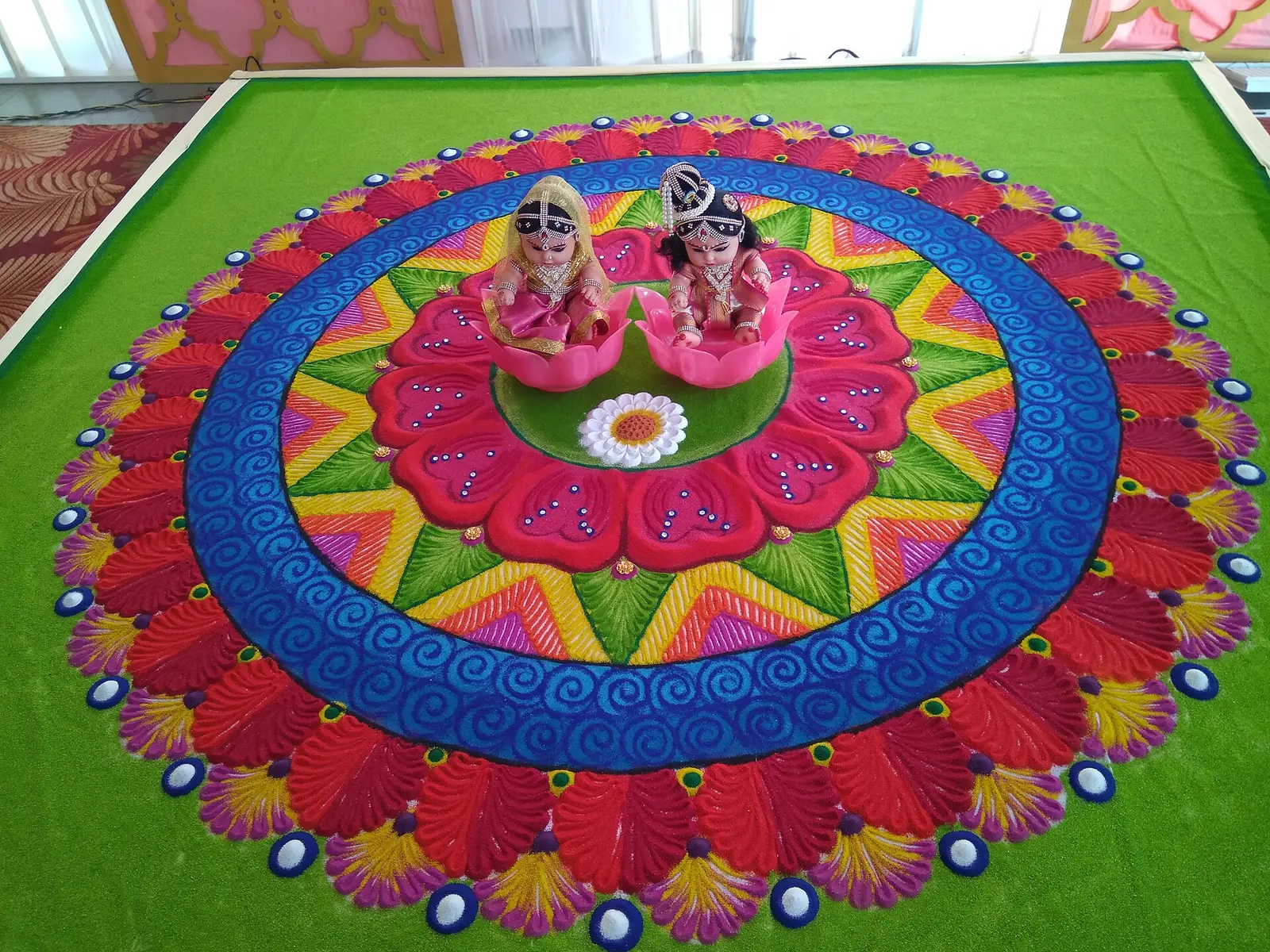
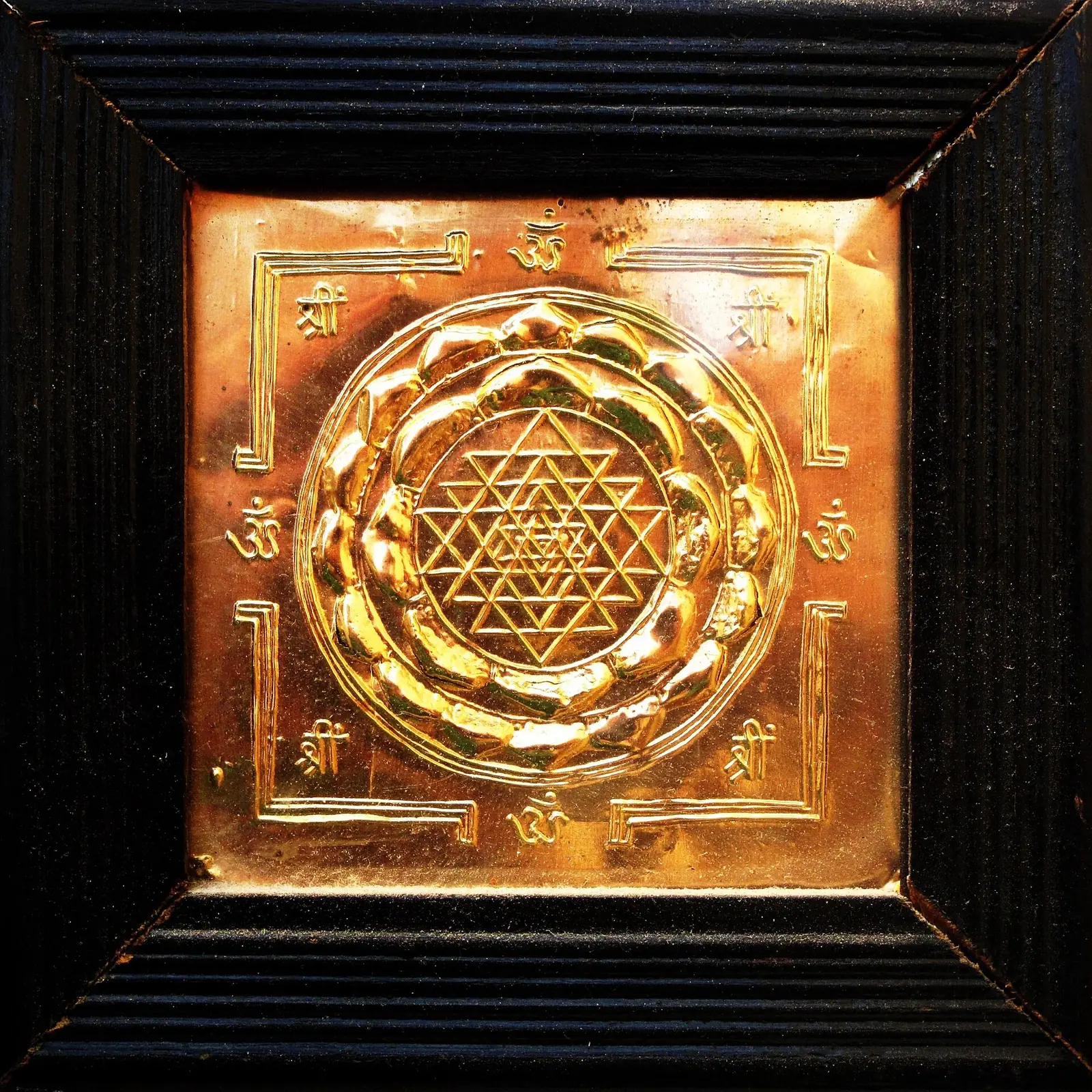
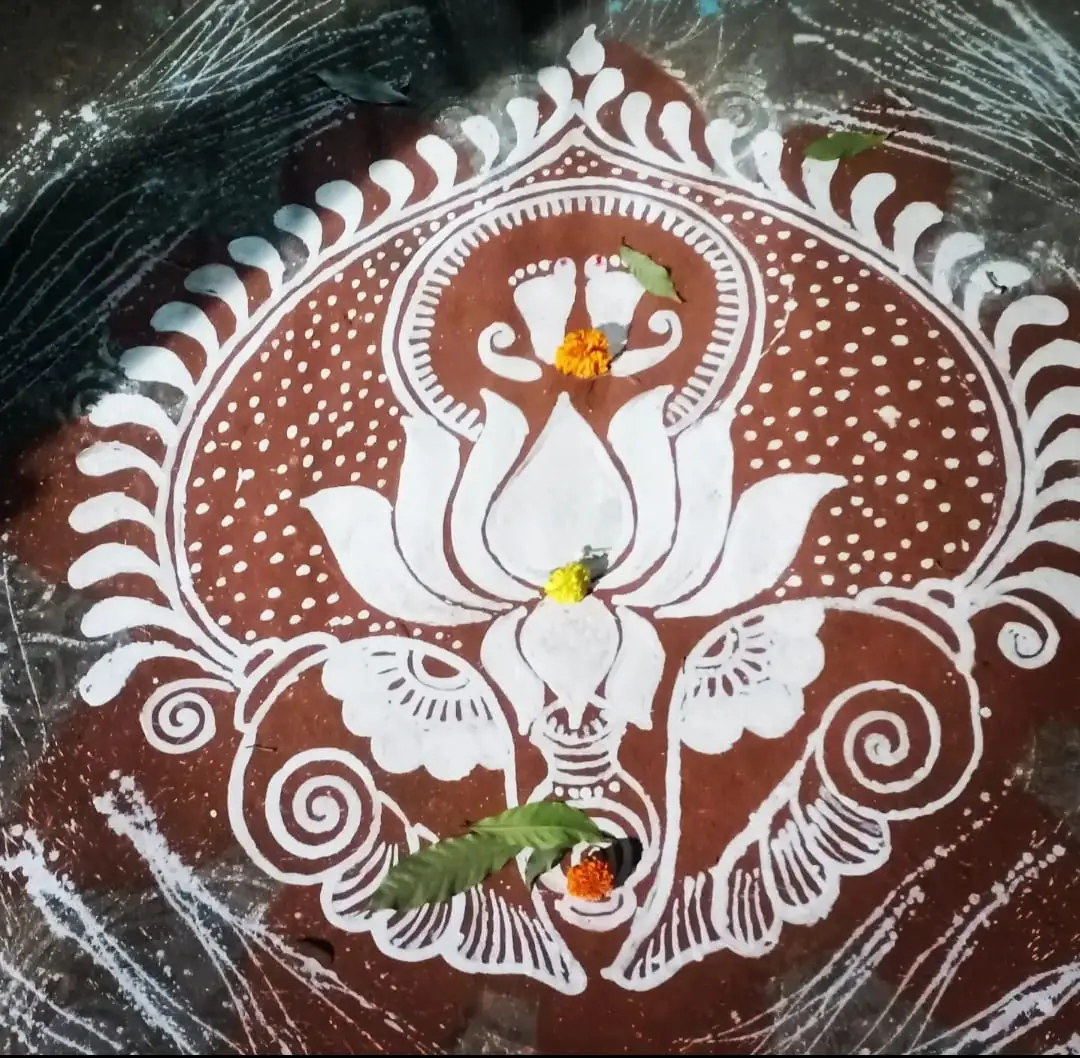
For Kojagari Lakshmi Puja the alpana is drawn in white rice paste, and a lotus usually sits at its centre, with Lakshmi's small footprints leading to it.
Draw a small circle for the seed pod. Mark six dots on it.
Draw eight petals between the main directions. Each petal is two curves meeting at a point.
Draw eight larger petals behind them, in the gaps. Your ashtadala padma is done.