Tussar silk
तसर सिल्क · Bhagalpur, Bihar; Jharkhand; Odisha; Bengal
The honey-coloured forest silk of Bhagalpur and the tribal belts, reared on arjun, asan and sal trees.
- FibreWild silk (Antheraea)
- TechniqueReeled, handwoven
- GI tagBhagalpur Silk, 2013
- Worn forPujas, festive wear
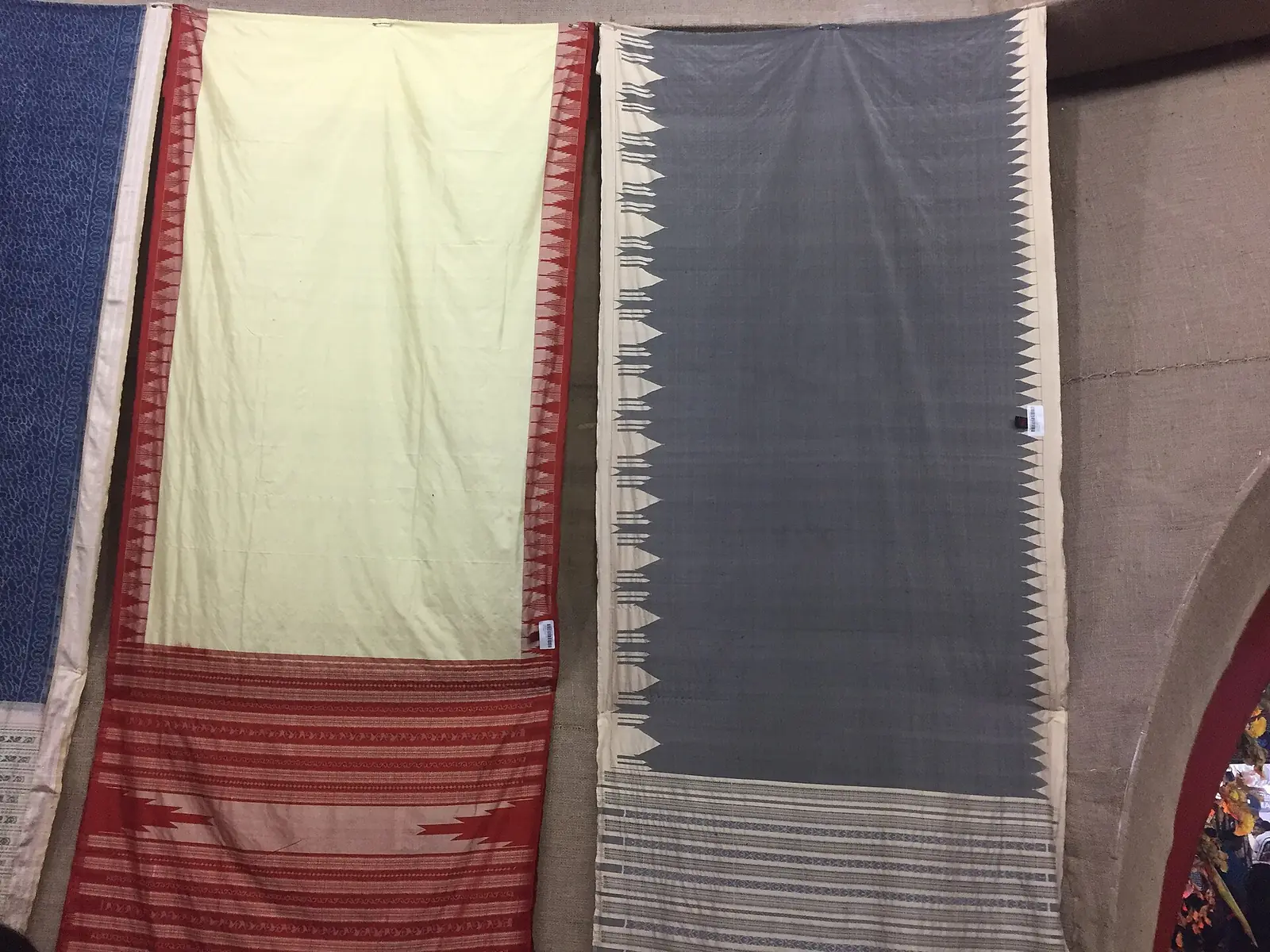
Forest cocoons, ghicha in the weft
- १
Silkworms live wild on forest trees and are gathered by forest communities.
- २
Cocoons are boiled and reeled; the natural colour is a dull gold.
- ३
The yarn is woven into saris, often with cotton or ghicha (rough tussar) mixed in.
Natural gold that takes hand-painting
१Natural goldThe fibre's own shade
२Painted or printedTussar takes hand-painting well
३Woven bordersRed or black bands
Coarse texture, uneven threads
- Tussar has a textured, slightly coarse surface and a soft gold sheen.
- Its threads are uneven compared with mulberry silk.
Kosa, and the silk city Bhagalpur
- SanskritKosa
In Sanskrit the cocoon is kosa; tussar is also called kosa silk in Chhattisgarh.
- Silk cityBhagalpur
Bhagalpur, on the Ganga, is called the silk city; Champanagar and Nathnagar are its weaving quarters.
- 2013GI tag
"Bhagalpur Silk Fabrics & Sarees" registered, certificate 15 January 2013. Odisha's Gopalpur Tussar was tagged in 2012.
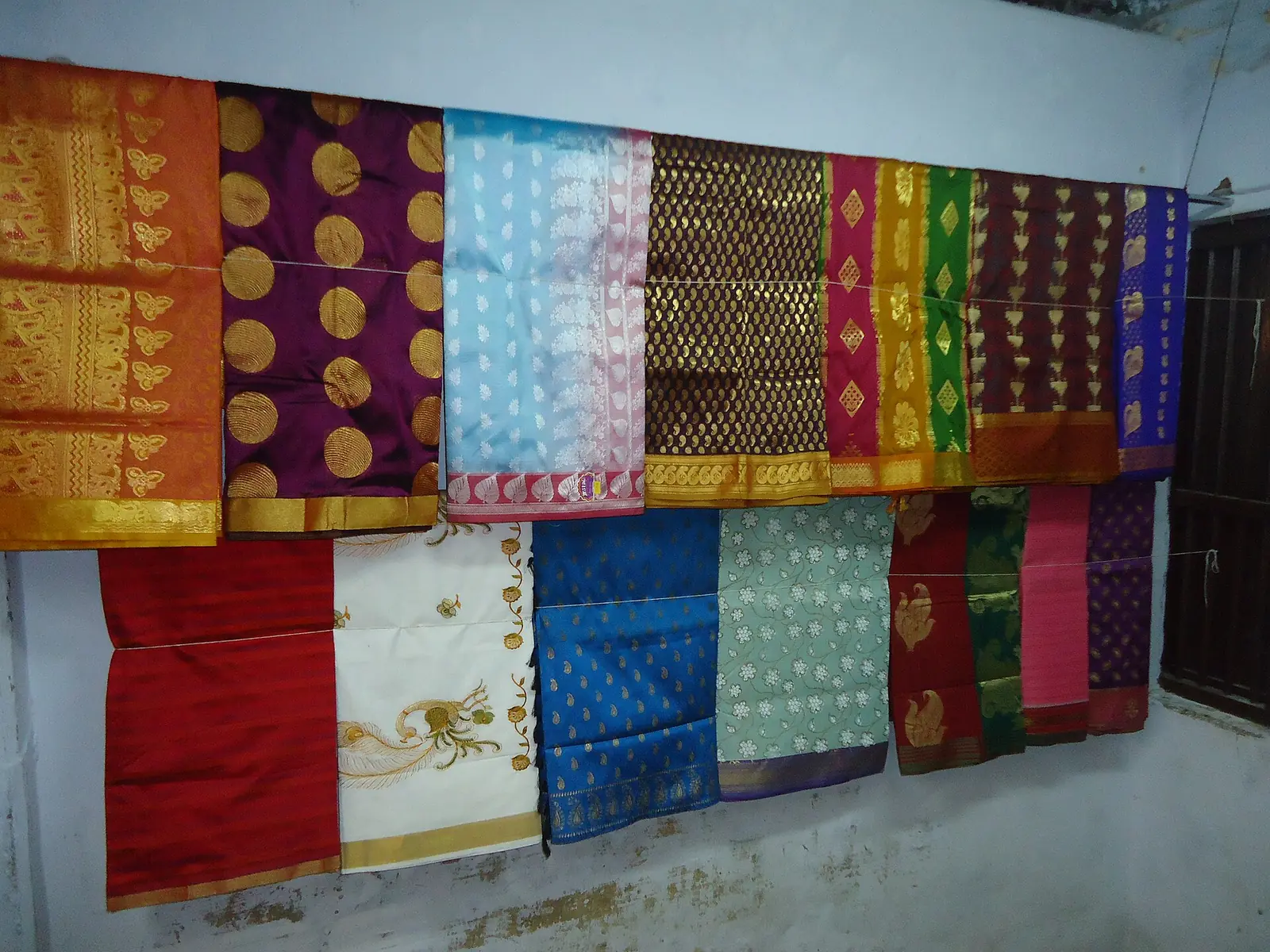
Saris at Phulia, Nadia