The Bhagavata
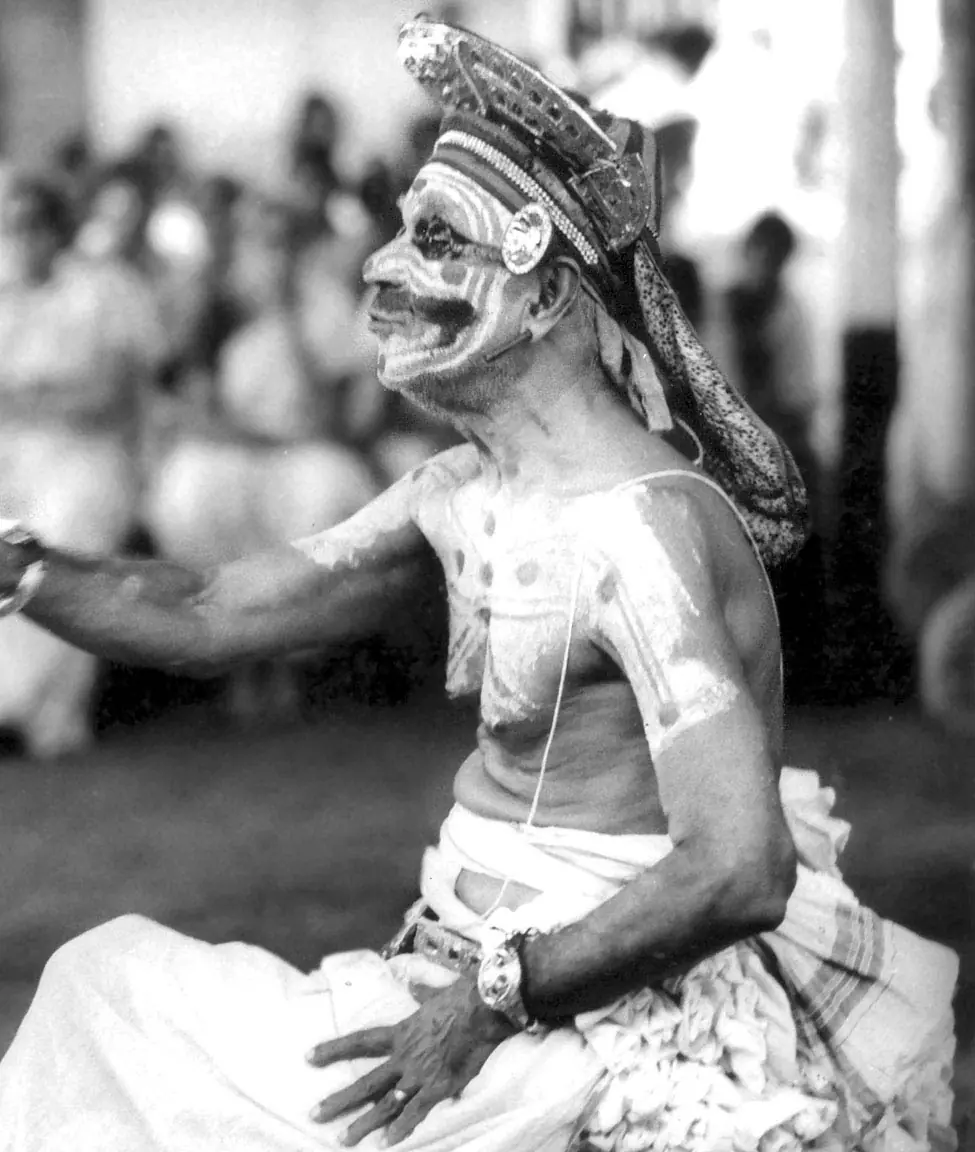
The lead singer and director of the night. He sings the prasanga, the play text, and the actors improvise their spoken lines around it.

यक्षगान
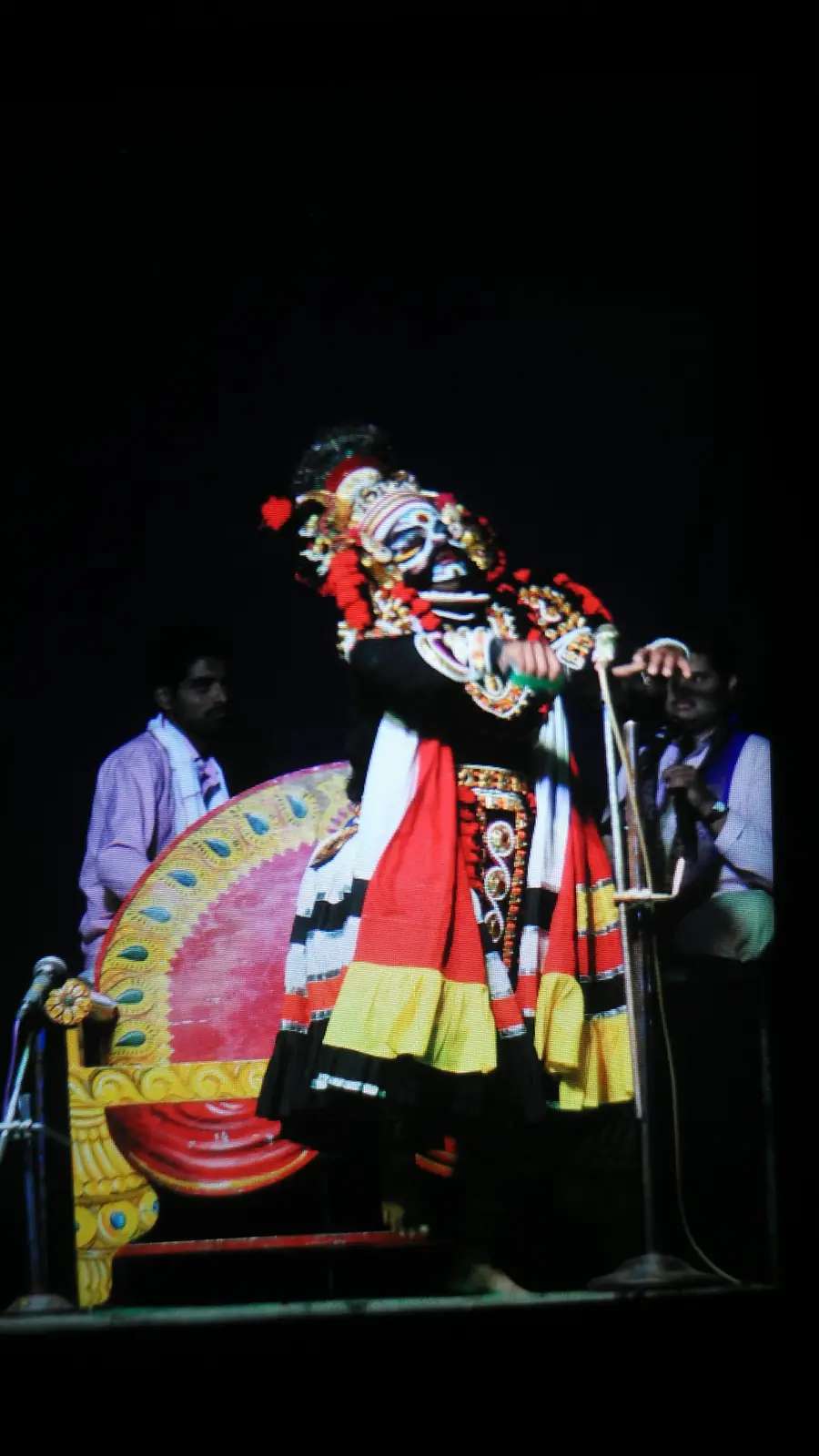
Night-long epic theatre of coastal Karnataka, with towering headdresses, a singing Bhagavata and drums that carry across the paddy fields.
The lead singer and director of the night. He sings the prasanga, the play text, and the actors improvise their spoken lines around it.
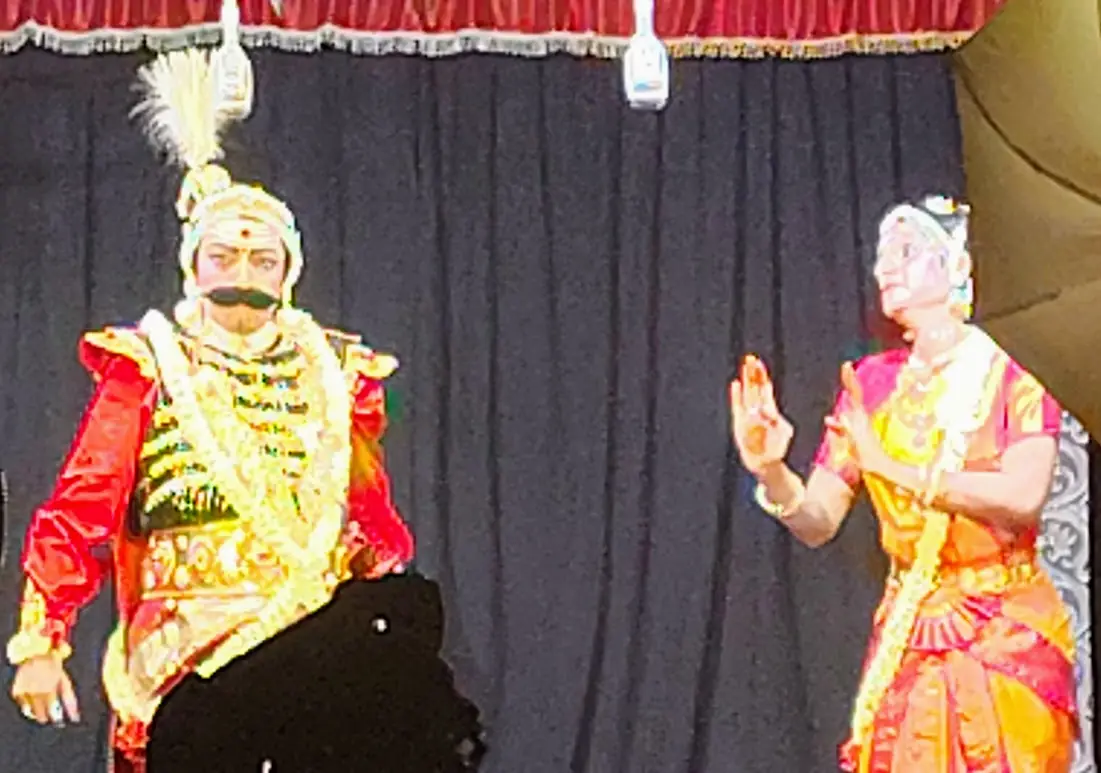
The himmela is the back row of singer and drummers; the mummela is the front row of actors who dance and speak.
Tenku tittu, the southern style, is centred around Kasaragod and Dakshina Kannada; Badagu tittu, the northern, around Udupi and Uttara Kannada.
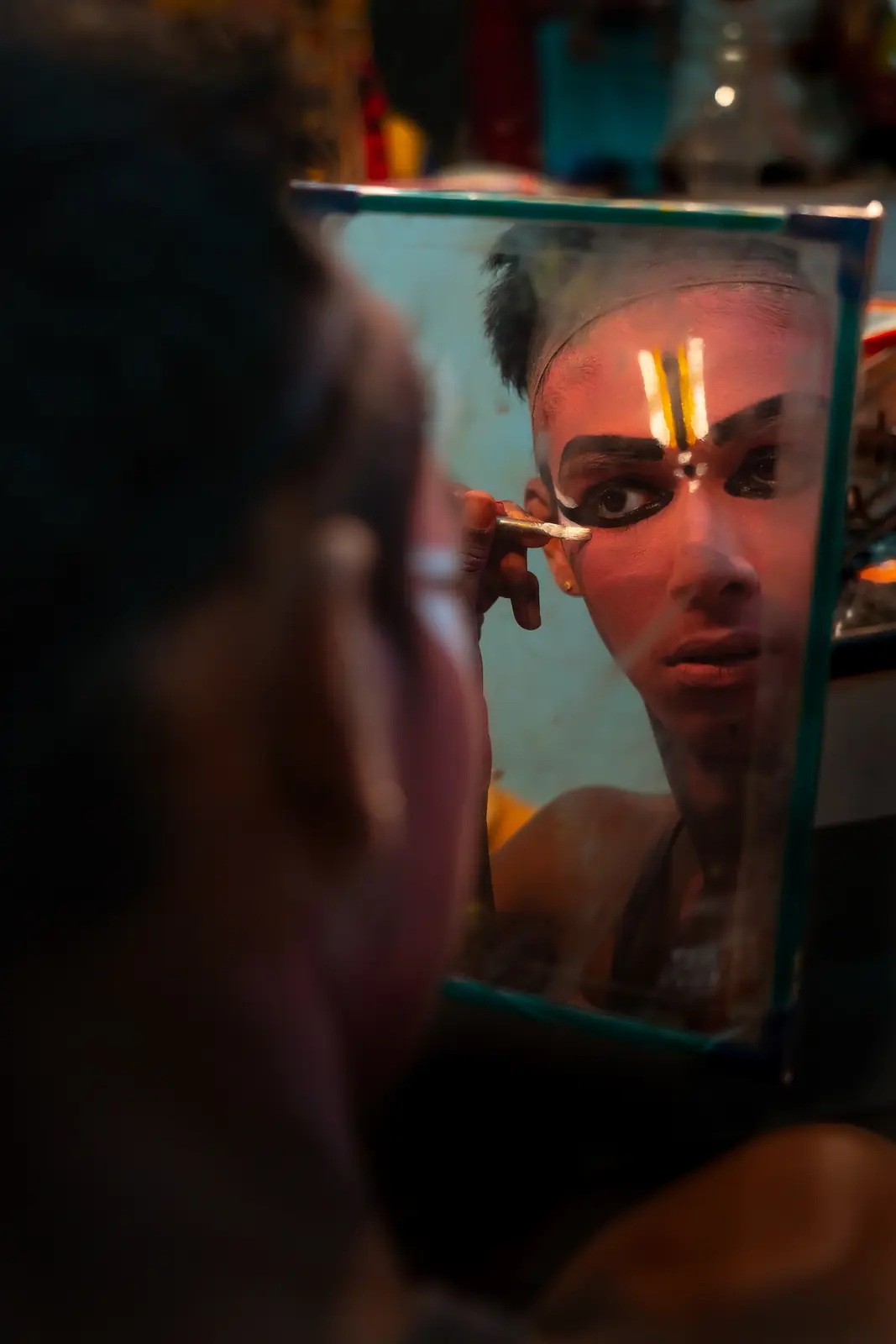
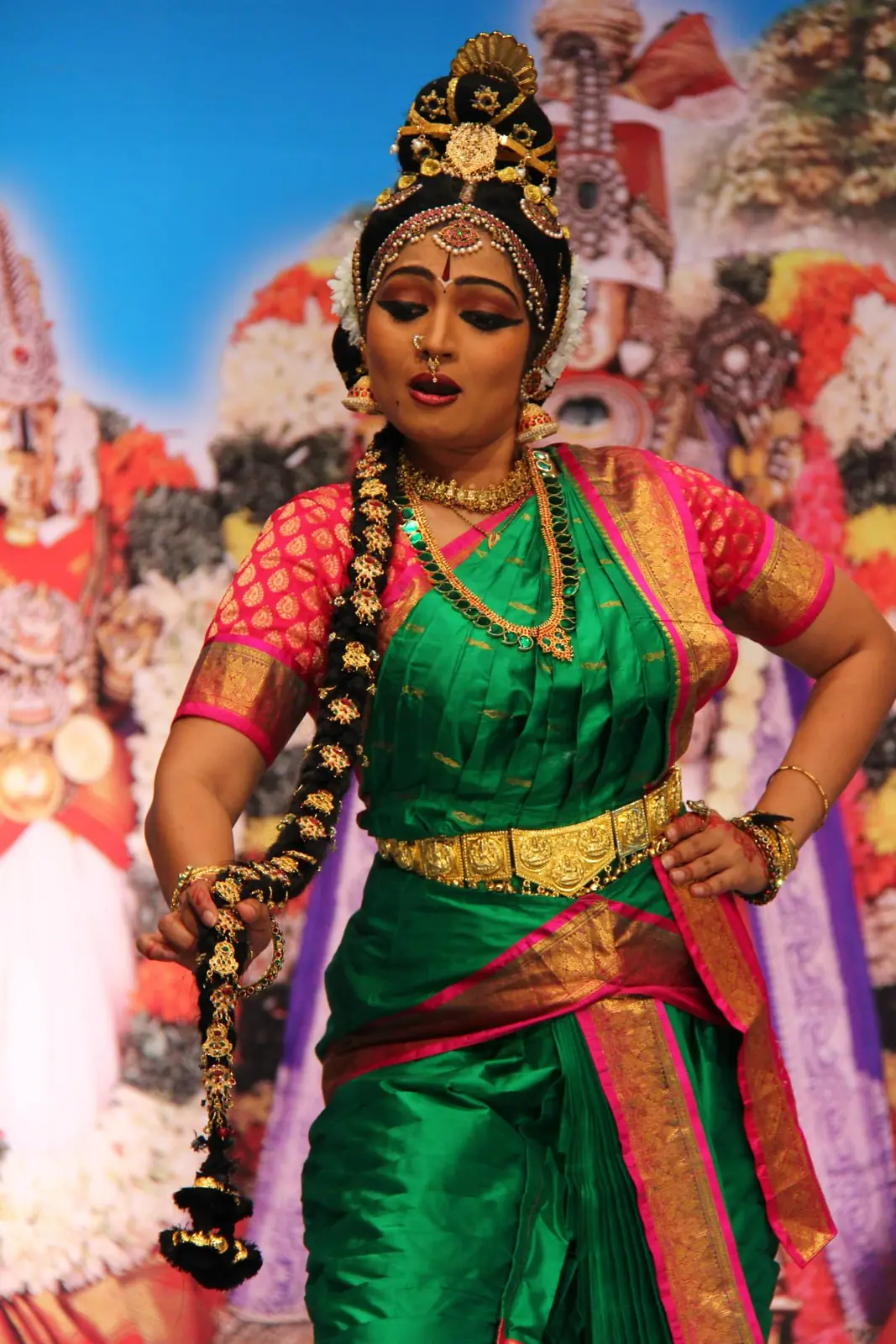
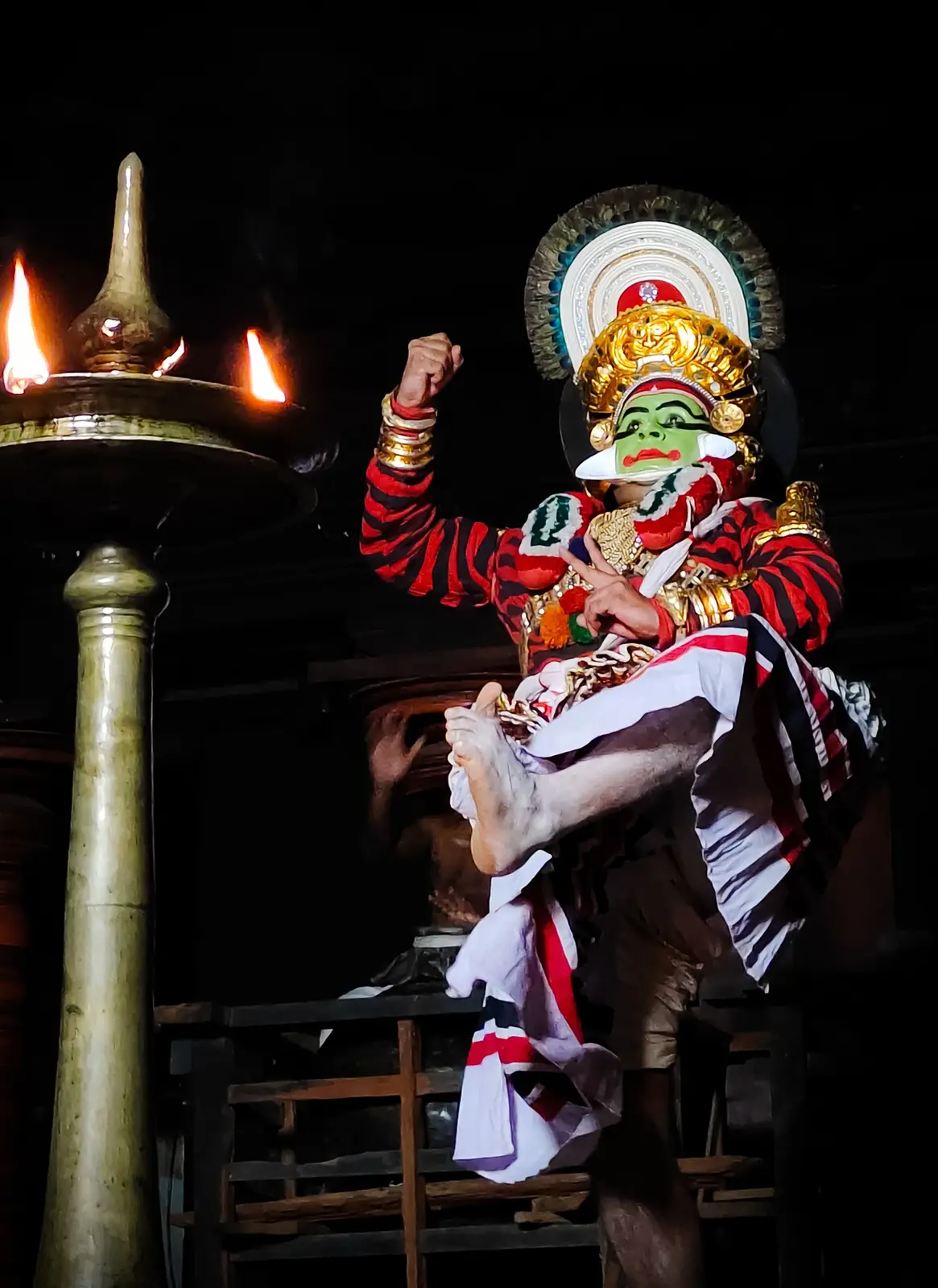
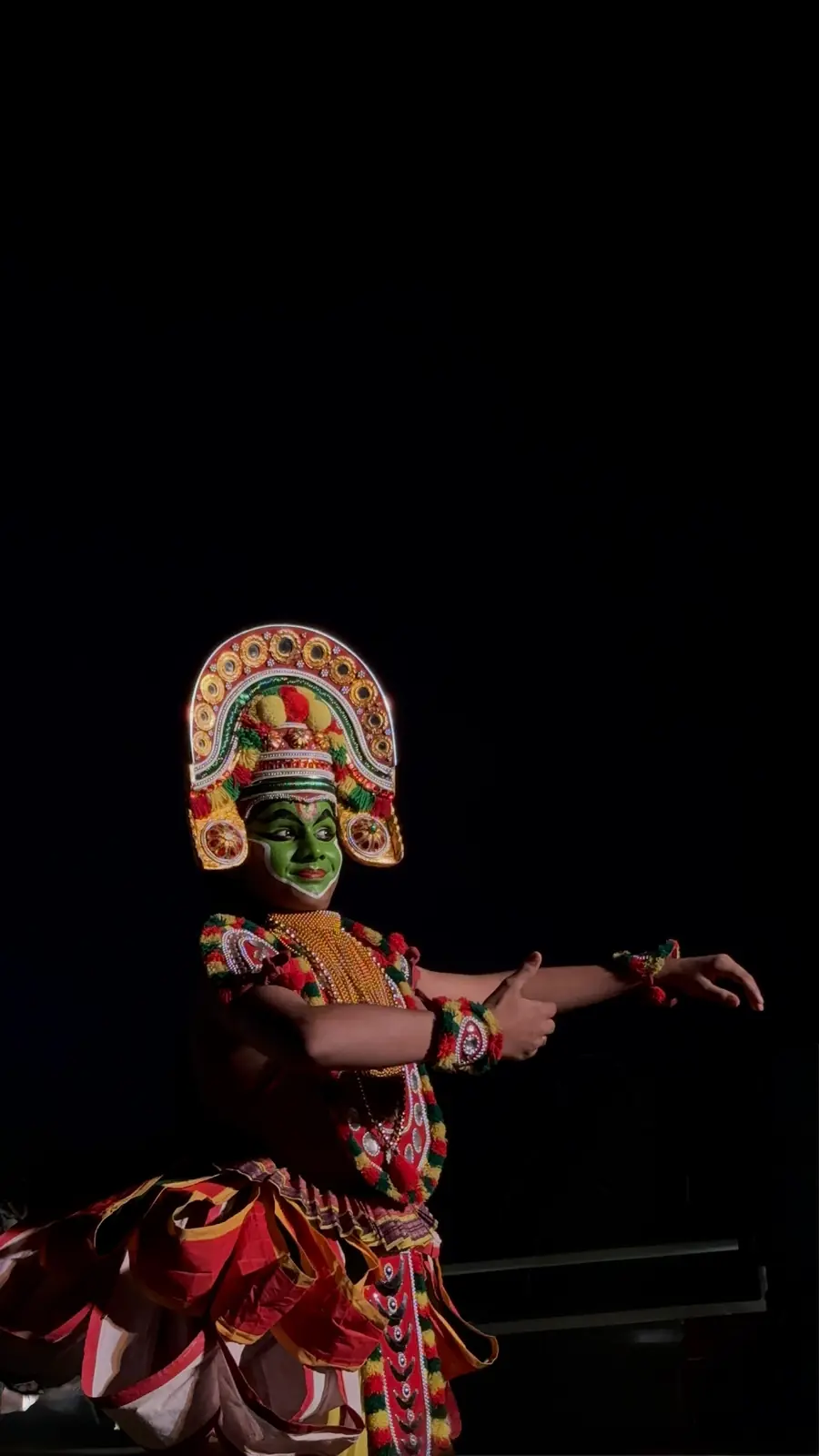
Huge kirita crowns, wide padded skirts, wooden ornaments covered in gold foil and mirror. Each character’s make-up follows a fixed type.
A seated form with no costume or dance: the actors argue the episode in spoken Kannada to the singing and the maddale.
Scholars place the growth of Yakshagana between the 11th and 16th centuries, from the singing of the epics in temples.
Kannada tradition credits the poet Parthi Subba with Ramayana prasangas. His dates are still argued over.