Sanskrit plays
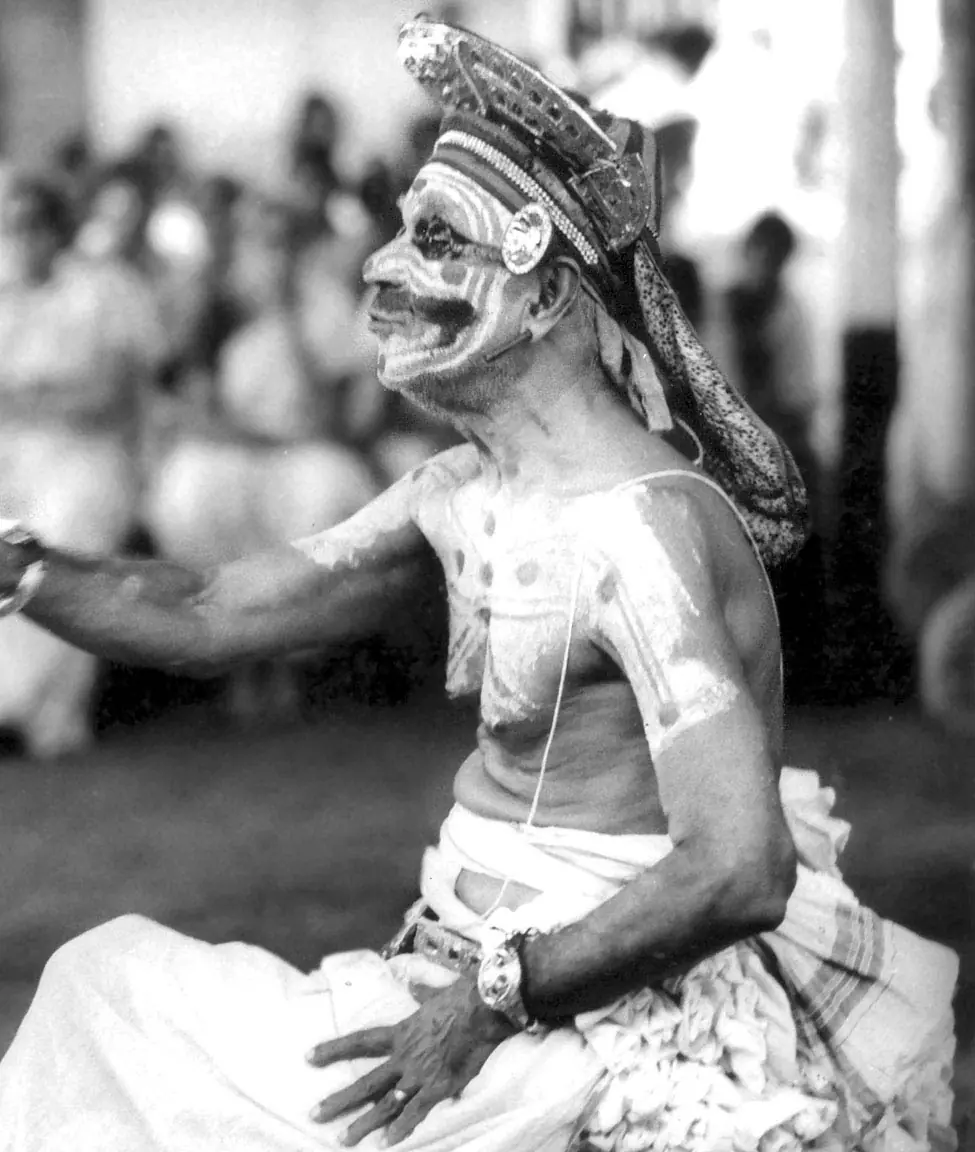
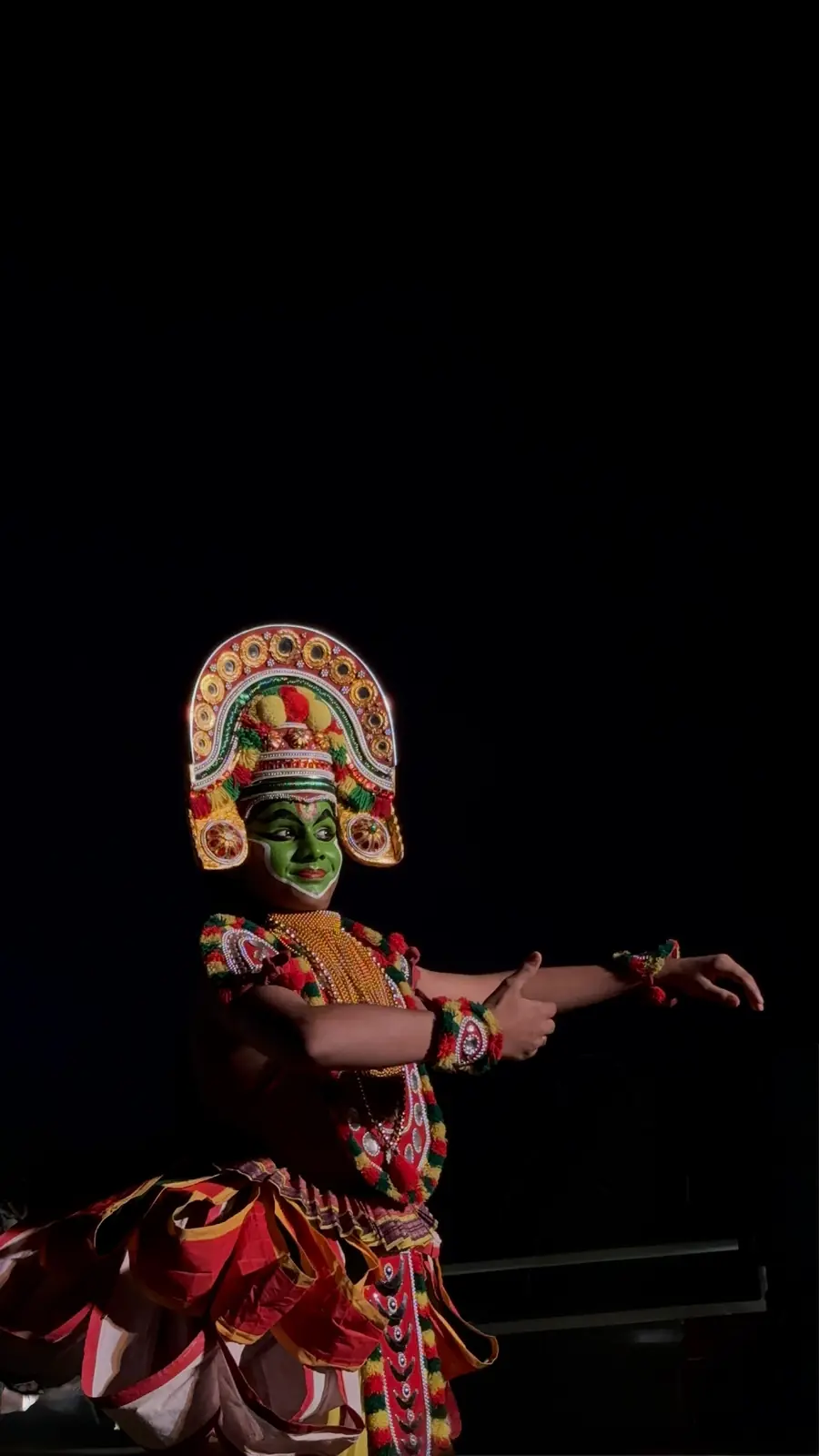
The texts are classical Sanskrit dramas, such as those of Bhasa and Kulashekhara. The Vidushaka, the jester, speaks in Malayalam and explains.

कूडियाट्टम
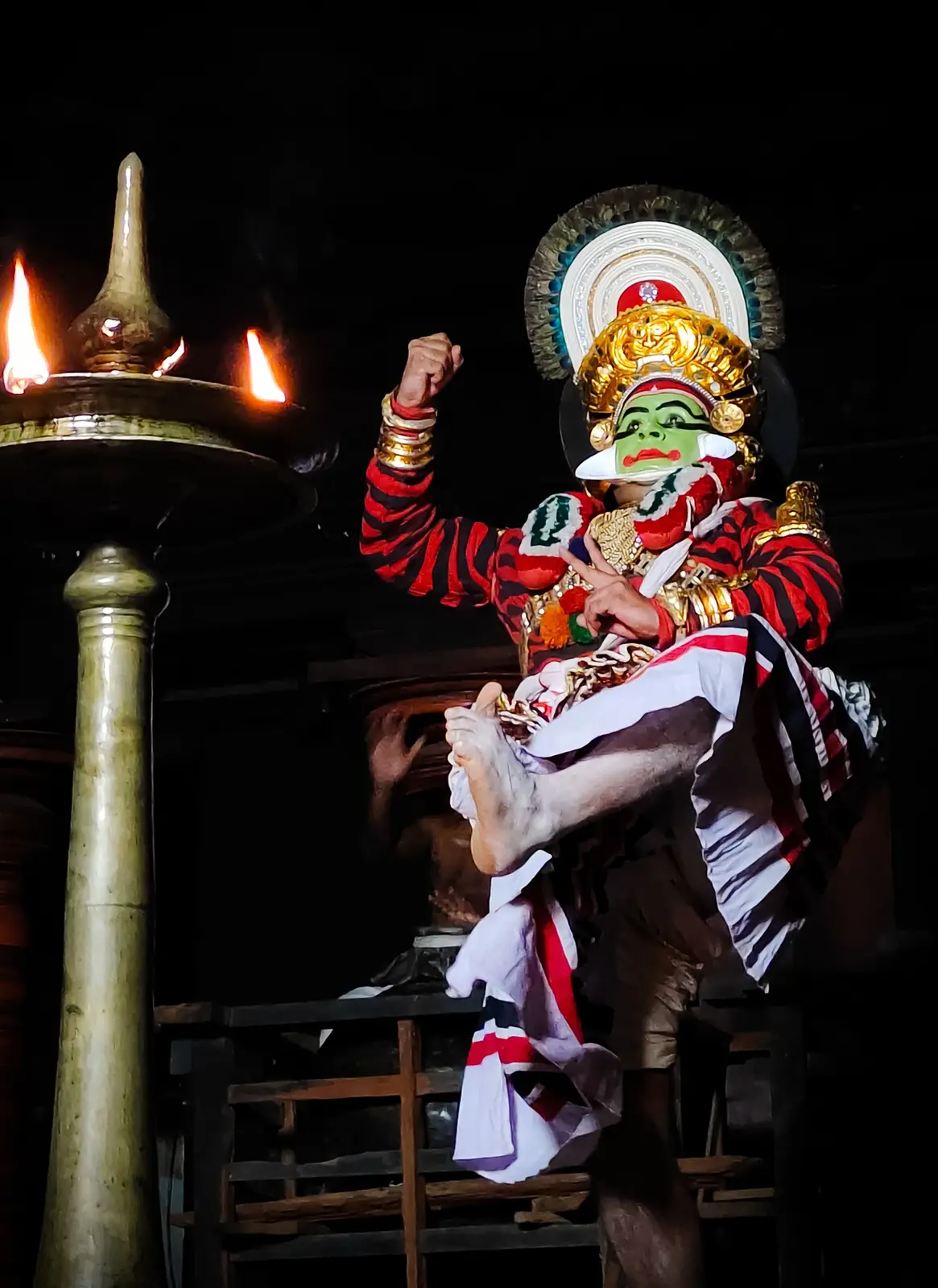
Sanskrit drama kept alive in Kerala’s temple theatres, where one verse can take a whole night to act.
The texts are classical Sanskrit dramas, such as those of Bhasa and Kulashekhara. The Vidushaka, the jester, speaks in Malayalam and explains.
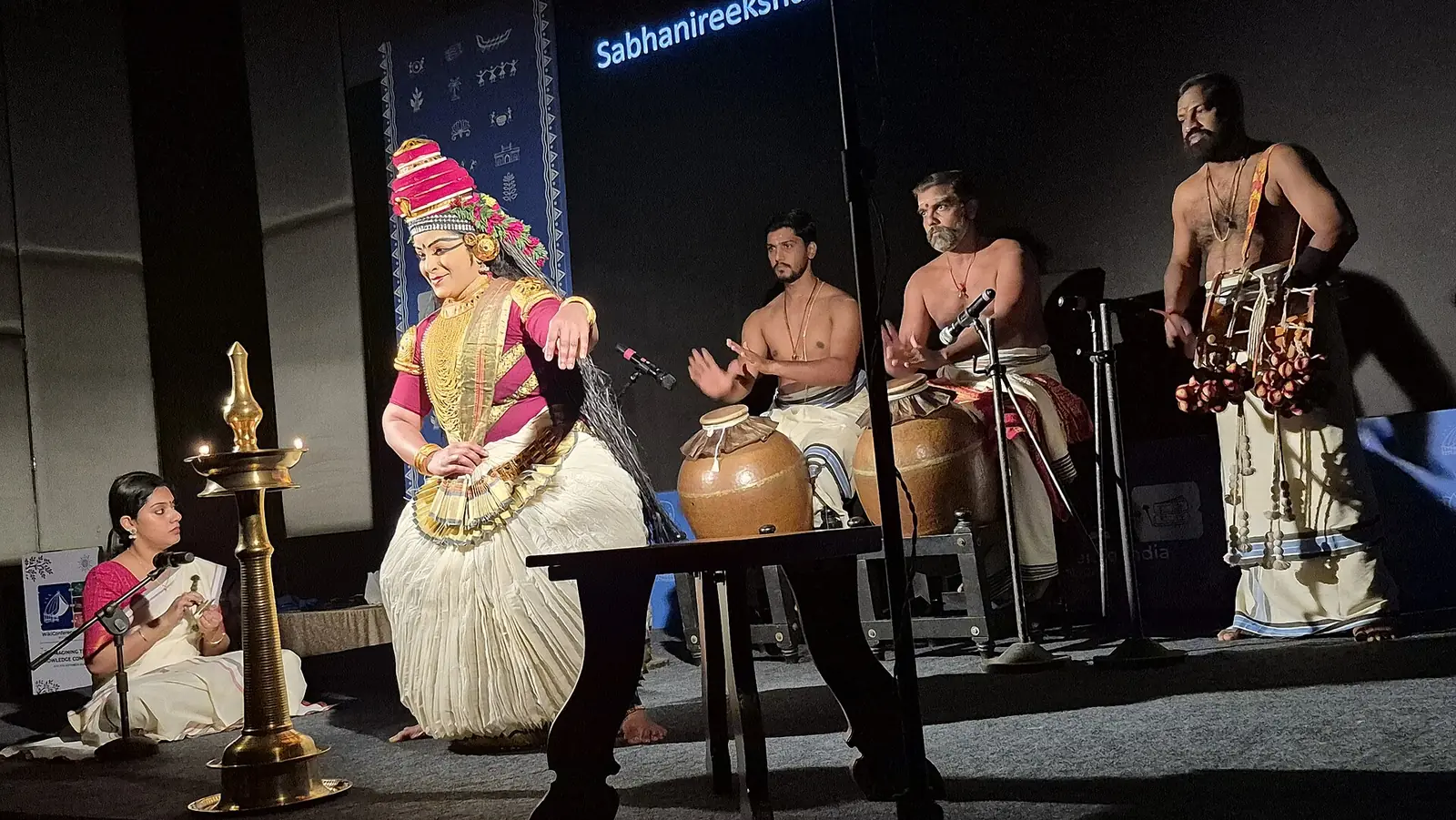
Acting with the eyes alone, trained for years. The actor can show a bee moving from flower to flower with the eyes.
One act may be played over many nights. The actor steps out of the story to show what led to it, in long passages of pure abhinaya.
Played by the Nambiars, the mizhavu is a large copper pot drum set in a wooden frame, played with the palms. Women of the community, the Nangiars, sing and play the cymbals.
Koodiyattam was played inside koothambalams, theatres within temple walls, as worship.
Koodiyattam was among the first forms proclaimed a Masterpiece of the Oral and Intangible Heritage of Humanity in May 2001.