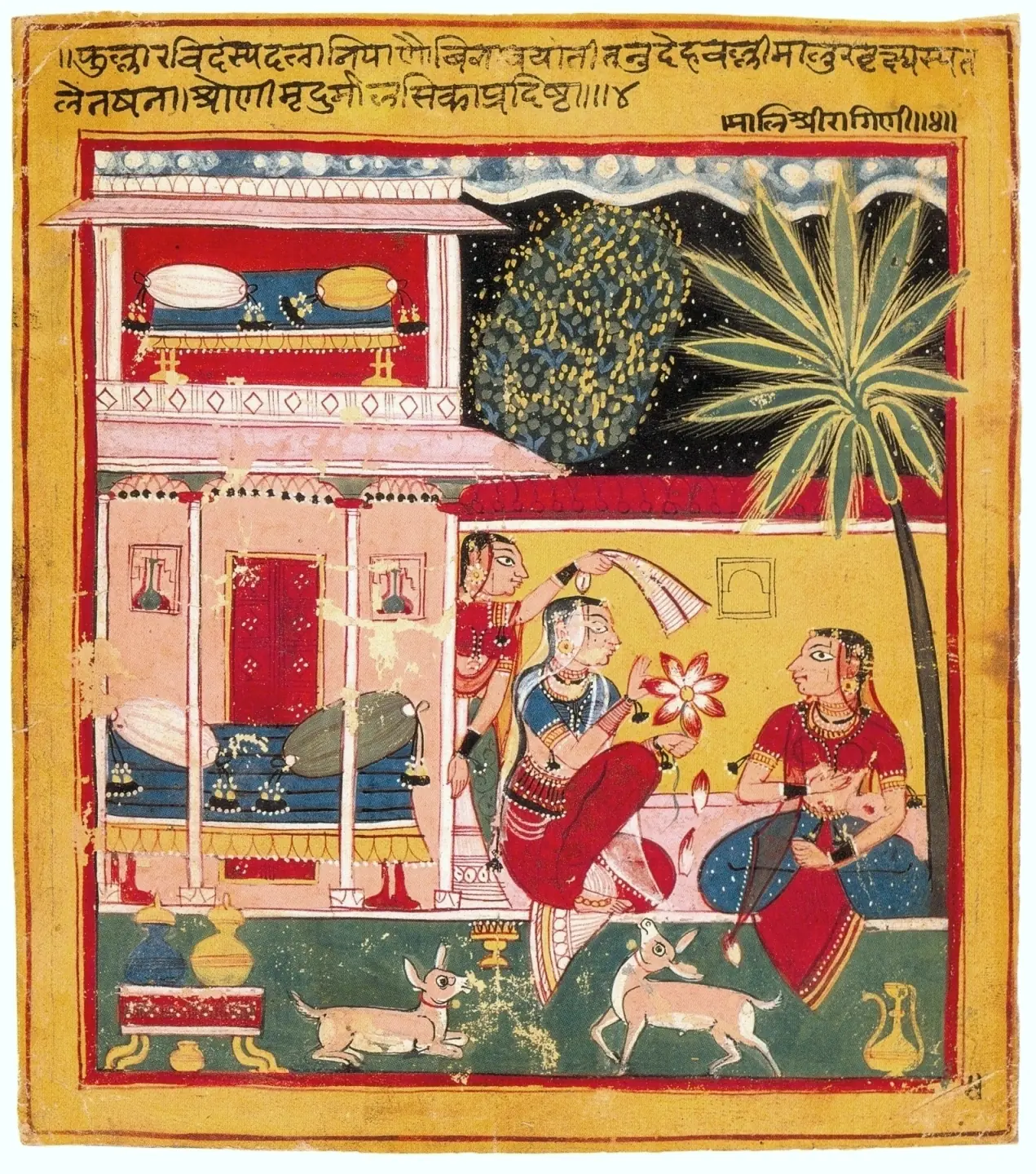
The early capital, where Nasiruddin painted the Ragamala of 1605.
Mewar
मेवाड़ चित्रशैली
The oldest and most steadfast of the Rajput courts, painting Ragamala and Ramayana in bright flat colour from Chawand to Udaipur.
- Also calledUdaipur painting
- FromThe Mewar court, Rajasthan
- Period1605 to the 19th century
- Famous forThe Chawand Ragamala; Sahibdin's Ramayana
Two capitals and a temple town
The court of Jagat Singh I and his heirs; epics, portraits, festivals.
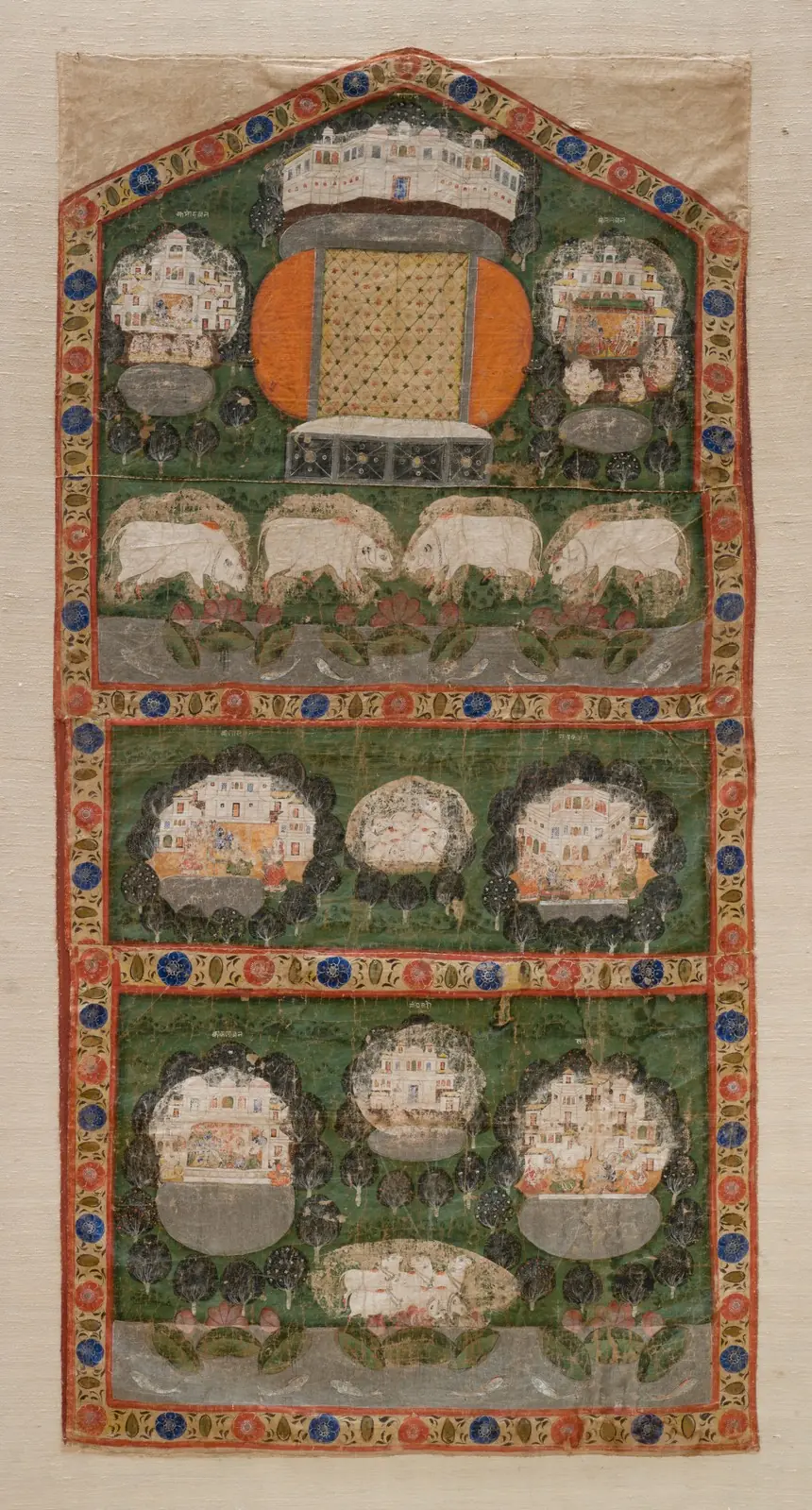
Temple painting for Shrinathji, the source of pichwai.
Ragas and processions
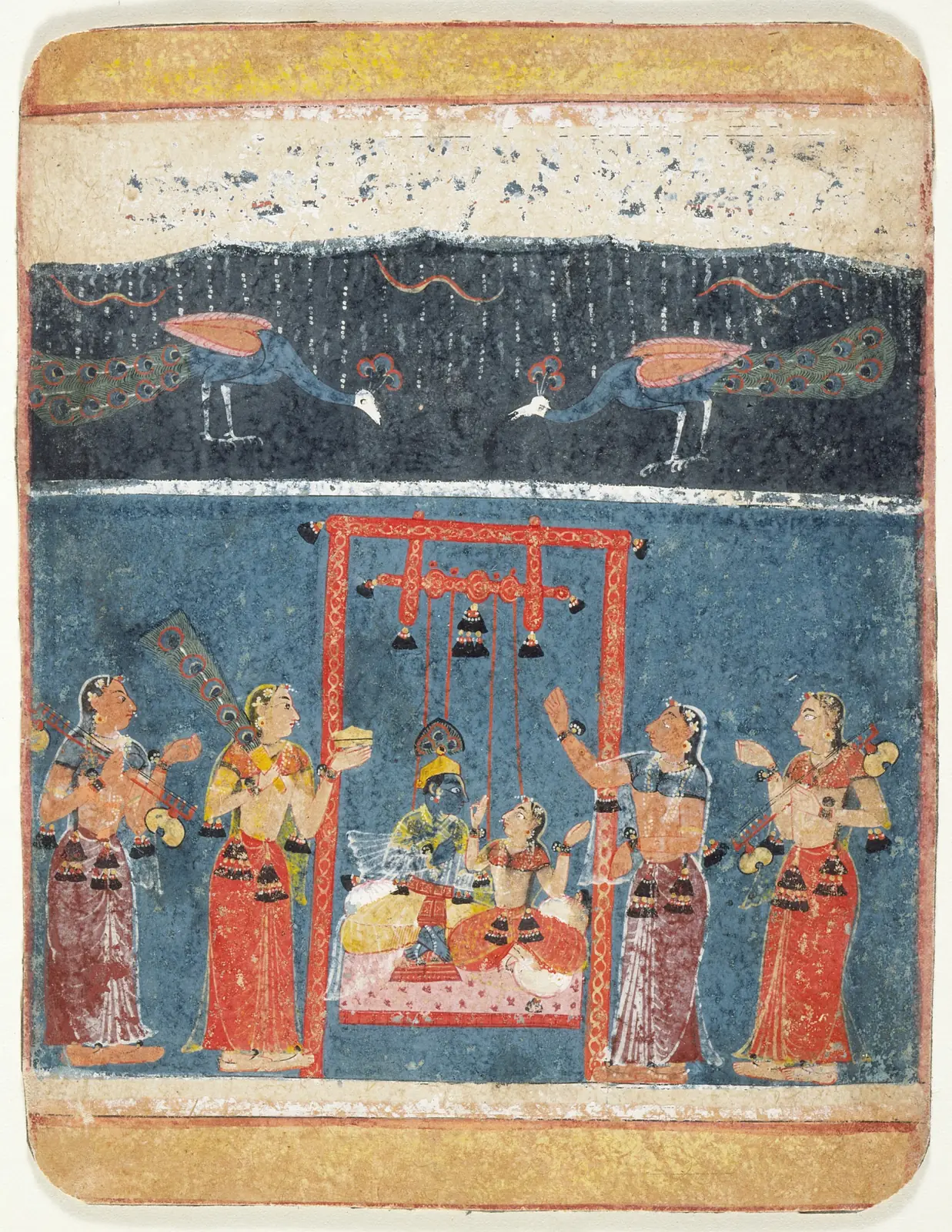
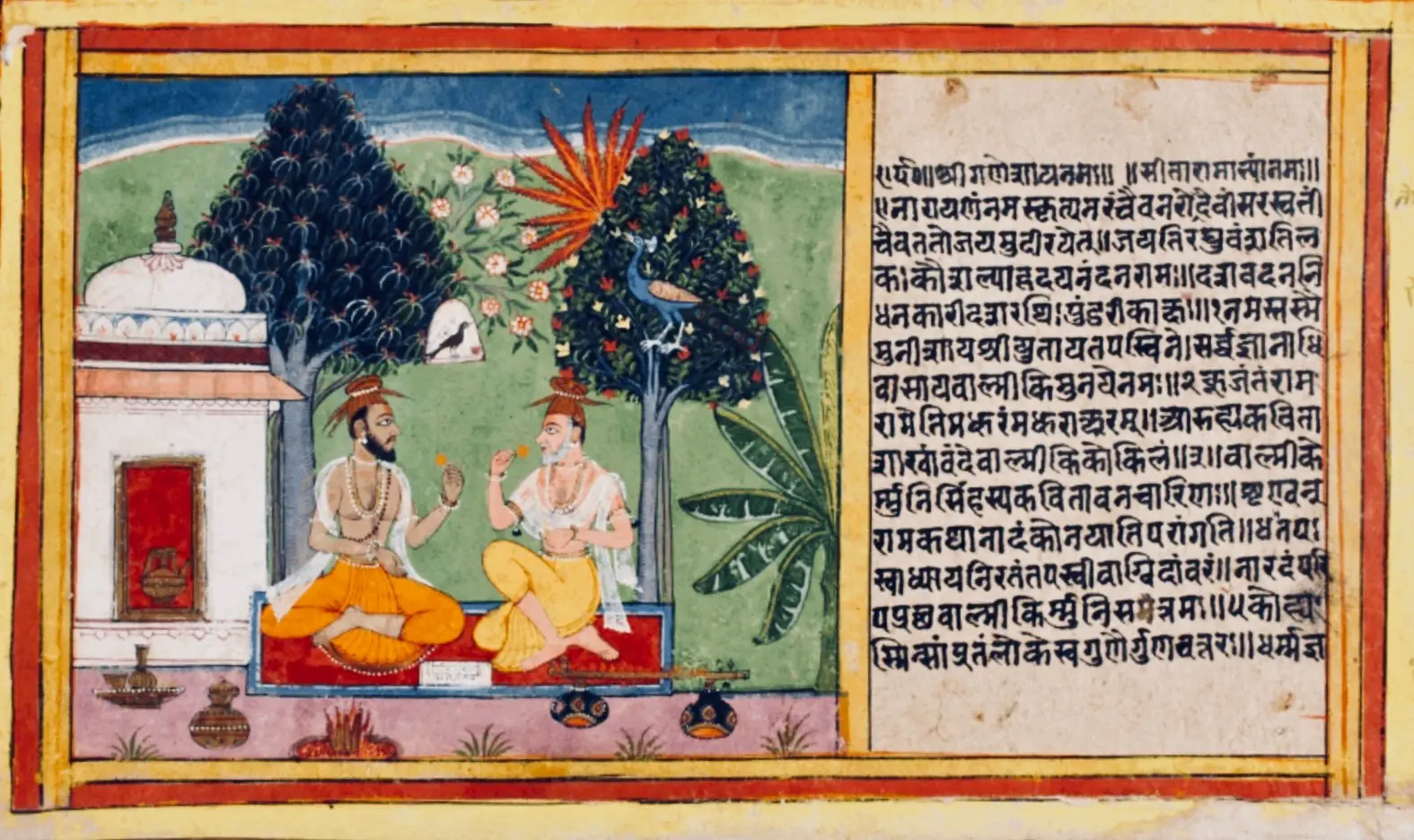
१RagasEach mode painted as a figure in a scene
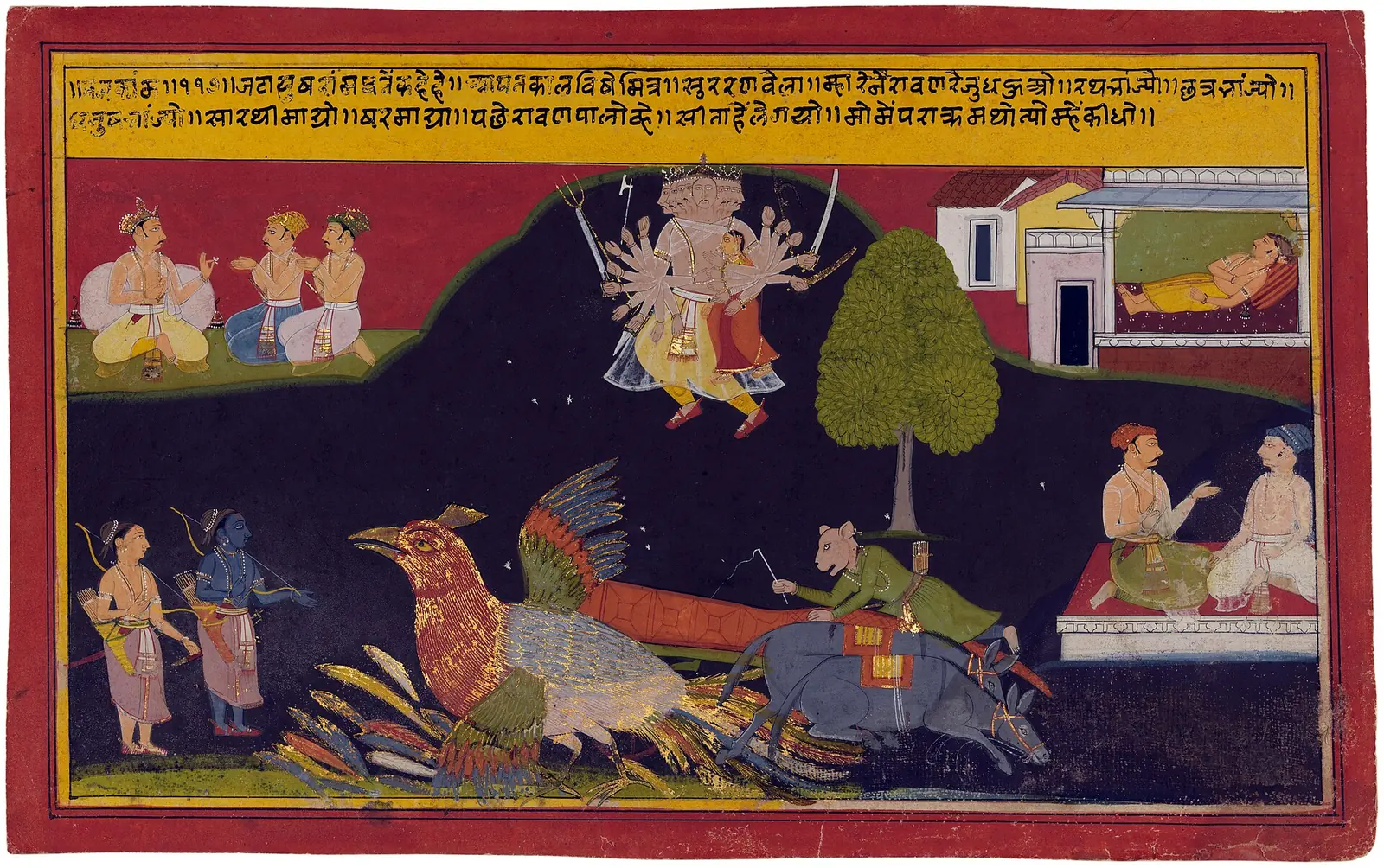
२RamaSahibdin's great Ramayana
३KrishnaThe Bhagavata Purana of 1648
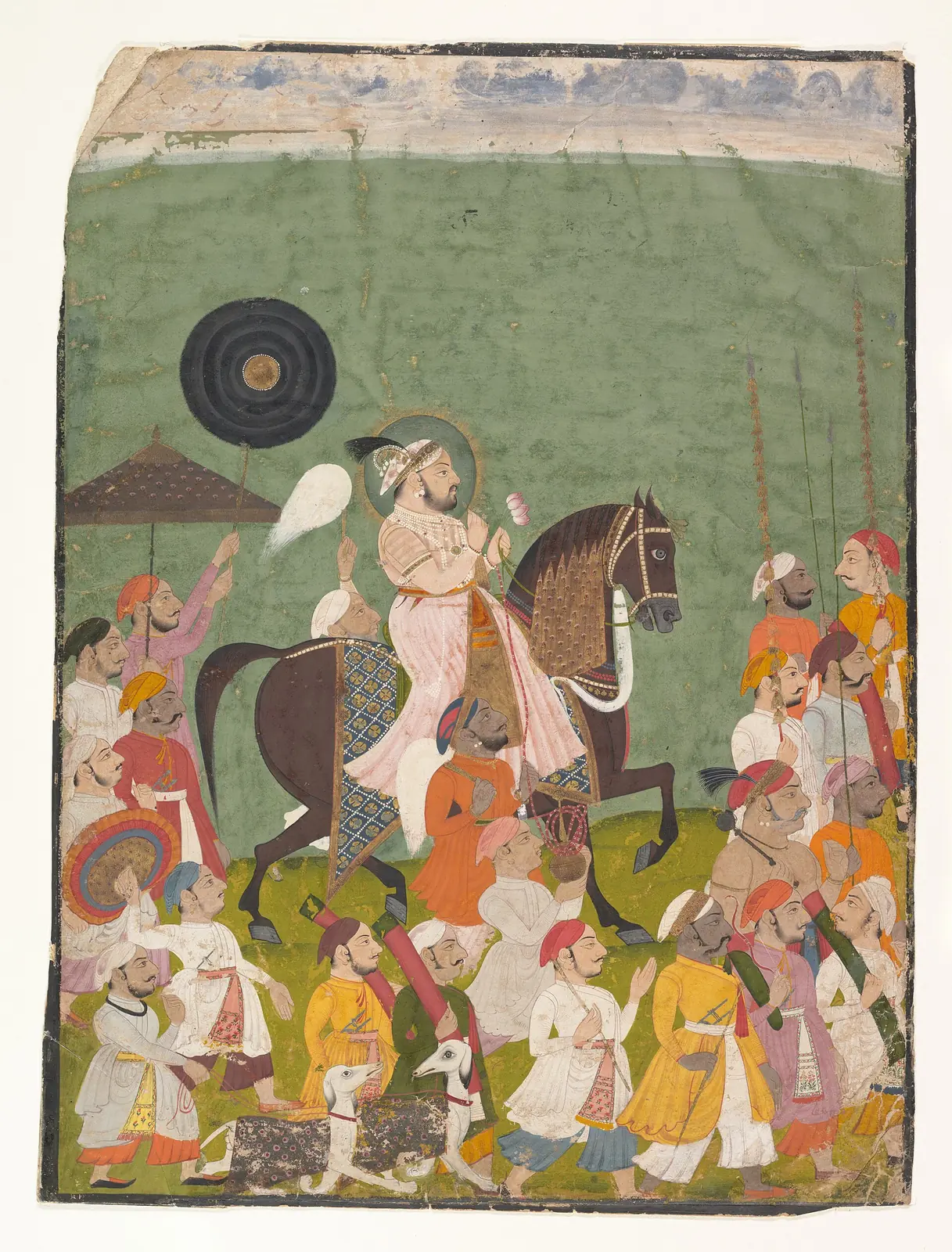
४ProcessionMaharanas at festival and hunt
Peori yellow and malachite
Opaque watercolour on paper, with flat fields of primary colour and figures in profile.
The Chawand Ragamala of 1605
- 1605The Chawand Ragamala
Nasiruddin painted a Ragamala at Chawand; it is called the first document of Mewar painting.
- 1628–52Sahibdin
Sahibdin, chief painter of Jagat Singh I, painted a Bhagavata Purana (1648) and a great Ramayana in volumes dated 1649–53.
- 18th centuryThe court in colour
Under Sangram Singh II and Jagat Singh II, painters such as Jai Ram showed the Maharanas at hunts, festivals and darbar.
- 1799–1868Chokha and Tara
Chokha (fl. 1799–1824) and Tara (fl. 1836–68) carried the court style into the 19th century.
Sahibdin's Ramayana and Bhagavata
- Nasiruddin
- Chawand Ragamala, 1605.
- Sahibdin
- Fl. 1628–55; Ramayana and Bhagavata Purana.
- Chokha
- Fl. 1799–1824.
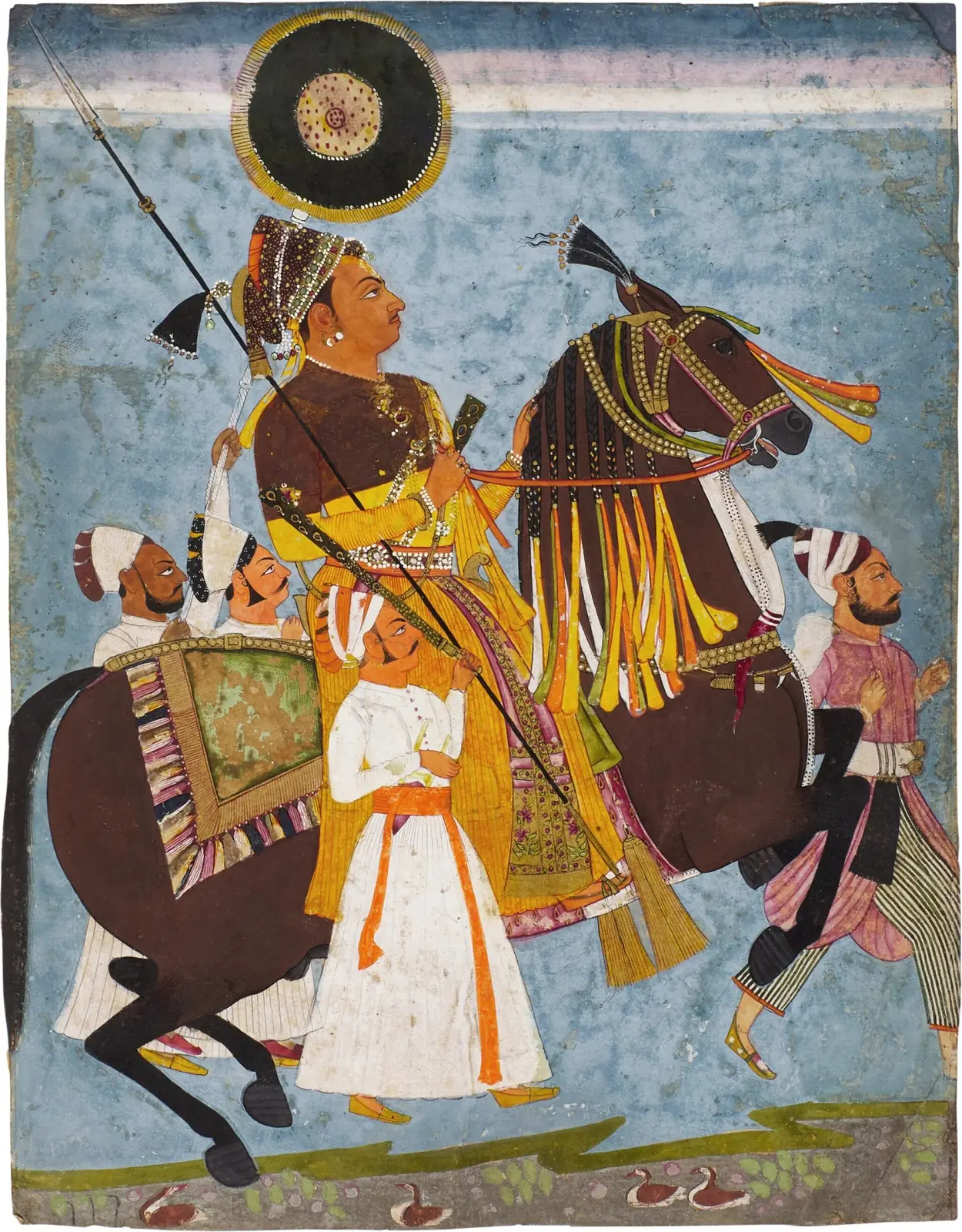
Jagat Singh II in procession, 1745