Ajrakh
अजरख · Ajrakhpur and Dhamadka, Kutch, Gujarat
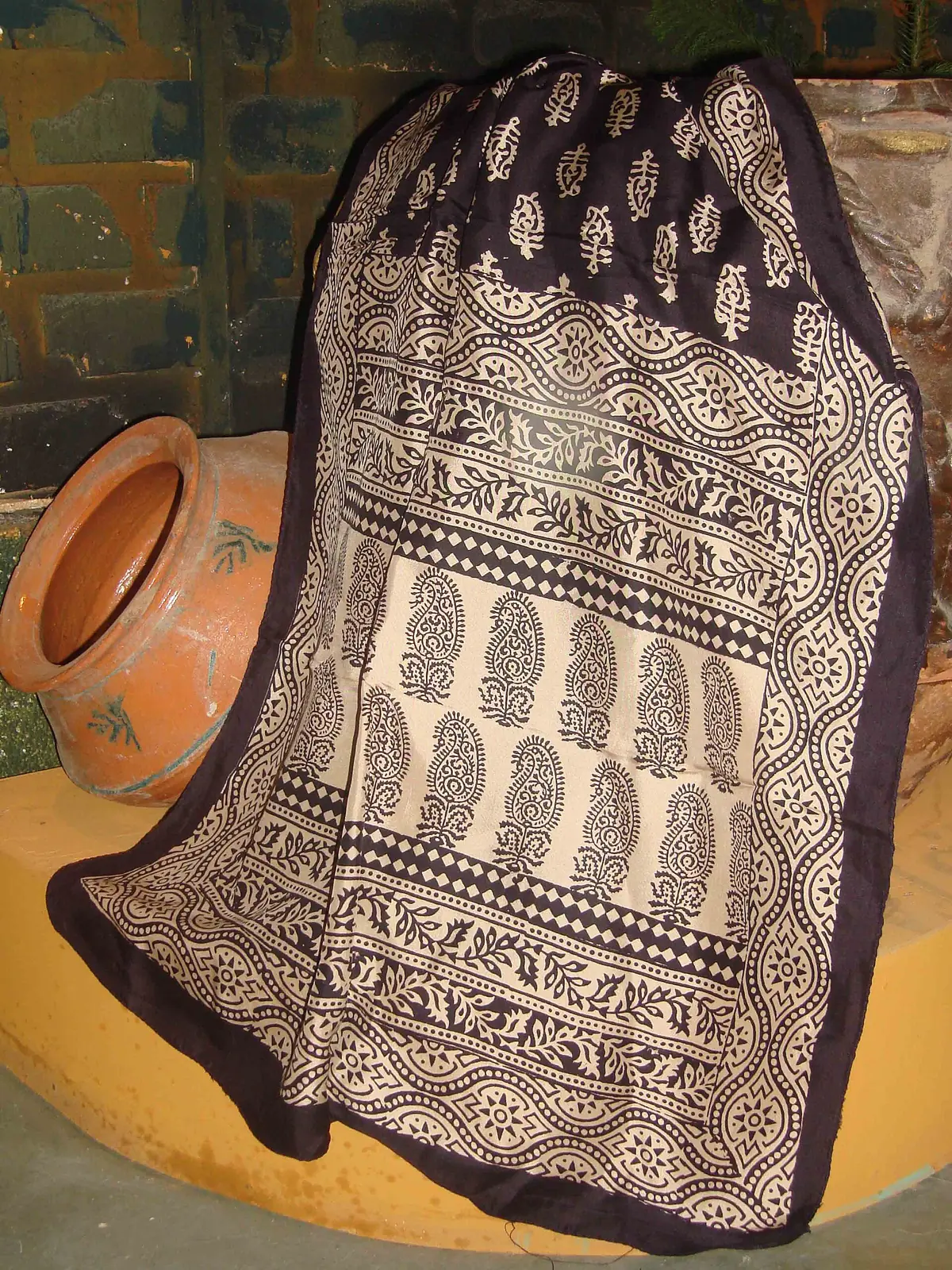
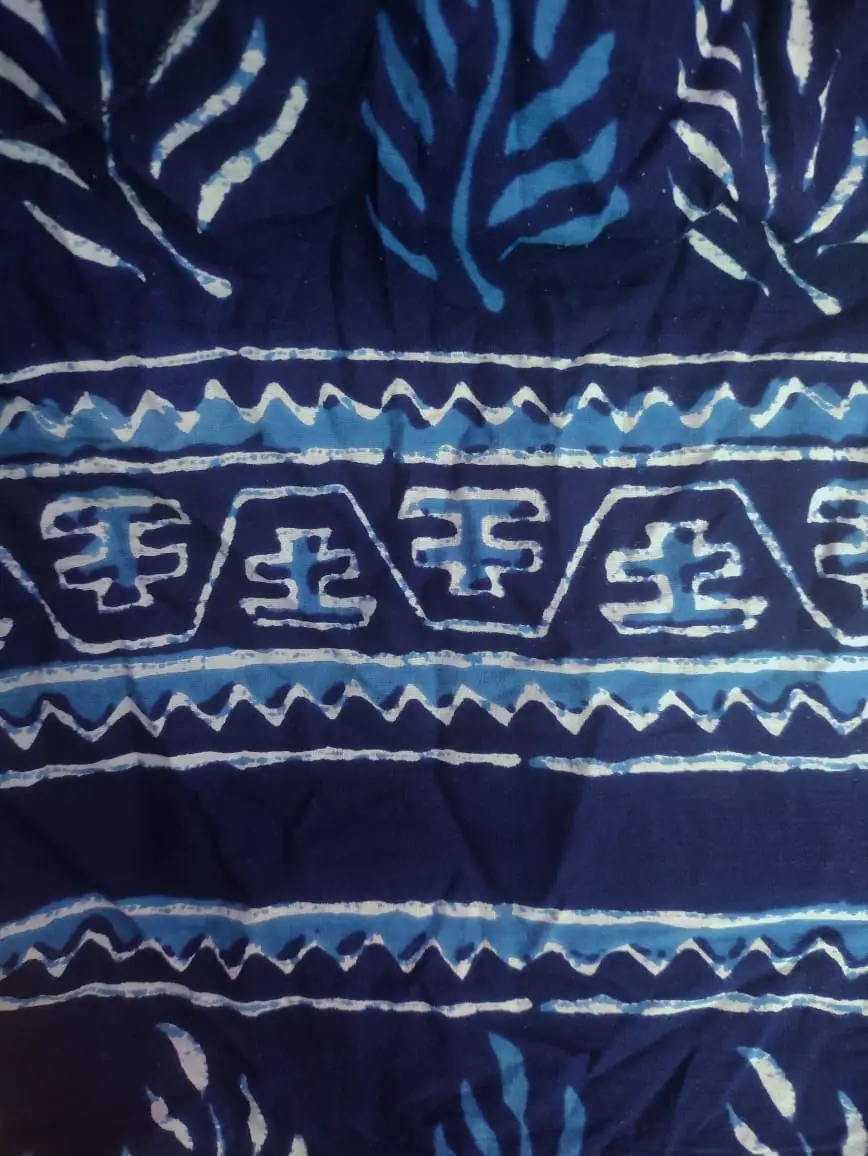
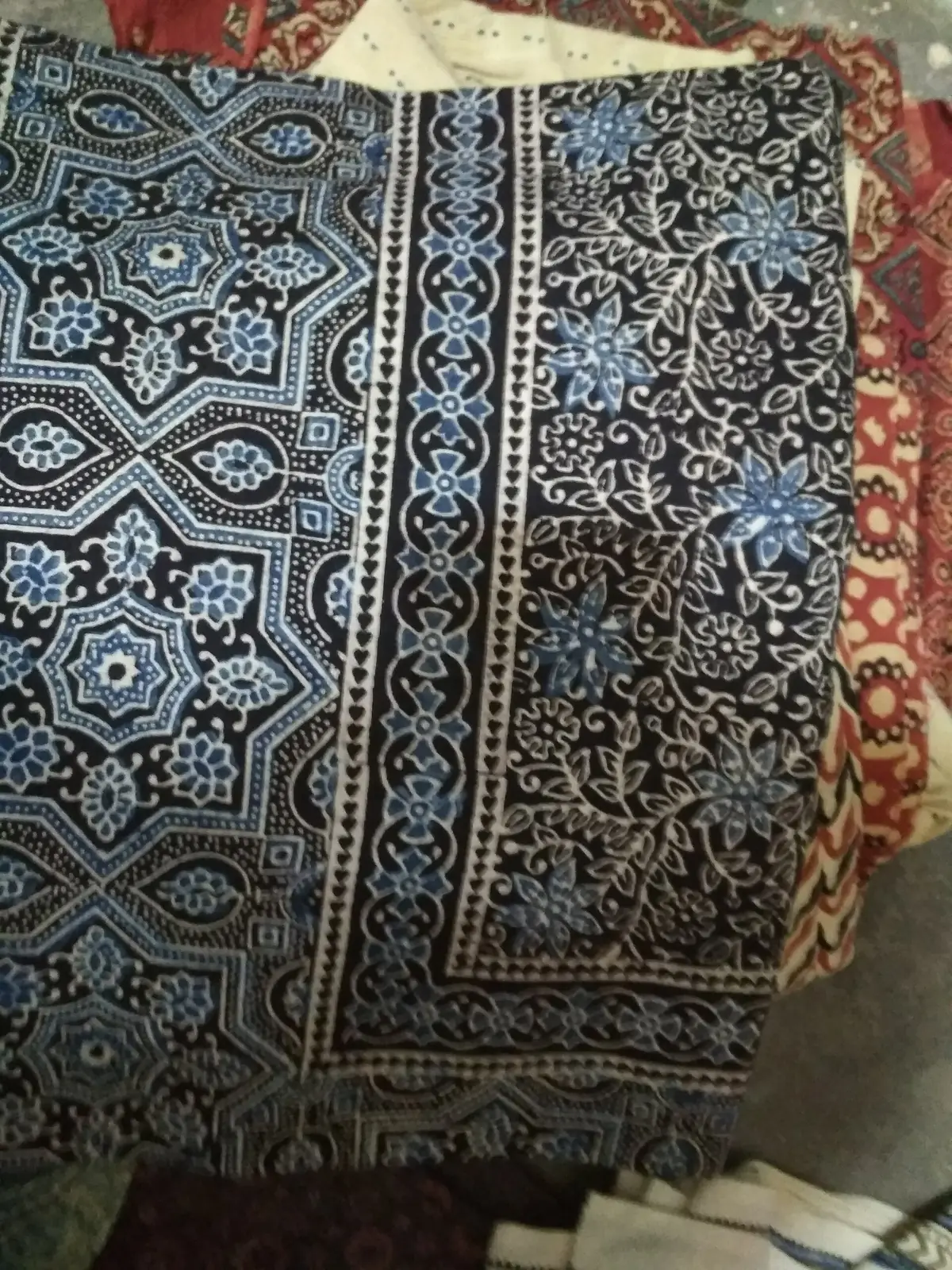
Deep indigo and madder-red cloth printed on both sides with carved blocks, in a long cycle of printing, dyeing and washing.
- FibreCotton, now also silk
- TechniqueResist and mordant block print
- GI tagYes, 2024 (Kutch Ajrakh)
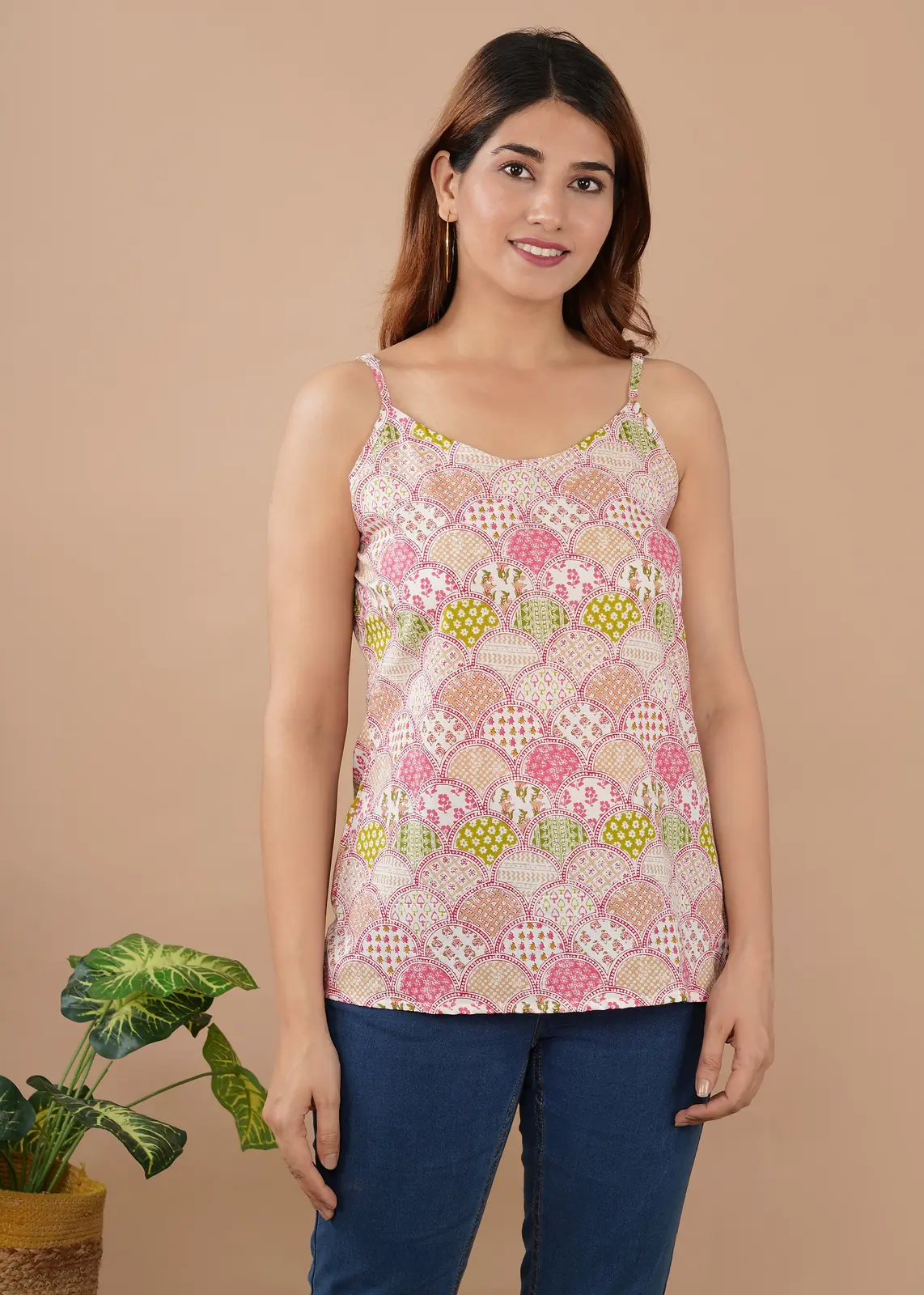
- Worn forTurbans, shawls, saris
Lime resist, indigo, then madder
- १
The cloth is washed and soaked in a mix that prepares it to take dye.
- २
A resist of lime and gum is printed with blocks where the cloth must stay white.
- ३
Iron and alum mordants are printed for black and red.
- ४
It is dyed in indigo, washed, then dyed in madder or alizarin, with many repeats.
- ५
Both faces are printed so the pattern matches front and back.
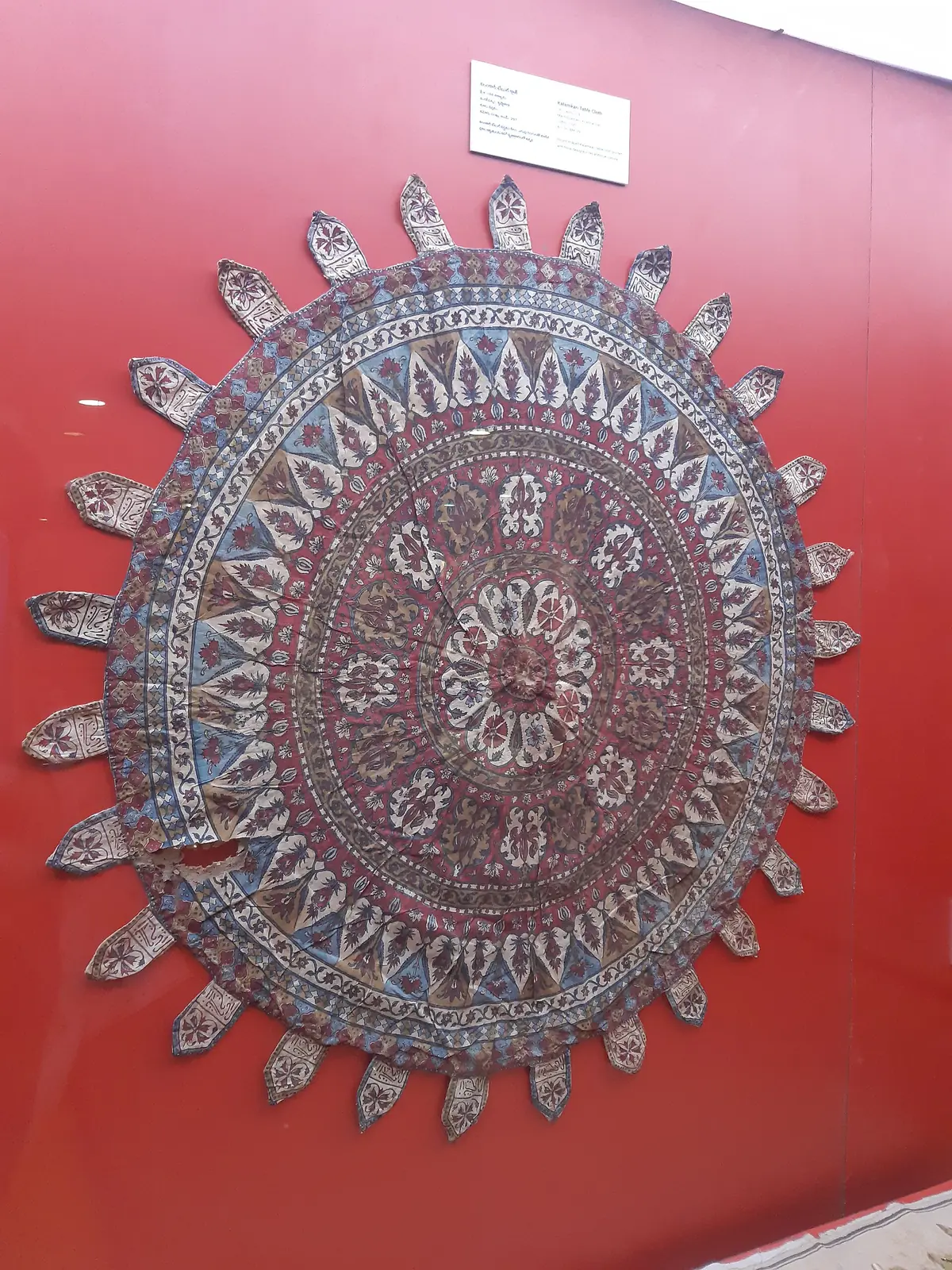
Stars, trefoils, indigo and red
Printed through on both sides
- Real ajrakh is printed on both sides and the colours go through the cloth.
- Natural indigo and madder fade softly; the cloth smells faintly earthy when new.
Khatri printers of Sindh and Kutch
- Sindh and KutchKhatri printers
Ajrakh is shared by Sindh and Kutch. In Kutch the Khatri families printed it at Dhamadka for herders and farmers.
- After 2001Ajrakhpur
After the 2001 earthquake and water shortages at Dhamadka, printing families built a new village near Bhuj and named it Ajrakhpur.
- 2024GI tag
"Kutch Ajrakh" was filed in January 2023; the certificate was presented to the artisans in April 2024.