One tower over the sanctum
The shikhara rises directly above the garbhagriha, so the highest point of the temple stands over the murti. Lower roofs over the halls climb towards it like foothills.

नागर
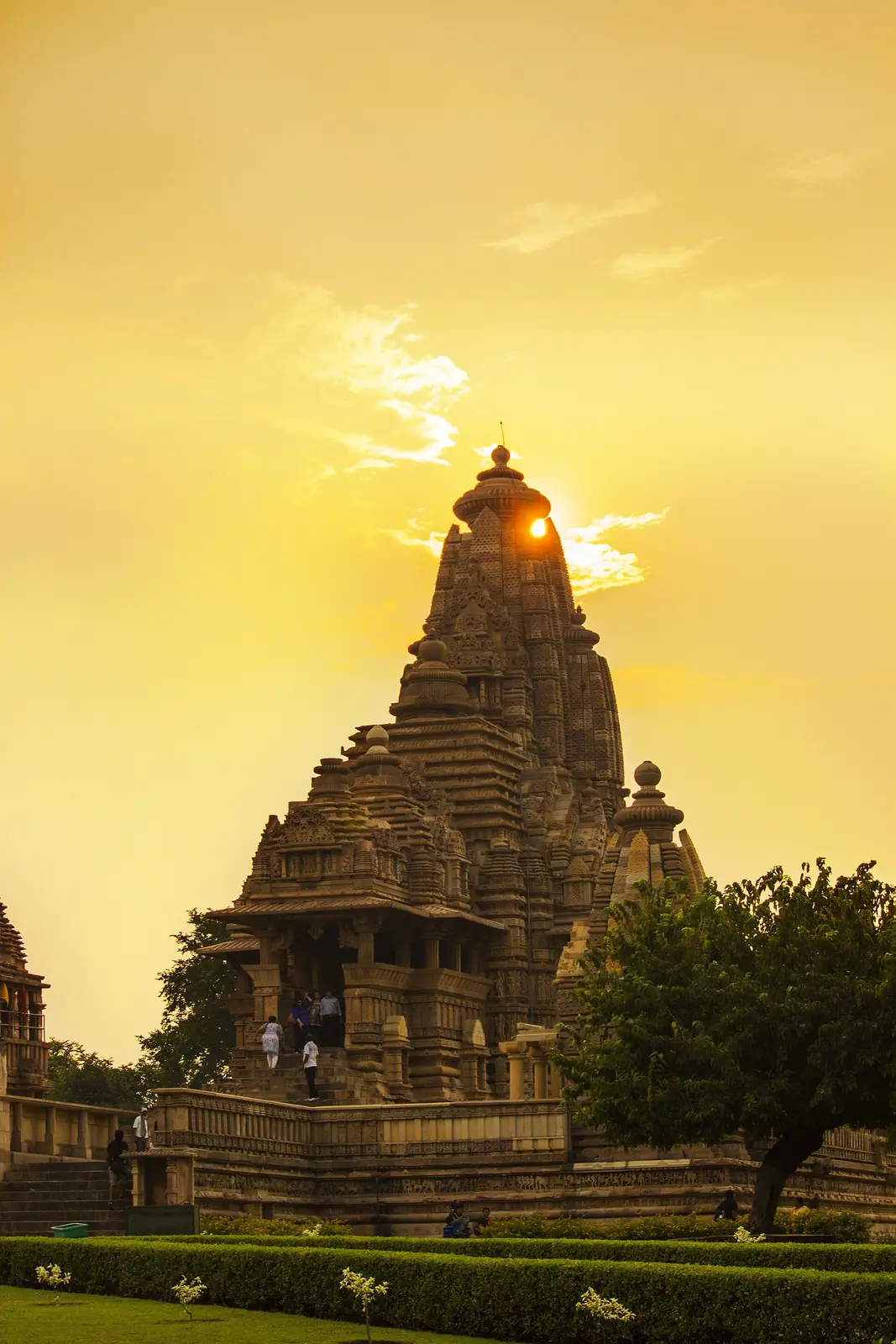
The northern temple, its curved tower rising straight from the sanctum and crowned by a ribbed amalaka stone.
The shikhara rises directly above the garbhagriha, so the highest point of the temple stands over the murti. Lower roofs over the halls climb towards it like foothills.
The walls step forward in vertical bands. A temple with three bands on each face is triratha, with five pancharatha, and the bands run up the tower to the crown.
A flat ribbed stone shaped like the amla fruit caps the tower. Above it sits the kalasha, the pot of plenty.
The tower faces are covered with a net of tiny horseshoe-arch windows, the gavaksha, woven into a pattern scholars call jala.
A single curved tower with four faces and no clinging spires. The oldest and commonest form, seen at Lingaraja, Bhubaneswar and the Vamana temple, Khajuraho.
Small copies of the main tower, urushringas, cling to its sides in tiers, so the spire looks like a mountain range. Kandariya Mahadeva at Khajuraho is the classic example.
Rows of miniature spires set one above another run up the tower in columns, between plain vertical bands. Udayeshwara at Udaypur, Madhya Pradesh, and Ambarnath near Mumbai are Bhumija.
An oblong sanctum under a barrel-vaulted roof, shaped like an upturned boat. Teli ka Mandir at Gwalior is the grandest; in Odisha the same form is called khakhara.
A roof of flat slabs stacked in diminishing tiers, straight-edged and pyramidal. Often used over halls and porches; in Odisha it becomes the pidha roof.
Kandariya MahadevaKhajuraho, Madhya Pradesh · c. 1030 CE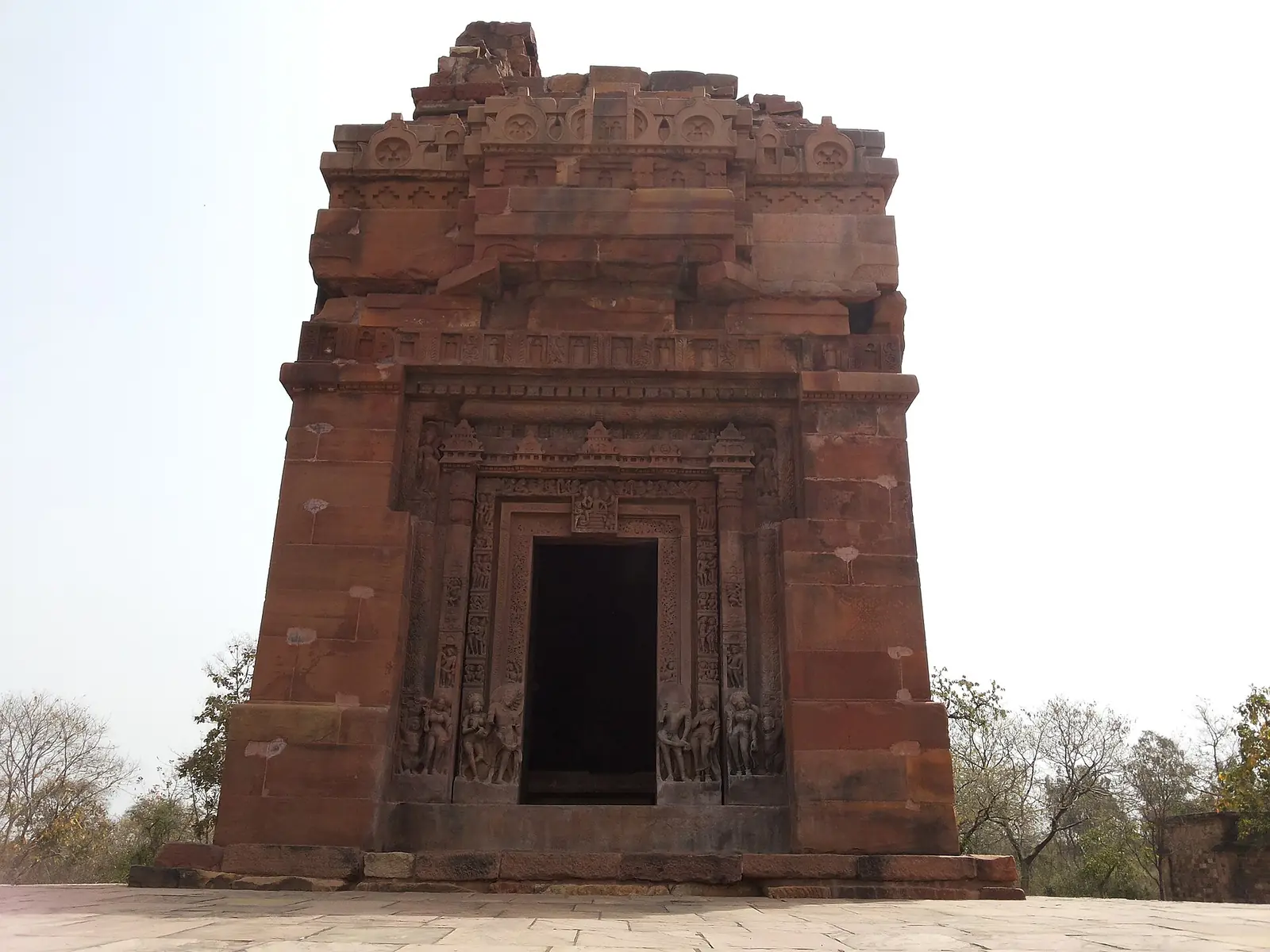 Dashavatara templeDeogarh, Uttar Pradesh · c. 500 CE
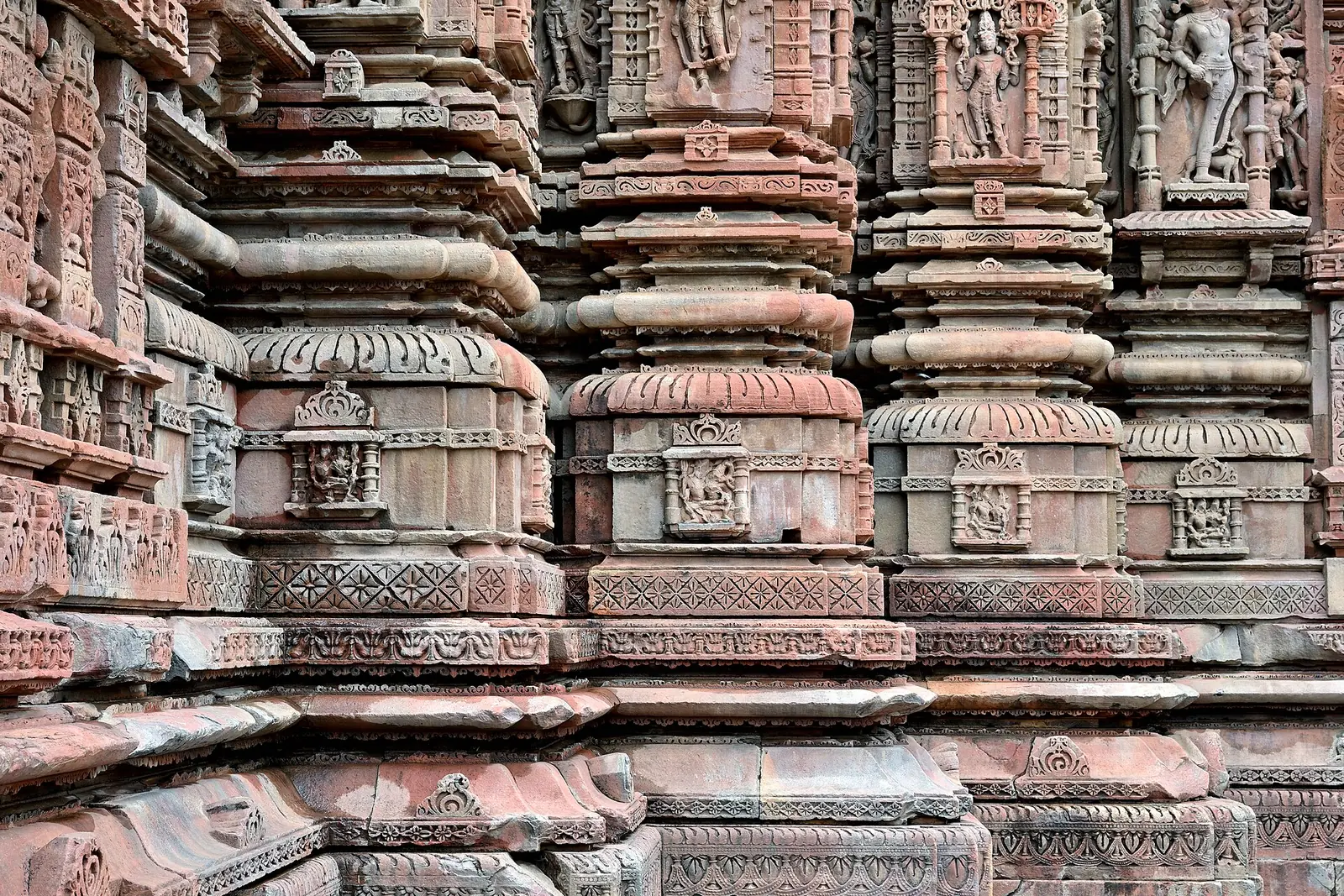 Udayeshwara templeUdaypur, Madhya Pradesh · 1059–1080 CE
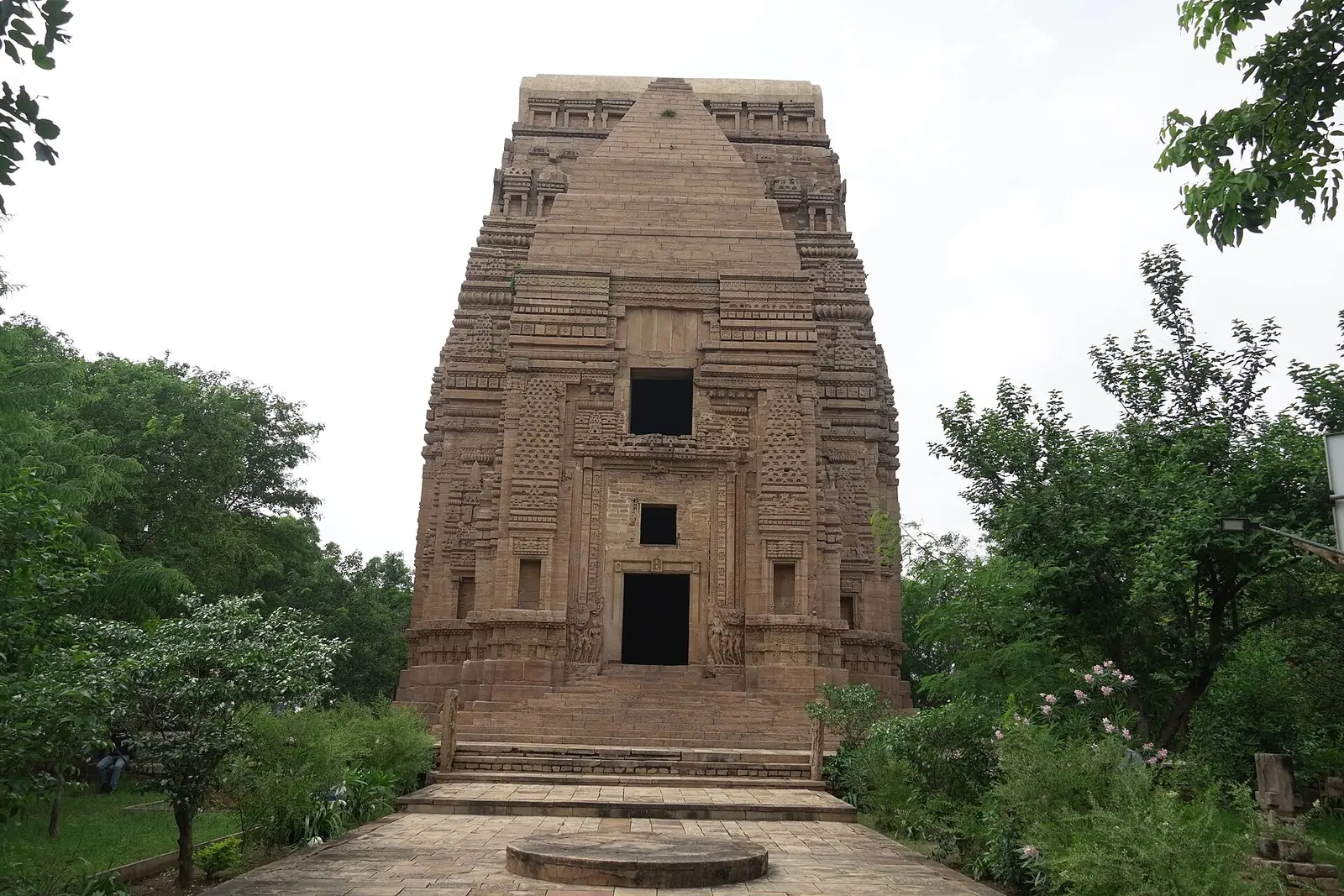 Teli ka MandirGwalior Fort, Madhya Pradesh · 8th–9th century