Shesha and Vasuki
Vishnu rests on Ananta Shesha, and Shiva wears Vasuki round his neck. The Gita names both: among serpents I am Vasuki, among nagas I am Ananta (10.28–29).

नाग
Ananta holds up Vishnu and the worlds, and at village shrines carved cobras receive milk and turmeric.
Vishnu rests on Ananta Shesha, and Shiva wears Vasuki round his neck. The Gita names both: among serpents I am Vasuki, among nagas I am Ananta (10.28–29).
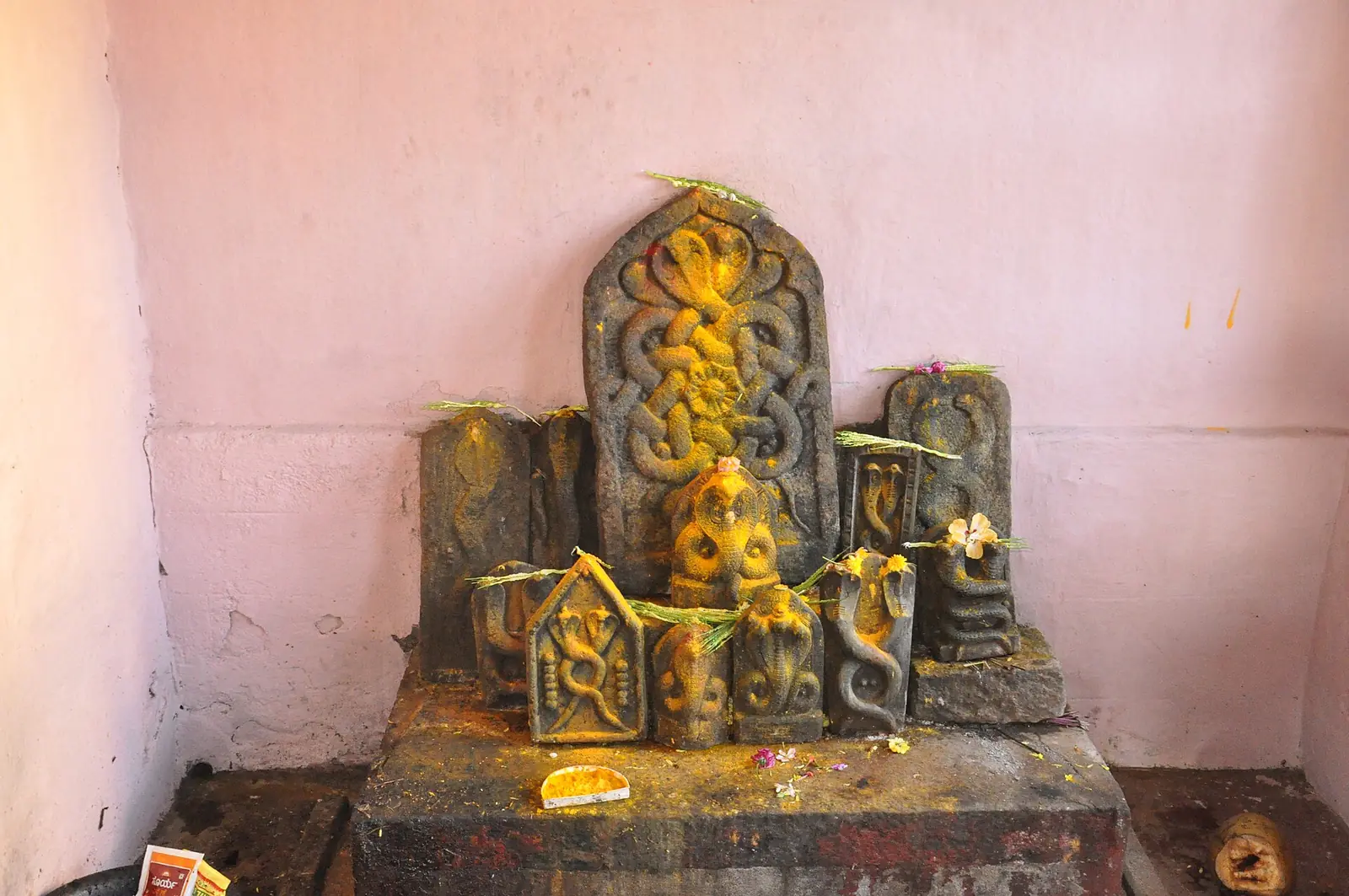
In Karnataka and the south, carved naga kallu stand under trees and beside temples, often a coiled cobra or a pair of entwined snakes. On Nag Panchami women offer milk and sweets, many praying for their brothers.
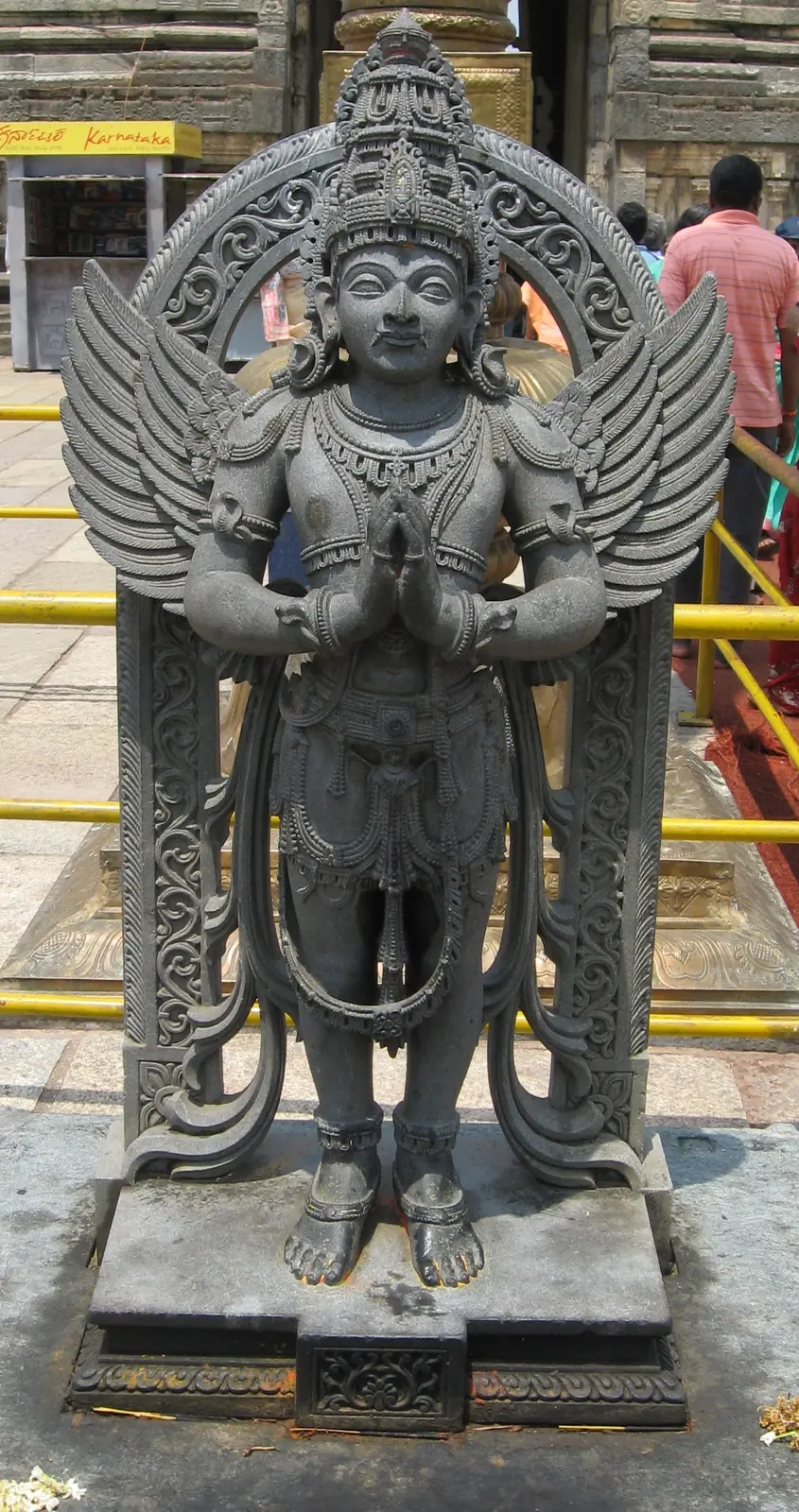
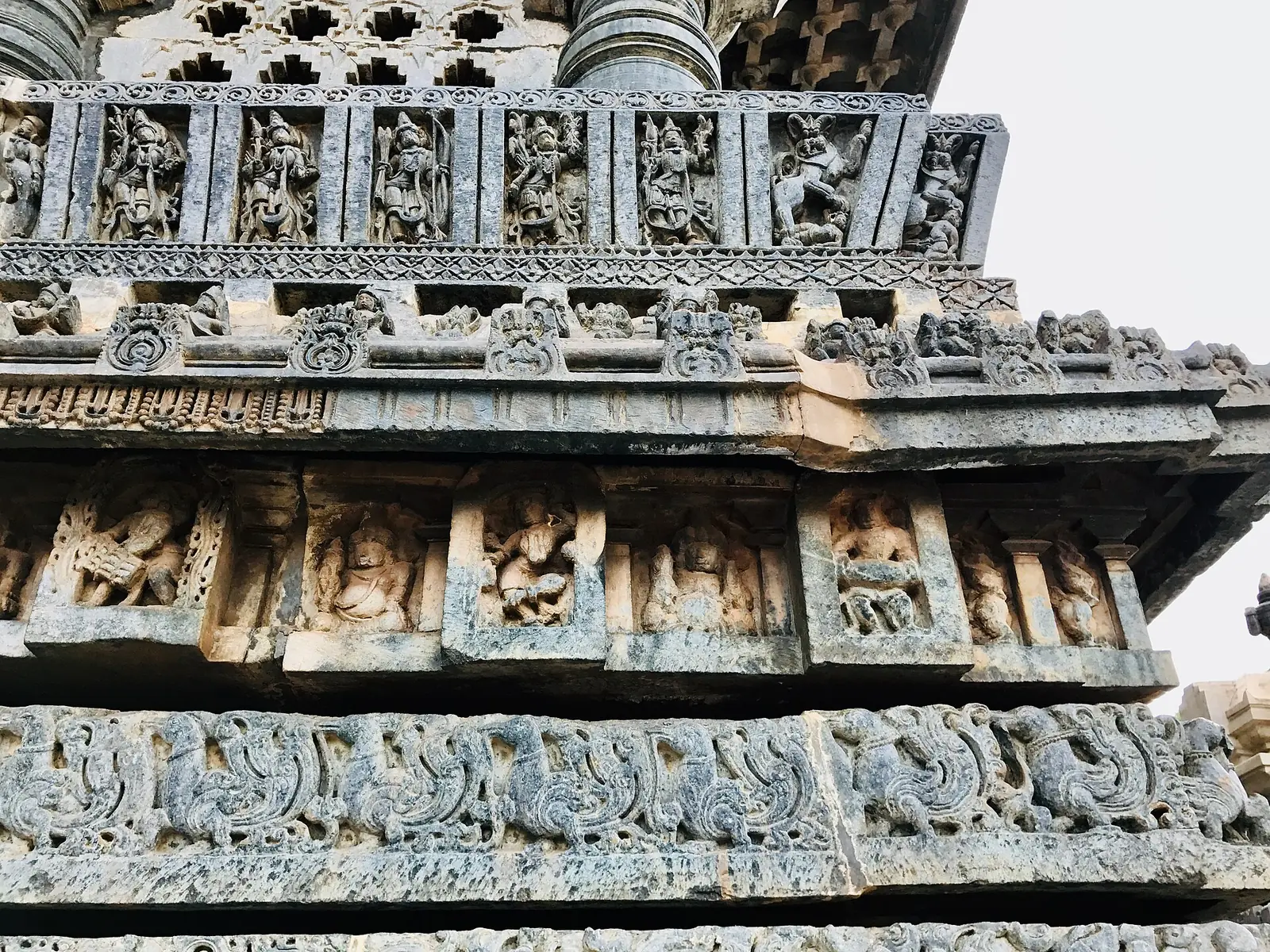
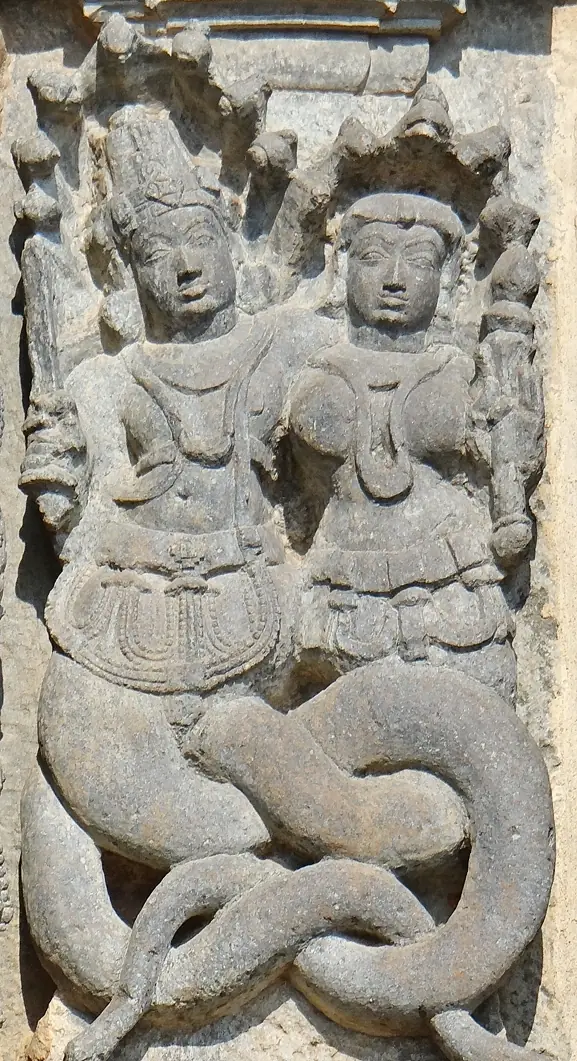
Temple walls carry nagas and naginis with human bodies below a spread hood, as at Belur, guardians of water and of the treasures under the earth.
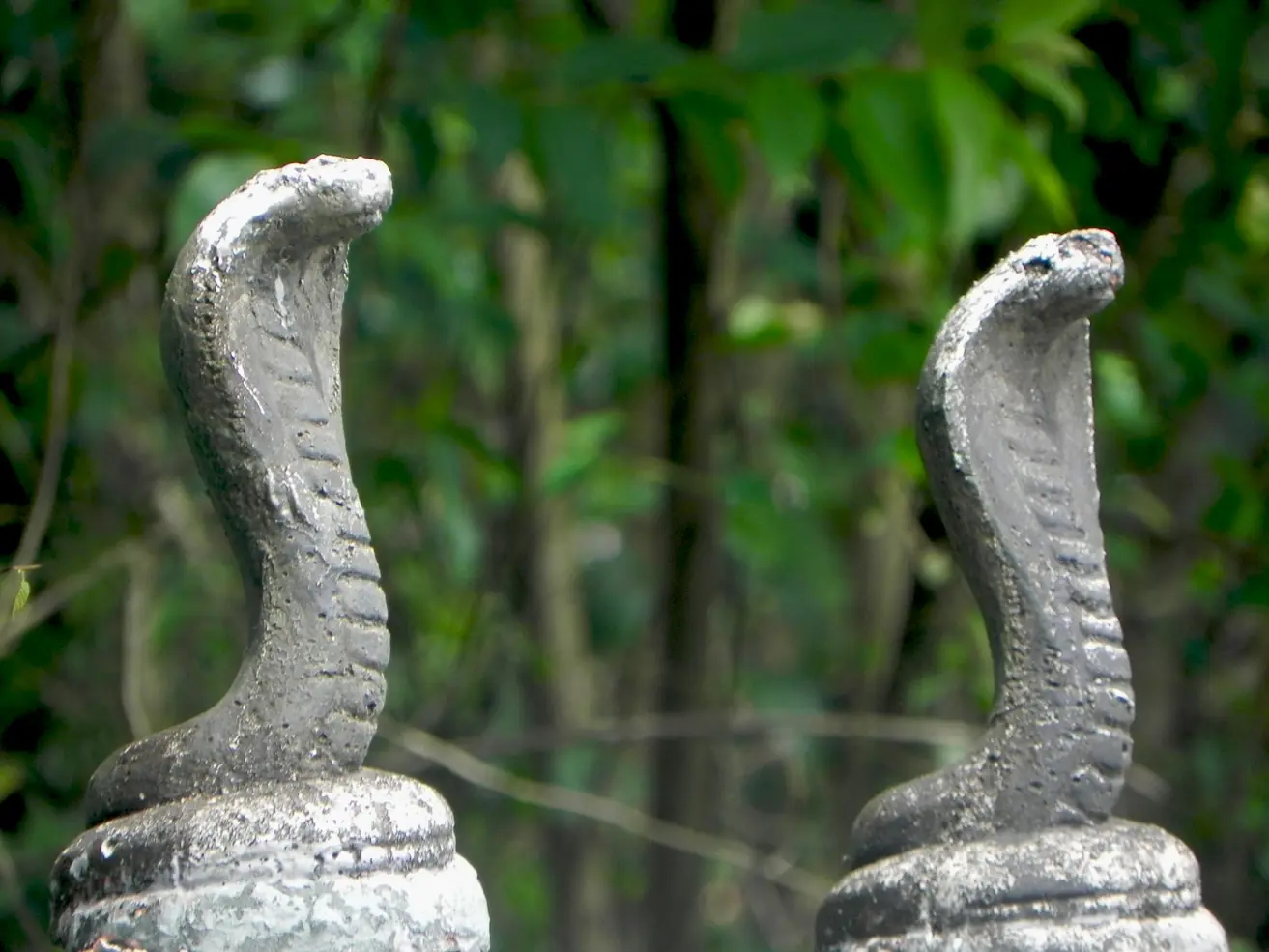
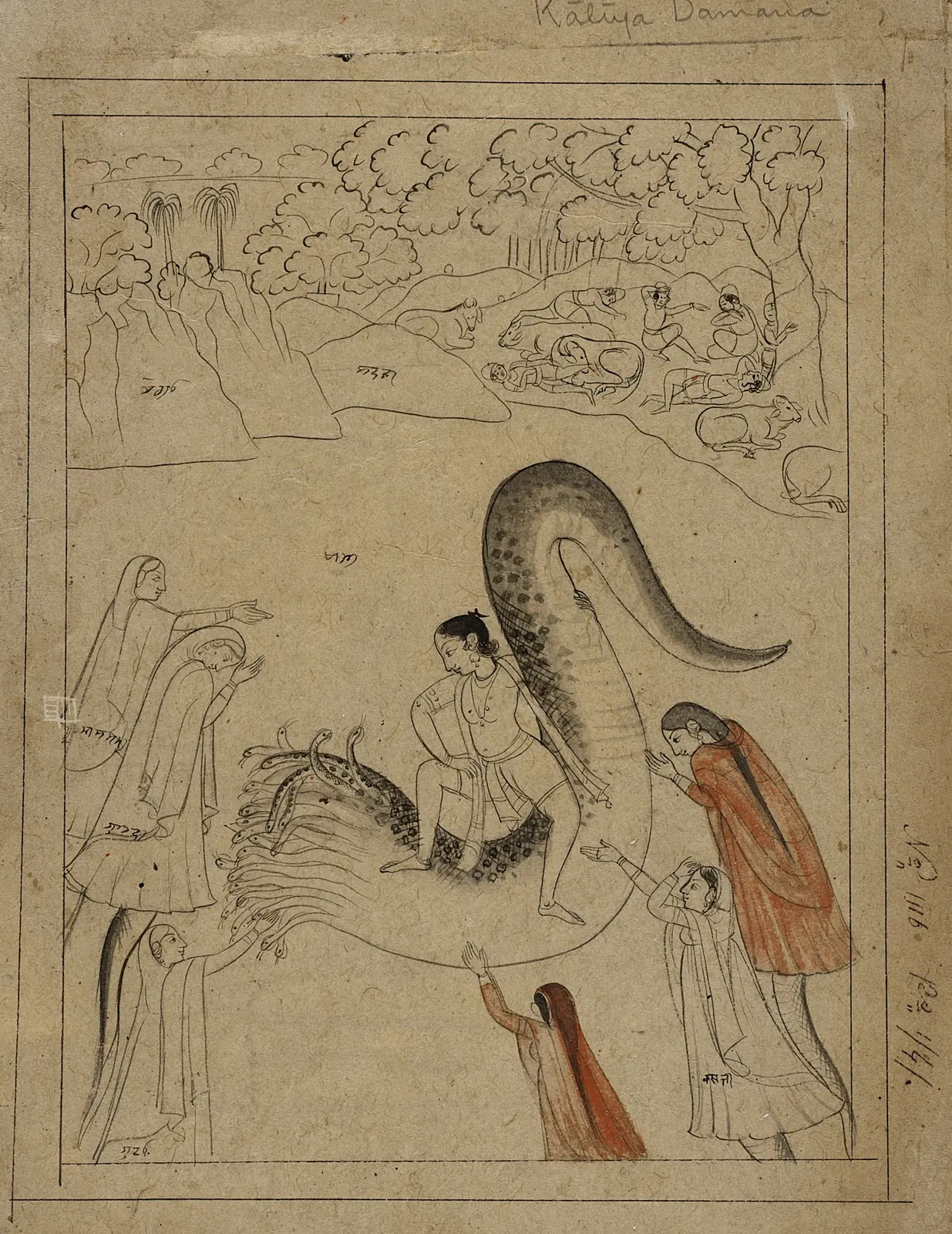
Old family homes kept a sarpa kavu, a small grove left wild for the serpents. Mannarasala, near Haripad, is the best-known serpent temple.