
Raja Ravi Varma
राजा रवि वर्मा · 1848–1906
The Kilimanoor painter who gave Lakshmi, Saraswati and the heroines of the epics faces and bodies a family could recognise.
- Era1870s to 1906
- MediumOil on canvas, then printed copies
- Key figureRaja Ravi Varma
- Where to seeSree Chitra Art Gallery; Vadodara; Mysore
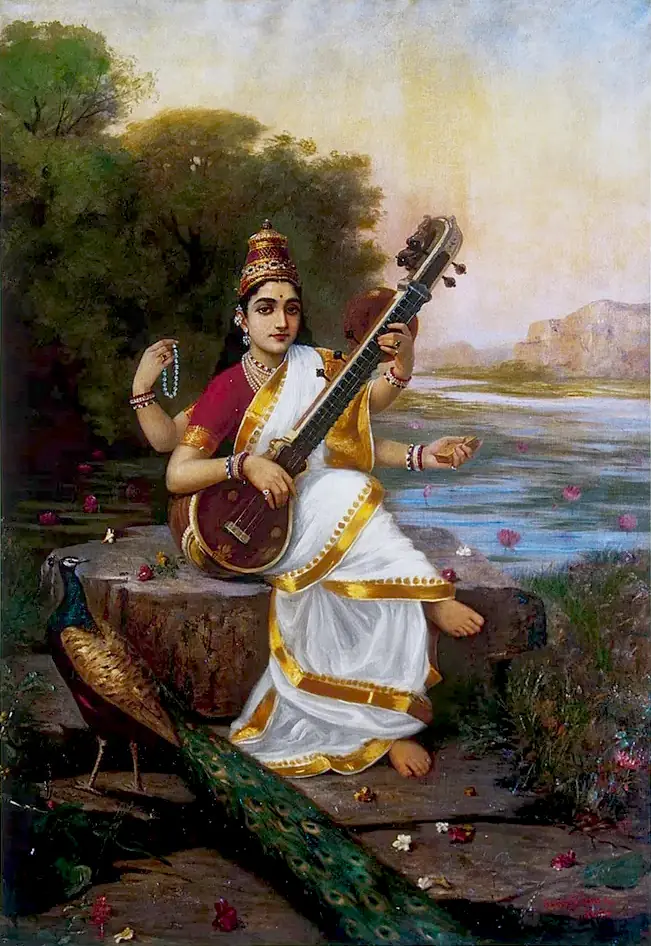
Born at Kilimanoor on 29 April 1848, Ravi Varma learnt oil painting in a European manner and turned it on the Puranas and the Itihasa. Shakuntala, Draupadi, Sita in the Ashoka grove and Lakshmi on her lotus became oil paintings first, and then, through his own press, pictures on the walls of ordinary homes.
Earlier temple and court painting drew the devatas in set forms. Ravi Varma gave them weight, shadow, draped saris and real faces, so that Lakshmi and Saraswati looked like women one might meet.
He chose dramatic moments, such as Shantanu stopping Ganga or Krishna as envoy at the Kaurava court, and painted them like a lit stage. Film and calendar art later took up the same staging.
His paintings won an award at Vienna in 1873 and three gold medals at the Chicago exposition of 1893. In 1904 Lord Curzon gave him the Kaisar-i-Hind gold medal.
Royal patrons in Travancore, Baroda and Mysore owned the originals. The lithographic press he opened in 1894 made his gods cheap enough for a home shrine.
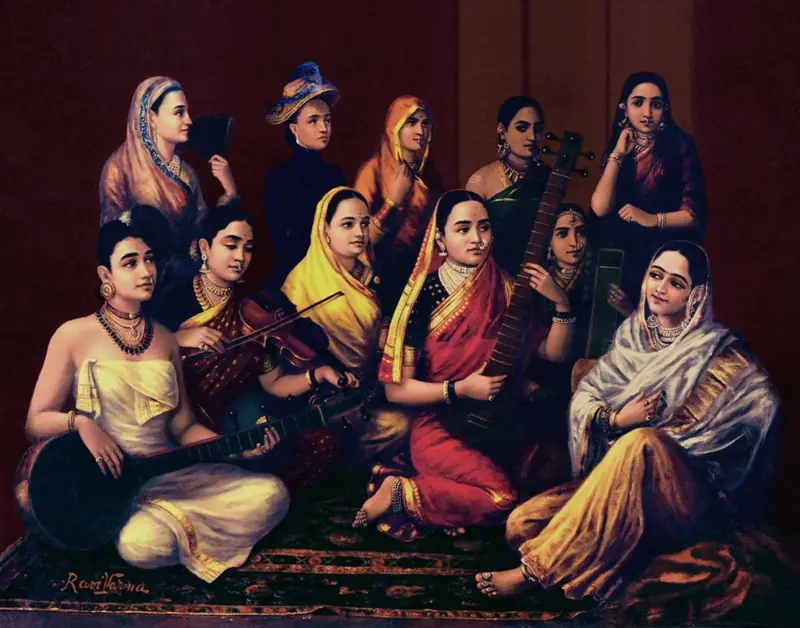
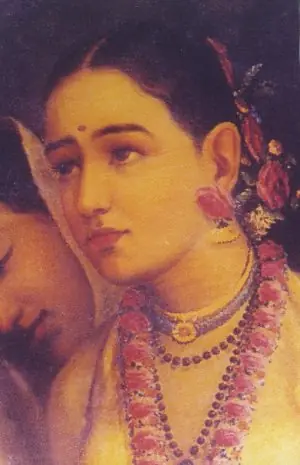
Key works
People
His younger brother, born 1860, a painter who worked beside him and managed the press.
Dewan of Travancore, who advised him to start a lithographic press.
Maharaja of Travancore and an early patron.