Durga Puja
दुर्गा पूजा · Ashvin, Sept–Oct
For five days Kolkata becomes a city of temporary temples, each holding a clay Durga made a few streets away.
Bengal, and Bengali communities everywhere
- SeasonAutumn, Shashthi to Vijaya Dashami
- ColourSindoor red, white shola, gold foil
- Made byKumartuli potters, Bonkapasi shola workers
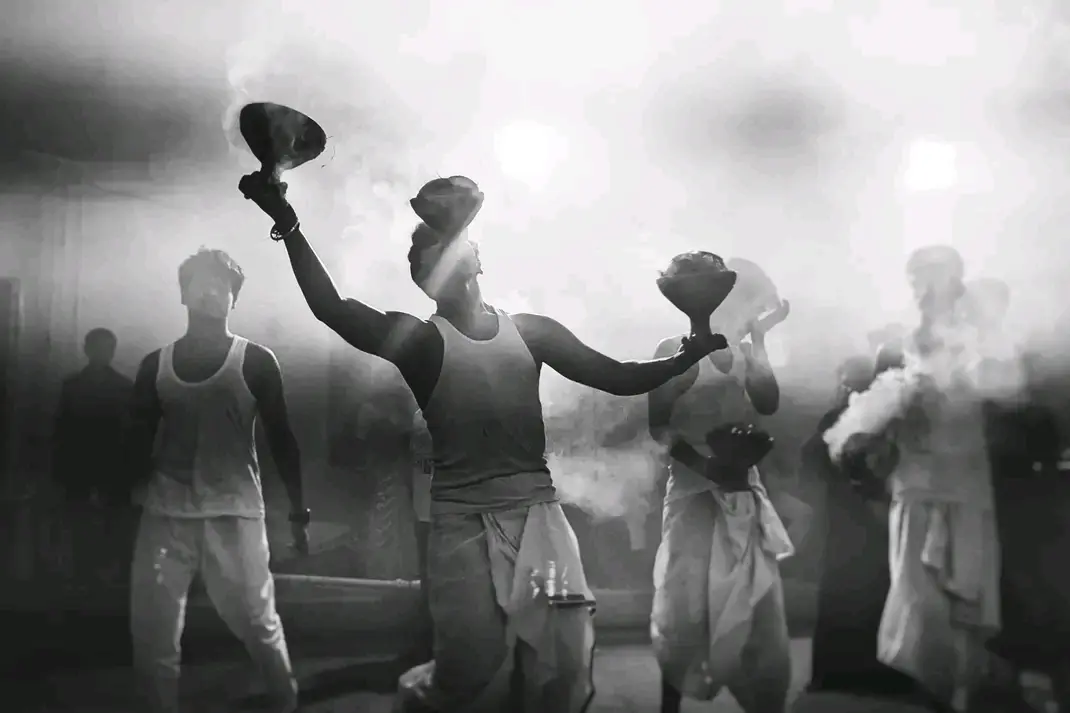
- Light/soundDhak drums, dhunuchi smoke, conch
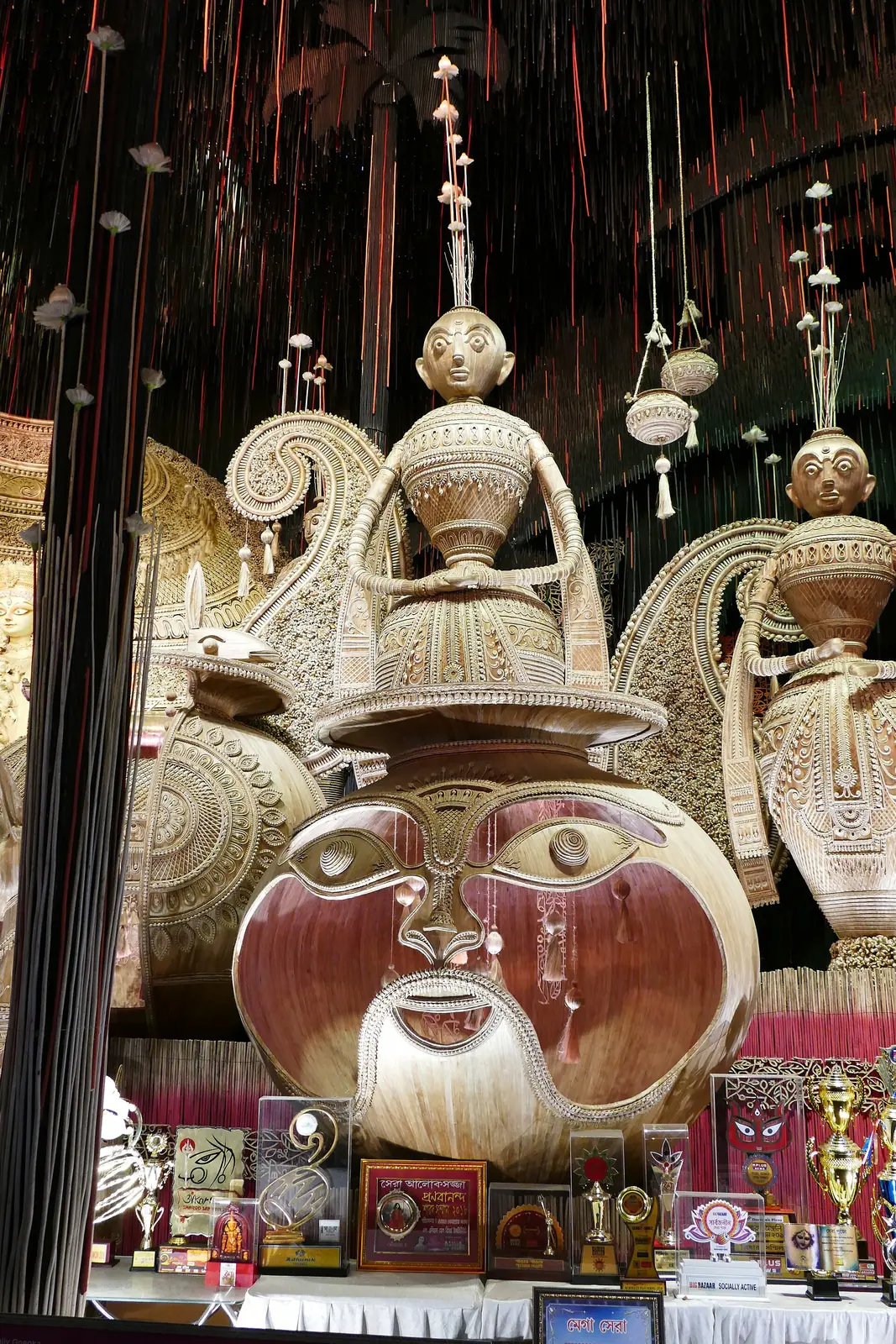
A shelter of bamboo and cloth is raised on a street or a field to house the goddess. Kolkata pandals are now built around themes, from folk crafts to famous buildings, and people walk all night to see them.
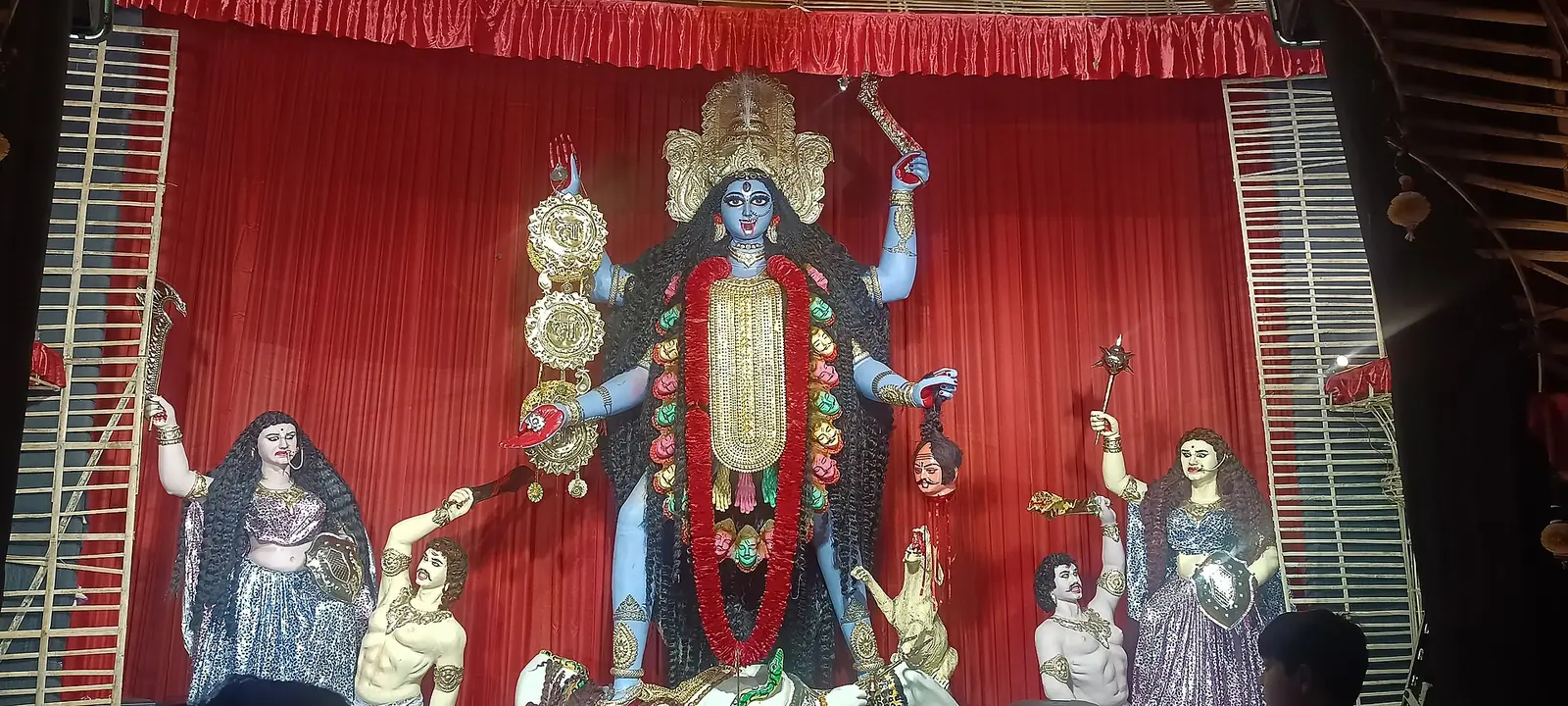
Durga stands with Lakshmi, Saraswati, Ganesh and Kartikeya, Mahishasura at her feet. When the whole family is set against one arched backdrop it is called ek-chala; two backdrops make do-chala.
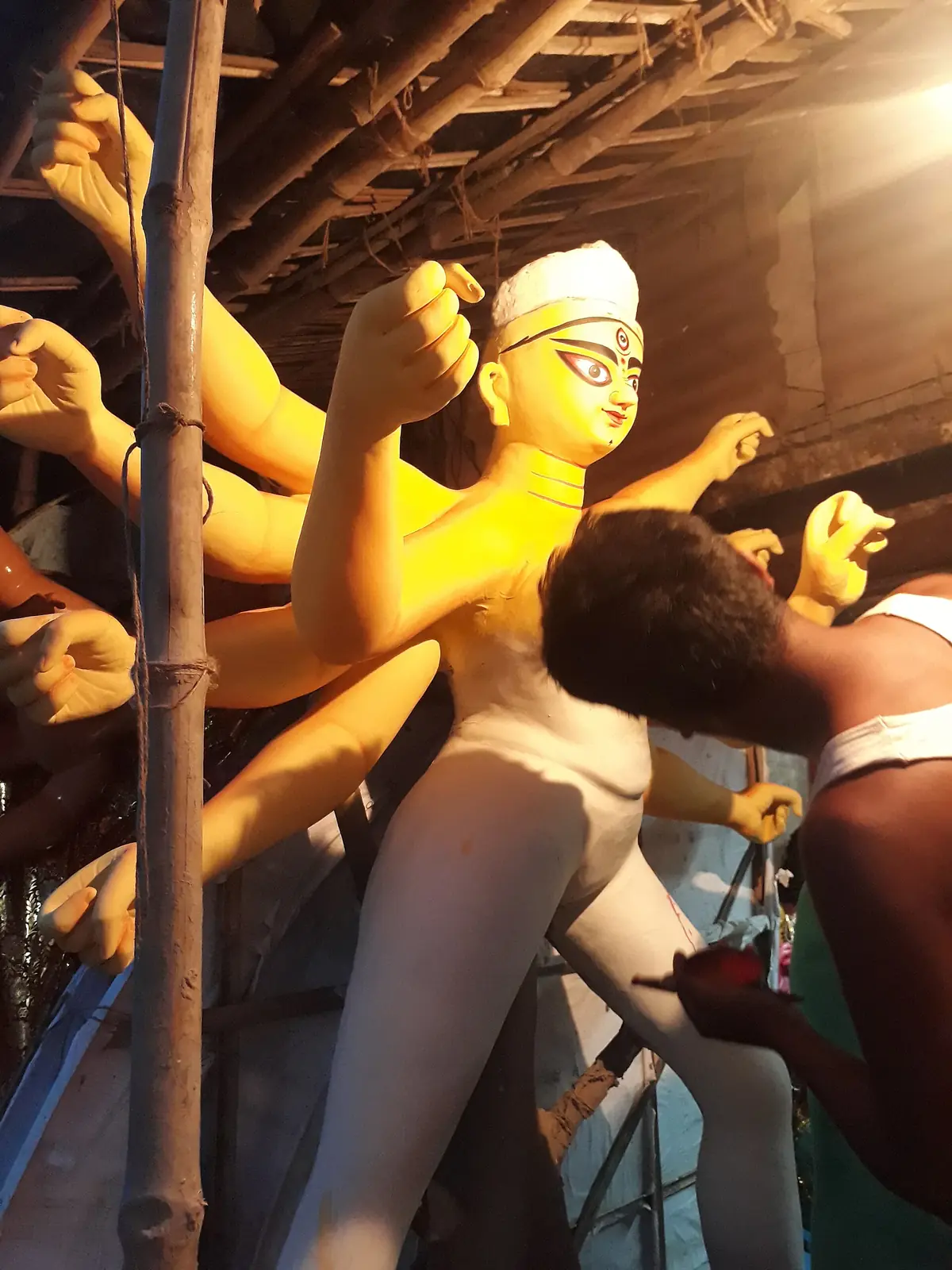
The eyes are painted last. Kumartuli artists draw them on the morning of Mahalaya, the giving of the eyes, and until then the image is held to be unfinished.
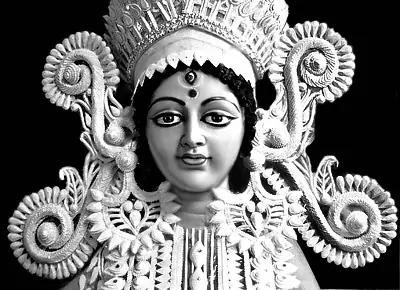
Durga's crown and ornaments are cut from white shola pith, or from foil. Daker saaj takes its name from daak, the post: the silver foil once came from Germany by mail, until the Second World War stopped it.
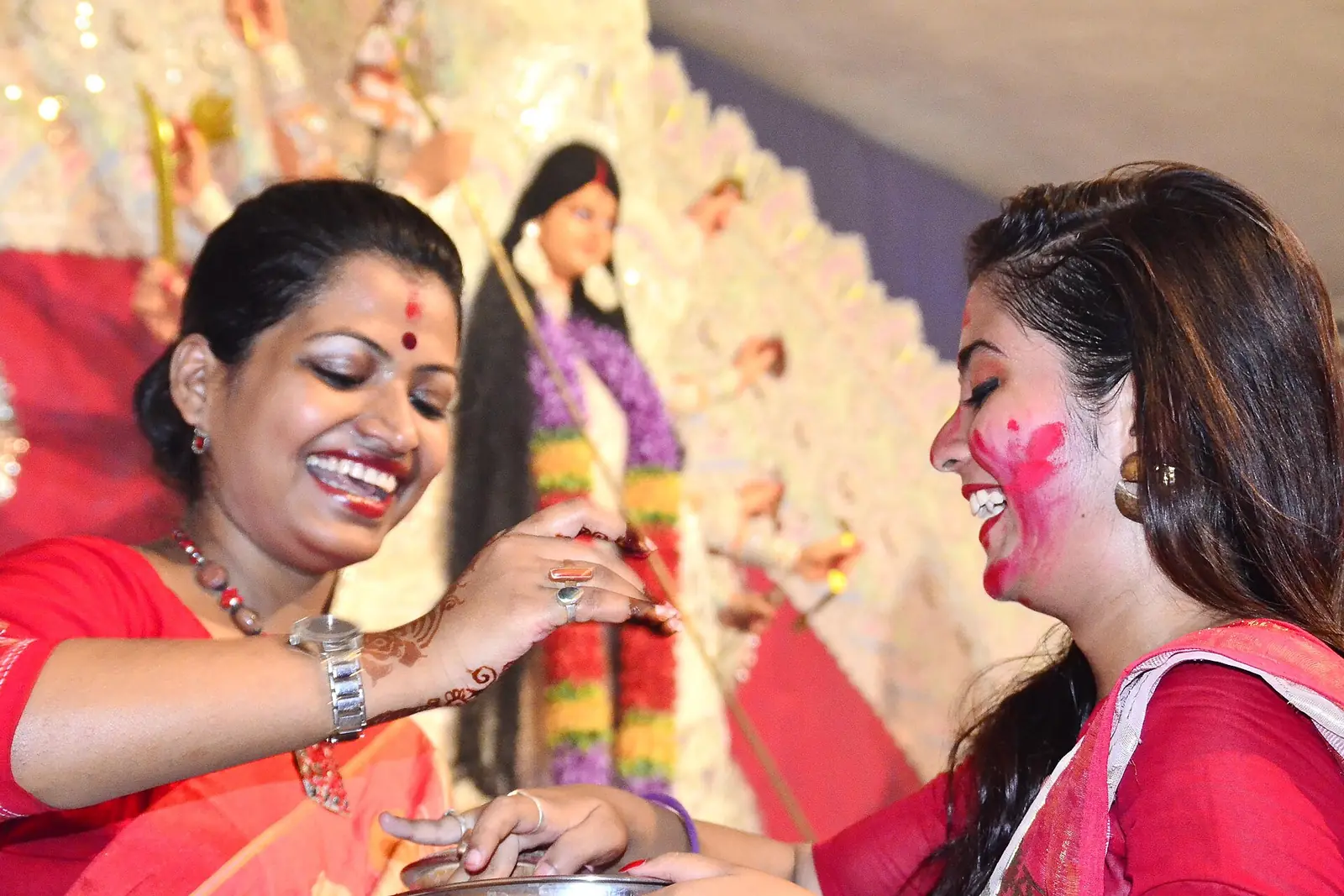
On Vijaya Dashami married women touch sindoor to the goddess and then to each other, until faces and red-bordered saris glow. Then the image goes to the river.
Makers
The potters' quarter on the Hooghly. Over more than 450 workshops, artisans build each image on a wooden or bamboo frame, wrap it in straw, and coat it with sticky Ganga clay mixed with rice husk. Work begins with a frame puja on Rath Yatra day.
Much of the shola ornament for big pandals comes from Bonkapasi in Bardhaman district. The craftsmen, called malakars, carve the soft white pith of a marsh plant, and travel to Kolkata each year to dress the larger images.
Pictures