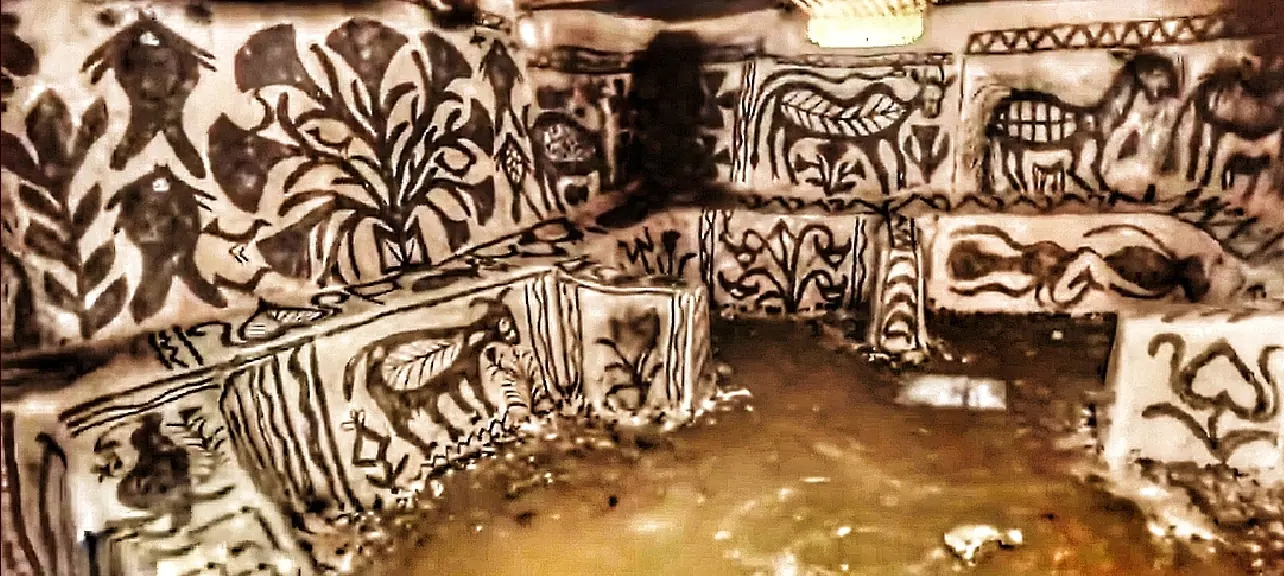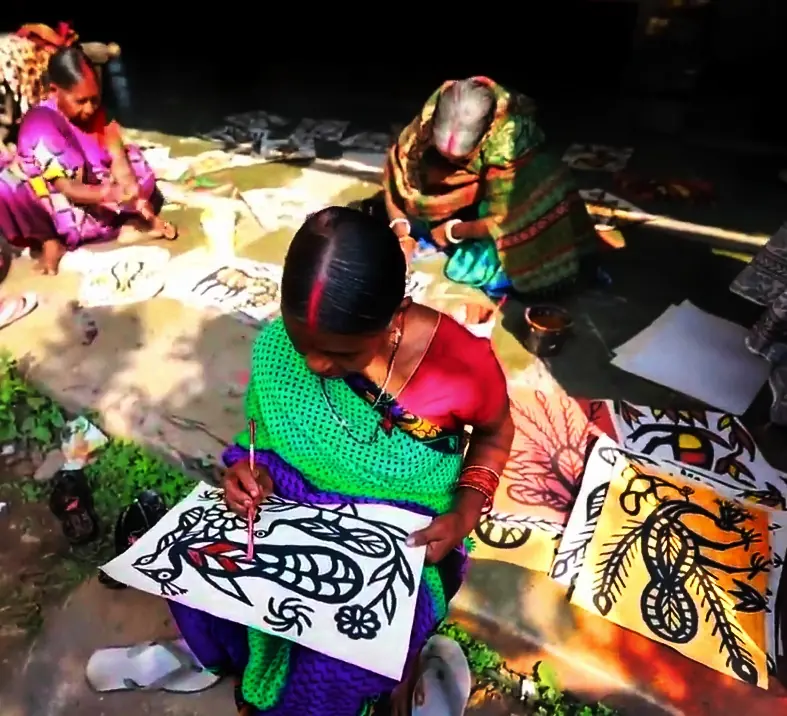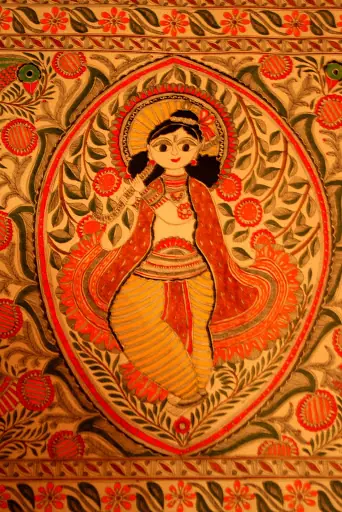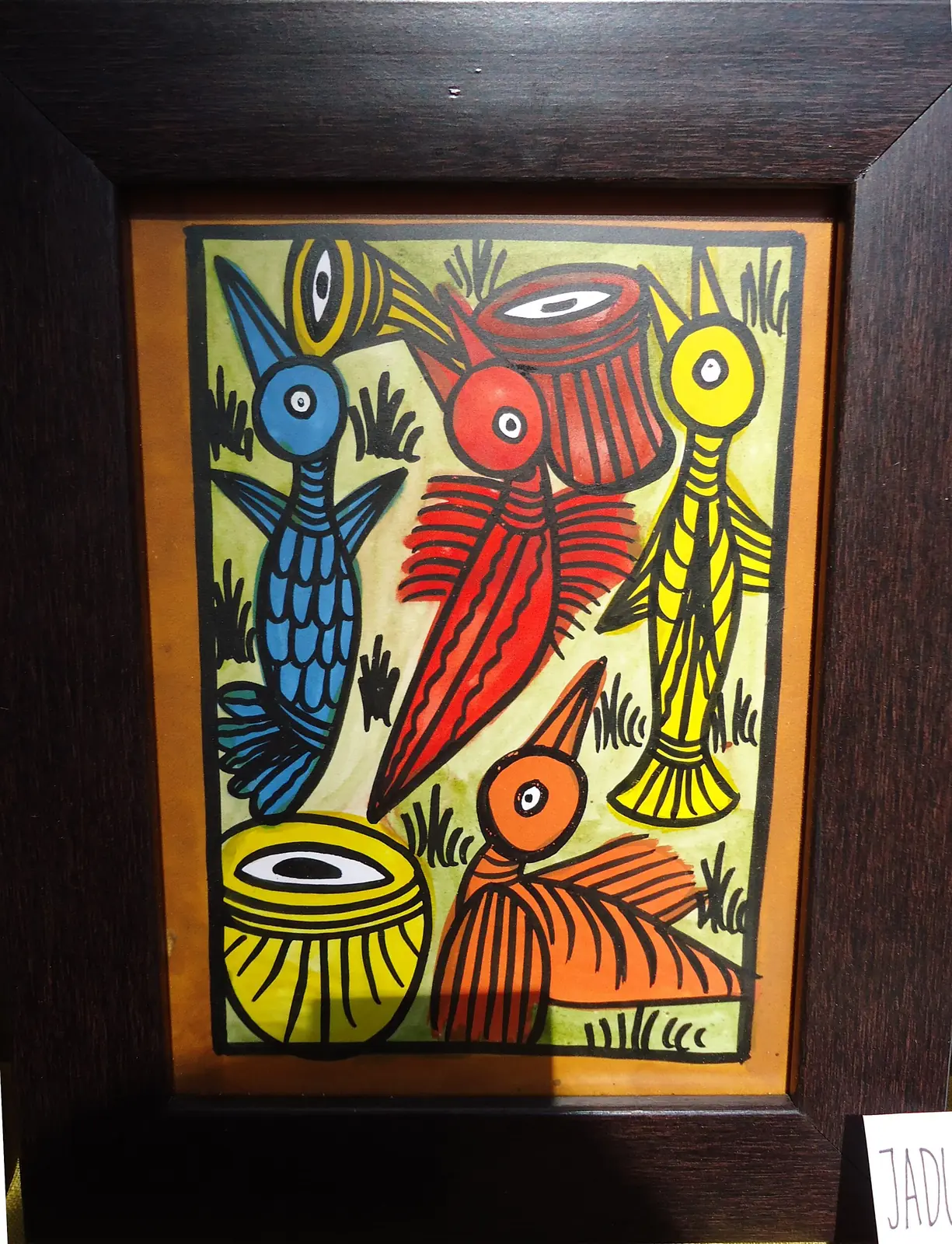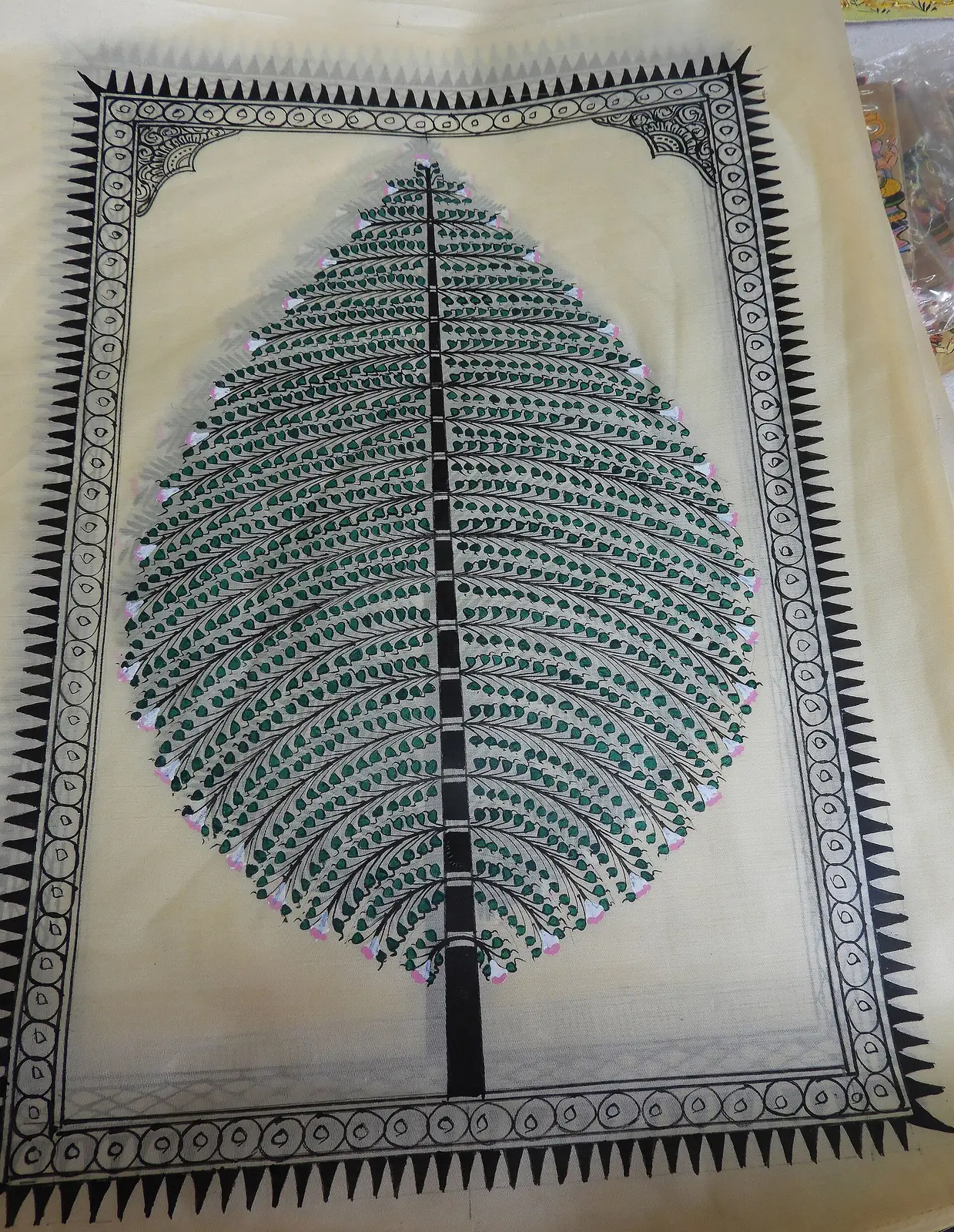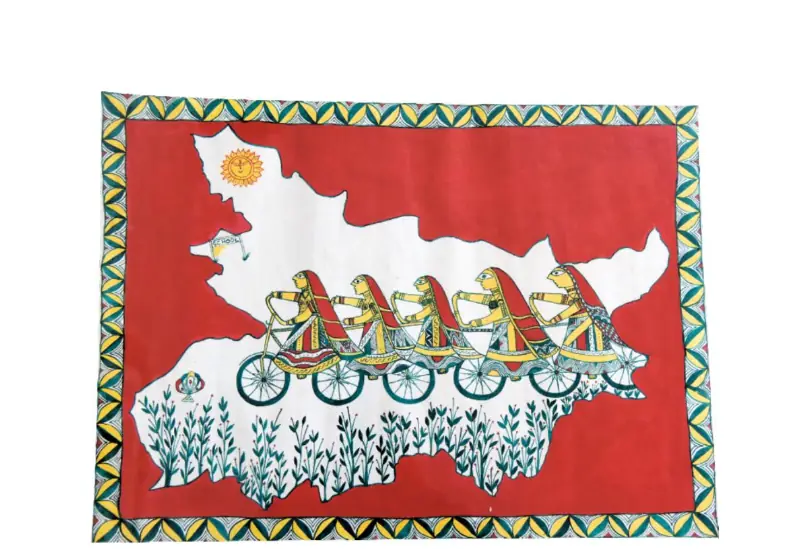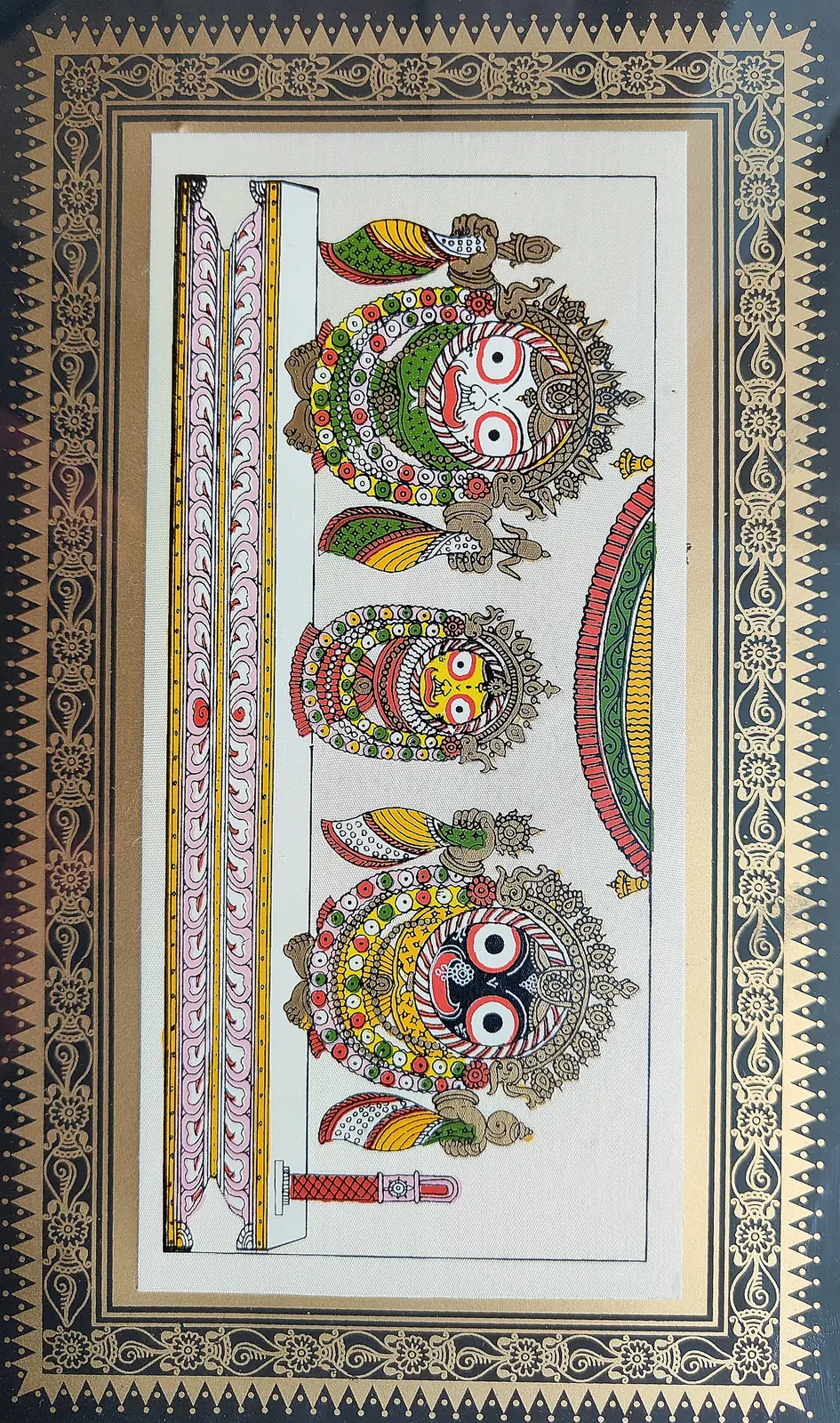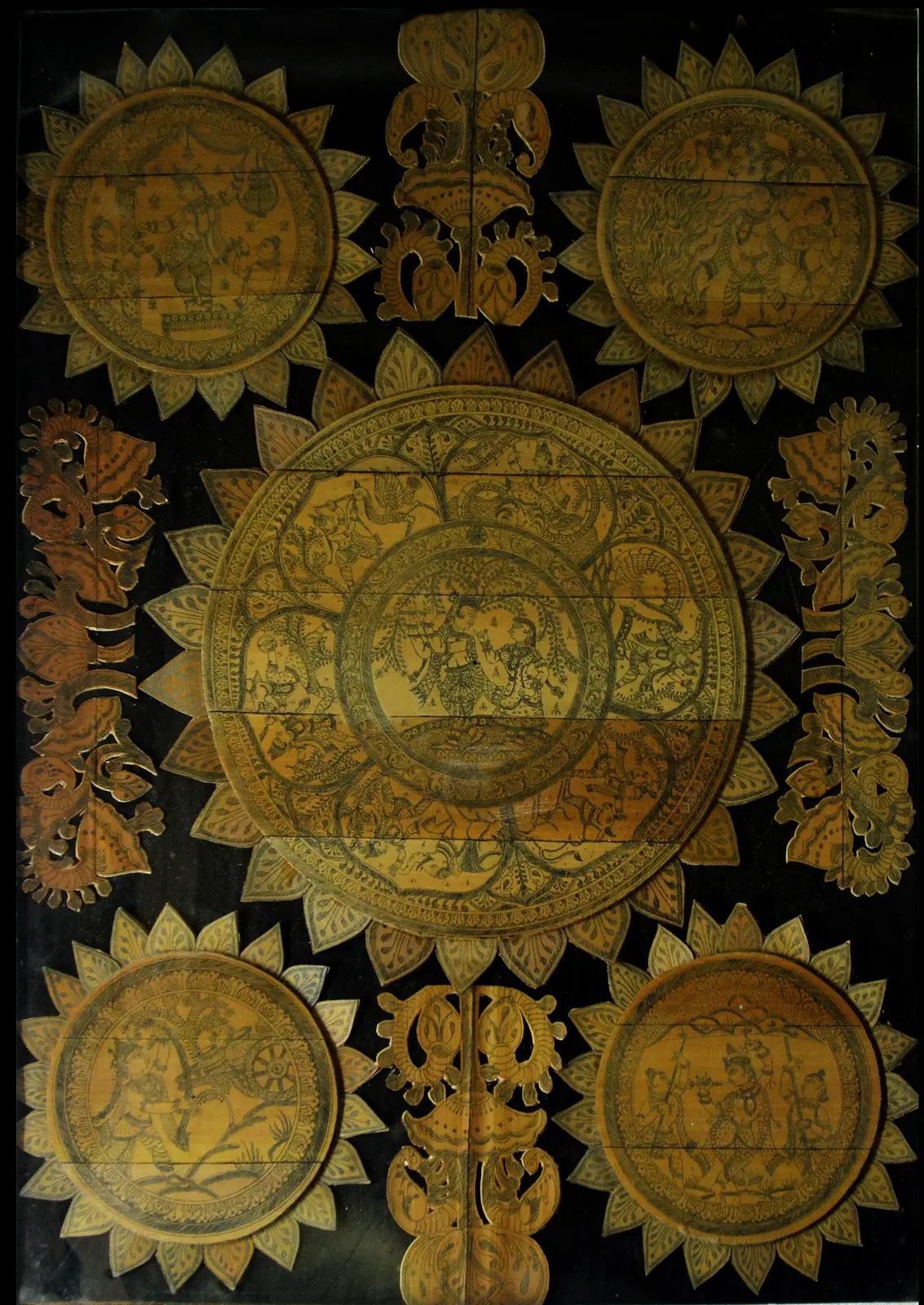
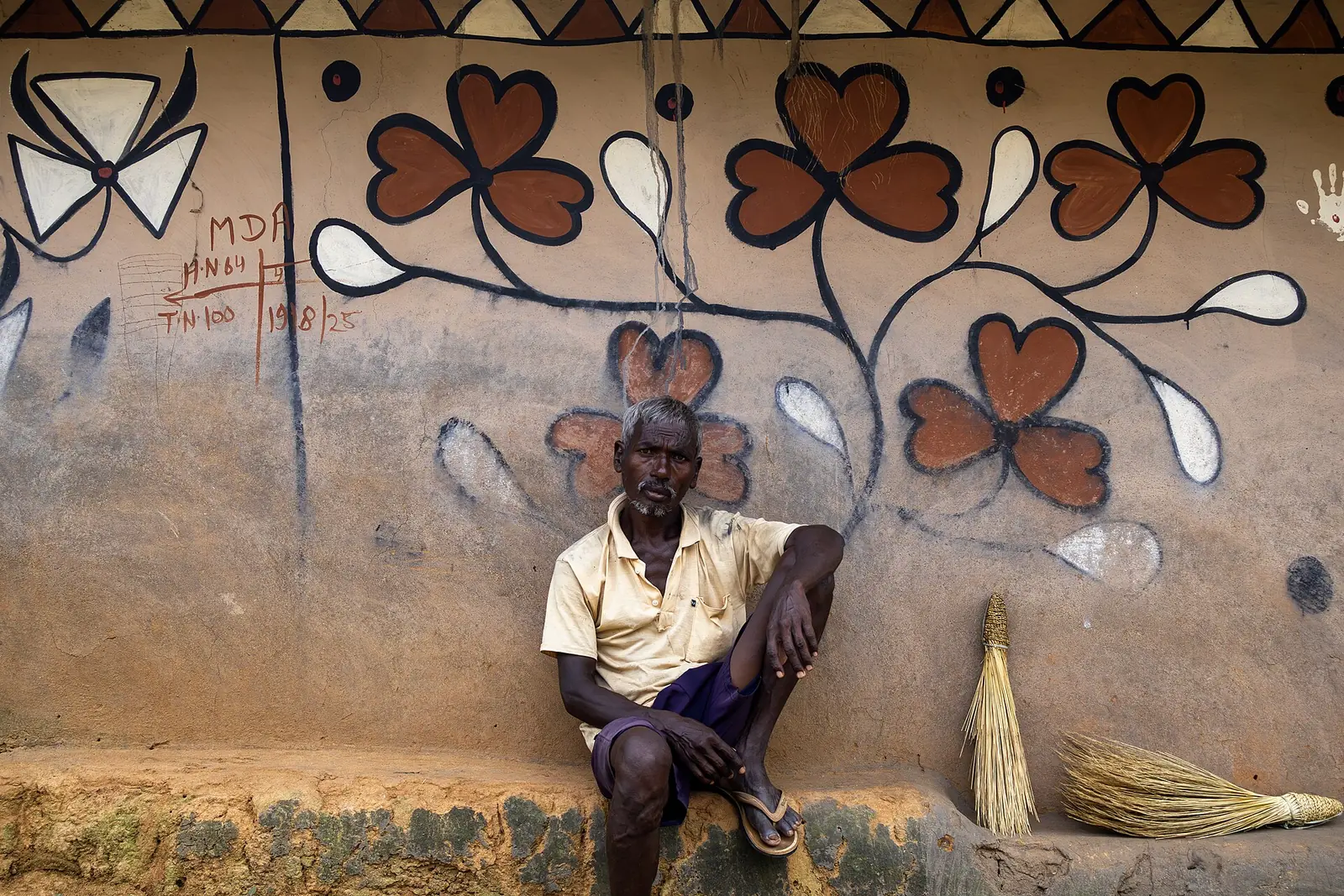
Painted for the harvest festival after Diwali, in red, black and white lines. Pregnant animals, hens with chicks, plants.
Sohrai and Khovar
सोहराय-खोवर चित्रकला
Earth paintings that Hazaribagh women comb into fresh clay walls, Sohrai after Diwali for the harvest, Khovar for the bride's room.
- Also calledSohrai, Khovar, Kohbar
- FromHazaribagh district, Jharkhand
- Painted byWomen, mother to daughter
- Protected?GI tag, registered 2020–21
Harvest walls and the bride's room
Painted in the bride's room after the monsoon, largely in one colour. Peacocks, elephants and lotuses for a fruitful marriage.
Pashupati and the hen with chicks
१PashupatiSohrai is dedicated to Pashupati, lord of the animals
२Hen and chicksA household that grows
३Pregnant animalsPlenty in the coming year
४PeacockKhovar wish for the new couple
५LotusThe bride and her fortune
६ElephantStrength and blessing on the house
Red earth on a dung-washed wall
The wall is first coated with soil and dung, then with white clay. While it is still damp, the women cut patterns through it with fingers, sticks or a comb, so the darker layer shows through the white.
Shown to the world in 1992
- TraditionMother to daughter
The designs are passed from mother to daughter, and every village keeps its own forms.
- 1992Shown to the world
Bulu Imam began showing the paintings through his Sanskriti Museum and Art Gallery in Hazaribagh, and linked their motifs to old rock paintings nearby.
- TodayOnto paper and cloth
The art is now also made on paper and cloth for sale.
- 2020–21A protected name
Sohrai–Khovar Painting was registered as a Geographical Indication of Jharkhand.
Painted walls of Isko village